



Antique Box Commode
These antique box commode pieces offer clever concealed storage and fine period joinery, bringing both historical utility and handsome timber to a room.
Antique Box Commode
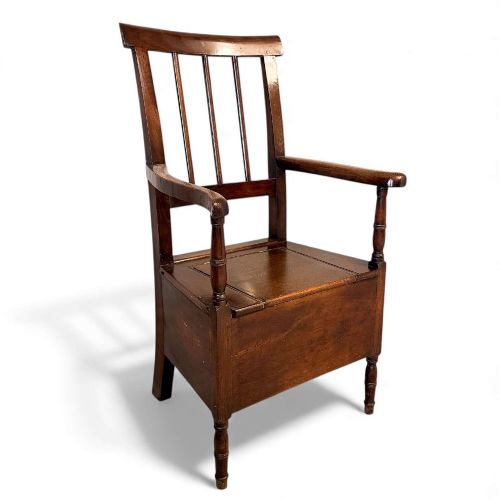
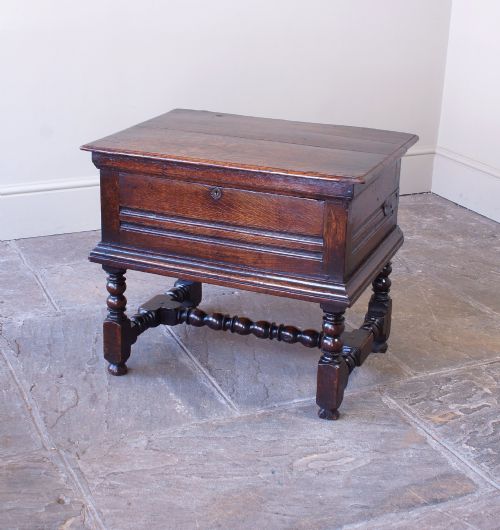
An antique box commode takes several distinct forms in the evidence, ranging from seventeenth-century oak close stools and box stools to eighteenth-century Georgian commode chairs in oak and walnut. These domestic items combined seating or table surfaces with concealed sanitation or storage compartments before modern plumbing arrived.
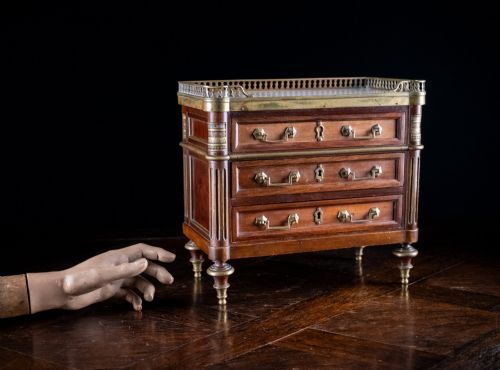
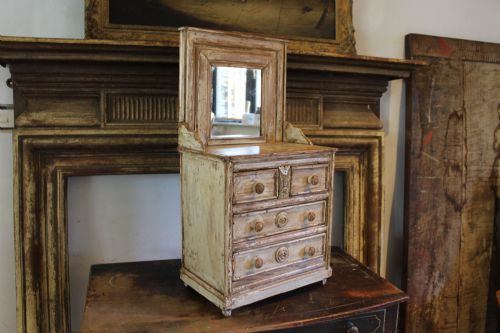
Buyers also encounter related miniature furniture on this page, including apprentice chests of drawers and miniature commodes rendered in mahogany, amboyna, kingwood, and tulipwood. These smaller pieces served as journeyman showcases or tabletop storage rather than full-scale furniture.
The materials and styles span from early oak examples to Regency flame mahogany and French Provincial or Louis XV designs. This variety reflects changing domestic habits and cabinetmaking fashions across four centuries.
What varies in quality
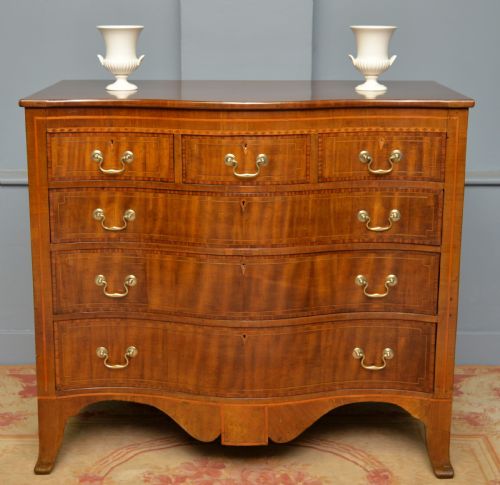
Quality rests in the choice of timber figure, such as richly grained flame mahogany or well-figured walnut, and the crispness of any inlay or veneer work. Early oak examples depend on the integrity of the original boards and structural joinery.
The sophistication of the internal mechanism and the retention of original brass hardware or painted surfaces elevate certain pieces. Miniature chests and apprentice pieces show their caliber through the precision of the drawer dovetails and overall proportions.
An apprentice carved a tiny chest so convincingly that future generations mistook it for a grand drawing-room commode.
The Antique Box Commode Glossary
- Close stool
- A piece of furniture containing a chamber pot, enclosed by a lid or seat to serve as a commode. These items date back to the seventeenth century in oak.
- Apprentice piece
- A small-scale item demonstrated by a craftsman to prove skill before joining a guild. These often take the form of miniature chests of drawers.
- Flame mahogany
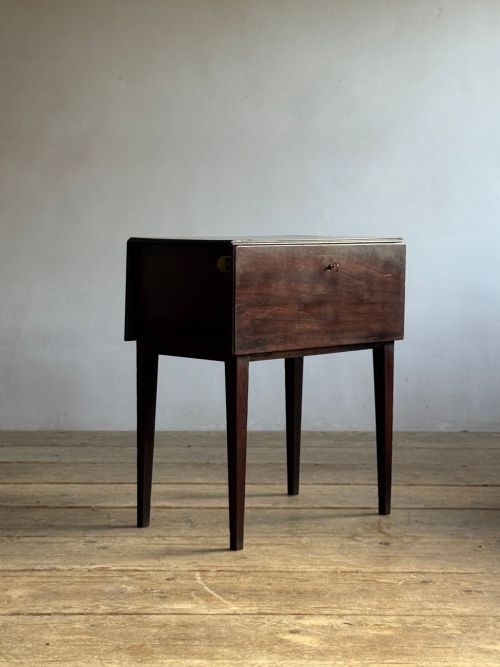
- A distinctive wood grain pattern resembling flickering flames, prized by Georgian and Regency cabinetmakers. It appears on box tables and drawer fronts.
Antique Box Commode: Frequently Asked Questions
What is an antique box commode?
An antique box commode typically refers to a lidded box stool or close stool designed for sanitation or storage, though the term also embraces small tabletop chests and miniature commodes.
These pieces bridge the gap between functional domestic utility and decorative cabinetmaking across the seventeenth, eighteenth, and nineteenth centuries.
How were box commodes used originally?
Earlier forms functioned as indoor sanitary seating with lidded compartments for chamber pots, while later variations served as storage boxes or bedside tables.
Miniature versions functioned as apprentice display pieces, jewellery boxes, or salesmen's samples for wealthy clients.
How do I date an oak close stool?
Dating relies on construction methods, timber selection, and hardware styles, with seventeenth-century pieces showing heavy oak boards and simple board-and-tenon or panel construction.
Later eighteenth-century iterations introduce more refined chair backs, cabriole legs, or mahogany frames influenced by Georgian tastes.
Are miniature chests considered commodes?
Miniature chests and apprentice pieces share cabinetmaking techniques with full-sized commodes but were built as small-scale models or tabletop storage for valuables.
They appear alongside traditional box commodes in period listings due to their compact box-like proportions and fine veneering.
What woods were used for these pieces?
Early examples utilise native British hardwoods like oak and walnut, whilst Georgian and Regency pieces favour mahogany, sometimes enhanced by exotic veneers such as kingwood and tulipwood.
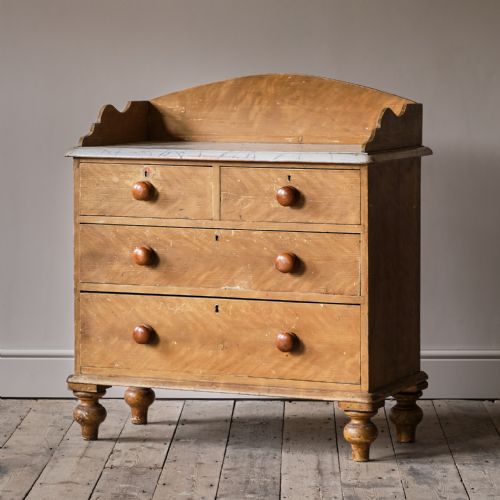
Pine appears in vernacular painted washstands and utility boxes from the nineteenth century.