


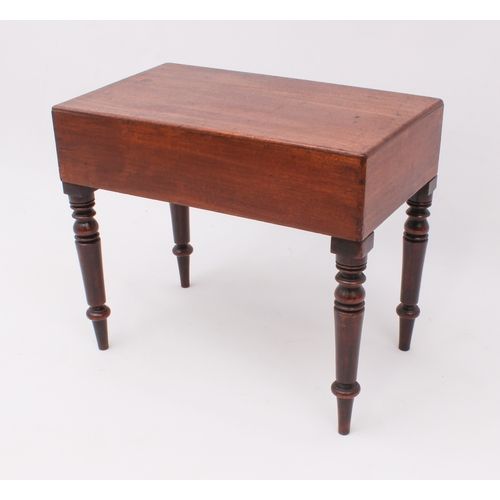


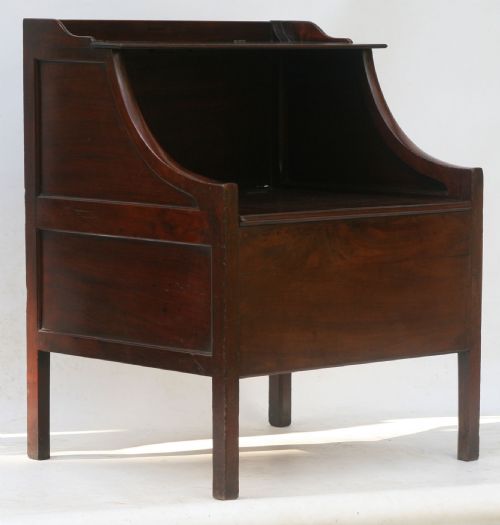
Mahogany Side Stool
These mahogany side stool pieces offer compact seating and auxiliary support, bringing classic timber grain and period charm to any room.
Mahogany Side Stool
A mahogany side stool provides compact seating and functional support, appearing across various historical periods including the Georgian era, Regency, Victorian, and Edwardian times. When searching for a mahogany side stool, buyers encounter diverse forms such as box stools, footstools, window seats, and related seating or auxiliary pieces.
The materials and styles span traditional British cabinet-making alongside pieces influenced by Asian design traditions, such as Chinese Hongmu plant stands and Liberty & Co styles. These furnishings function effectively in reception rooms, bedrooms, and libraries as versatile movable seats.
How they were made
Makers utilised solid mahogany and hongmu timbers for structural durability and rich grain appearance. Workshops incorporated decorative elements like brass hardware, metal tacks, and inlay work.
Upholstered versions integrated fabric, leather, and wool coverings over padded foundations. Timber frames were shaped through traditional joinery techniques appropriate to each period style.
Some nineteenth-century mahogany box stools secretly doubled as bidets, proving that Victorian practicality had a very specific sense of multi-tasking.
What varies in quality
Quality differences stem from the precision of timber selection and the complexity of cabinet-making techniques employed on the frame. Finer examples display superior wood figuring, careful joinery, and refined decorative details like inlay or stamped maker signatures.
The integrity of the original materials, including upholstery fabrics, brass accents, and structural supports, distinguishes standard utilitarian items from exceptional pieces created by notable workshops.
Gillows Lancaster·Liberty And Co·Richard Bridgens
The Mahogany Side Stool Glossary
- Mahogany
- A durable tropical hardwood prized for its deep reddish-brown colour and fine grain, extensively used in British furniture manufacturing. It takes a high polish and resists warping.
- Regency
- A British design style spanning the early nineteenth century characterised by classical restraint, elegant proportions, and Greek or Roman influences. Pieces from this period often feature clean lines and dark timber.
- Edwardian
- A period of furniture design spanning the early twentieth century that frequently revived earlier Georgian motifs with lighter construction and delicate inlay work. Edwardian pieces often incorporate satinwood or mahogany veneers.
- Bidet
- A specialised basin form occasionally constructed as a timber-cased stool with a removable ceramic or metal liner during the nineteenth century. These items often double as enclosed box seats.
- Hongmu
- A category of dense, heavy hardwood used in traditional Chinese furniture making, frequently featuring dark reddish tones. It appears in plant stands and display pieces.
Mahogany Side Stool: Frequently Asked Questions
Where did people place these stools?
These pieces served multiple functions in nineteenth and early twentieth century homes, appearing beside firesides, in dressing rooms, and near pianos.
Their compact dimensions allowed them to move easily between rooms to provide extra seating or support.
How do I identify a Regency period piece?
Regency items typically display classical proportions, clean architectural lines, and dark mahogany timber without excessive ornamentation.
Cabinet makers during this era drew inspiration from ancient Roman and Greek designs.
What is an Edwardian inlaid stool?
Edwardian examples from around 1900 often feature contrasting wood inlays set into the mahogany surface for decorative effect.
These pieces tend to have lighter frames and more delicate proportions than earlier Victorian counterparts.
How do I care for mahogany timber?
Mahogany surfaces benefit from occasional polishing with traditional beeswax to maintain the moisture and depth of the grain.
Keep these items away from direct heat sources and strong sunlight to prevent the timber from drying out.