

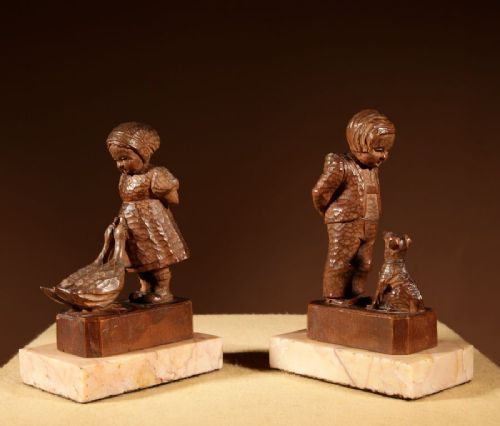
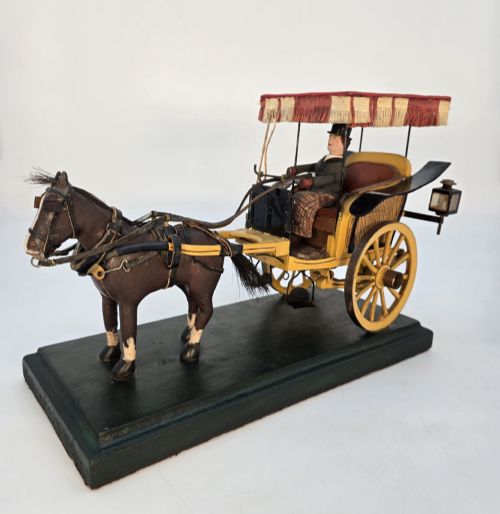


Wooden Base Figurine
A wooden base figurine anchors a sculptural study or decorative figure, bringing substance and distinct period character to a tabletop or cabinet.
Wooden Base Figurine
When you search for a wooden base figurine, you encounter sculptural works elevated by timber supports, ranging from cast metal figures to carved animal studies. The selection spans the nineteenth century through the Art Deco era, encompassing folk art models and decorative figures.
You meet Black Forest carvings, spelter dancers, and root wood sculptures united by their distinct mounting or integrated wooden plinths. These pieces reflect diverse origins including Chinese, French, and British traditions across various decades.
Materials and construction
Makers utilised wood, spelter, bronze, and glass, often combining cast metals with carved wooden foundations to give stability and contrast to the figures. Paint and fabric details enhance specific works, while scratch built models incorporate straw and papier-mâché.
Carving techniques shape the wooden elements, from detailed Black Forest pairs to root wood carvings, while metal figures are cast and mounted securely onto their respective bases.
A diligent bookworm sculpture sits ready to read, proving that even wooden base figures appreciate a quiet study.
Variations in quality
Quality rests in the precision of the carving and the fidelity of the casting, distinguishing lively folk art models and detailed animal studies from simpler production pieces. The integration between the figure and its wooden base demonstrates the maker's hand and intent.
The choice of materials, such as bronze or mahogany versus plaster or base metal, marks the tier of the work. Surface finish, whether original paint or polished grain, preserves the integrity of the period.
The Wooden Base Figurine Glossary
- Spelter
- A zinc alloy commonly used as a substitute for bronze in decorative figures, often given a patinated finish to resemble more costly metal.
- Root wood
- Timber formed from the root mass of a tree, valued in carving for its gnarled grain and natural, twisting contours.
- Black Forest
- A style of wood carving originating from the mountainous region of central Europe, typically depicting animals and figures with deep relief.
- Folk art
- Objects created by self-taught or traditional craftsmen outside academic art traditions, often using accessible materials like wood, straw, or paint.
Wooden Base Figurine: Frequently Asked Questions
What periods do these figures come from?
The pieces span the nineteenth century through the early twentieth century, including Edwardian examples and Art Deco designs from the nineteen-twenties and nineteen-thirties.
Craftsmanship from these decades reflects distinct regional styles, from European folk carvings to oriental root wood.
How are the figures secured to their bases?
Many metal or carved sculptures are mounted directly onto integrated wooden plinths, mahogany rounds, or custom-built timber foundations.
This construction provides stability for heavier materials like spelter, bronze, and porcelain while framing the sculpture.
Are these figures handmade?
Many examples involve direct craftsmanship, such as scratch built folk art models and hand-carved wooden animal studies.
Other pieces combine industrial casting methods for metal figures with individually turned or shaped wooden bases.
What materials appear most often?
Wood is the primary element for bases and specific carvings, paired frequently with spelter, bronze, paint, and glass.
Selected pieces incorporate alternative mediums like papier-mâché, straw, and marble to form the main subject.
How do I identify a Black Forest carving?
Black Forest pieces are characterised by intricate wood carving, typically portraying animals or human figures with deep texture and lifelike poses.
These sculptures often feature rich brown tones and are mounted on complementary wooden supports.