
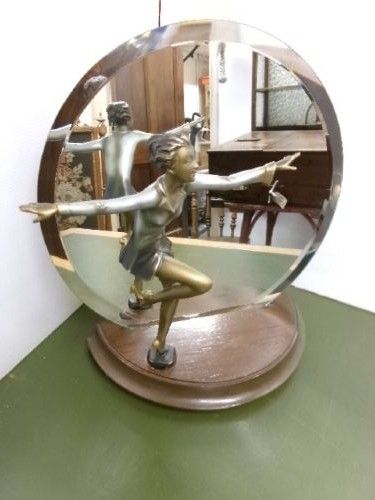
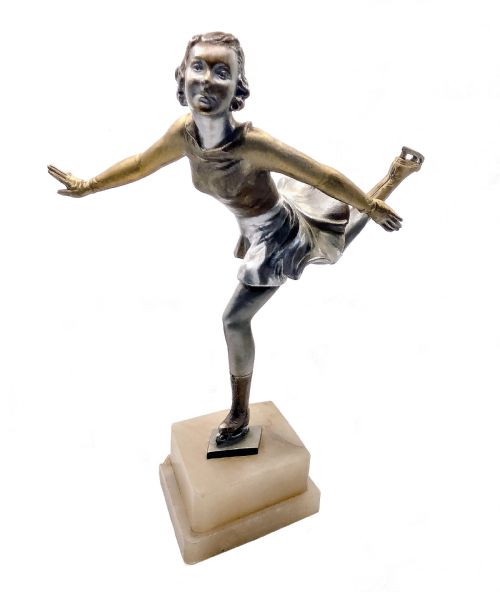





Spelter Female Sculpture
Spelter female sculpture offers graceful decorative figures cast in zinc alloy, prized for bringing affordable nineteenth and twentieth-century elegance into the home.
Spelter Female Sculpture
A spelter female sculpture typically depicts dancers, ladies, and classical models cast from a zinc-based metal alloy that mimics bronze. These pieces emerge predominantly in nineteenth and twentieth-century designs, spanning the eighteen-eighties through to nineteen-thirty.
Most examples found here adopt the stylistic vocabulary of Art Deco, Art Nouveau, and Neo-Classical movements. Figures frequently appear mounted upon integral marble, onyx, or alabaster bases, sometimes functioning as table lamps or table lighters.
French workshops produced a significant portion of these works, ranging from modest figurines to large sculptural groups involving dancers, musicians, and mothers with children. The form prioritises flowing drapery, slender silhouettes, and expressive postures typical of European decorative arts.
Materials and construction methods
The primary material, spelter, is a softer zinc alloy that allowed founders to cast intricate details more easily than traditional bronze. Manufacturers frequently enhanced these figures with cold paint, silvered finishes, or bronzed patination to simulate costlier metals.
Object forms span standard figurines, table lamps, table lighters, and sculptural groups mounted on stone bases.
Assessing quality and execution
Quality in these sculptures rests upon the crispness of the casting and the preservation of the original surface finish, whether cold paint, silvering, or patination. Finer pieces retain delicate facial expressions and sharp linear details in garments and hair.
The integrity of the mounting also dictates the calibre of the piece, with solid marble, onyx, or alabaster bases adding considerable presence. Signed works by notable sculptors command greater recognition through superior artistic conception and foundry execution.
Josef Lorenzl·Auguste Moreau·Geo Maxim
The Spelter Female Sculpture Glossary
- Spelter
- A zinc alloy commonly utilised in the nineteenth and twentieth centuries as a cost-effective alternative to bronze for decorative figures. It is softer than bronze and generally requires a surface finish such as paint or patination.
- Art Deco
- A design movement prevalent during the nineteen-twenties and nineteen-thirties characterised by sleek geometric lines, stylised forms, and modern motifs. Figures from this era often depict dancers, ice skaters, and fashionably attired women.
- Art Nouveau
- An artistic style spanning the late nineteenth and early twentieth centuries inspired by natural organic forms, flowing curves, and plant motifs. Sculptures from this period frequently feature sweeping hair and cascading drapery.
- Cold Paint
- A decorative finishing technique where paint is applied to metal without being kiln-fired afterwards. It is frequently encountered on vintage spelter figures to provide flesh tones and coloured garments.
- Onyx
- A banded variety of chalcedony quartz frequently used as a heavy, decorative base for table sculptures and lamps. Its polished stone surface complements the metallic sheen of the figures.
Spelter Female Sculpture: Frequently Asked Questions
What is spelter metal?
Spelter is a zinc-based alloy that sculptors and foundries utilised to create decorative figures, lamps, and decorative objects. It served as a lighter and less expensive alternative to bronze.
Because the metal is relatively soft, it permitted fine detail work in casting, though it typically required a painted, silvered, or patinated surface coating to achieve a finished appearance.
How do I clean my sculpture?
Maintenance requires only gentle dusting with a soft, dry cloth to prevent the accumulation of grime on the delicate surface finish. Water and chemical cleaning products should be avoided entirely, as they can strip away cold paint or patination.
Care must also be taken around the marble, onyx, or alabaster bases, using appropriate dry methods to preserve the polished stone surfaces.
Are these figures French?
A substantial proportion of these decorative sculptures originated in France, particularly from Parisian foundries and studios operating during the late nineteenth and early twentieth centuries. French makers excelled in capturing the fluid aesthetics of Art Nouveau and Art Deco movements.
These continental pieces often display distinct artistic signatures or registry marks integrated into the casting or base.
How can I tell Art Deco from Art Nouveau?
Art Nouveau figures, dating roughly from the late nineteenth century to nineteen-ten, feature undulating organic lines, flowing hair, and motifs inspired by natural plant forms. The aesthetic emphasises asymmetry and romanticism.
Art Deco works, emerging strongly around nineteen-twenty and nineteen-thirty, lean towards streamlined geometry, stylised drapery, and depictions of modern pursuits like ice skating and dancing.