

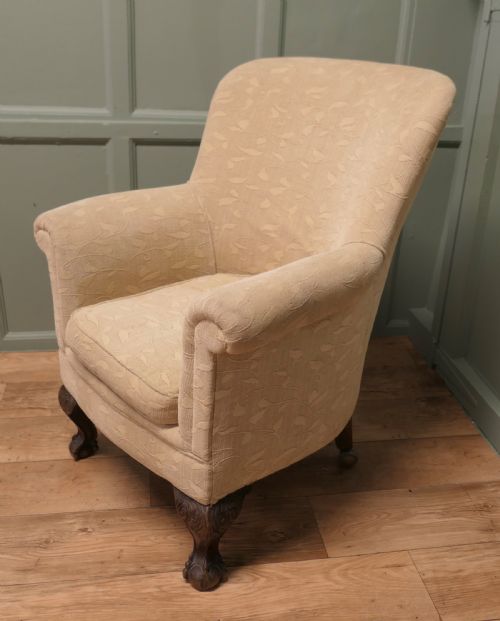
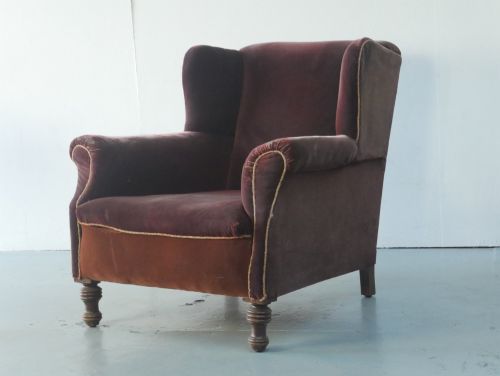
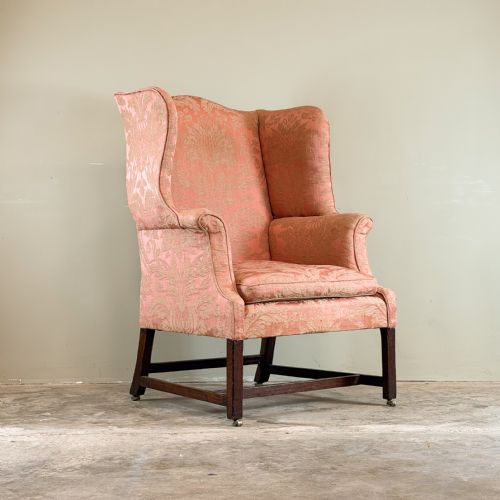
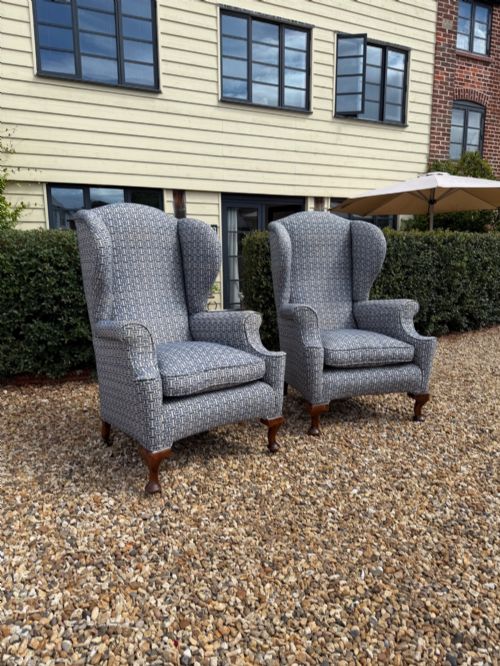
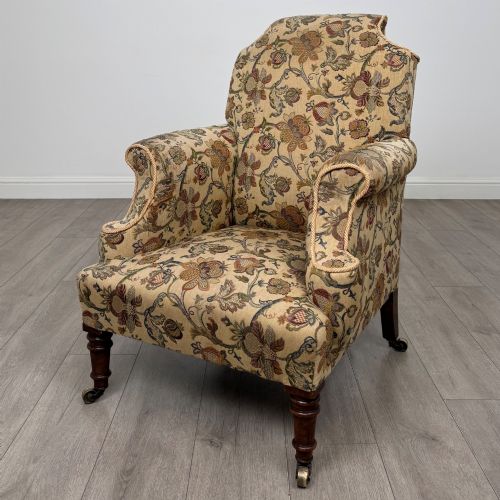
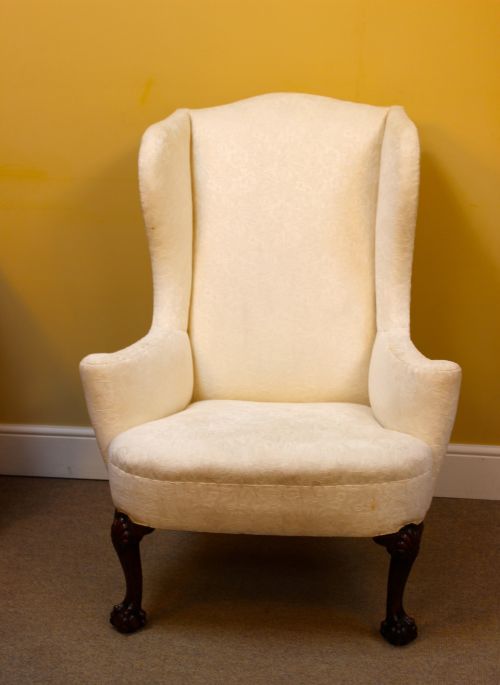
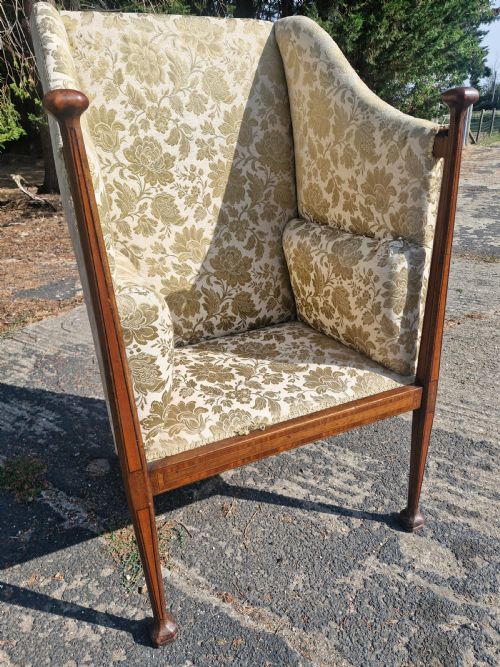
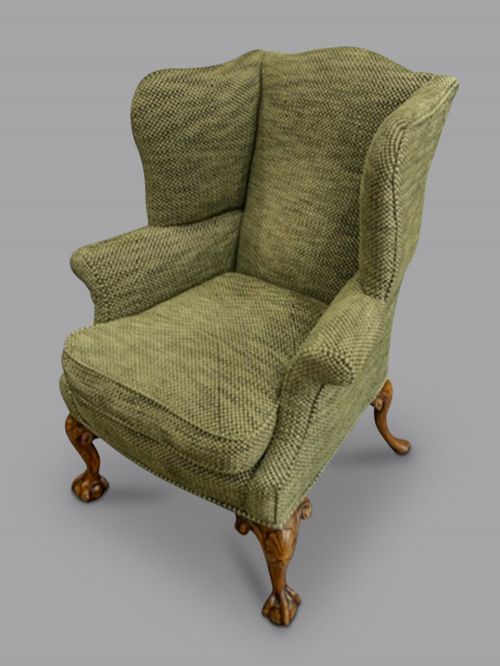
Wingback Lounge Chair
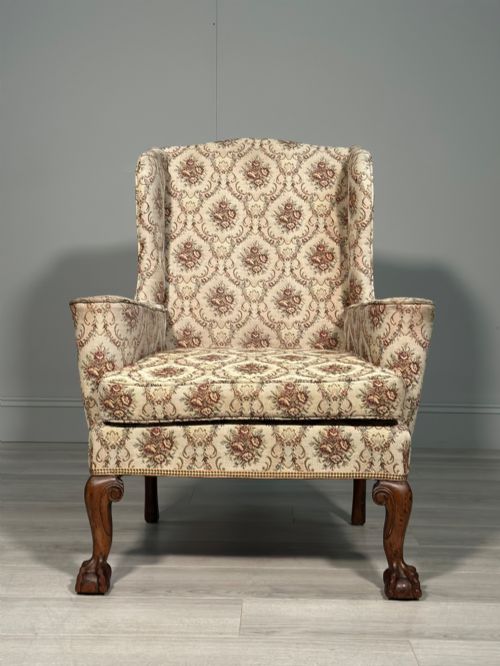
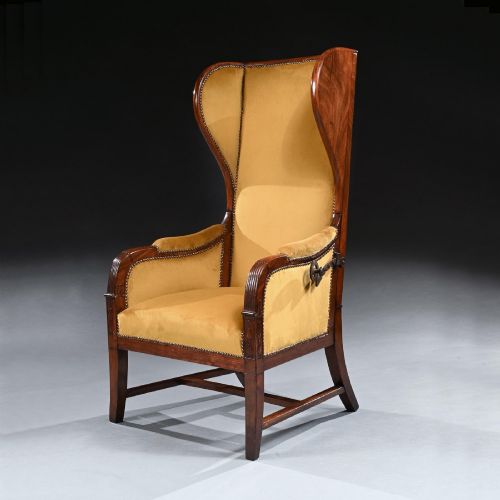
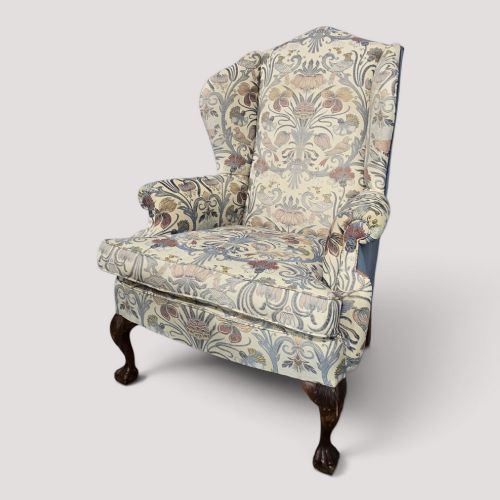
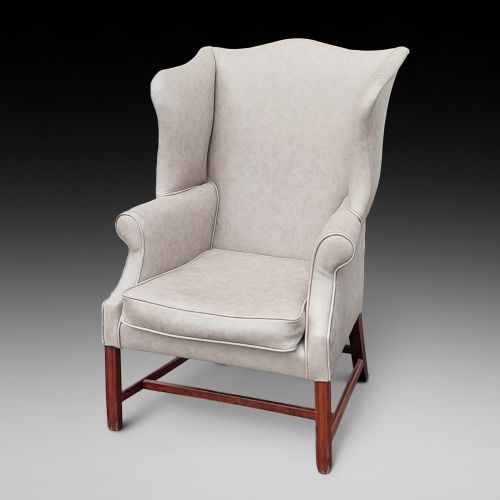
A wingback lounge chair brings deep-seated comfort and historic character to a room, offering the iconic winged silhouette designed to block draughts by the hearth.
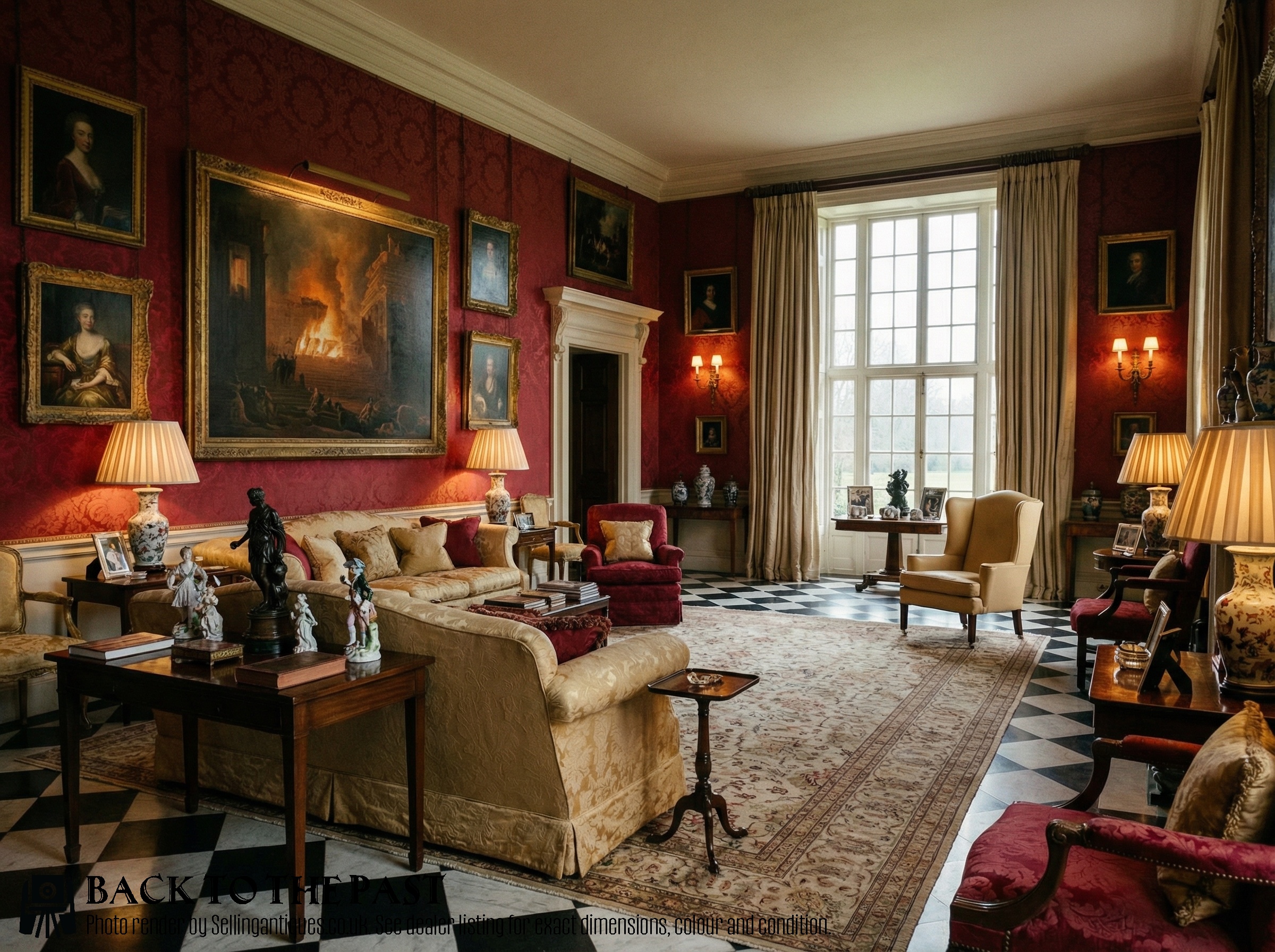
Wingback Lounge Chair
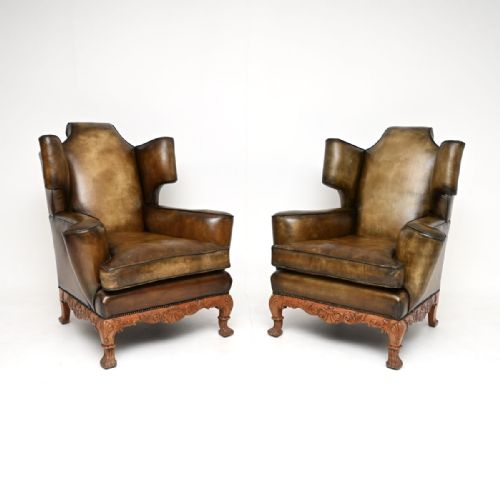
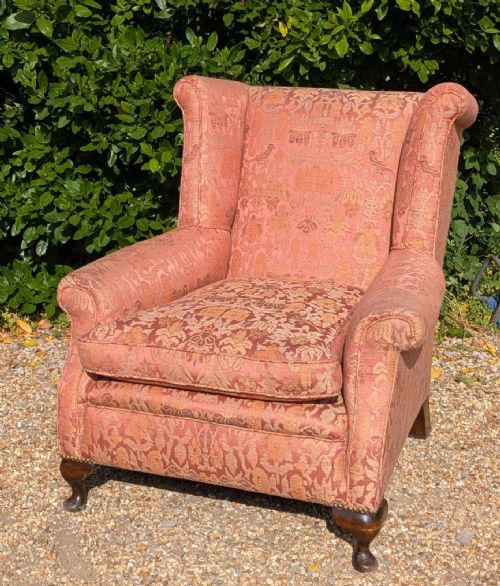
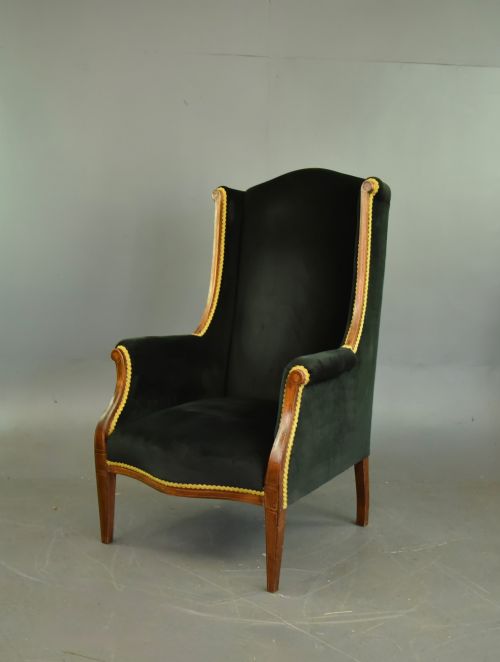
A wingback lounge chair is a substantial upholstered seat featuring characteristic side panels attached to the arms or back, designed originally to trap heat around the sitter. On this page, you will encounter examples spanning the eighteenth century through to the 1930s, reflecting shifts in taste from formal revival pieces to relaxed country house seating.
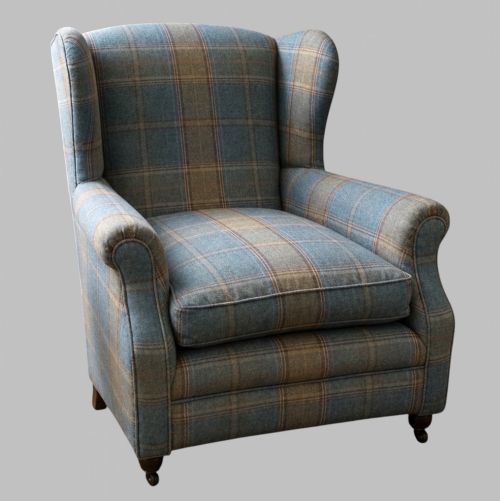
The selection ranges from early walnut and oak frames to Victorian mahogany and Edwardian inlaid designs, alongside French and Scottish interpretations. Buyers frequently find pieces influenced by Queen Anne and Georgian styles, upholstered in traditional leather, velvet, or contemporary plaid wool.
Makers and workshops of note such as Howard and Sons and Sopwith appear alongside pieces showing classic barrel back forms and feather-filled cushions. These armchairs function as focal points in a study or drawing room, combining deep padding with upright structural support.
Materials and construction methods
Frames are constructed from solid hardwoods including mahogany, walnut, oak, and general timber, providing the rigid skeleton necessary to support deep upholstery and heavy use. Brass accents frequently appear on castors or hardware, adding functional detail to the wooden underframes.
Traditional stuffing methods utilise horsehair and webbed bases, often finished with feather filling for deep seat comfort. Upholstery fabrics span supple leather, rich velvet, and woven wool textiles such as Shetland plaid, secured with careful hand-tacking.
Wingback Lounge Chair Retail Price Guide 2026
Typical asking prices for wingback lounge chair among the pieces listed under this phrase on Sellingantiques today, from the lower quarter to the upper quarter. They describe what is for sale here now, not the wider market.
Some nineteenth-century sitters enjoyed such effective draught protection from their wings that they barely noticed the room fire going out.
Assessing quality and finish
Quality rests in the integrity of the wooden frame and the precision of the joinery beneath the upholstery. Finer examples display carefully carved mahogany or walnut legs, crisp proportions in the wings, and disciplined serpentine shaping to the seat rails.
The distinction between standard production and superior work lies in the handling of the secondary timbers and the quality of the internal stuffing. Well-executed revival pieces emulate the authority of genuine eighteenth-century models through balanced scale and harmonious textile selection.
Howard and Sons·Sopwith·Whytock and Reid
The Wingback Lounge Chair Glossary
- Wingback
- An armchair featuring protective side panels attached to the backrest, created to shield the occupant from cold draughts. These panels vary in shape from scroll-over to flat geometric projections.
- Barrel back
- A seating form where the upholstered back curves continuously around to form enclosed arms. This shape offers a particularly cocooning sit.
- Secondary timber
- The interior or lesser-seen wood used in a furniture frame, such as oak or pine beneath mahogany facades. Examining this helps determine the regional origin and period.
- Feather filled
- Cushions packed with natural feathers to give a soft, yielding seat. This filling method is typical of high-comfort lounge seating.
- Inlaid
- Decoration formed by fitting contrasting strips of wood or shell into carved recesses within the primary timber. Edwardian and later pieces frequently utilise this technique for surface pattern.
Wingback Lounge Chair: Frequently Asked Questions
How do I date a wingback lounge chair?
Dating relies on examining the secondary timbers, the shape of the legs, and the profile of the wings. Earlier eighteenth-century models show simpler, heavier framing while Victorian and Edwardian examples often feature revival styling with machine-cut elements.
Upholstery materials and interior stuffing methods also provide clues, though many pieces have been re-covered multiple times across their lifespan.
Were wingback chairs originally used for reading?
The high wings were primarily engineered to trap heat from open fires and block cold room draughts around the head and shoulders. Reading and general lounging became natural secondary uses due to the high back support and enclosed posture.
Over centuries, the form evolved from a purely functional hearth seat into a statement piece for libraries and drawing rooms.
What is the difference between a Georgian style and a true Georgian chair?
A true Georgian chair dates directly from the eighteenth-century reign of the Georges, constructed according to the prevailing cabinet-making techniques of that era. Georgian style pieces are later revivals, typically manufactured during the Victorian or Edwardian periods using historic design motifs.
Both offer traditional proportions, but genuine period examples carry greater age and original construction integrity.
How do I care for leather upholstery on an antique armchair?
Leather upholstery requires regular dusting with a soft cloth and occasional treatment with specialist leather balms to prevent cracking. Keeping the chair away from direct sunlight and heat sources preserves the natural hide.
Avoid using harsh modern detergents, which can strip historic finishes and dry out the material.