

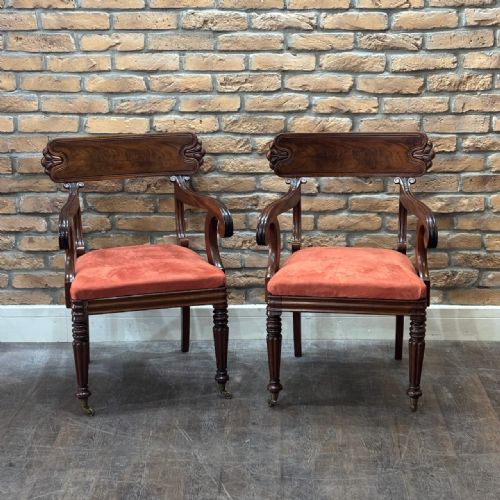


William IV Library Armchair
A william iv library armchair delivers robust proportions and rich timber tones, making it the anchor piece for a traditional study.
William IV Library Armchair
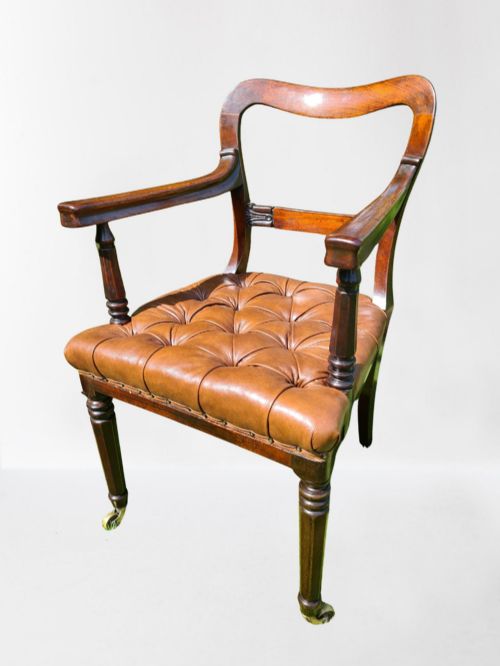
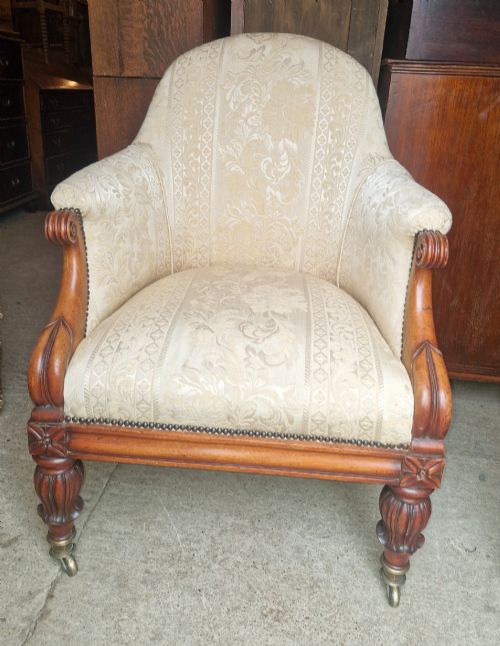
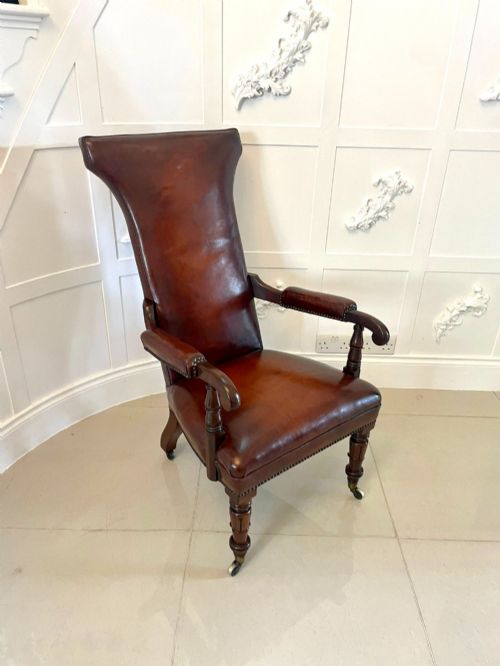
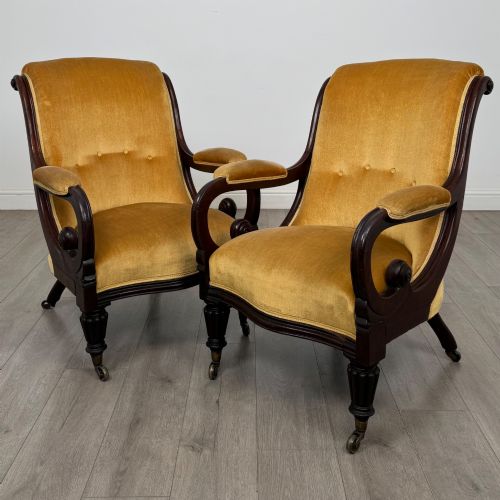
A william iv library armchair is a sturdy, deep-seated seat designed for extended reading and writing in nineteenth-century studies and libraries. The version most commonly met on this page is constructed from dark timber with generous padded armrests and low-slung profiles.
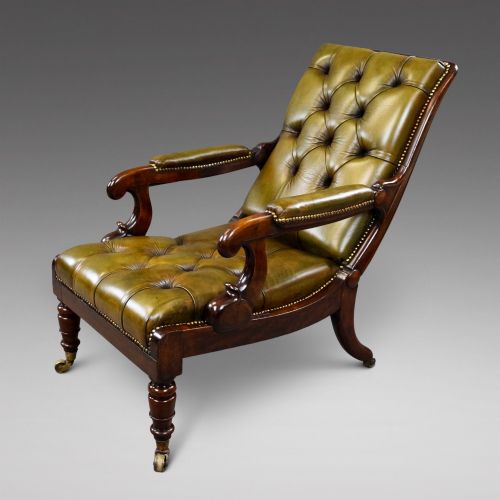
Makers of the period adapted transitional late regency lines into heavier, more robust frames that often incorporated mechanical actions for reclining. Surviving examples frequently retain original brass castors and turned front legs to allow easy movement across heavy wool carpets.
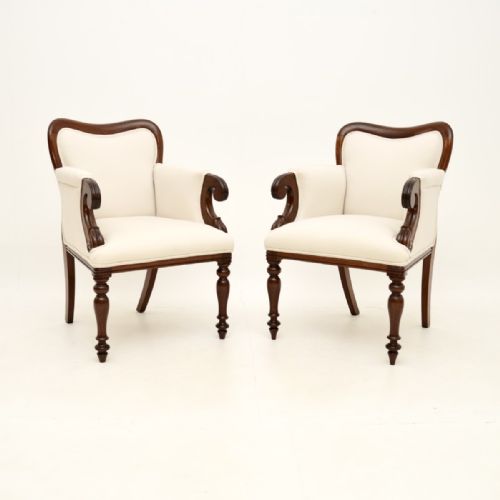
Examples listed here span various seating types, including desk chairs, bergères with cane panels, and specialised reclining reading chairs. These heavy timber forms reflect the solid domestic architecture of the eighteen-thirties and surrounding decades.
How They Were Made
Cabinet makers built the primary frames of a william iv library armchair from solid mahogany or rosewood, frequently selecting figured timber for the show frames and arm supports. Skilled artisans turned heavy cylindrical or octagonal front legs and fitted robust brass castors to bear the substantial weight of the timber.
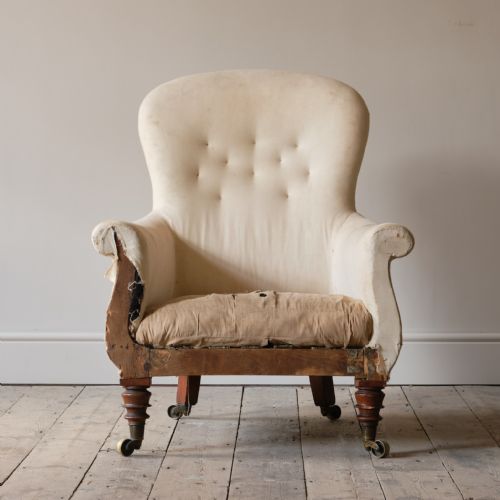
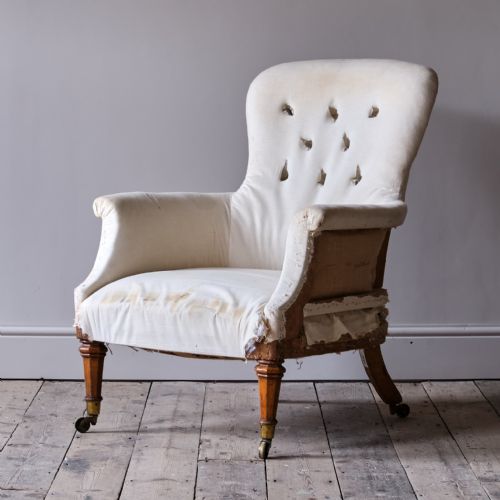
Upholstery techniques combined deep horsehair stuffing with durable leather, velvet, calico, or cane panels woven into bergère frames. Specialised mechanical variants integrated clever internal iron ratchets and wooden ratchets to permit adjustable reclining positions for the reader.
The archive records library armchairs originating from notable historic country houses alongside standard domestic desk chairs.
What Varies in Quality
The choice of primary timber and the crispness of hand-carved scrolling details establish the baseline distinction between standard utility seating and high-end commission pieces. Richly figured rosewood or dense mahogany frames with deep relief carving indicate workshops operating at the upper tier of cabinet making.
Mechanisms for reclining and the integrity of retained leather or cane work further divide the output of different makers. Complex adjustable actions signed by known makers like Minter or Dawes demonstrate superior engineering compared to simple fixed-position frames.
Gillows·Robert Daws
The William IV Library Armchair Glossary
- Bergere
- A closed-frame armchair with cane work panels set into the back and sides. This French-inspired form provides a lighter visual weight while maintaining structural rigidity.
- Carver
- A dining or desk chair featuring extended wooden armrests designed to match a set of side chairs. These pieces often share the primary stylistic turning of the wider suite.
- X frame
- A structural furniture base formed by intersecting diagonal timbers that cross beneath the seat. This architectural layout appears on specialised library and desk seating.
- Reclining chair
- A seat equipped with mechanical ratchets or pivots to alter the angle of the backrest. Nineteenth-century examples often conceal these functional iron components within the upholstered frame.
William IV Library Armchair: Frequently Asked Questions
How do I identify a true period piece?
Examine the timber density, hand-turned leg construction, and internal framing materials to confirm nineteenth-century production methods. Genuine examples display period-appropriate joinery and wear consistent with age.
Look for traditional upholstery foundations like horsehair stuffing beneath the leather rather than modern synthetic foam. Original brass castors and authentic patination on the timber support an accurate period attribution.
How did nineteenth-century readers use reclining chairs?
Readers adjusted the integrated mechanical actions to tilt the backrest for extended periods of study or relaxation. Built-in ratchets allowed the user to lock the frame at various comfortable angles.
These pieces served dual functions as standard desk seating and adjustable reading chairs. Advanced models included extending foot rests or reading slopes attached to the frame.
Where should I place a heavy library armchair?
Position the chair near bookshelves or beside a desk where its substantial timber proportions complement other nineteenth-century furniture. Ensure adequate floor clearance for the brass castors if you plan to move the seat frequently.
Keep the piece away from direct heat sources and strong sunlight to protect the leather upholstery and polished timber finish from drying out over time.