
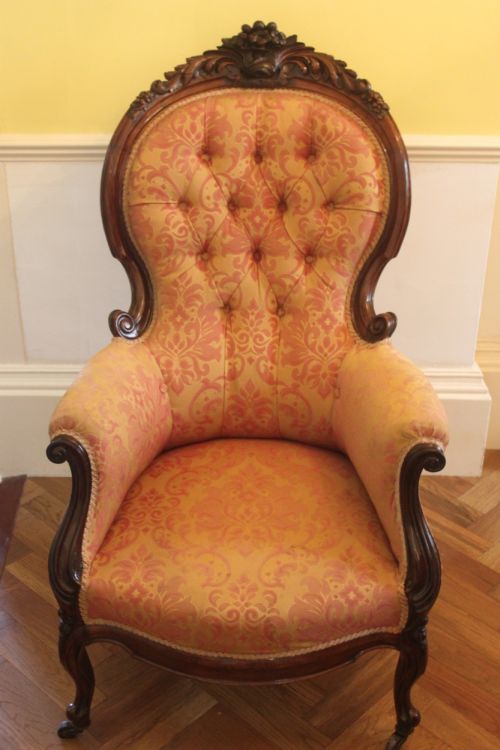


Early Victorian Library Chair
An early victorian library chair brings substantial timber frames and deep upholstery together for long hours of reading.
Early Victorian Library Chair
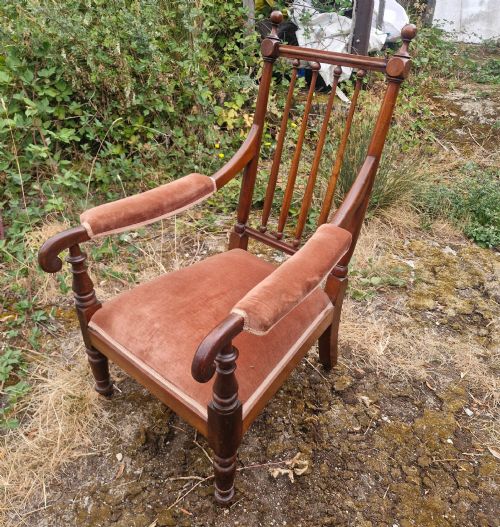
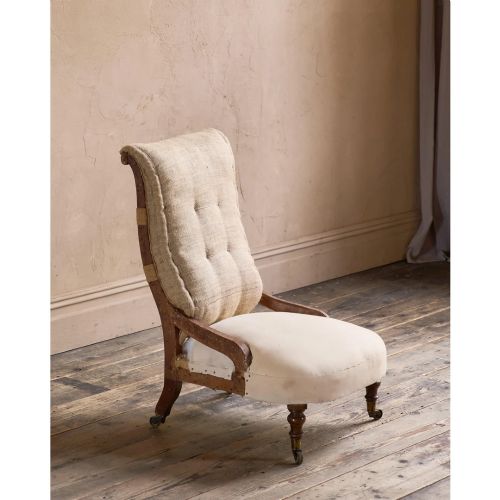
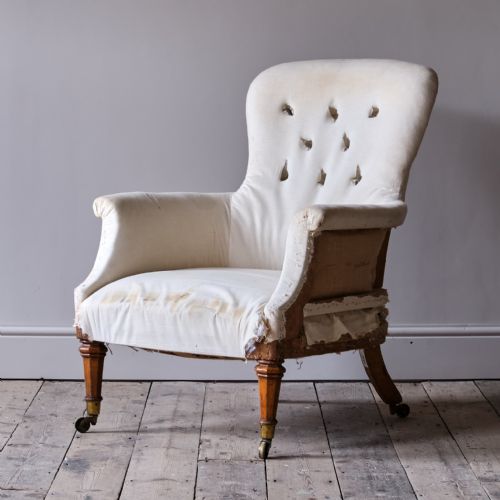
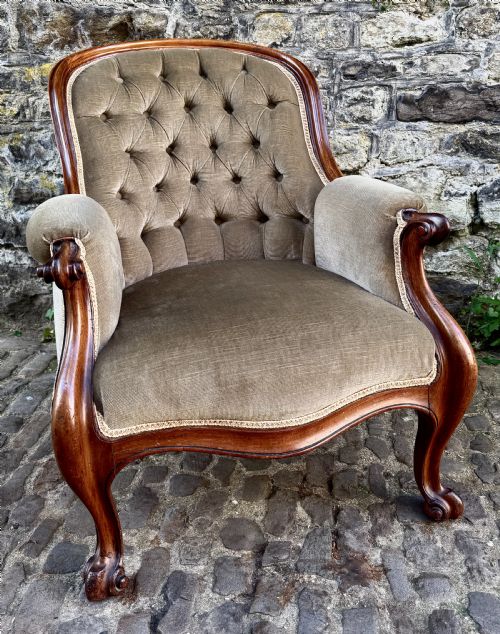
An early victorian library chair is a sturdy upholstered armchair designed for comfort in studies, libraries, and drawing rooms during the nineteenth century. These seating pieces appear in forms such as open armchairs, gentleman's armchairs, desk chairs, and library reading chairs.
The styles span the early nineteenth century into the Victorian period, including William IV, Regency, Victorian Gothic Revival, and Victorian Rococo Revival designs. You will encounter robust mahogany, rosewood, and oak frames paired with leather, velvet, calico, and hessian upholstery.
Materials and Construction Methods
Cabinetmakers built the structural frames primarily from dense hardwoods like mahogany, rosewood, walnut, oak, and chestnut, sometimes incorporating brass castors or fittings for mobility. Frames exhibit skilled turning, spindle work, scroll arms, and carved detailing.
Upholstery techniques involve webbing, horsehair stuffing, and springs secured beneath outer coverings of leather, hide, velvet, calico, or fabric. Adjustable mechanisms and buttoned leather finishes appear on selected reading and desk variations.
The documented styles span the Regency, William IV, Early Victorian, Victorian, and Gothic Revival periods of the nineteenth century.
Assessing Quality and Craftsmanship
The distinction between standard examples and top-tier pieces rests on timber selection, the crispness of carved or turned details, and the integrity of the original frame structure. Heavier rosewood or mahogany frames with refined scroll arms and balanced proportions demand closer attention.
Makers' marks and stamps elevate specific pieces, particularly when attributed or linked to established cabinet makers and upholstery firms of the period. The survival of period leather hide or early upholstery stuffing also influences the standing of an individual chair.
Howard and Sons·JG Crace·Holland and Sons
The Early Victorian Library Chair Glossary
- Library chair
- A heavy upholstered armchair designed for reading rooms, studies, and libraries. These seating pieces often feature leather upholstery and robust wooden frames.
- Open armchair
- A seat with un-upholstered wooden armrests, exposing the frame construction. This form highlights the polished mahogany, rosewood, or oak grain.
- Scroll arm
- A curved, rolled wooden or upholstered armrest resembling a scroll shape. This stylistic flourish appears frequently on nineteenth-century library seating.
- Bergere
- An enclosed armchair with cane or upholstered sides panels. The wooden frame surrounds the cushioned seat and back.
- Calico
- A plain-woven cotton fabric used as an initial upholstery layer or under-cover. Many nineteenth-century chairs survive in this foundational state ready for top covering.
Early Victorian Library Chair: Frequently Asked Questions
What is an early victorian library chair used for?
These chairs served readers and writers in studies and libraries throughout the nineteenth century. Their sturdy frames and padded upholstery provided comfort for extended periods of sitting.
Today, they function as desk chairs, reading seats, or statement armchairs in domestic interiors.
Are these library chairs comfortable for daily use?
Original nineteenth-century seating was built with deep padding, sprung seats, and supportive armrests. Many examples retain ergonomic proportions suited to reading.
Upholstery condition varies, so some pieces require restoration before daily sitting.
What woods were used for these chairs?
Cabinetmakers utilised dense hardwoods to ensure structural stability under heavy use. Mahogany and rosewood appear frequently in polished finishes.
Oak, walnut, and chestnut frames also occur across the available selection.