


William IV Center Table
A william iv centre table anchors a room with rich timber grain and bold architectural presence.
William IV Center Table
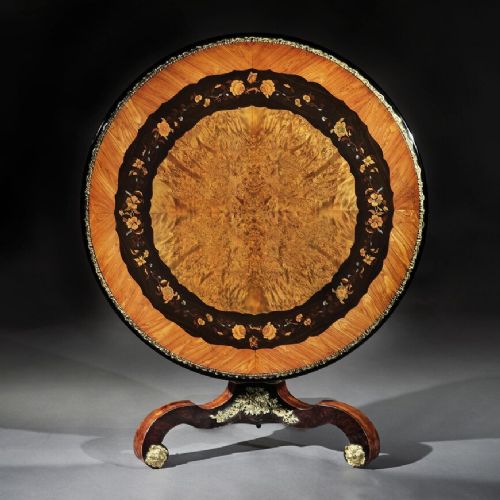
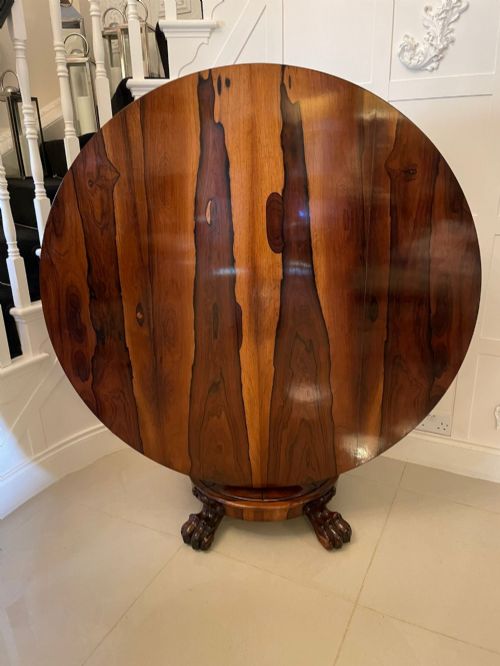
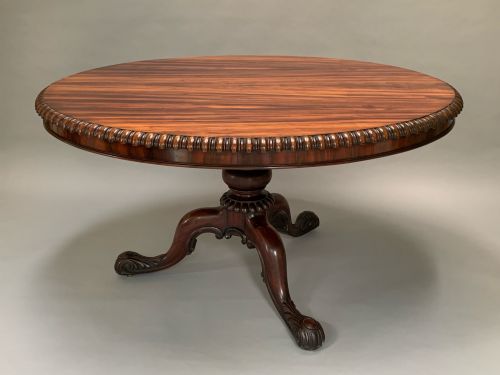
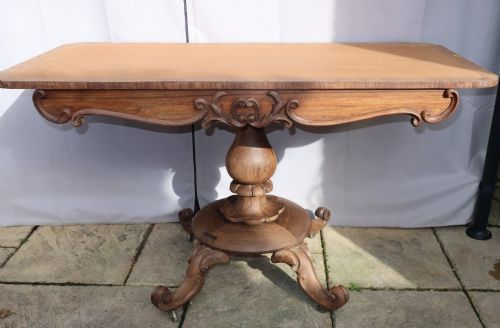
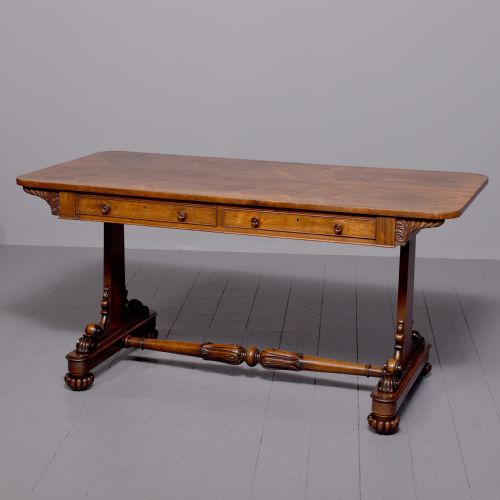
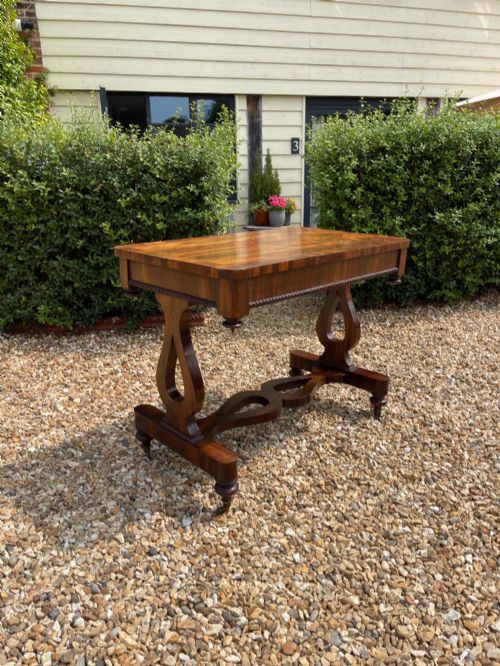
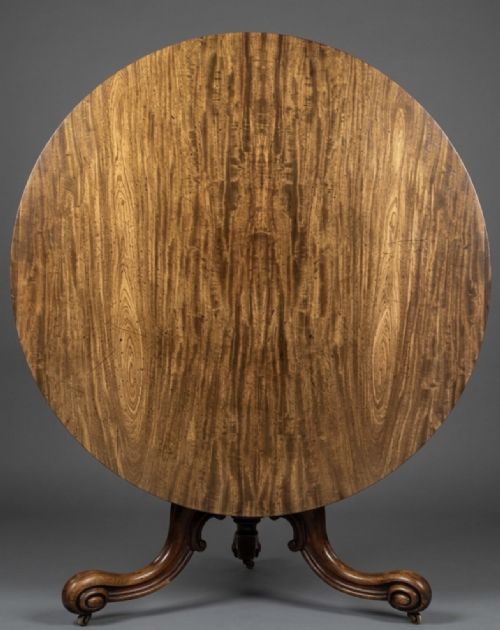
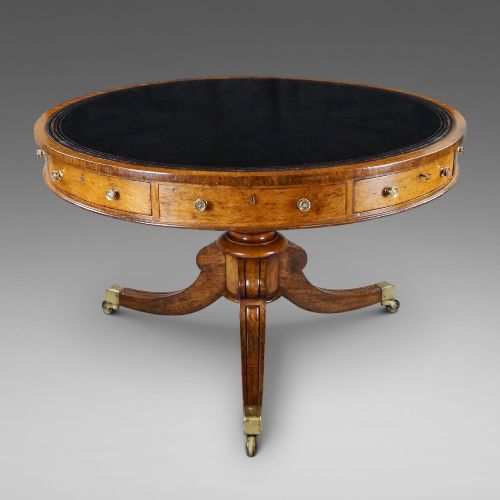
When you search for a william iv centre table, you encounter substantial freestanding pieces designed to sit in the middle of a room rather than against a wall. These objects span periods from the nineteenth century, Georgian eras, and Regency influences, manifesting as circular breakfast tables, library tables, and loo tables.
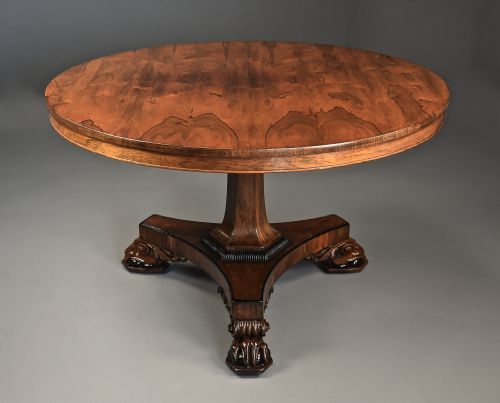
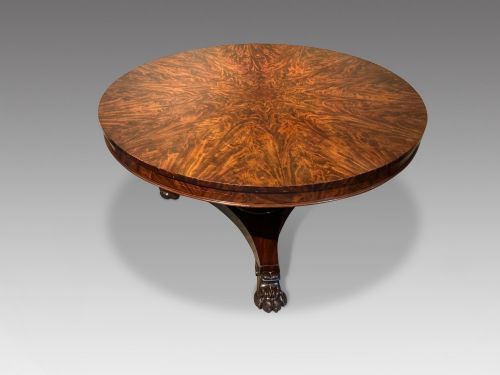
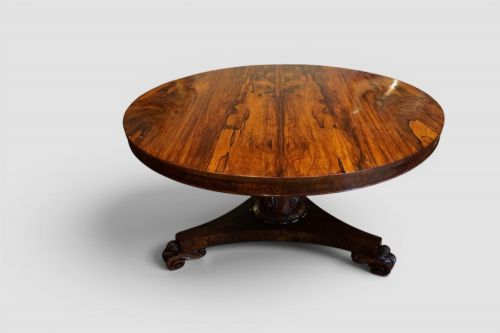
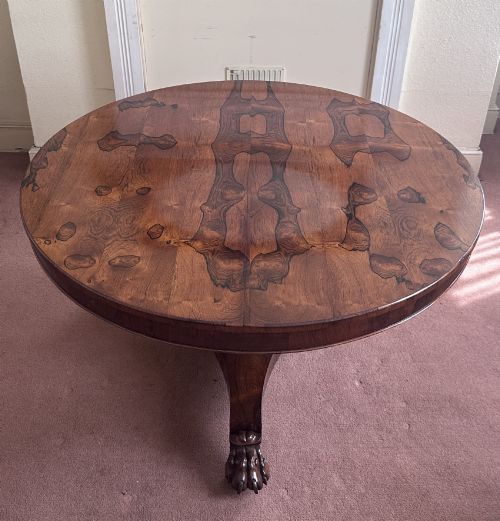
The circular rosewood and mahogany formats dominate the selection, often resting on heavy central pedestals with triform or platform bases. Makers utilised figured veneers and tilting mechanisms to combine decorative impact with practical utility in domestic interiors.
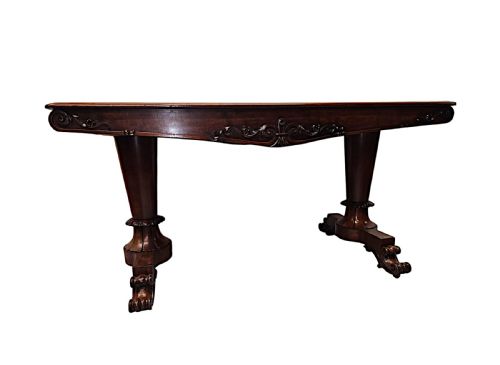
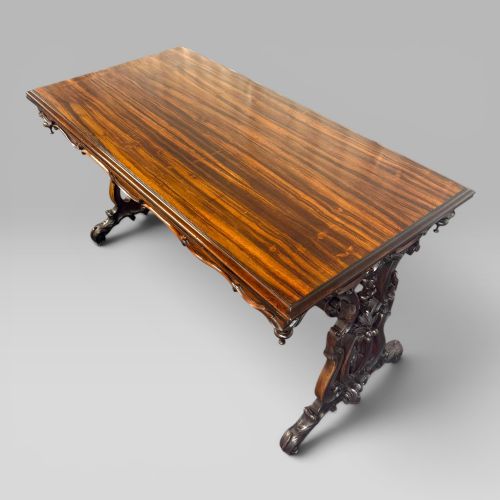
Makers also produced oval and rectangular library variants in rarer timbers such as goncalo alves, pollard oak, and zebrawood. Each form reflects the heavy, grounded proportions typical of the era, merging classical revival details with robust nineteenth-century engineering.
Materials and construction
Cabinetmakers built these tables using dense primary timbers like mahogany and rosewood, frequently applying flame veneer or segmented layouts to display striking grain patterns. Exotic hardwoods such as goncalo alves and pollard oak appear alongside standard cabinet timbers, adding varied tone and texture.
Support structures rely on robust central wooden pillars, frequently octagonal or circular, anchored to platform bases with carved scroll feet or brass castors. Tilting mechanisms on breakfast tables allowed tops to fold vertically when not in use, demanding precise joinery and durable iron hinges.
Tilt-top mechanisms allowed homeowners to tuck massive dining tables against the wall like oversized wooden shields when the parlor needed floor space for dancing.
Distinctions in craftsmanship
Quality separates simple production pieces from high-workshop examples through the selection of timber and the depth of carving on the pedestal. Master makers used heavily figured rosewood and meticulously matched flame mahogany veneers, whereas lesser examples utilised plain stocks with minimal figure.
Structural integrity and the crispness of carved details dictate the standing of a piece. Well-executed library and centre tables exhibit balanced proportions, tight joints in the central pillar, and refined brass or timber mounts that endure heavy daily use.
Edward Holmes Baldock·Gillows·Williams and Gibton·Mein of Kelso
The William IV Center Table Glossary
- Tilt top
- A hinged tabletop mechanism that allows the surface to pivot upright for storage or space-saving against a wall. This construction demands strong iron latches and stable pillar fittings.
- Triform base
- A three-sided platform foundation supporting the central column of the table. It frequently terminates in scroll feet or concealed brass castors for mobility.
- Loo table
- A large round table originally intended for evening card games such as commerce or loo. These pieces double as generous breakfast or centre tables due to their expansive diameters.
- Goncalo alves
- A dense exotic hardwood prized for its striking mottled and striped grain patterns. Cabinetmakers utilised this timber on high-status library and centre tables.
- Drum table
- A circular library table containing a deep frieze fitted with drawers around the circumference. These models typically rotate on a central pedestal.
William IV Center Table: Frequently Asked Questions
What is a william iv centre table?
A william iv centre table is a heavy freestanding nineteenth-century table designed to stand centrally in a room. These pieces feature robust timber construction, prominent central pillars, and circular or rectangular tops.
Craftsmen built them from dense woods like rosewood and mahogany, often incorporating tilt-top mechanisms or spacious library drawers for domestic utility.
How were these tables used?
Owners placed these tables in the middle of libraries, drawing rooms, and halls as multi-purpose surfaces for reading, dining, and card games. Their freestanding nature allowed access from all sides.
Many examples functioned as breakfast tables in the morning and transformed into card or display tables during evening gatherings.
How do you distinguish periods?
Distinguishing between Georgian, Regency, and William IV styles involves examining the weight of the proportions and the boldness of the carving. William IV pieces generally display heavier, more monumental pedestals and subdued classical motifs.
Earlier Regency items tend toward leaner lines and delicate brass inlays, whereas mid-nineteenth-century examples embrace heavier architectural forms and darker exotic veneers.
How do you live with them?
Living with a nineteenth-century centre table requires placing it where its central pedestal and proportions can be appreciated from every angle. Regular polishing maintains the natural lustre of rosewood and mahogany surfaces.
Positioning the table away from direct heat sources prevents the timber veneers from drying out and lifting over time.