
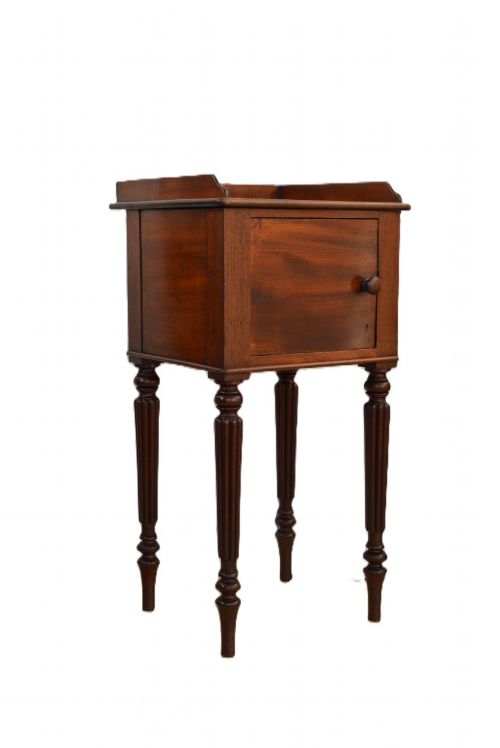


William IV Bedside Cabinet
A william iv bedside cabinet brings solid architectural timber and practical nineteenth-century storage right beside the bed.
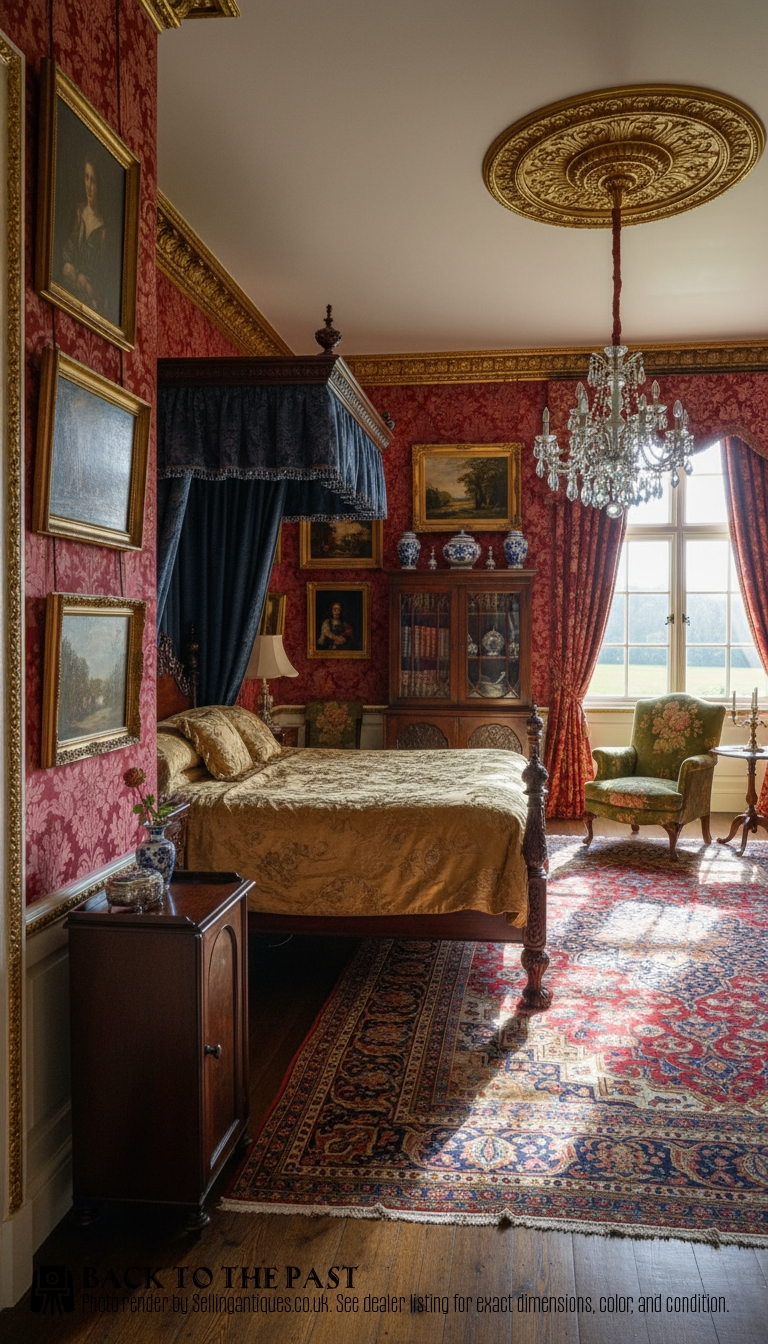
William IV Bedside Cabinet
A william iv bedside cabinet encompasses pedestal cupboards, pot cupboards, cylinder stands, and side cabinets built during the nineteenth century. These pieces usually take the form of single cupboards or matched pairs designed to sit neatly beside a bed.
The prevailing style on this page is William IV, alongside Regency, Grand Regency, and Victorian influences. Makers and cabinetmakers of the period drew upon classical architectural forms to create these robust bedside pieces.
Most examples hail from the nineteenth century, including specific dates around eighteen-thirty and eighteen-forty. Scottish workshops also contributed distinct figured elm variations to the mix alongside standard English production.
How they were made
Makers utilised solid mahogany, flame mahogany veneer, and rosewood, often supported by secondary pine carcass timbers. Figured elm also appears in regional Scottish pieces from the period.
Surfaces frequently showcase figured wood grains paired with brass details and turned or reeded legs. Faux marble finishes appear on select cylinder cupboard stands.
What varies in quality
The choice of timber creates a distinct separation in quality across these cabinets. Plain mahogany surfaces sit at one end, while rich flame mahogany veneers and figured elm demand closer attention for their grain depth and visual movement.
Construction details and matching pairs dictate upper tiers of value and desirability. Single cupboards exist alongside true pairs and architectural forms shaped in the manner of notable workshops like Gillows.
Gillows·Gillows of Lancaster
The William IV Bedside Cabinet Glossary
- Flame mahogany
- A veneer cut from the fork of the mahogany tree to create a distinctive flame-like pattern. This decorative surface was favoured by nineteenth-century cabinetmakers.
- Pedestal cabinet
- A tall, single-door cupboard resting on a plinth or feet. It provides enclosed bedside storage.
- Pot cupboard
- A traditional nineteenth-century term for a small bedside cabinet originally built to house a chamber pot. These pieces usually feature a single door enclosing a shelf.
- Reeded legs
- Cylindrical supports carved with parallel convex mouldings running vertically. This decorative turning style is common on nineteenth-century furniture.
- Figured elm
- Timber taken from the elm tree featuring swirling patterns and knot clusters. Scottish makers utilised this wood for regional cabinetwork.
William IV Bedside Cabinet: Frequently Asked Questions
What is a william iv bedside cabinet used for?
These cabinets serve as bedside storage units, offering enclosed space behind a single door for nighttime essentials. Historically, they functioned as pot cupboards to conceal chamber pots.
Today, they operate effectively as functional bedside tables or side cabinets in period and modern bedrooms alike.
How do I spot a william iv bedside cabinet?
Look for heavy classical architectural forms, solid mahogany or flame mahogany veneers, and robust nineteenth-century proportions. Details like reeded legs and brass fittings are common indicators.
Pieces often date around eighteen-thirty to eighteen-forty, aligning with the William IV and late Regency eras.
Are pairs difficult to find?
Matched pairs of pedestal cabinets or nightstands appear less frequently than single cupboards. Many surviving examples are assembled matches rather than original pairs.
Checking timber grain and cabinet dimensions helps determine if two pieces started life together.
How do I care for mahogany veneer?
Keep nineteenth-century mahogany and flame mahogany surfaces away from direct sunlight and excessive heat sources to prevent the veneer from drying out or lifting. Regular dusting with a soft, dry cloth preserves the polished finish.
Avoid commercial silicone sprays and excess moisture when cleaning.