

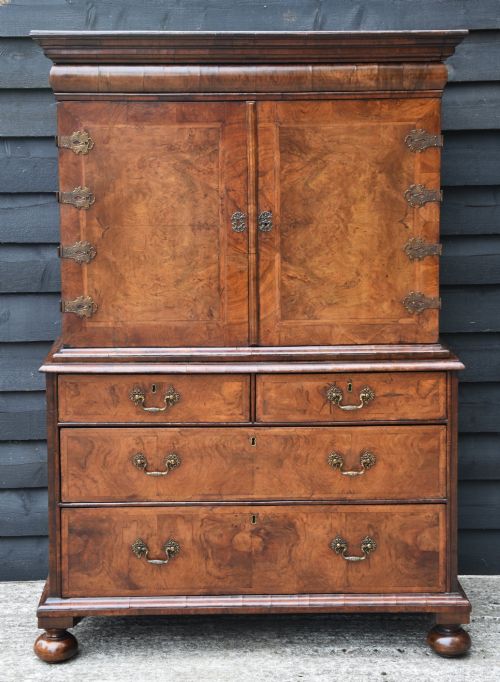
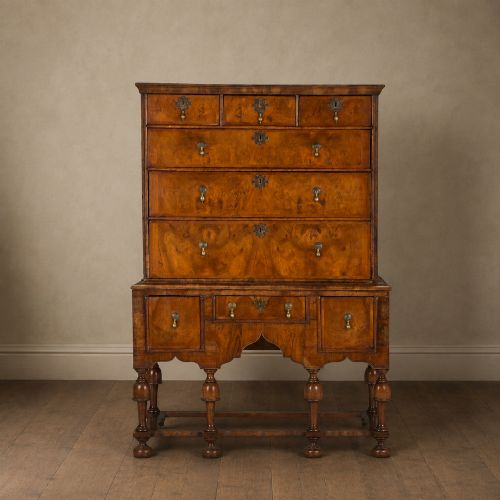


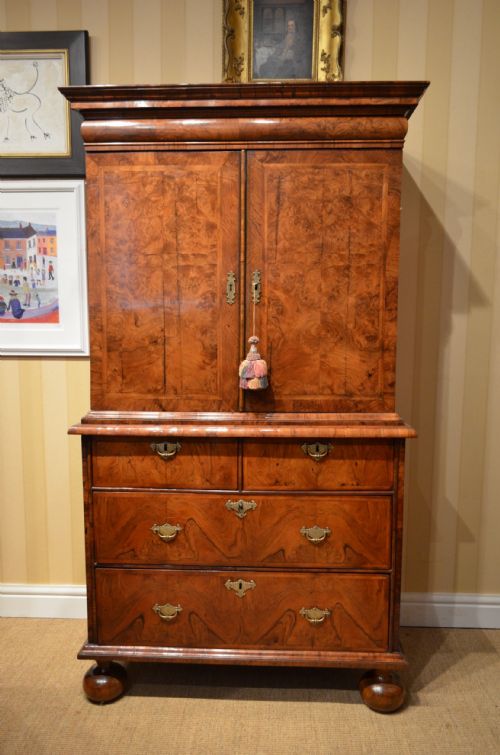


William and Mary Highboy
A william and mary highboy is a sophisticated tall storage piece built to anchor a formal interior with rich walnut and clever joinery.
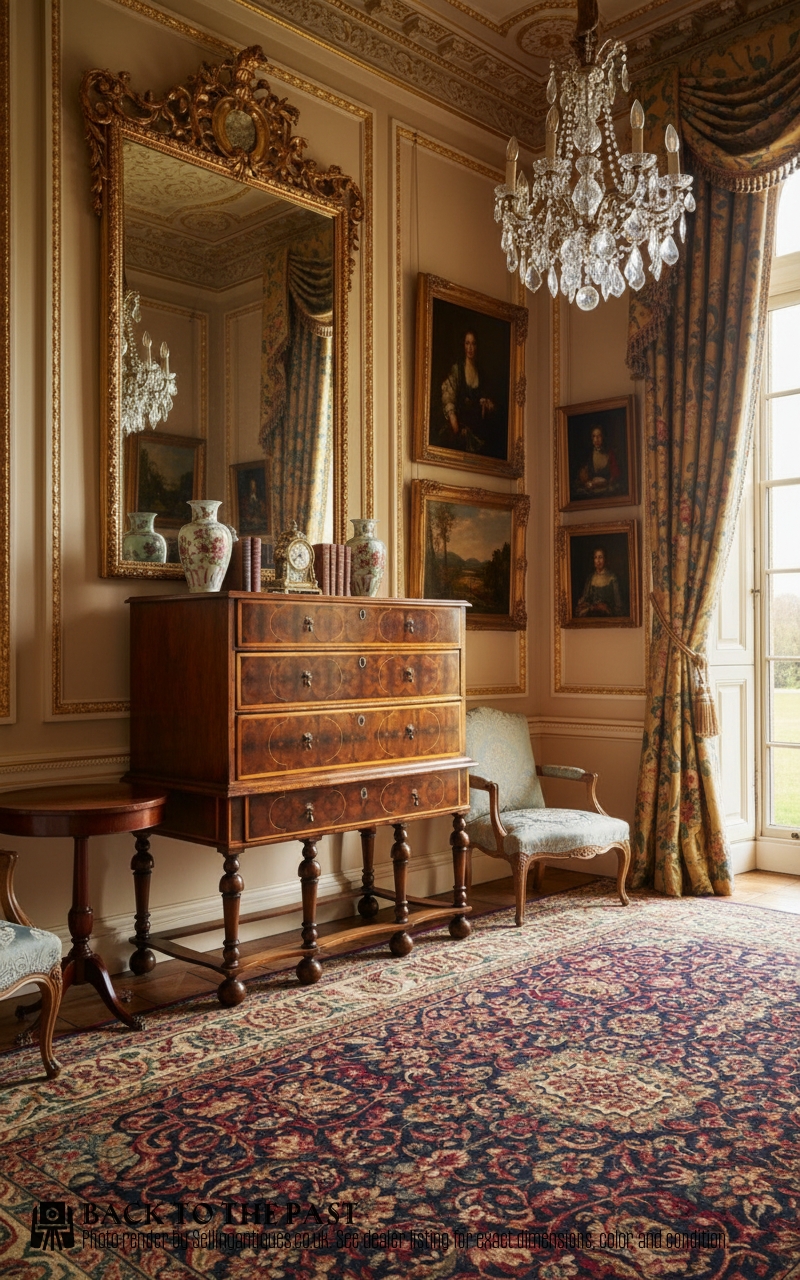
William and Mary Highboy
When you search for a william and mary highboy, you are looking at tall case furniture designed in two distinct sections, combining a lower stand with an upper chest or cabinet. These examples span the seventeenth century and the eighteenth century, including pieces from the seventeen hundreds and seventeen fifty.
The forms listed here appear primarily as a chest on stand or a cabinet on chest, with stylistic influences crossing into Queen Anne and seventeenth century Jacobean periods. Walnut and oak dominate the construction, accompanied by burr walnut and burr amboyna veneer.
Originating in English workshops, these pieces showcase the monumental proportions typical of the era, standing tall on integrated or separate stands. Buyers meet variations that range from plain oak storage units to highly decorated japanned surfaces.
Materials and Construction Techniques
Cabinetmakers built the structural carcases using solid oak or pine, applying expensive timbers such as walnut, burr walnut, and burr amboyna as veneers across the primary visible surfaces. Oyster veneering techniques create complex circular grain patterns across drawer fronts and panels.
Decorative finishes include intricate lacquerwork and gold leaf applied for Chinoiserie-Japanned effects, while brass handles and escutcheons secure the drawer assemblies. Joinery methods of the period rely on sturdy framing to support the heavy upper cabinets above the stands.
Listings combine walnut, oak, and pine with decorative surfaces of burr walnut, burr amboyna veneer, lacquer, and gold leaf.
Assessing Quality and Execution
The choice of surface veneer determines much of the visual distinction, moving from straightforward plain oak to highly figured burr walnut and exotic burr amboyna. Elaborate japanned finishes with gold leaf represent a higher tier of decorative investment compared to unadorned wood.
Proportion and the retention of original brass hardware elevate individual examples, as does the crispness of the oyster veneer patterns. The integration between the upper chest and its supporting stand dictates the structural harmony of the complete form.
The William and Mary Highboy Glossary
- Chest on stand
- A two-part storage furniture item consisting of a lower table-like stand supporting an upper chest of drawers.
- Cabinet on chest
- A tall storage form where an upper cabinet encloses smaller drawers or compartments above a lower chest base.
- Oyster veneer
- Slices cut transversely from small branches to produce circular or oval wood patterns resembling oyster shells.
- Japanned
- European decoration imitating Asian lacquerwork, typically using dark varnishes and raised motifs in gold leaf.
- Burr walnut
- A prized wood growth yielding complex, swirling grain patterns used for decorative veneering on high-status furniture.
William and Mary Highboy: Frequently Asked Questions
What is a highboy?
A highboy is a tall chest of drawers raised on a separate or integrated low stand, providing significant vertical storage capacity without a large floor footprint.
These pieces combine an upper section designed for textiles or valuables with a sturdy base frame.
How old are these pieces?
The pieces listed date from the late seventeenth century through the early eighteenth century, specifically spanning the seventeen hundreds to seventeen fifty.
Craftsmen produced these designs during the reigns of William and Mary and into the subsequent Queen Anne period.
What woods were used?
Main construction relied on sturdy timbers like oak and pine for internal carcases and structural frames.
Fine decorative surfaces utilised walnut, burr walnut, and exotic burr amboyna veneers to create striking visual patterns.
How do I style one?
Place a tall chest in a room with sufficient ceiling height to let the vertical proportions command the space properly.
Keep surrounding furniture simple to allow the figured veneers and brass hardware to remain the focal point.
Are they all English?
The traditional origin for these particular forms and stylistic groups is English cabinetmaking from the seventeenth and eighteenth centuries.
Specific regional workshops contributed distinctive joinery methods and decorative finishes like Chinoiserie lacquer.