






Period English Walnut Chest
A period english walnut chest brings rich grain and deep colour to a room, spanning the seventeenth and eighteenth centuries.
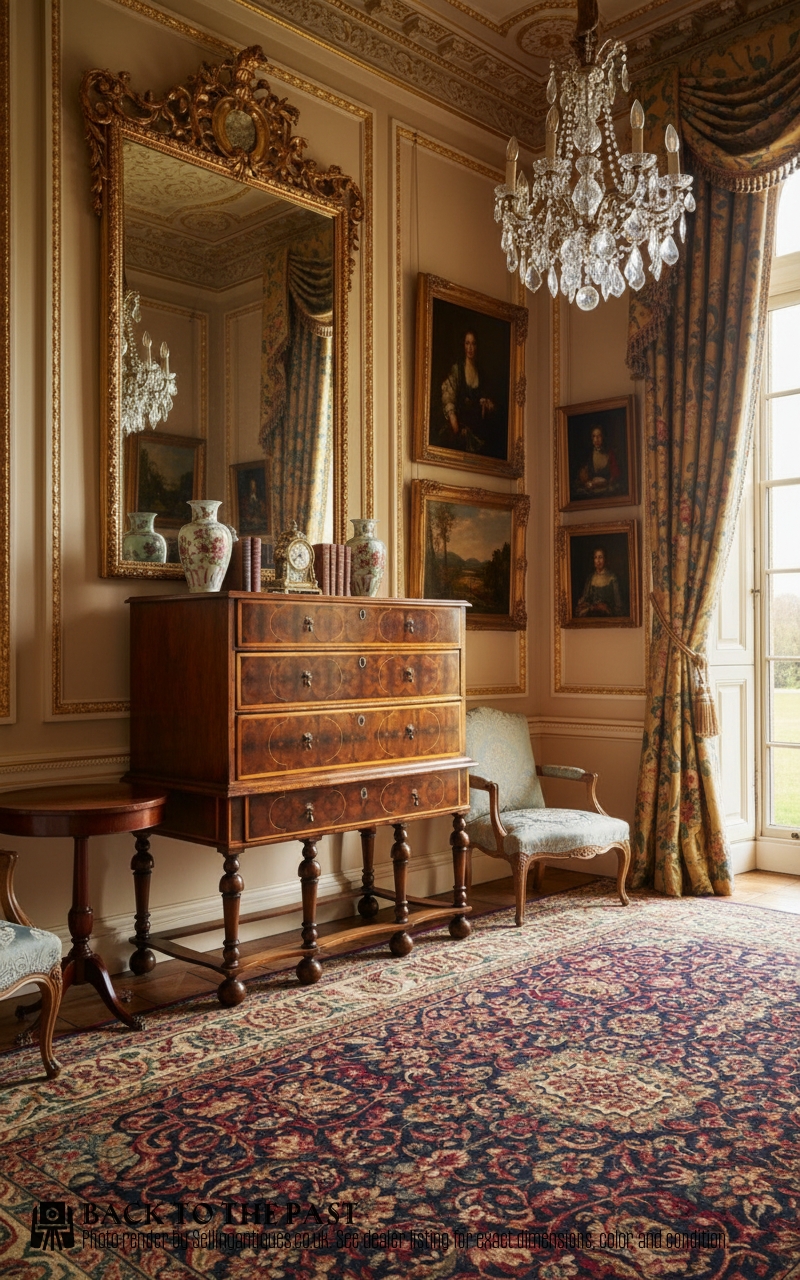
Period English Walnut Chest
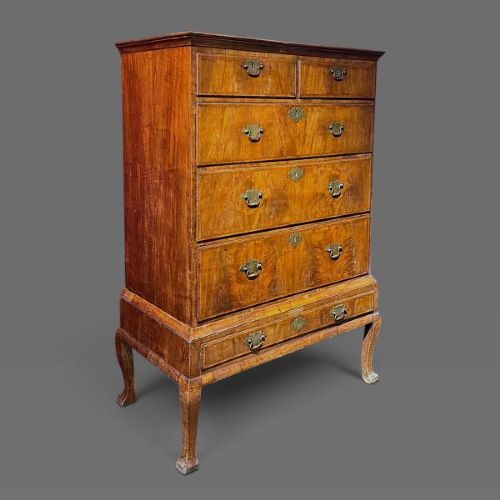
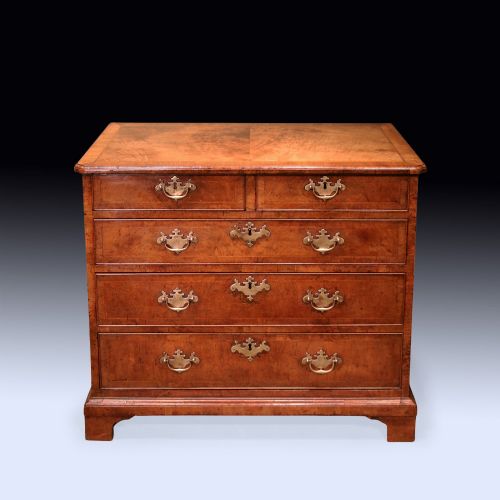
A period english walnut chest encompasses several distinct domestic forms from the seventeenth and eighteenth centuries, including chests of drawers, chests on stands, and cabinets. These pieces demonstrate the evolution of cabinet-making from the William and Mary and Queen Anne eras through to the Georgian period.
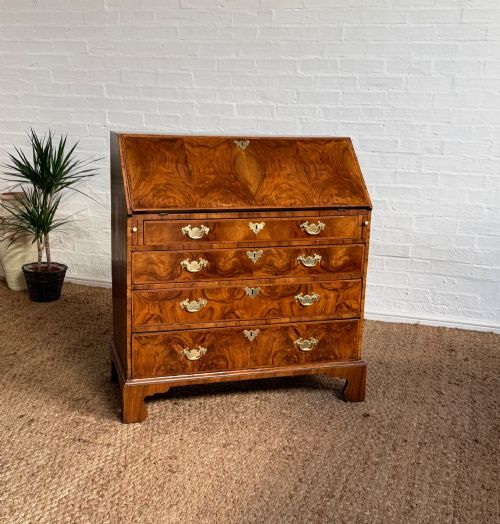
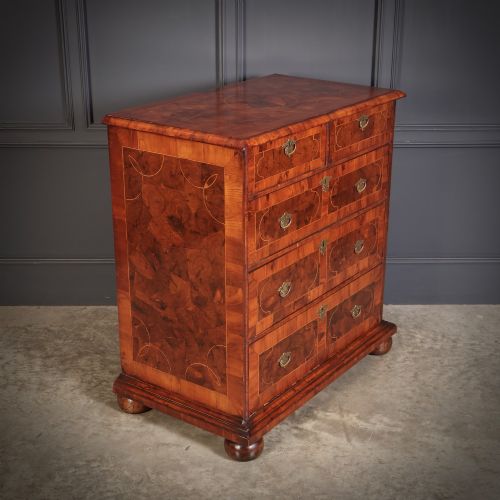
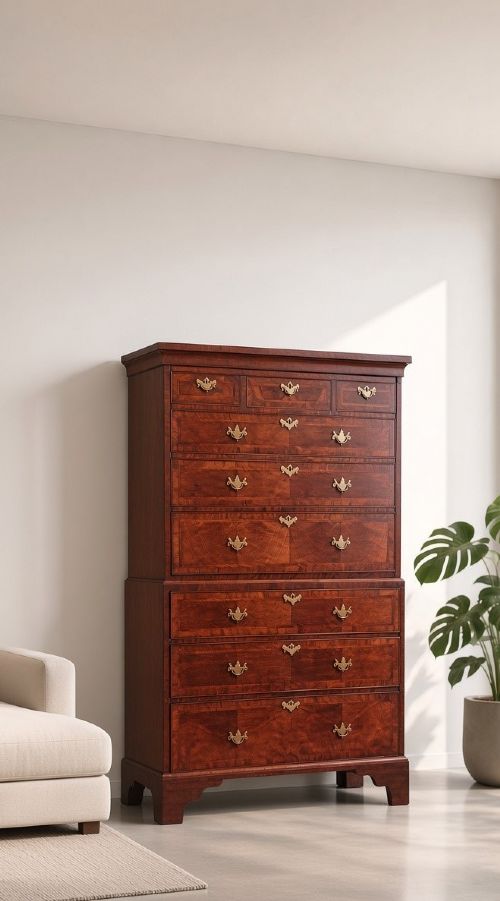
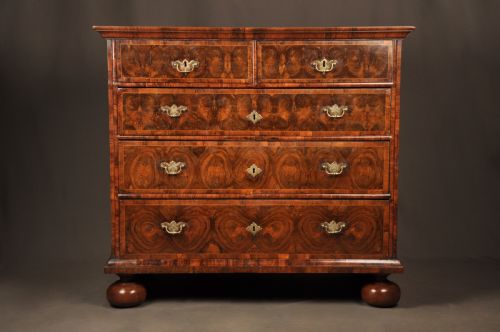
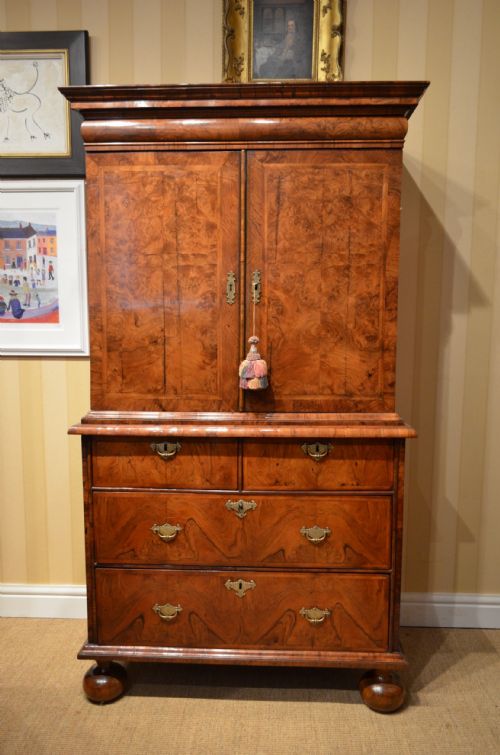
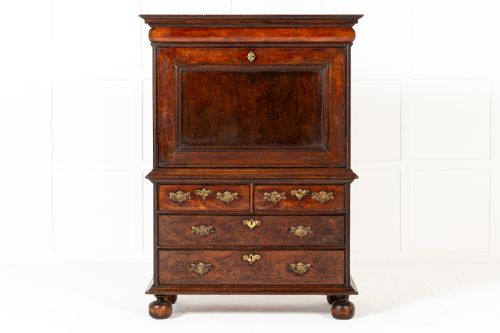
The version most commonly encountered in these listings is the chest of drawers, often featuring figured walnut veneers or oyster veneers arranged in geometric patterns. Alongside these standard chests, buyers will find more complex tall forms such as the chest on chest and cabinet on chest, plus sloping bureaus fitted for writing.
Materials and Construction
Cabinet-makers of the period utilised walnut, burr walnut, and olivewood, frequently sawing the timber into thin circular veneers to create oyster patterns. These decorative veneers were laid onto secondary woods such as oak and embellished with feather-banded borders or intricate marquetry.
Hardware played a functional and decorative role, with brass drop handles and escutcheons fastened to the drawer fronts. Interiors often incorporated boxwood stringing and leather writing surfaces, supported by structural elements of solid oak.
Early cabinet-makers sliced tree branches across the grain just like carrots to make those mesmerizing oyster patterns.
Evaluating Quality
Quality rests primarily in the visual impact of the timber and the precision of the veneer work. Finer examples display carefully matched burr walnut or symmetrical oyster veneers that wrap harmoniously around the carcass and drawer fronts, while simpler pieces rely on plainer grain.
The integrity of the original surface patination and the survival of period brass hardware also distinguish superior examples. Construction details, such as the neatness of feather-banding and the execution of marquetry inlay, separate standard workshops from the finest hands of the era.
The Period English Walnut Chest Glossary
- Oyster veneering
- A technique of cutting small branches or roots transversely to produce circular or oval cross-sections resembling oyster shells. These pieces were laid closely together to create intricate decorative patterns across the surface of the furniture.
- Feather-banding
- A form of inlay consisting of two strips of veneer cut diagonally and laid side by side to form a continuous herringbone pattern. It typically frames the drawer fronts or top surfaces of walnut furniture.
- Chest on chest
- A tall storage unit comprising two separate sections, with a narrower chest stacked directly upon a wider base chest. This form maximises vertical storage capacity while maintaining balanced proportions.
- Marquetry
- The art of creating decorative pictures or patterns by fitting together small pieces of various woods and veneers. It appeared on sophisticated pieces from the William and Mary period.
- Escritoire
- A writing cabinet featuring a fall-front or sloping lid that opens to reveal a fitted interior of small drawers and pigeonholes. These portable writing houses sat upon stands or chests.
Period English Walnut Chest: Frequently Asked Questions
How do I date a walnut chest?
Dating relies on stylistic clues like leg design, drawer configuration, and veneer types. William and Mary pieces often feature stands and geometric oyster patterns, whereas Georgian examples show cleaner drawer lines.
Examining the secondary woods inside, such as oak drawer linings, also helps confirm the period. Hardware styles and inlay work provide further evidence for the exact decade of manufacture.
Where should I place a walnut chest?
A walnut chest suits living rooms, hallways, or bedrooms where its warm tones can be appreciated. Keep the piece away from direct sunlight and strong heat sources to protect the delicate veneers.
Maintain a stable room humidity to prevent the wood from drying out or warping. Gentle placement allows the historical surface patination to endure without daily wear.
What is a chest on stand?
A chest on stand is a raised storage form consisting of a drawer chest supported by an open frame with legs. This elevated design lightens the visual weight of the furniture.
Such pieces date predominantly to the late seventeenth and early eighteenth centuries. The base structure often incorporates shaped stretchers uniting the legs beneath the main body.