


White Porcelain Lidded Urns
White porcelain lidded urns bring disciplined form and refined glaze to a room, offering both containment and sculptural presence.

White Porcelain Lidded Urns
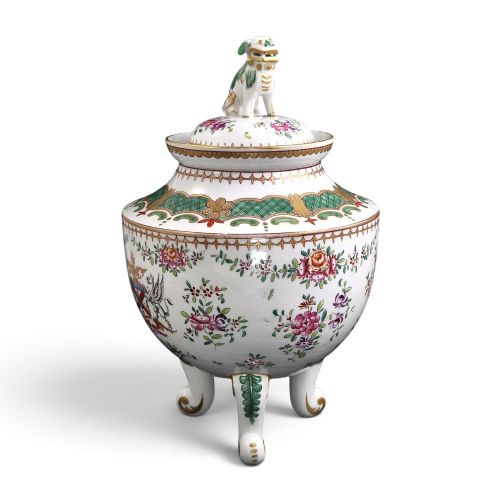
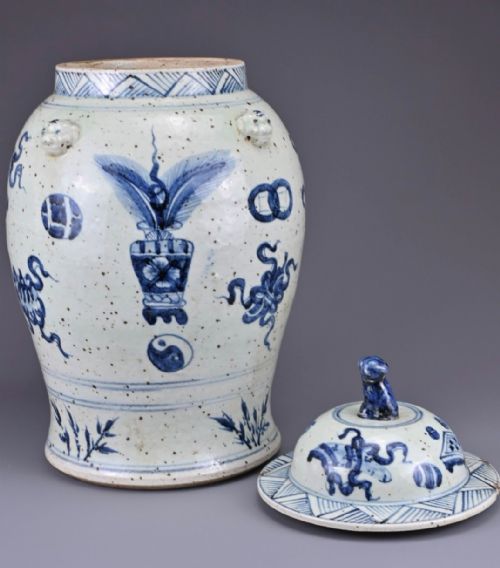
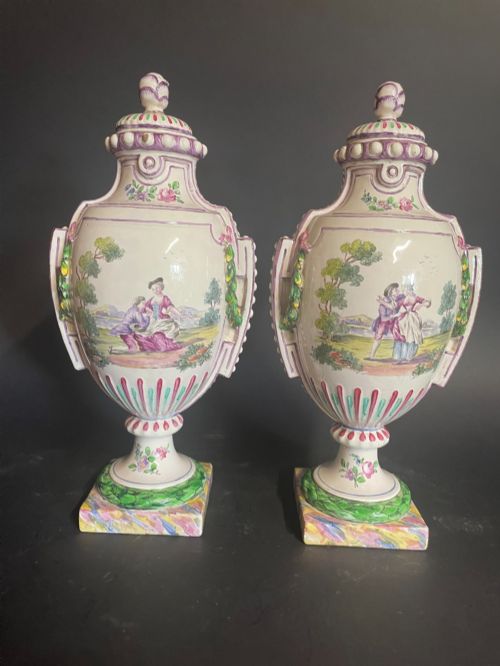
White porcelain lidded urns span eighteenth-century Georgian production through the nineteenth century into Edwardian and later twentieth-century examples, including Chinese Qing Dynasty and Japanese Meiji period wares alongside European factories. A buyer encounters pieces ranging from blue and white ginger jars to elaborate French and German rococo revival designs with fitted covers.
The selection includes faience, ironstone, and hard-paste porcelain forms, often categorised as vases and jars, decorative urns, or potpourri containers. English factories such as Derby and Spode sit alongside continental makers and Asian export traditions, providing diverse interpretations of the covered vessel.
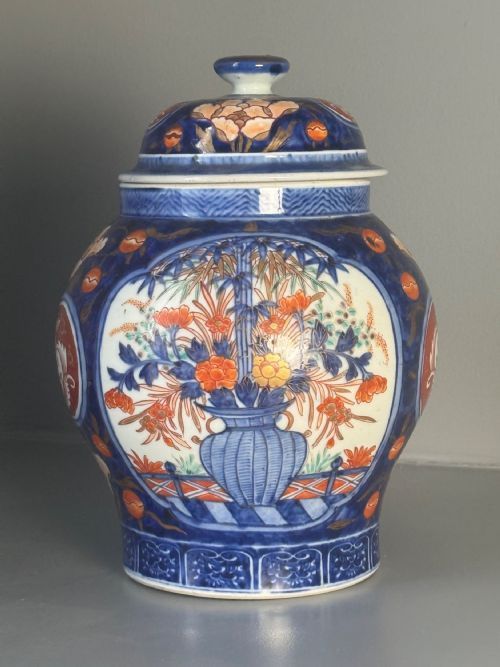
Most listings focus on pairs or individual lidded vessels showing influence from Chinoiserie, Imari palettes, and traditional armorial decoration. These objects function as tabletop focal points or mantel ornaments, retaining their original matching covers.
Materials and technique
Makers utilised hard-paste porcelain, ceramic, and tin-glazed earthenware bodies, applying white glazes that created a smooth ground for subsequent painting. Cobalt blue underglaze work appeared alongside polychrome enamel decoration and gold leaf accents.
Potters formed these urns and jars on wheels or within moulds, adding applied handles, frilled details, and pierced covers for potpourri use. Firing took place in kilns at high temperatures to vitrify the ceramic body and fuse the glaze surface.
Several pieces contain cleverly pierced lids designed specifically to let sweet scents escape from hidden mixtures of dried rose petals and spices.
Quality and execution
Quality rests in the crispness of the moulding and the control of the glaze, distinguishing finely potted walls from heavier, coarser ceramic bodies. Painted details show variation in brushwork precision, from fluid hand-painted scenes to stiffer transfer-printed application.
The relationship between the vessel and its cover indicates overall standard, where a well-fitted lid completes the silhouette intended by the maker. The complexity of the painted palette, whether subtle blue and white or rich enamel and gold leaf, marks the ambition of the workshop.
Samson of Paris·Royal Crown Derby·KPM·Sitzendorf·Herend
The White Porcelain Lidded Urns Glossary
- Hard-paste porcelain
- A dense, vitrified ceramic material fired at high temperatures using kaolin and petuntse. This composition produces a ringing tone when struck and resists scratching.
- Tin-glazed earthenware
- Pottery coated with a white opaque glaze containing tin oxide, providing a smooth surface for painted decoration. Examples include Delft and faience productions.
- Potpourri
- A vessel featuring a pierced or openwork lid designed to diffuse scent from dried plant materials placed inside. These pieces often incorporate elaborate moulded decoration.
- Imari
- A style of Japanese export porcelain characterised by a palette of underglaze blue, iron red, and gold. European factories frequently copied these distinctive patterns.
- Chinoiserie
- European artistic interpretation of Chinese and East Asian decorative motifs. This style appears widely on eighteenth and nineteenth-century porcelain and earthenware.
White Porcelain Lidded Urns: Frequently Asked Questions
What were lidded urns used for?
These covered vessels served as decorative garniture sets, storage jars for dry goods, or fragrant potpourri containers holding dried botanical mixtures.
Many remained purely ornamental, occupying prominent positions on mantelpieces or pedestals within period interiors.
How do I distinguish eighteenth and nineteenth-century pieces?
Eighteenth-century examples often display softer paste bodies, hand-mixed pigments, and potting irregularities typical of early European and Asian workshops.
Nineteenth-century pieces frequently show more standardised moulding, brighter chemical enamels, and factory marks associated with Victorian production.
Are lids usually original to the urns?
Most surviving examples retain their matching original covers, fired and glazed alongside the main body by the same workshop.
Matching glaze tones and consistent wear patterns help confirm that the vessel and lid belong together.
How do I care for antique porcelain urns?
Dust these objects gently with a dry, soft brush to protect delicate enamel painted surfaces and gold leaf highlights.
Avoid immersing pieces with old repairs or unglazed bases in water, keeping them away from direct sunlight and temperature extremes.