


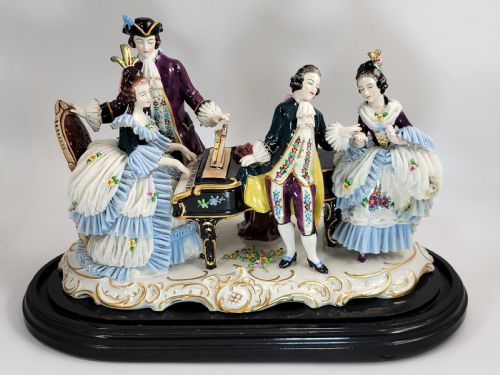


White Porcelain Figure Group
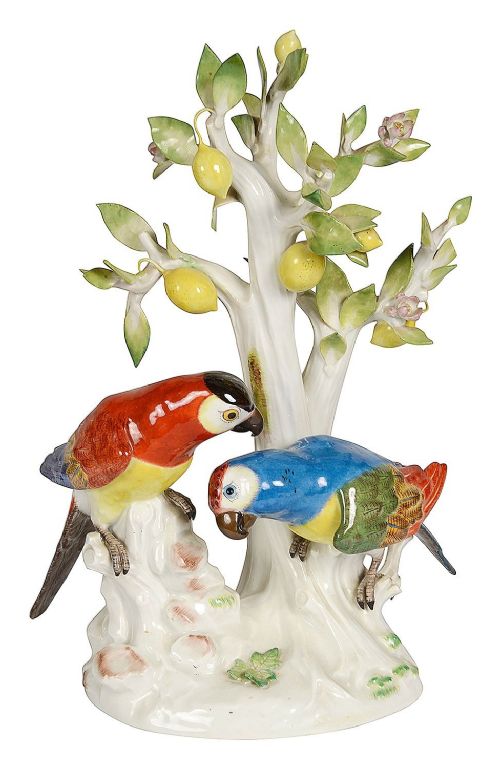
A white porcelain figure group brings together modelled human or animal figures in white ceramic, often touched with gilt or soft enamel colours.
White Porcelain Figure Group
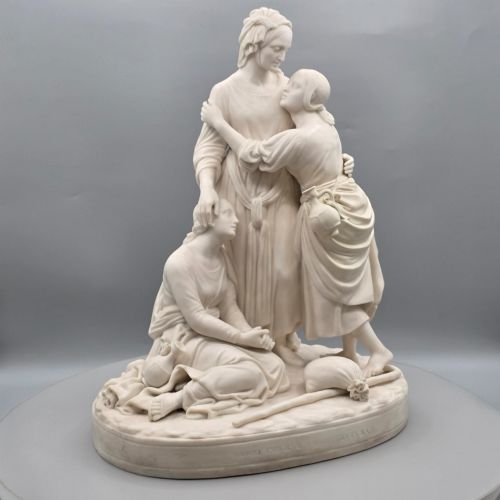
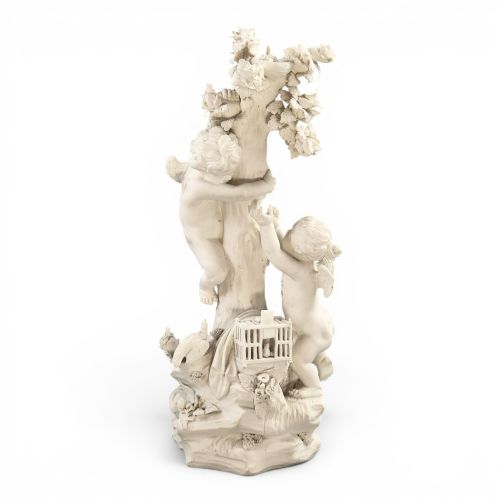
A white porcelain figure group captures multi-figure compositions in hard-paste porcelain, biscuit porcelain, or parian ware. These pieces range from classical mythological scenes and allegorical figures to domestic animals and romantic pairs, appearing across the eighteenth and nineteenth centuries.
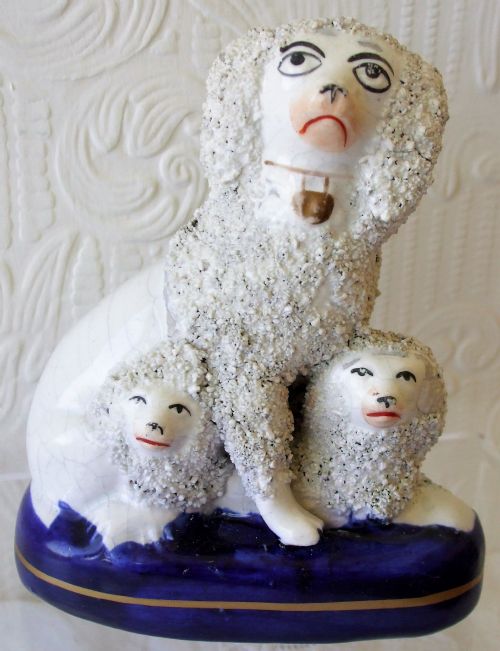
The English and continental pieces on this page span several decades of ceramic production, encompassing Derby biscuit figures, Meissen allegorical groups, and Victorian Staffordshire pottery pieces. Buyers frequently encounter nineteenth-century parian sculptures alongside eighteenth-century rococo groups.
Makers across Germany, France, and England shaped these decorative figures, producing spill vases, flatbacks, and sculptural table centrepieces. Each white porcelain figure group reflects the prevailing sculptural taste of its period, from Georgian neoclassical arrangements to Victorian sentimental subjects.
How they were made
Potters formed these groups using slip casting or pressing clay into intricate multi-part moulds, allowing for the creation of detailed limbs, drapery, and surrounding foliage. Artisans then fired the pieces at high temperatures, applying glaze or leaving the ceramic unglazed to achieve a matte bisque surface.
Biscuits and parian ware rely on the unglazed body to display fine surface detail, whereas hard-paste porcelain and soft-paste pieces receive smooth glaze coatings. Painters occasionally added enamel colours and gold leaf highlights by hand before subsequent low-temperature refirings.
The listings span the eighteenth, nineteenth, and twentieth centuries, incorporating hard-paste porcelain, parian ware, earthenware, and biscuit porcelain forms.
What varies in quality
The complexity of the composition and the reputation of the manufactory influence the standard of the piece. Well-fired bodies from established continental and English factories display consistent surfaces and stable construction, whereas lesser works show distortion from the kiln or heavy, clumsy repairs.
Meissen·Minton·Derby·Carl Thieme Dresden·Ernst Bohne Soehne·Triebner Ens And Co·Vion et Baury
The White Porcelain Figure Group Glossary
- Biscuits
- Porcelain fired without a glaze to produce a matte, white surface resembling marble. This unglazed body permits exceptionally sharp modelling of sculptural details.
- Parian Ware
- A fine-grained white ceramic developed in the nineteenth century to imitate white marble. It contains a high proportion of feldspar, which vitrifies during firing to give a translucent finish.
- Hard-paste Porcelain
- A true porcelain composed of kaolin and petuntse fired at high temperatures. It yields a durable, vitrified body that resists scratching and absorbs little moisture.
- Flatback
- A figure moulded with a decorated front and a flat, unpainted reverse. Potters designed these ceramic pieces to stand against cottage mantelpieces.
- Spill Vase
- A hollow vertical tube incorporated into a figure group designed to hold wooden spills for lighting fires. These functional vessels combine domestic utility with sculptural modelling.
White Porcelain Figure Group: Frequently Asked Questions
What is a white porcelain figure group?
A white porcelain figure group is a modelled ceramic sculpture depicting two or more figures, animals, or allegorical subjects in porcelain, parian, or earthenware.
These decorative works were produced across European factories to ornament tables, cabinets, and mantelpieces.
How do I care for these pieces?
Clean unglazed biscuit and parian pieces gently with a soft dry brush to remove dust from recessed areas. Avoid water or liquid cleaners on porous unglazed surfaces.
Glazed porcelain figures tolerate light dusting with a damp cloth, provided you handle them with care to protect delicate fingers and protruding limbs.
How can I tell the period?
Dating relies on the paste type, factory marks, style of modelling, and subject matter. Eighteenth-century pieces often feature rococo scrollwork and soft-paste bodies.
Victorian and later nineteenth-century pieces frequently utilise parian ware or display Staffordshire earthenware characteristics with titled bases.
Where were these figures displayed?
Wealthy households placed large porcelain figure groups on dining tables as decorative centrepieces during formal meals. Smaller figures populated mantelpieces, sideboards, and enclosed display cabinets.
Staffordshire flatbacks and spill vases sat atop cottage mantelpieces where they remained visible to guests.