


Staffordshire Portrait Statue
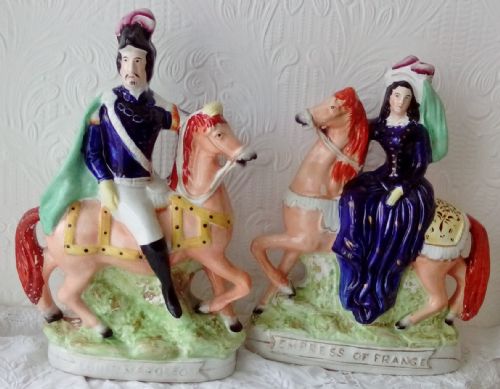
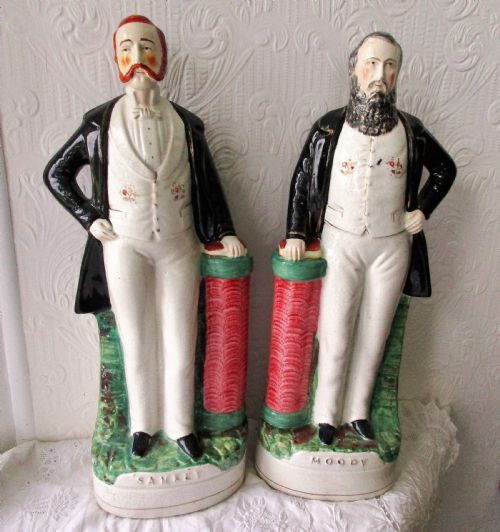
These Staffordshire portrait statue pieces capture notable historical figures, royals and performers in clay.
Staffordshire Portrait Statue
A staffordshire portrait statue depicts royals, military commanders, patriots and performers from the nineteenth century. These ceramic figures served as mantelpiece ornaments for Victorian households wishing to display their loyalties and interests.
The pieces on this page appear as single figures, pairs and figure groups. Subjects range from Queen Victoria and Napoleon III to theatrical performers and evangelists.
Makers shaped these pottery figures and ceramic busts using earthenware and pearlware. Most examples date from the Victorian period, though earlier Georgian pieces also occur.
Materials and construction
Potters formed these figures using earthenware, ceramic and pearlware bodies. The soft paste clay took mould impressions cleanly before firing in kilns.
Nineteenth-century mantelpieces doubled as newsstands, letting ordinary households proudly display their favourite opera singers and rebel generals.
Judging quality and character
Quality rests in the crispness of the mould and the precision of the enamel painting. Stronger pieces show clear facial likenesses and careful hand-brushing on the titles and costumes.
The depth of the glaze and the complexity of the subject matter distinguish finer examples. Pairs and multi-figure groups demand greater modelling skill than single standing figures.
The Staffordshire Portrait Statue Glossary
- Earthenware
- A porous pottery body fired at lower temperatures. It forms the base for nearly all nineteenth-century figures.
- Pearlware
- A refined earthenware with a bluish glaze that mimics porcelain. It appears on earlier pieces from the opening of the nineteenth century.
- Enamel glaze
- A vitreous coating fused to the pottery during firing. It provides a durable, glossy surface over the painted details.
- Lead glaze
- A traditional transparent coating containing lead oxide. It gives the pottery a smooth finish and deepens the colour of the clay beneath.
Staffordshire Portrait Statue: Frequently Asked Questions
What do staffordshire portrait statue pieces depict?
These figures represent famous individuals from the nineteenth century, including royalty, military leaders, religious figures and theatrical performers. They celebrated contemporary public figures whom households wanted to honour in their parlours.
Subjects span British royals like Queen Victoria alongside continental leaders, explorers and musicians.
How were staffordshire portrait statue items displayed?
Owners placed them on mantelpieces, sideboards and shelves in nineteenth-century homes. Pairs often sat at either end of a shelf for visual balance.
Their brightly painted surfaces caught the light from oil lamps and candles in the evening.
Are these figures made of porcelain?
Most pieces consist of earthenware or pearlware rather than true porcelain. Potters used these more affordable ceramic bodies for mass production.
A clear lead glaze typically covers the painted earthenware body.
How can I tell the period of a figure?
Dating relies on the subject portrayed, the style of the clothing and the type of ceramic body. Earlier pieces use pearlware and simpler bases, while Victorian examples show bolder enamel colours.
Historical events and royal reigns provide firm markers for when specific subjects were popular.