


White Earthenware Dogs
White earthenware dogs are traditional ceramic figures designed to adorn mantels, and a pair brings authentic nineteenth-century domestic character to a room.
White Earthenware Dogs
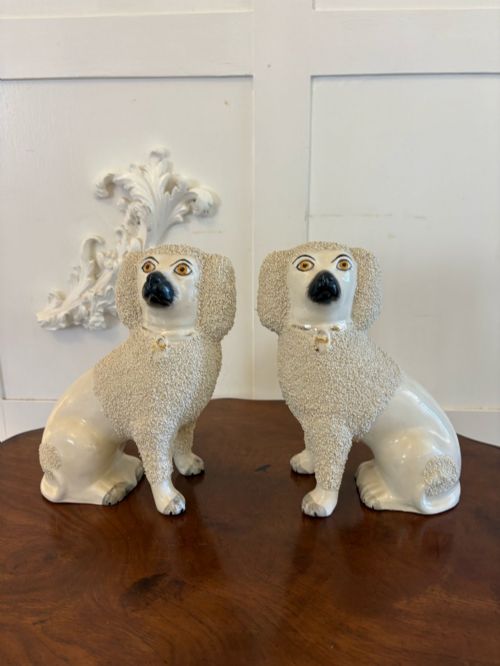
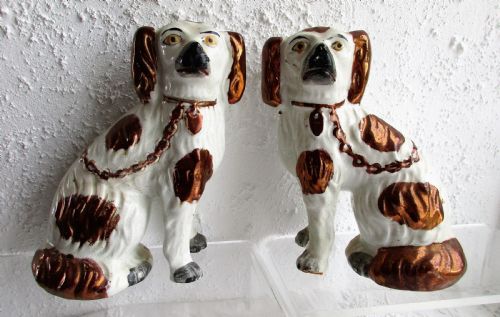
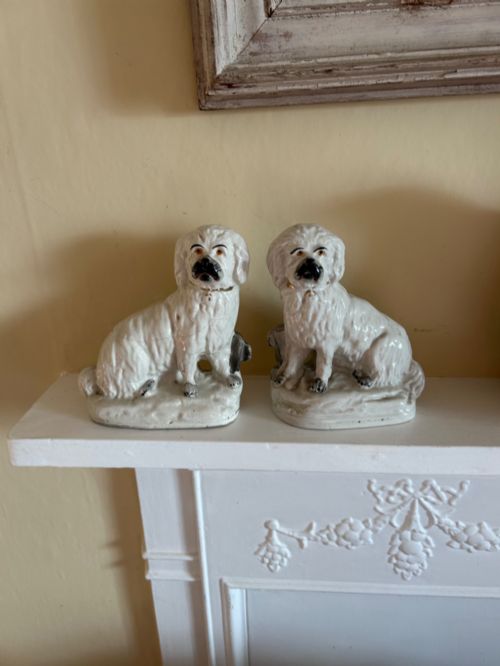
White earthenware dogs encompass a variety of nineteenth-century ceramic figures, including spaniels, poodles, greyhounds, and maltese terriers made in England. Most examples appear as pairs designed to sit facing one another on a mantelpiece.
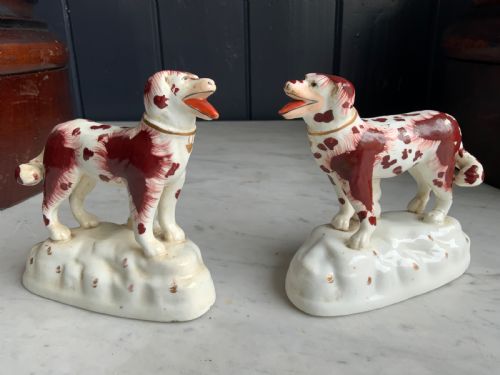
The selection ranges from standard seated spaniels with gilt highlights to miniature poodles, dalmatians, setters, and functional forms such as money boxes, quill holders, and clock groups. The nineteenth century yields the vast majority of these ornamental pottery figures.
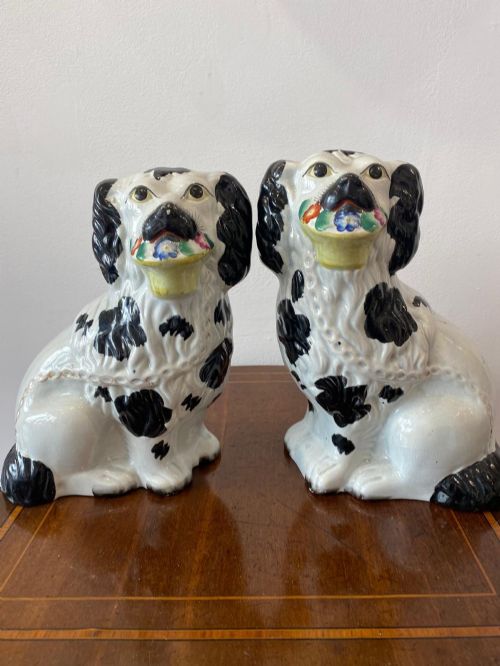
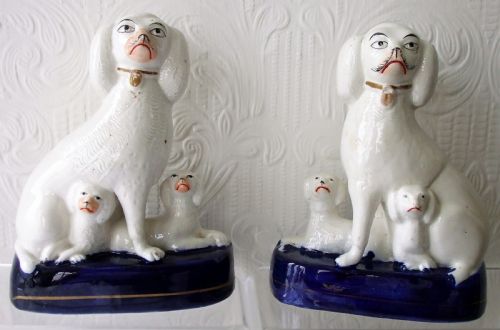
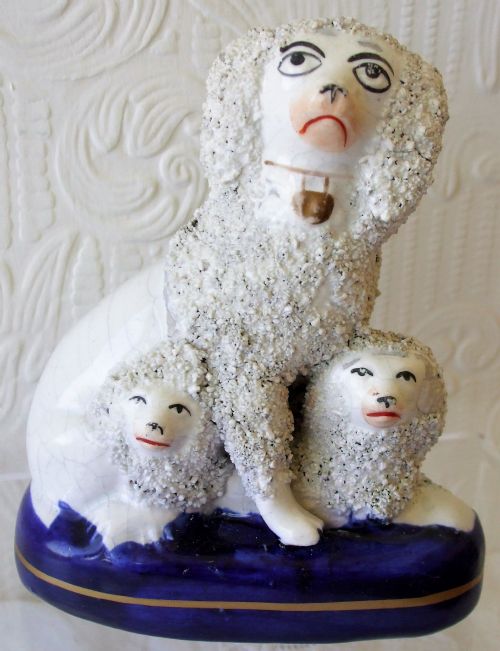
Makers often modelled these dogs with specific details like baskets, puppies, or textured coats representing wool or fur. Buyers encounter pieces from the Regency period through to nineteen hundred, with Victorian examples dominating the offerings.
Materials and construction
Colour decoration involved hand painting with enamel paint for markings such as black, red, and brown patches, alongside blue cushions and encrusted details. Kiln firing fixed these glazes and pigments to the ceramic body.
Some spaniels double as money boxes, ready to swallow nineteenth-century pennies while guarding the mantelpiece.
Assessing quality and character
Quality rests in the crispness of the modelling and the sensitivity of the hand-painted details on the face and coat. Superior examples display carefully rendered eyes and distinct fur markings rather than flat, hasty brushwork.
The presence of secondary elements like puppies, baskets, or specialised forms such as quill holders and clock groups elevates the interest of a piece. The crisp application of gilt and the preservation of the original glaze integrity further distinguish finer figures.
Thomas Parr·Enoch Wood factory
The White Earthenware Dogs Glossary
- Earthenware
- Porous pottery fired at a lower temperature than stoneware or porcelain. It serves as the primary ceramic body for these nineteenth-century figures.
- Lead glaze
- A glossy coating applied to pottery before firing to give a smooth, shiny finish. This glaze protects the underlying earthenware body.
- Enamel paint
- Coloured glass powder suspended in a medium and fired onto glazed ceramics. It provides the red, black, and gold details on the dogs.
- Quill holder
- A desk accessory or decorative figure incorporating a small receptacle for writing feathers. Several nineteenth-century dog figures serve this dual purpose.
White Earthenware Dogs: Frequently Asked Questions
What are white earthenware dogs?
White earthenware dogs are nineteenth-century ceramic figures modeled as spaniels, poodles, and other breeds. They were created primarily in England as decorative ornaments for the home.
Most often found in pairs, these figures reflect domestic Victorian tastes and depict popular household and sporting dogs.
How were they displayed?
These dogs were traditionally placed on mantelpieces in pairs, facing inward toward each other. They served as decorative focal points in nineteenth-century parlours and living rooms.
Certain variations also functioned as money boxes or quill holders on desks, combining ornament with utility.
Are all the dogs spaniels?
While spaniels represent a major portion of the offerings, makers also produced poodles, greyhounds, dalmatians, setters, and maltese terriers. Some feature wool or fur textures and additional elements like puppies.
Breed representation varied according to the popular domestic and sporting animals of the nineteenth century.