
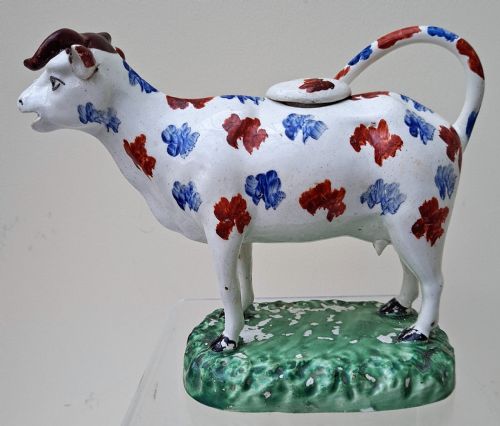


White Blue Earthenware Jug
A white blue earthenware jug brings tactile blue and white patterns into domestic spaces, offering both decorative presence and historic utility.
White Blue Earthenware Jug
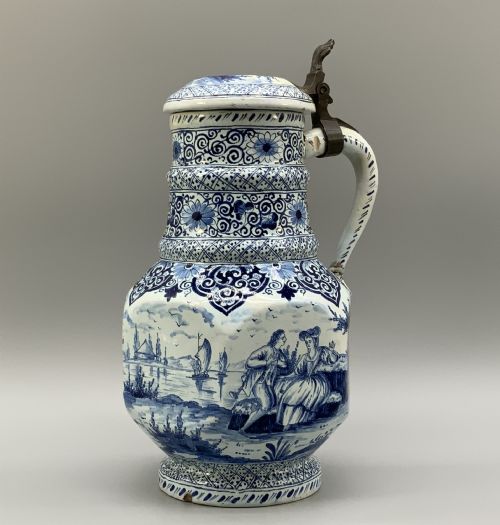
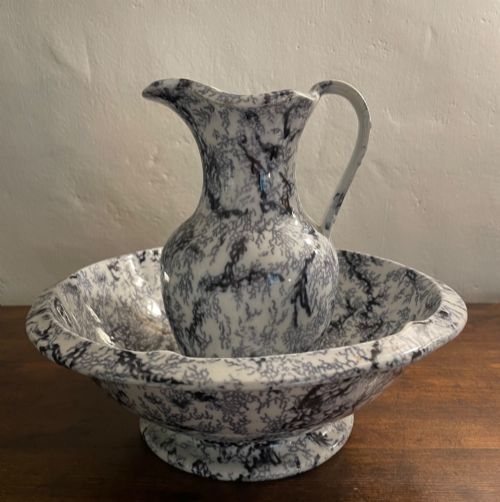
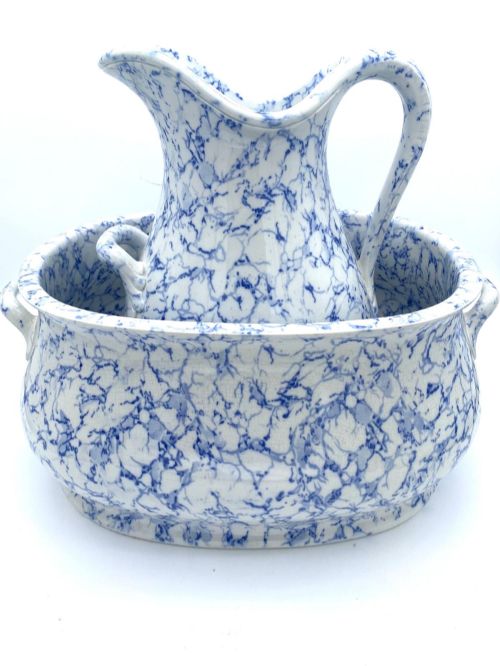
A white blue earthenware jug spans utilitarian water carriers, wash sets, creamers, and puzzle jugs produced across several centuries. The selection encountered here ranges from early Dutch delftware vessels to nineteenth-century Staffordshire pottery and large Georgian examples.
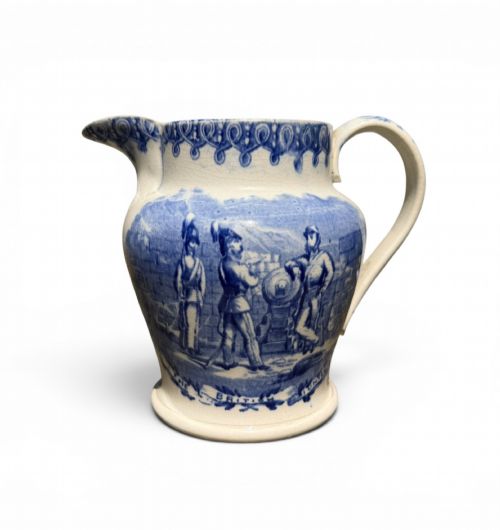
Buyers frequently encounter nineteenth-century pieces alongside older seventeenth and eighteenth-century items. These items appear in domestic settings as display pieces or functional vessels with transfer-printed and hand-painted blue designs.
Materials and Techniques
Potters utilised earthenware and ceramic bodies, coating them with tin glaze or standard glazes to achieve smooth surfaces. Pigments applied to these surfaces created the characteristic blue decoration seen on delftware and transfer-printed items.
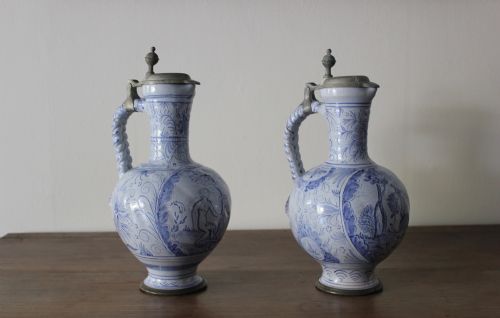
Manufacture involved shaping clay on a wheel or in a mould before firing and glazing. Metal mounts, such as pewter lids on eighteenth-century Dutch pieces, completed certain vessels.
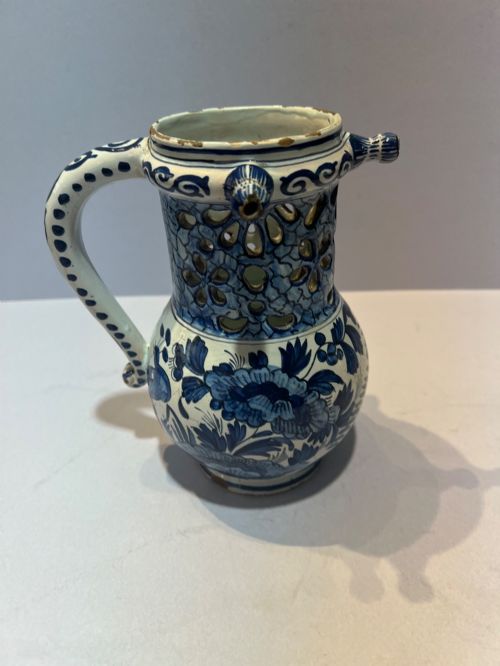
An eighteenth-century Dutch delft puzzle jug challenges drinkers to figure out how to imbibe without leaking through the perforated neck.
Quality and Execution
Quality rests in the crispness of the blue pigment application and the stability of the glaze across the earthenware body. Pieces with intricate hand-painted Chinoiserie or floral motifs demonstrate higher artistic engagement than standard production items.
The preservation of the glaze and the structural integrity of handles and spouts distinguish superior examples. Potteries such as Minton or Doulton Lambeth achieved distinct refinement in their ceramic bodies and pattern execution.
Minton·Doulton Lambeth·Pieter Verburg·Spode
The White Blue Earthenware Jug Glossary
- Earthenware
- Porous pottery fired at lower temperatures than stoneware or porcelain. It requires a glaze to become impermeable to liquids.
- Tin Glaze
- An opaque white glaze containing tin oxide, providing a smooth surface for painted blue pigments on delftware.
- Flow Blue
- A nineteenth-century transfer printing technique where cobalt blue bled slightly into the glaze during firing, creating a misty effect.
- Toby Jug
- A pottery jug shaped as a seated person, often depicted drinking or holding a mug.
- Puzzle Jug
- A vessel with a perforated neck that requires the drinker to solve a riddle or cover hidden holes to drink without spilling.
White Blue Earthenware Jug: Frequently Asked Questions
How do I date a blue and white jug?
Dating relies on stylistic clues, glaze characteristics, and recorded manufacturer marks found on the base or body.
Earlier pieces often feature tin glazes and hand-painted motifs, while nineteenth-century items frequently employ transfer printing and maker stamps.
Are these jugs safe for daily use?
Many older earthenware jugs have fragile glazes and historical wear that make them better suited for display rather than regular service.
Historic pieces can develop hairline cracks or glaze crazing that absorbs liquids over time.
What is Dutch delftware?
Dutch delftware is tin-glazed earthenware produced in the Netherlands, heavily influenced by imported Chinese porcelain.
These pieces typically display blue and white painting depicting floral scenes, figures, or landscapes.
Why do some jugs have pewter lids?
Pewter mounts and lids were fitted to seventeenth and eighteenth-century jugs to protect fragile earthenware rims and preserve contents.
These metal additions are characteristic of better-quality Dutch and continental vessels of the period.