

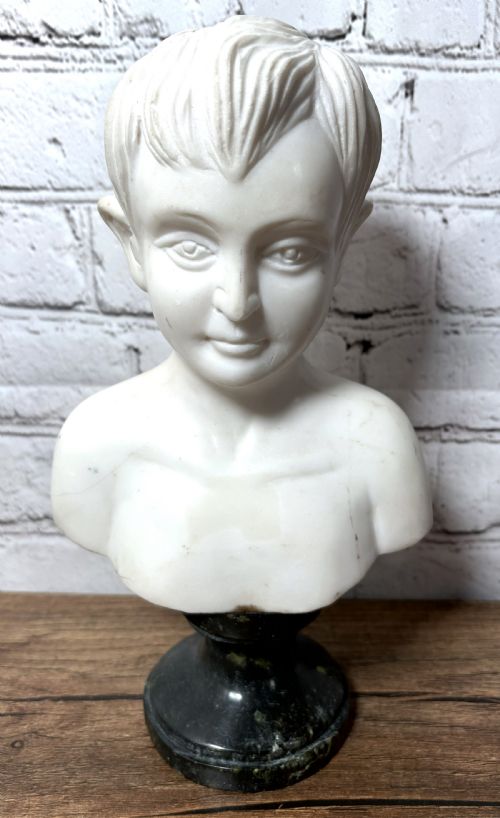


White Alabaster Figure
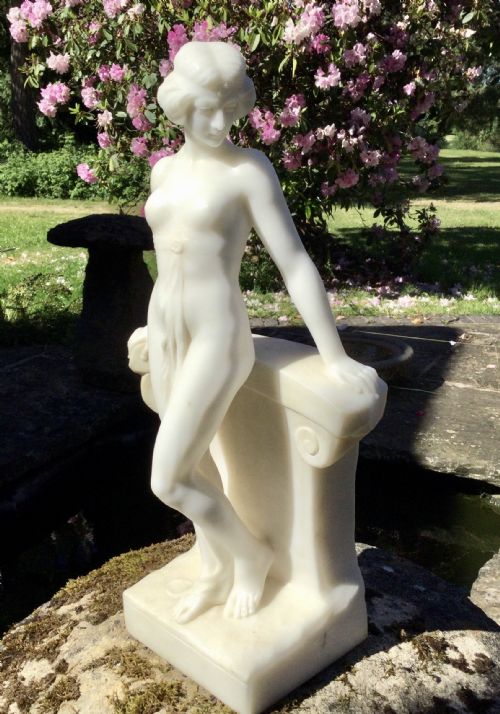
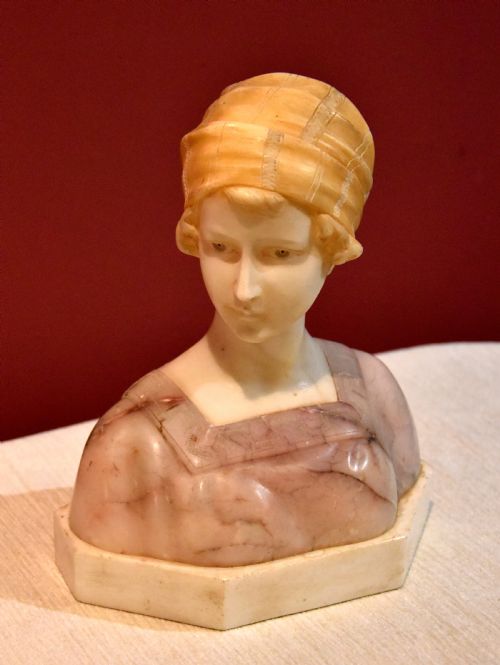
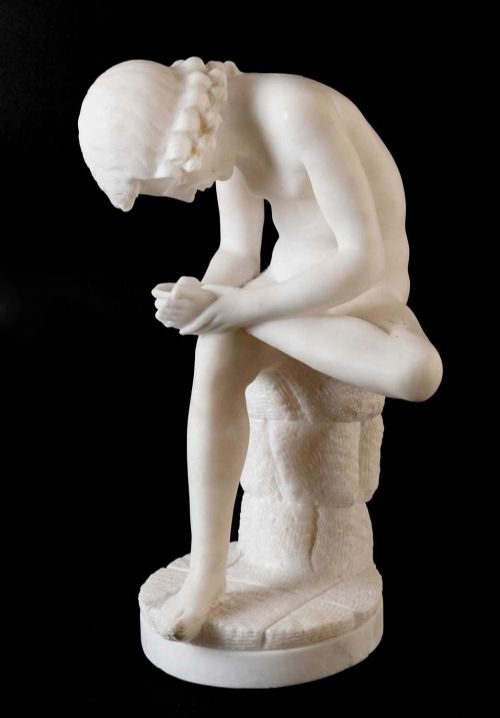
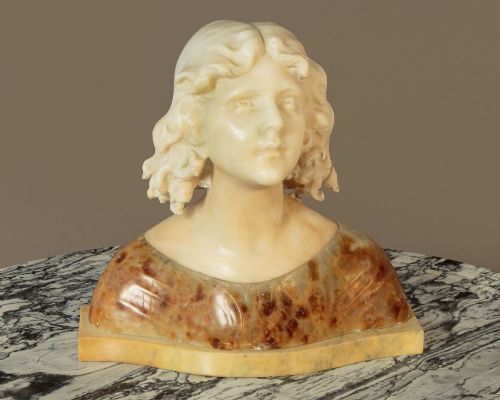
When you search for a white alabaster figure, you find sculpted portrait busts and full-length studies that capture nineteenth-century and early twentieth-century classical ideals.
White Alabaster Figure
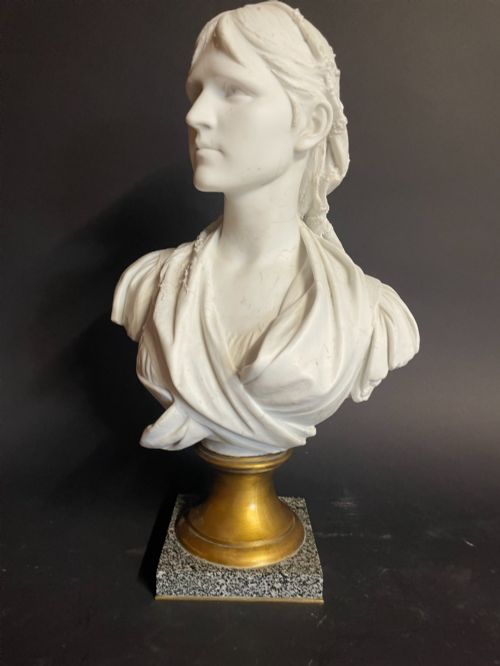
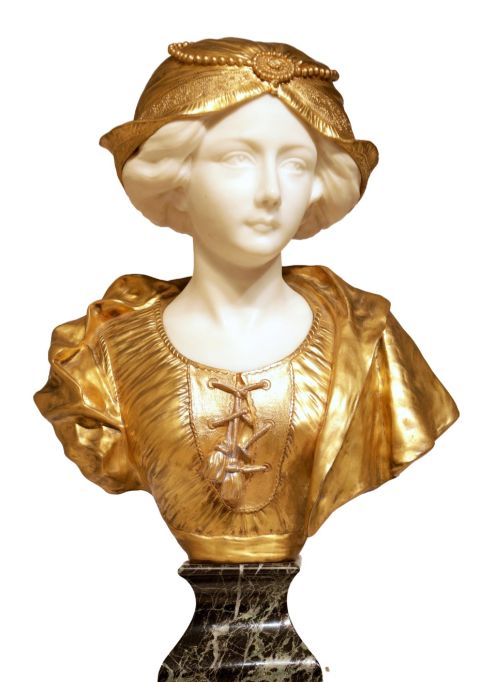
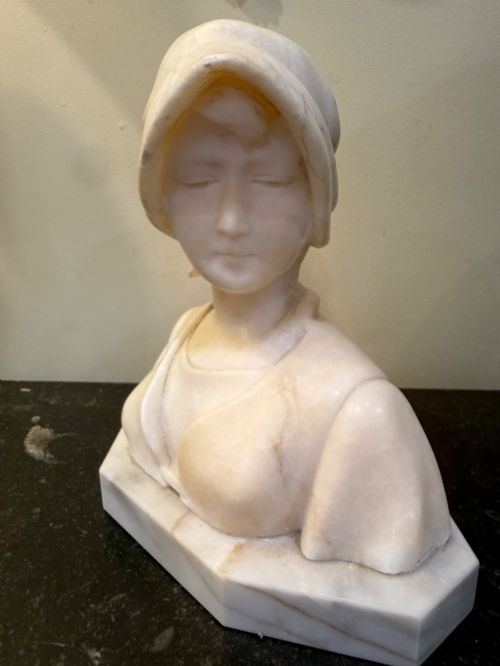
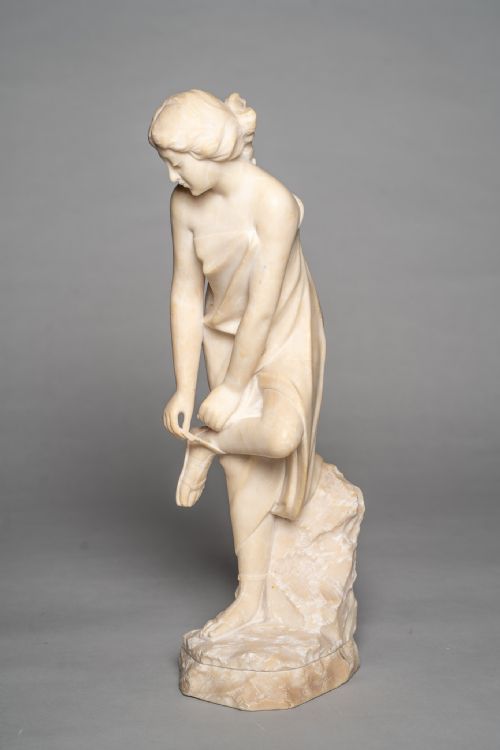
A white alabaster figure typically takes the form of a portrait bust or a full-length study of a female subject, often rendered in Neoclassical, Victorian, or Art Deco styles. These works span the nineteenth and early twentieth centuries, emerging primarily from Italian and French workshops.
Buyers will frequently encounter depictions of young women, mythological figures such as Diana or Hestia, and allegorical subjects. Alongside standalone sculptures, the selection includes library busts, mantel clocks, and companion figures paired with brass or bronze elements.
Materials and carving techniques
Carvers shaped these pieces from soft gypsum-based stone, frequently combining fine alabaster with white marble for structural contrast. Certain compositions integrate cast metals like ormolu, gilt bronze, or brass to accent the bases and drapery.
Sculptors utilised traditional hand-chiselling and polishing methods to achieve a translucent, smooth surface finish that mimics human skin. Details such as hair texture and fabric folds were incised meticulously by hand.
Listings feature 19th Century, 1900, 1910, 1890, 1920, 1870, 1860, and 1850 periods.
Distinctions in craftsmanship
The selection of the raw stone also dictates the grade of the piece, with uniform, flawless mineral deposits commanding greater artistic regard. Integrated details, such as signed signatures and secondary mounts in gilt bronze, elevate the standing of a work.
Affortunato Gory·Auguste Henri Carli·Fritz Kochendorfer·Antonio Frilli·Pugi·Cipriani·G.V. Vaerenbergh·P. Emilio Fiaschi·Joseph Gott·R. Lusili
The White Alabaster Figure Glossary
- Alabaster
- A fine-grained, translucent stone favoured by sculptors for its soft texture and ability to accept intricate chisel work. It polishes to a smooth finish reminiscent of marble.
- Portrait Bust
- A sculpted representation of a person from the chest up, capturing likeness and character. These formed a staple of Victorian and Edwardian study decoration.
- Neoclassical
- An artistic style inspired by the classical art and culture of ancient Greece and Rome. It prioritises symmetry, restraint, and idealized human forms.
- Ormolu
- Gilt bronze mounts applied to furniture, clocks, and sculptures as decorative enrichment. The technique involves fusing a gold-mercury amalgam onto a bronze base.
- Grand Tour
- A cultural journey of Europe undertaken by wealthy young men in the eighteenth and nineteenth centuries. Travellers often returned with classical sculptures and portrait busts.
White Alabaster Figure: Frequently Asked Questions
Where were most of these alabaster sculptures made?
The majority of these pieces originate from Italian workshops, particularly in Florence and Volterra, where skilled artisans worked local alabaster deposits. French studios also produced significant numbers, often incorporating gilt bronze and marble elements.
Many of these works were created for the export market during the nineteenth century, catering to collectors undertaking continental travels. Consequently, you will find distinct stylistic links between Italian craftsmanship and French academic sculpture of the period.
Are these figures solid alabaster?
While many sculptures are carved from a single block of alabaster, larger compositions frequently combine alabaster with white marble for bases or structural support. Mixed-media examples also incorporate brass, glass domes, and gilt bronze mounts.
When examining a piece, look closely at the transition points between the figure and the plinth to understand how the materials were joined. This composite construction was standard practice for nineteenth-century mantel clocks and decorative portrait busts.
How do I distinguish nineteenth-century pieces from later ones?
Nineteenth-century works generally exhibit deeper hand-carved undercut details in the hair and drapery, reflecting rigorous academic training. Maker signatures, when present, often point to established Italian or French studio traditions from that era.
Later twentieth-century examples, including Art Deco designs, lean towards stylized geometric forms and simplified contours. Comparing the weight, base materials, and mounting techniques helps clarify the period of production.