





Classical Alabaster Bust
A classical alabaster bust brings sculptural weight and quiet presence to a room, capturing historical form through soft, translucent stone.
Classical Alabaster Bust
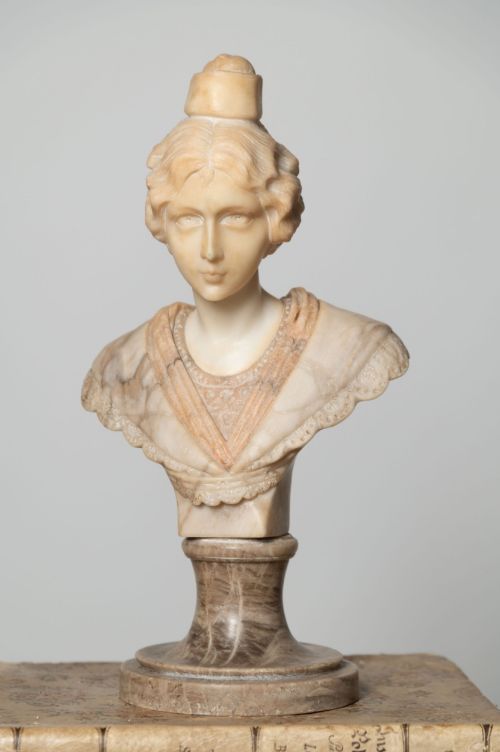
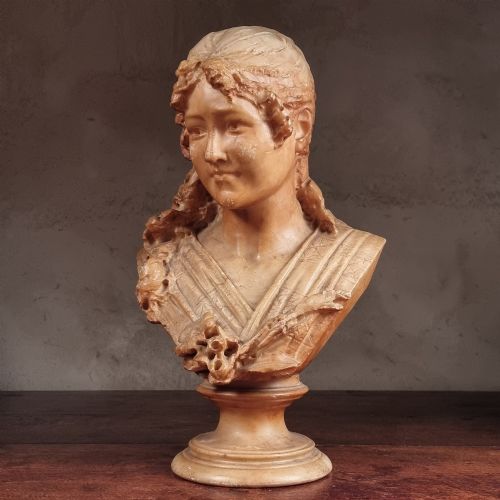
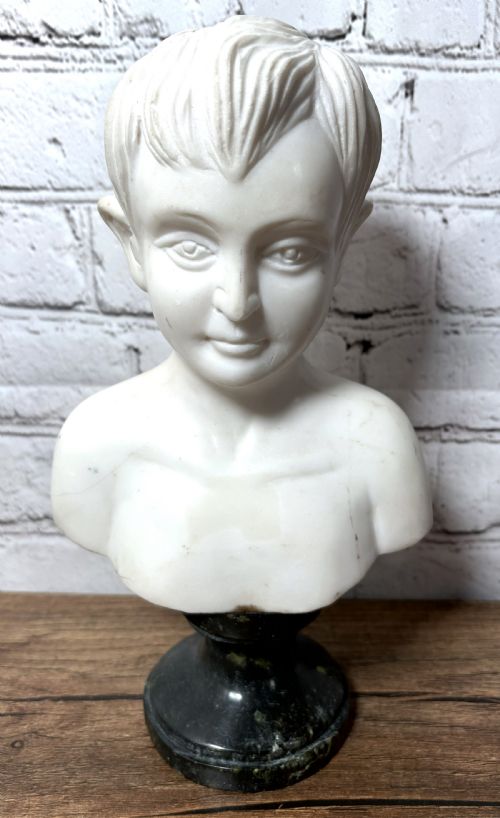
A classical alabaster bust represents human figures, typically women, young boys, gentlemen, or historical literary subjects rendered in carved stone. These pieces draw heavily on Neoclassical, Victorian, and French classical traditions, frequently originating from Italian and French workshops during the nineteenth and early twentieth centuries. The form ranges from cabinet-sized library portraits to larger sculptural depictions of female subjects playing instruments or wearing classical drapery.
The most common examples encountered on this page date from the nineteenth century through the Edwardian period, spanning movements like Art Nouveau alongside traditional Victorian styles. Sculptors often portrayed female subjects, young children, or profile plaques of literary figures such as Virgil and Dante. Portrait busts of gentlemen also appear, alongside figurative groups incorporating carved stone with brass or ormolu mounts.
How they were made
Many sculptures integrated mixed materials, combining carved alabaster or marble with cast ormolu, brass, granite, and bronze components. Artists signed their finished works directly into the stone or incorporated metal plaques naming the subject or sculptor. Bases were frequently turned from contrasting darker stone or mounted with gilded metal collars.
What varies in quality
Quality rests entirely in the hand of the carver and the purity of the medium. Finer pieces demonstrate a subtle handling of expression, intricate rendering of hair, and delicate folds in fabric that make the stone appear soft. Lesser examples display stiff proportions, heavy-handed tool marks, or plain, uninspired finishing around the shoulders and base.
The choice of materials also alters the character of the piece, as translucent alabaster requires precise selection to avoid heavy veining that disrupts the face. Signed works by recorded sculptors or foundry-stamped ormolu mounts distinguish ambitious sculptural commissions from standard decorative studio output.
Mieczyslaw Leon Zawiejski·G.V. Vaerenbergh·Joseph Gott·R. Lusili·Pugi·Greuze·A. Cipriani
The Classical Alabaster Bust Glossary
- Alabaster
- A fine-grained, soft stone used for carving, valued for its translucence and warm appearance. It allows light to pass slightly beneath the surface.
- Ormolu
- Gilt bronze mounted onto decorative objects or sculptures. This technique adds gilded metal highlights to stone bases or drapery.
- Neoclassical
- A style inspired by the classical art and culture of ancient Greece and Rome. It prioritises clean lines, classical dress, and restrained emotion.
- Portrait Bust
- A sculpted representation of a person from the chest up. This format focuses attention entirely on facial expression, hairstyle, and period dress.
Classical Alabaster Bust: Frequently Asked Questions
What is a classical alabaster bust?
A classical alabaster bust is a sculpted portrait or figurative head carved from soft stone, depicting subjects in historical or antique styles. These works range from small cabinet pieces to large gallery sculptures.
Most examples date from the nineteenth century and early twentieth century, originating primarily from Italian and French studios. They often portray women, children, or literary figures draped in classical garments.
How do I date a marble or alabaster bust?
Dating relies on the hairstyle, clothing, carving technique, and any signatures or foundry marks inscribed on the stone or base. Stylistic clues like Victorian dress or Art Nouveau curves provide clear chronological markers.
Comparative study of nineteenth-century European sculpture styles helps narrow down the decade of production. Many pieces carry signatures of known makers active during that era.
Where should I display a heavy stone bust?
Stone and marble sculptures require sturdy furniture capable of supporting considerable weight without shifting. A strong wooden console table, pedestal, or secure mantelpiece provides a stable platform.
Keep the sculpture away from direct sunlight, moisture, and high-traffic areas where it might get knocked. Placing it near a light source can highlight the translucent qualities of the carved stone.