


Wheel Engraved Glass
Wheel engraved glass carries the tangible weight of centuries, offering drinkers and collectors tactile depth through hand-cut surface detail.
Wheel Engraved Glass
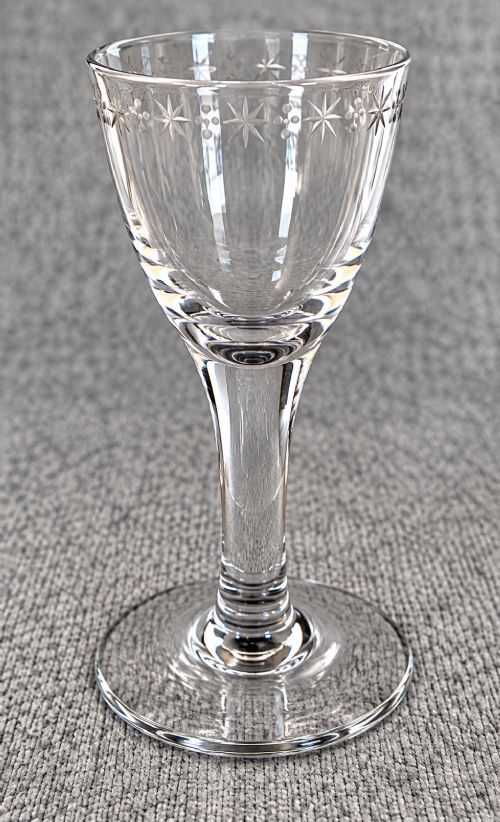
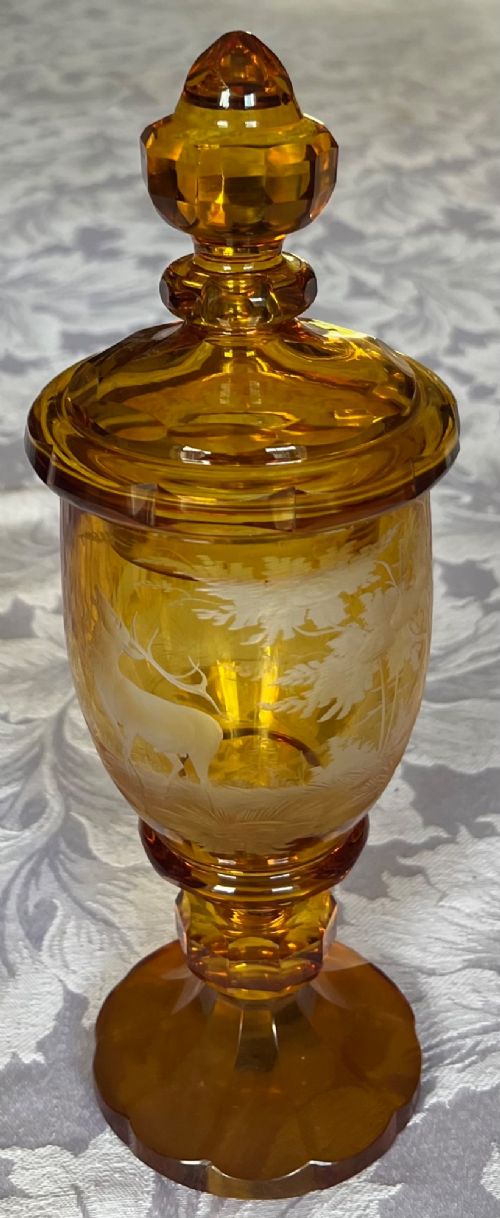
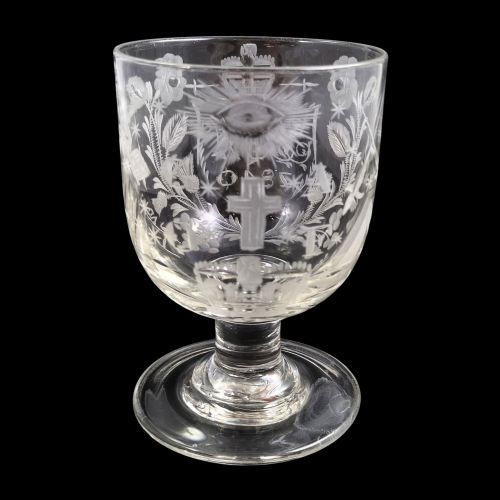
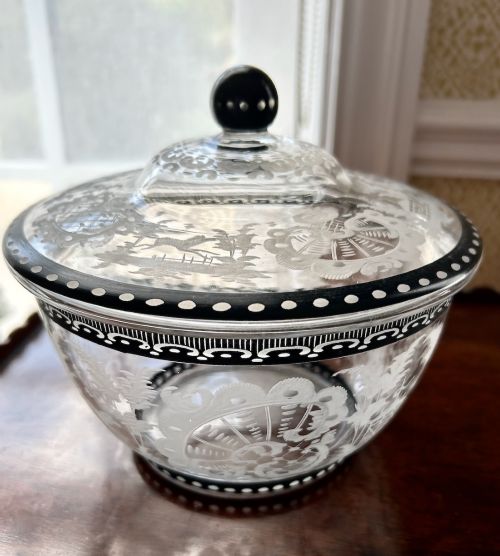
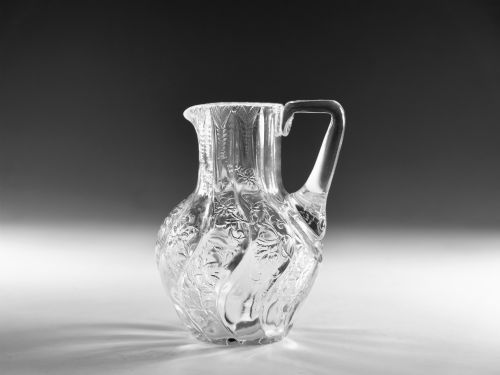
Buyers seeking these pieces encounter drinking glasses, heavy rummers, and ceremonial vessels shaped from lead glass, clear crystal, and coloured glass such as ruby red, amethyst, and amber. The forms range from simple firing glasses and wine goblets to large pitchers and covered bowls.
Originating across England and continental Europe, including Bohemia, these objects reflect distinct regional preferences in glass colour and decorative motifs. Pieces from the eighteenth and nineteenth centuries dominate the selection, showing continuous evolution in vessel shapes and engraving depth.
Materials and Techniques
Artisans formed these vessels using hand-blown lead glass, flint glass, and clear lead crystal, frequently incorporating coloured glass bodies in ruby, amber, or amethyst hues. The blowing process created robust walls and heavy bases suitable for subsequent cold-working decoration.
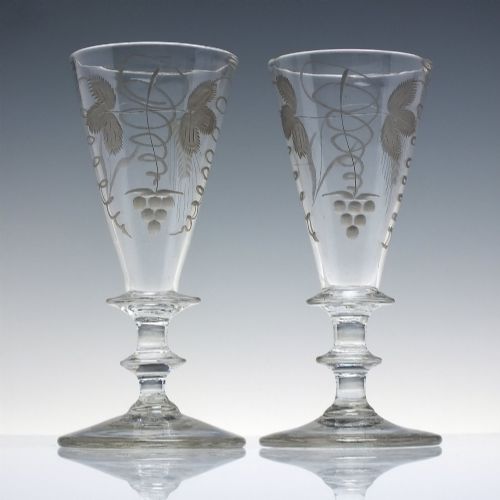
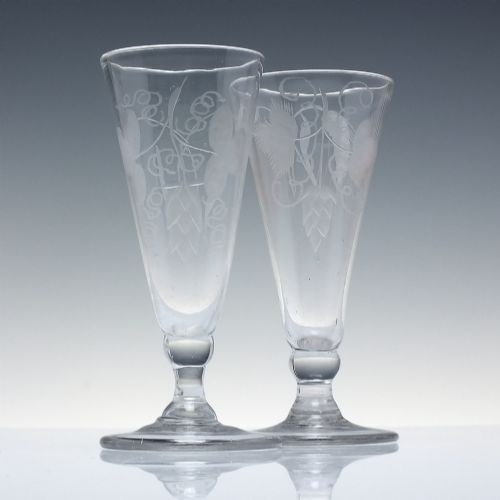
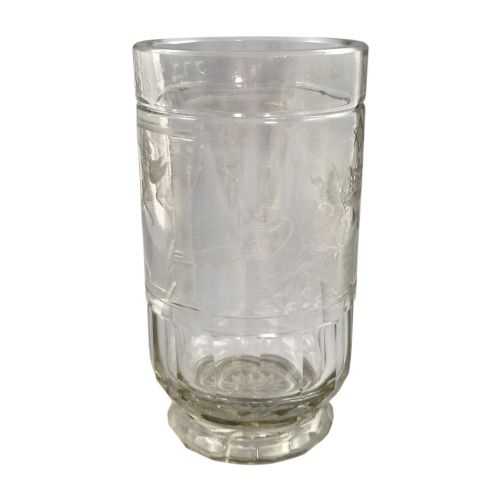
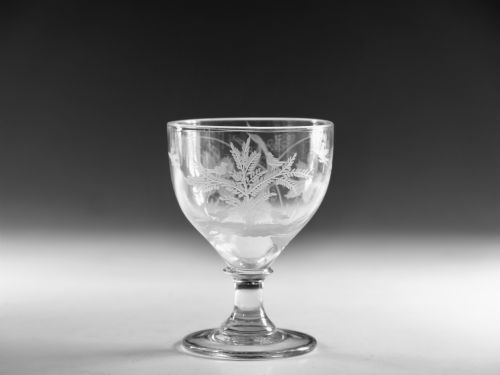
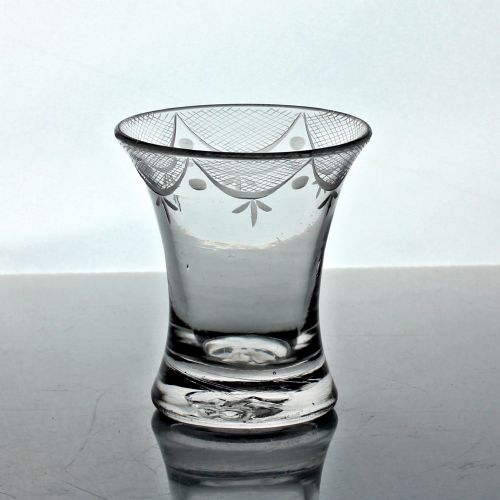
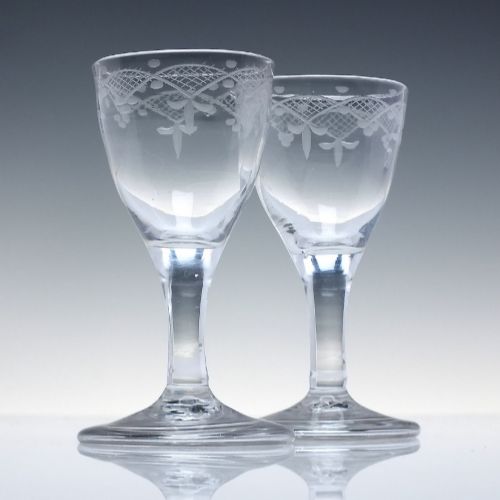
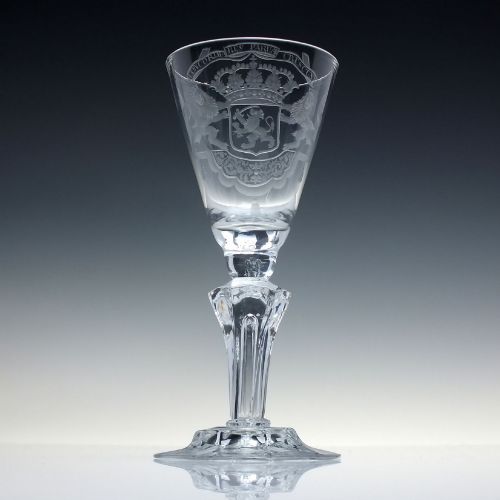
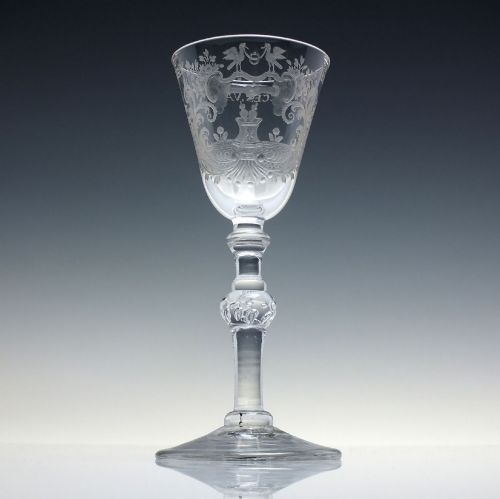
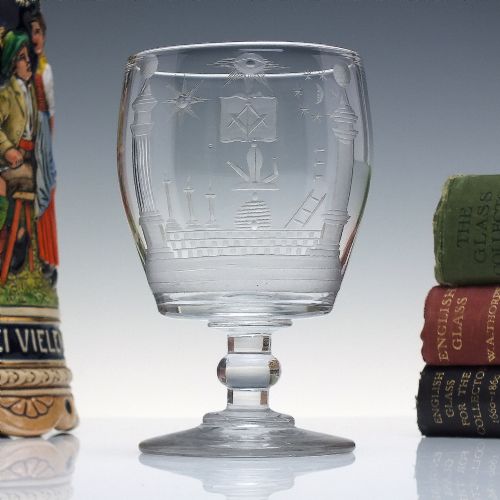
Makers applied surface designs using rotating stone or copper wheels fed with an abrasive slurry to cut intricate patterns into the glass body. This wheel engraving technique produced crisp lines, hollowed facets, and detailed pictorial elements like hops, vines, birds, and armorial crests.
Wheel Engraved Glass Retail Price Guide 2026
Typical asking prices for wheel engraved glass among the pieces listed under this phrase on Sellingantiques today, from the lower quarter to the upper quarter. They describe what is for sale here now, not the wider market.
Listings feature lead glass, clear crystal, and coloured glass bodies including ruby, amber, and amethyst across Georgian and Victorian periods.
Evaluating Quality and Execution
The distinction between standard vessels and superior pieces rests upon the confidence of the wheel work and the clarity of the metal. Deep, cleanly articulated cutting demonstrates exceptional control from the lapidary, whereas hesitant lines indicate hurried production.
Proportion and weight dictate the presence of higher craftsmanship, particularly in eighteenth-century baluster stems and heavy nineteenth-century rummers. Superior items balance substantial material heft with delicate, deliberate surface ornamentation that complements the natural refraction of lead crystal.
Stevens and Williams·Webb Corbett·Ganthony of London
The Wheel Engraved Glass Glossary
- Rummer
- A large, heavy-bowled drinking glass common in the Georgian and Victorian periods, typically used for beer, ale, or wine.
- Lead Crystal
- A heavy, highly refractive type of glass containing lead oxide, which enhances brilliance and makes the material ideal for deep cutting and engraving.
- Intaglio
- A technique where the design is incised below the surface of the glass rather than left in relief, creating a frosted, sculptural effect.
- Firing Glass
- A small eighteenth-century drinking glass characterised by an unusually thick, heavy foot designed to produce a sharp bell-like ring when thumped on a table.
- Roemer
- A traditional continental European wine glass, often made of green or amber glass with a large bowl resting on a ribbed, raspberry-prunt stem.
Wheel Engraved Glass: Frequently Asked Questions
What is wheel engraved glass?
Wheel engraved glass refers to vessels decorated by holding the glass against a revolving small wheel charged with an abrasive grit. This mechanical process cuts designs directly into the surface.
Artisans used this technique to produce detailed coats of arms, floral motifs, and geometric patterns on rummers, decanters, and wine glasses across the Georgian and Victorian eras.
How do I date antique glassware?
Dating relies on observing vessel forms, pontil marks, metal composition, and the specific style of engraving. Eighteenth-century pieces often display heavy lead metal and distinct air twist or baluster stems.
Later Victorian and Edwardian examples show heavier press-moulded influences, brighter colours, and distinct intaglio or etched floral arrangements like fruiting vines.
What is a rummer used for?
Rummers served as versatile, large-bowled drinking glasses for beer, ale, cider, and punch during the Georgian and Victorian periods. Their thick walls provided durability for communal or tavern settings.
Collectors today frequently use them as water goblets or display pieces to showcase the hop and barley engravings often found on English specimens.