



Welsh Oak Mule Chest
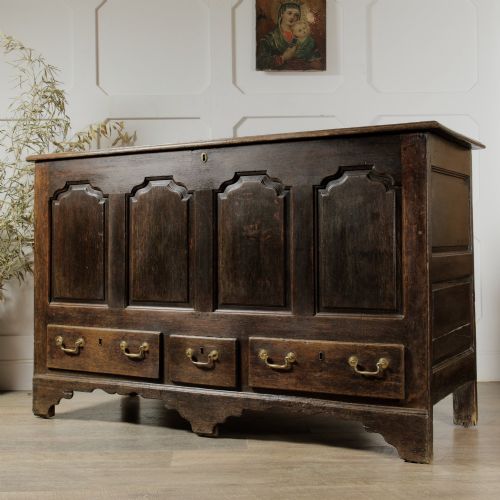
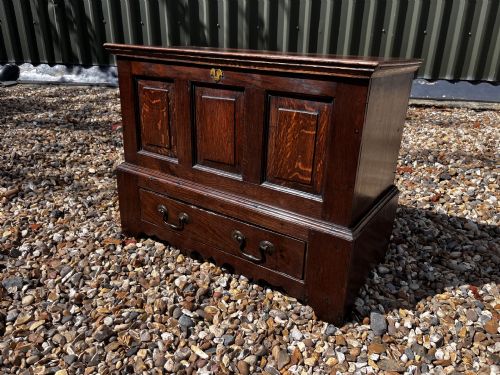
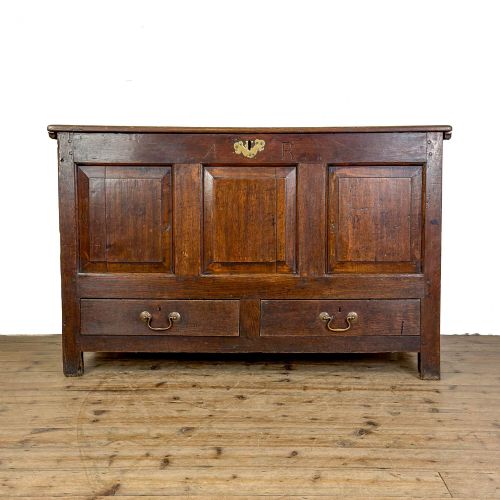
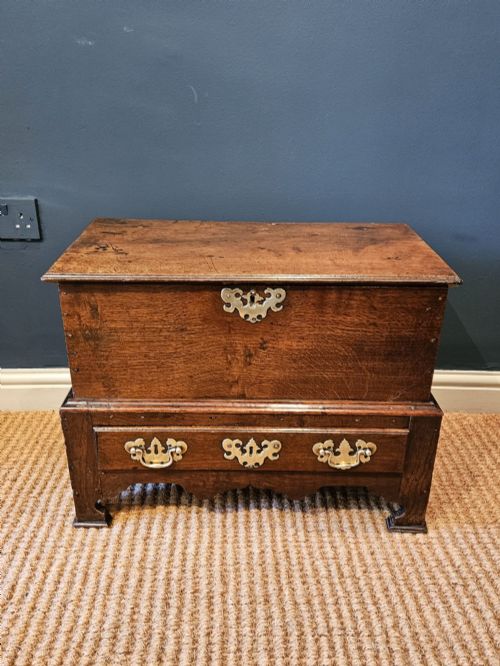
A welsh oak mule chest is a sturdy country storage piece built to hold blankets and clothes, combining a deep coffer with practical drawers below.

Welsh Oak Mule Chest
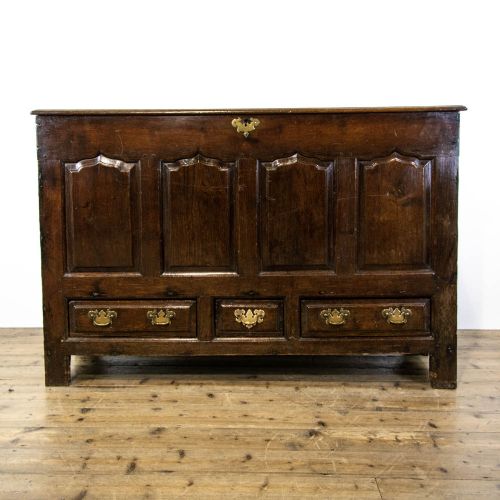
A welsh oak mule chest brings together a traditional boarded or panelled lid above one or more base drawers, standing as a primary storage unit of the rural home. These domestic pieces date principally from the seventeenth and eighteenth centuries, bearing the hallmarks of vernacular craftsmanship across Welsh counties.
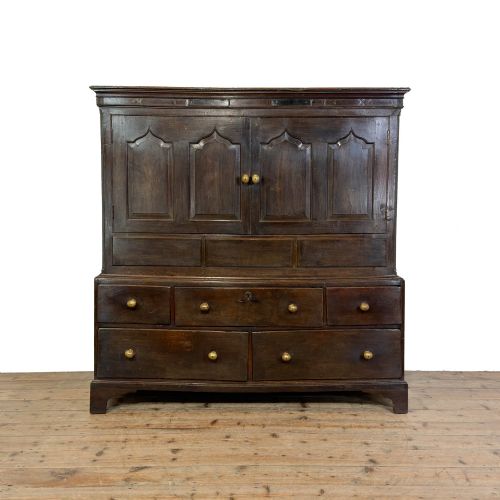
Buyers will encounter many variations on this page, ranging from full-sized two-part mule chests to smaller coffer bach and related blanket boxes. The forms reflect regional traditions of south and north Wales, often showing the simple proportions typical of Georgian provincial cabinet making.
Materials and Construction
These items rely on solid timber construction, using native oak for structural panels and framing, occasionally augmented with fruitwood or marquetry inlay for decorative contrast. Cabinet makers shaped boards using hand tools, fixing joints with pegged tenons and constructing robust lids to withstand daily household use.
Hardware such as brass handles and iron hinges secure the opening sections, with many surviving examples retaining original brasses that punctuate the dark timber grain. The surfaces reveal the natural texture of aged oak, shaped by centuries of waxing and handling.
Welsh Oak Mule Chest Retail Price Guide 2026
Typical asking prices for welsh oak mule chest among the pieces listed under this phrase on Sellingantiques today, from the lower quarter to the upper quarter. They describe what is for sale here now, not the wider market.
Listings span from the seventeenth century through the Georgian era to the late nineteenth century, predominantly constructed in solid oak.
Assessing Craftsmanship and Proportion
Quality in these items rests upon the balance of proportions, the integrity of the timber framing, and the survival of original surface patination. Pieces that retain their authentic boarded lids, working drawer mechanisms, and unblemished brass hardware command stronger interest.
Finer examples show careful attention to panel mouldings and dovetailing within the drawers, distinguishing bespoke local workshop output from simpler utilitarian boxes. The presence of marquetry inlay or well-figured grain further separates standard vernacular items from exceptional survivals.
The Welsh Oak Mule Chest Glossary
- Mule chest
- A storage chest featuring one or more drawers built beneath the main coffer compartment. This hybrid form bridges the evolution from simple blanket boxes to modern drawer chests.
- Coffer bach
- A small miniature chest or box originating from Wales, translating literally as little coffer. These desktop or tabletop pieces often replicate the full-scale proportions of larger mule chests.
- Vernacular
- Regional architecture and furniture built by local craftsmen using traditional local materials, prioritising utility and local style over court fashions. Welsh vernacular pieces display distinct county characteristics.
- Marquetry inlay
- Decorative patterns formed by fitting contrasting veneers or woods into carved recesses on the surface. This technique adds geometric or floral ornamentation to the oak panels.
Welsh Oak Mule Chest: Frequently Asked Questions
How do I date an old chest?
Dating relies on examining construction techniques, such as hand-cut dovetails, pegged joints, and the style of panel mouldings. Earlier seventeenth-century pieces tend to use heavier framing and boarded construction.
Later eighteenth and nineteenth-century examples introduce more refined drawer configurations and occasionally decorative marquetry inlay.
Where were these pieces made?
These items originated in regional workshops across Wales, reflecting local vernacular styles from different counties and valleys. Makers utilised native oak and accessible fruitwoods to build sturdy furniture for rural domestic life.
Regional traits often distinguish pieces made in south Wales from those originating in northern districts like Snowdonia.
How should I care for oak furniture?
Maintain the timber by keeping it away from direct heat sources and sudden humidity changes that can split dry oak. Apply natural beeswax periodically to nourish the grain and preserve the surface patina.
Avoid harsh modern chemical polishes, which strip the historic finish accumulated over centuries.