
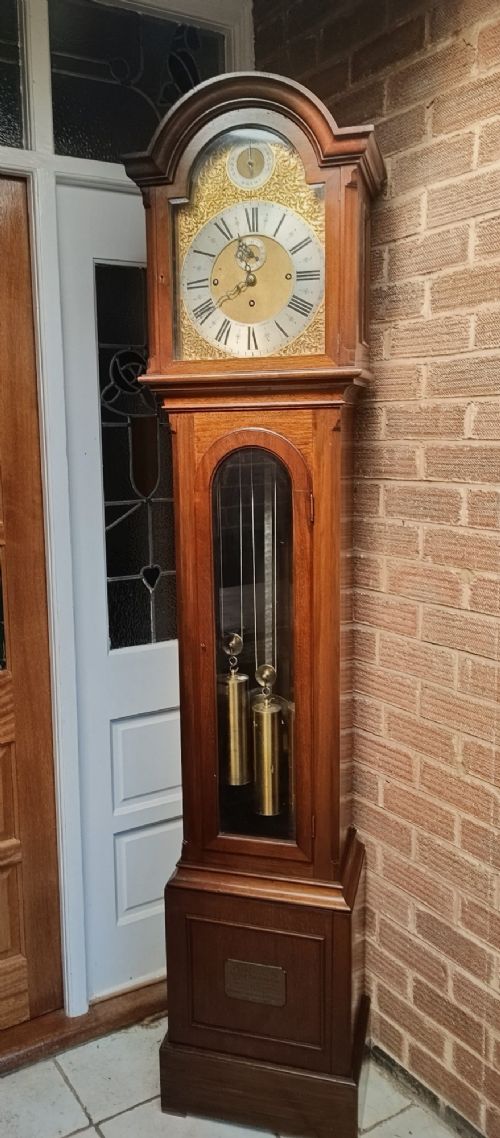
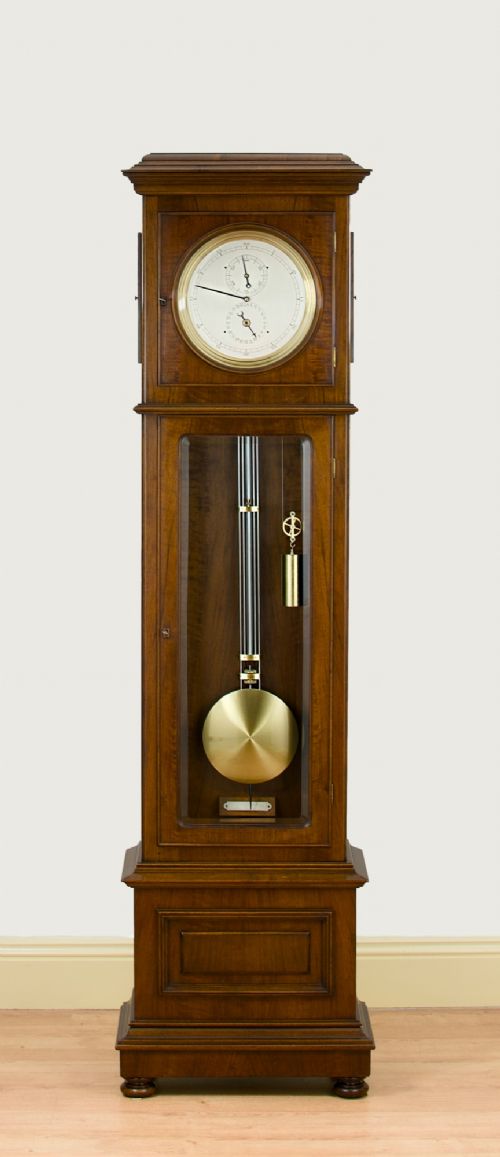
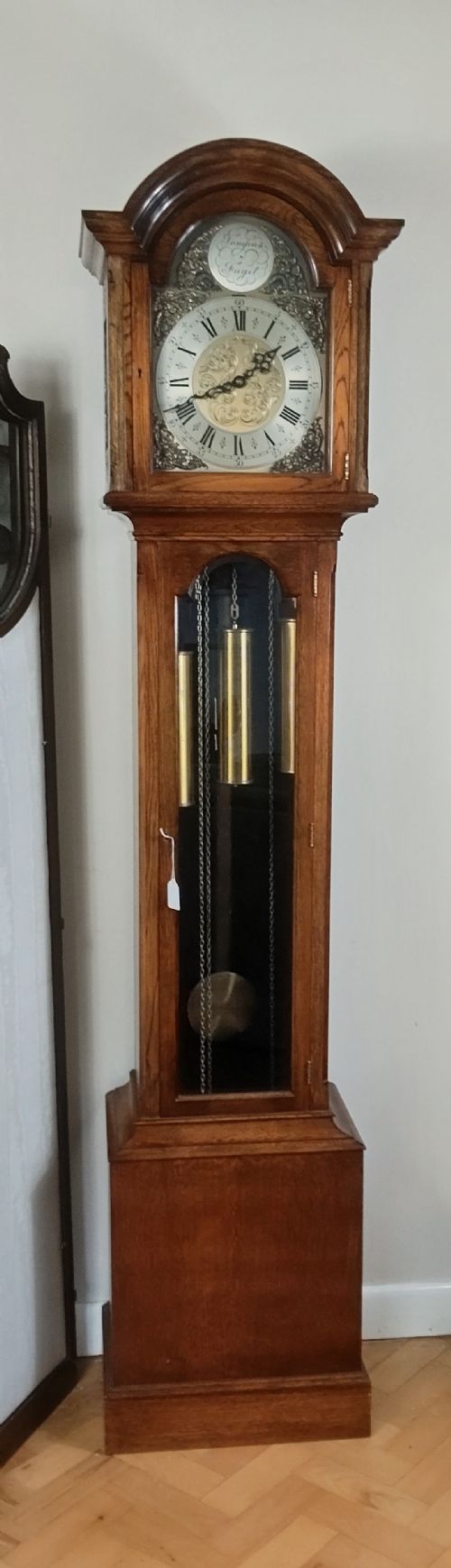


Weight Driven Grandfather Clock
A weight driven grandfather clock combines precise mechanical engineering with substantial timber cabinetry, serving as both a reliable timekeeper and a commanding architectural feature in any room.
Weight Driven Grandfather Clock
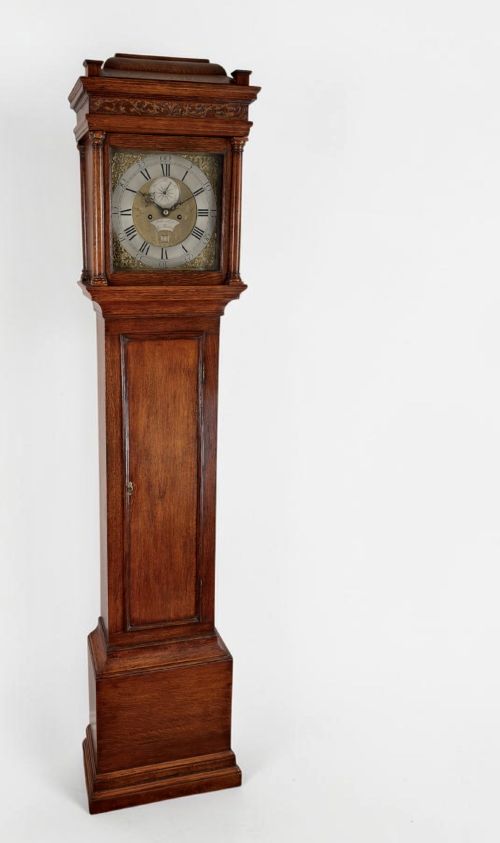
A weight driven grandfather clock is a tall floor-standing timepiece powered by descending lead or cast iron weights suspended by cords or chains. These mechanisms range from simple time-only movements to complex musical regulators with multiple chimes.
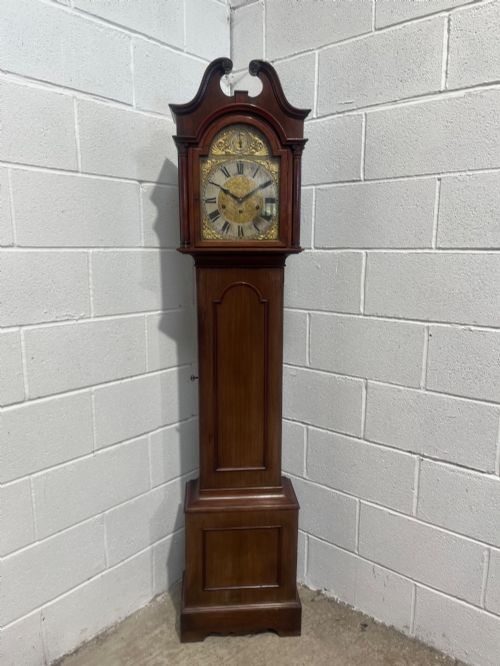
The versions most frequently met on this page span the Georgian and Victorian eras through to the early twentieth century, constructed in traditional regional British styles as well as later revival forms. Alongside full-sized models, shorter grandmother and miniature regulator variants appear frequently.
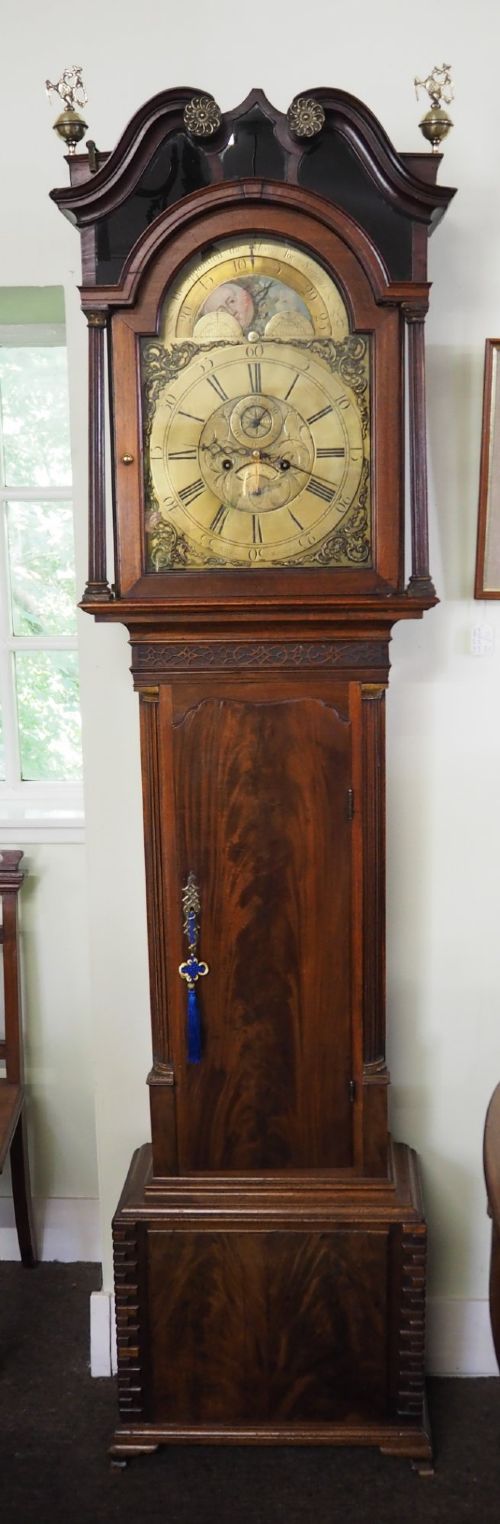
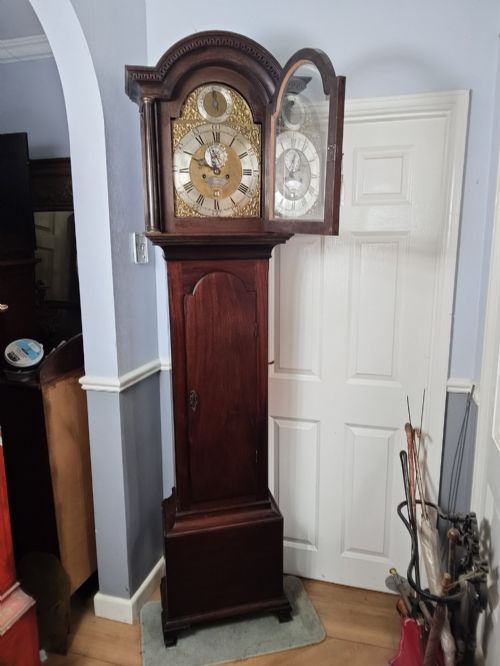
Cabinet timber varies widely across the selection, featuring native oak and walnut from earlier periods alongside rich mahogany favoured by later makers. Painted dials, arch dials and drum head forms further distinguish the regional variety available.
Construction and Materials
Cases were built from substantial hardwoods including mahogany, oak and walnut, often polished or lacquered to highlight the natural grain. Structural stability was paramount to support the heavy internal gear trains and swinging pendulums.
Dial work combined brass chapter rings with painted iron or silvered metal faces, frequently protected behind bevelled glass doors. Movements relied on cast brass wheels, steel pinions and iron weights hung on durable lines or cables.
One extraordinary Morbier clock is recorded as a limited edition numbered eleven out of one thousand.
Evaluating Quality
Quality rests in the precision of the movement and the integrity of the cabinet work, where finer gear cutting and maintaining power mechanisms ensure more accurate timekeeping. Heavily figured timbers and sophisticated dial engraving indicate higher workshop standards.
The presence of specialised complications, such as multiple chime tunes, strike-silent levers or mercury pendulums, separates standard domestic pieces from exceptional precision regulators and musical masterworks.
Lee of Great Marlow·Elliott·Lenzkirch·Enfield·Gillett and Johnston·Francis Perigal of Bond Street·William Wady·Wm Stanford·Benjamin Rogers·Rob Parry Pwllheli·Herbert of Haversham·Aitchison of Glasgow·JJ Elliot
The Weight Driven Grandfather Clock Glossary
- Regulator
- A precision clock designed to keep exceptionally accurate time, often featuring a fine deadbeat escapement and a mercury-filled pendulum to compensate for temperature changes. These clocks served as time standards in observatories and railway offices.
- Grandmother clock
- A smaller, more slender version of the traditional longcase clock, usually standing under six feet tall. They became popular in the twentieth century for homes with lower ceilings.
- Drum head
- A clock case design featuring a circular dial housing mounted directly atop a long trunk, reminiscent of a military drum. This specific regional form is particularly associated with Scottish Victorian cabinetmaking.
- Arch dial
- A clock face featuring a rounded upper section that often displays supplementary dials, maker signatures or painted moon phases. This layout became standard on better quality eighteenth-century movements.
- Maintaining power
- A mechanical device that keeps the clock running while the weights are being wound, preventing any interruption to the escapement and ensuring continuous timekeeping accuracy.
Weight Driven Grandfather Clock: Frequently Asked Questions
How do weight driven clocks work?
Weight driven clocks rely on gravity to power their internal gear train, using heavy metal weights suspended from cords or chains that gradually descend as the mechanism runs. Winding the clock pulls these weights back up to the top of the case.
The descending weight turns a drum connected to the wheel train, which transfers controlled energy through the escapement to drive the hands and swing the pendulum with steady regularity.
Where should I place a grandfather clock?
A grandfather clock requires a stable, vibration-free floor and a secure wall fixing to ensure the case remains perfectly plumb. This stability is essential for the pendulum to swing evenly and keep accurate time.
Avoid placing the clock in areas subject to dampness, direct sunlight or severe temperature fluctuations, as these environmental factors can damage the timber case and affect the metal movement.
How do I tell different periods apart?
Early pieces from the eighteenth century typically feature simpler oak or walnut cabinetry with square brass dials and heavy proportions. Mid-Georgian and later examples often introduce richer mahogany veneers, elaborate arch dials and more refined decorative inlay.
Twentieth-century variations embrace distinct design movements like Art Deco alongside meticulous reproductions of earlier regional styles. Examining the timber selection, dial configuration and construction fixings helps establish the correct era.
How often do these clocks need winding?
Most standard models featured in these listings are eight-day movements, meaning they require winding once a week using a specialised key or crank. Thirty-hour versions require more frequent attention, typically needing their weights pulled up daily.
Regular winding at the same time each week helps maintain consistent tension on the movement and ensures reliable timekeeping performance.