



Vintage Pendulum Hall Clock
A vintage pendulum hall clock stands as a commanding focal point, offering traditional timekeeping alongside rich timber grain and mechanical depth for a home.
Vintage Pendulum Hall Clock
A vintage pendulum hall clock encompasses tall floor-standing timepieces, frequently referenced as grandfather, grandmother, or longcase clocks, designed to measure hours through a swinging weight-driven or spring-driven pendulum. Buyers seeking this phrase typically encounter taller mahogany, oak, or walnut housing bodies dating from Georgian eras through the early twentieth century.
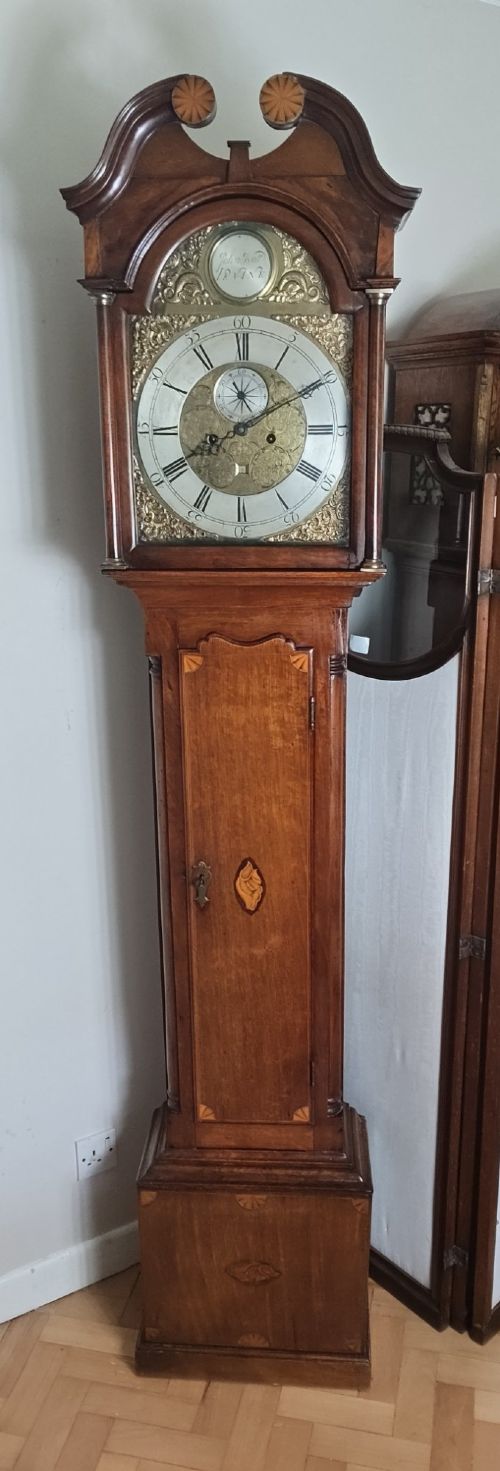
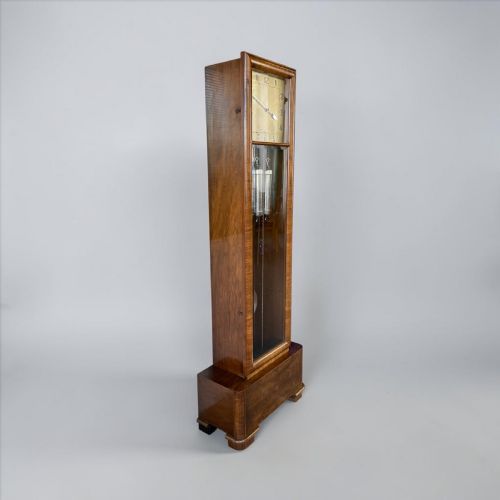
The selection ranges from robust nineteenth-century Scottish and English eight-day movements to more compact Edwardian or 1920s grandmother clocks with quarter chiming and musical capabilities. Oak and mahogany examples from the Georgian period sit alongside walnut Art Deco and Edwardian iterations on this page.
Materials and construction
Cabinetmakers utilised dense timbers including figured walnut, mahogany, and oak, often applying marquetry or paterae inlay to enrich the architectural facades of the tall cases. Glass panels protect the dial and trunk, allowing visibility of the swinging pendulum and weighted mechanisms.
Internal engineering relies on brass dials, steel components, and intricate gear trains designed for eight-day operation, weight-driven chime sequences, or musical quarter-hour strikes.
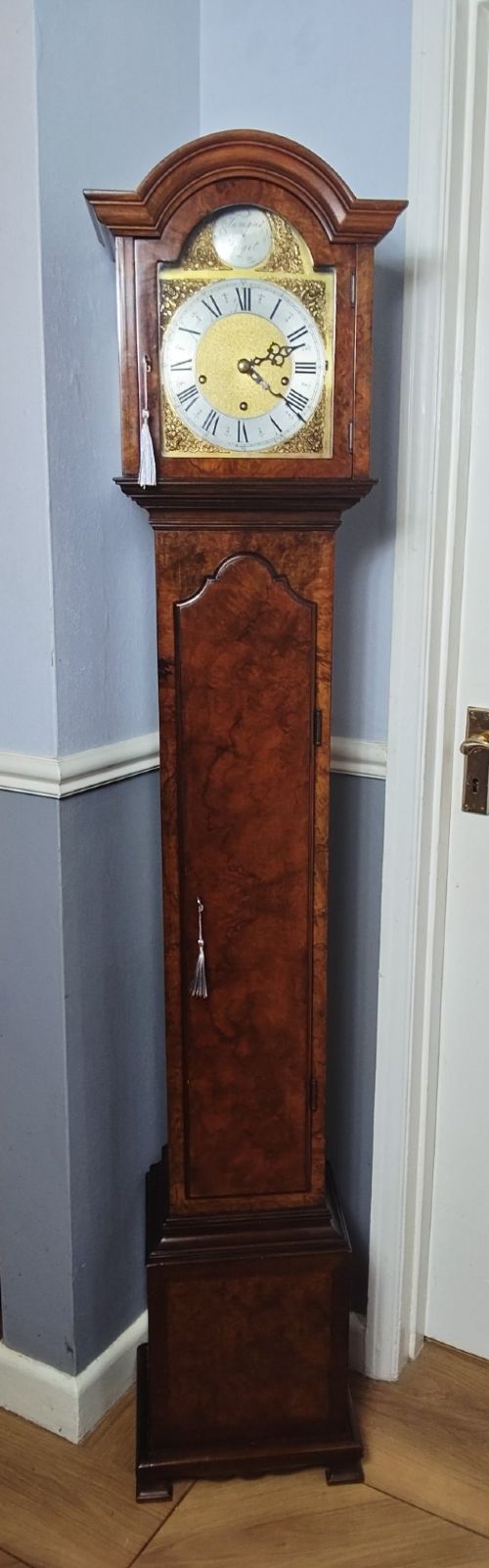
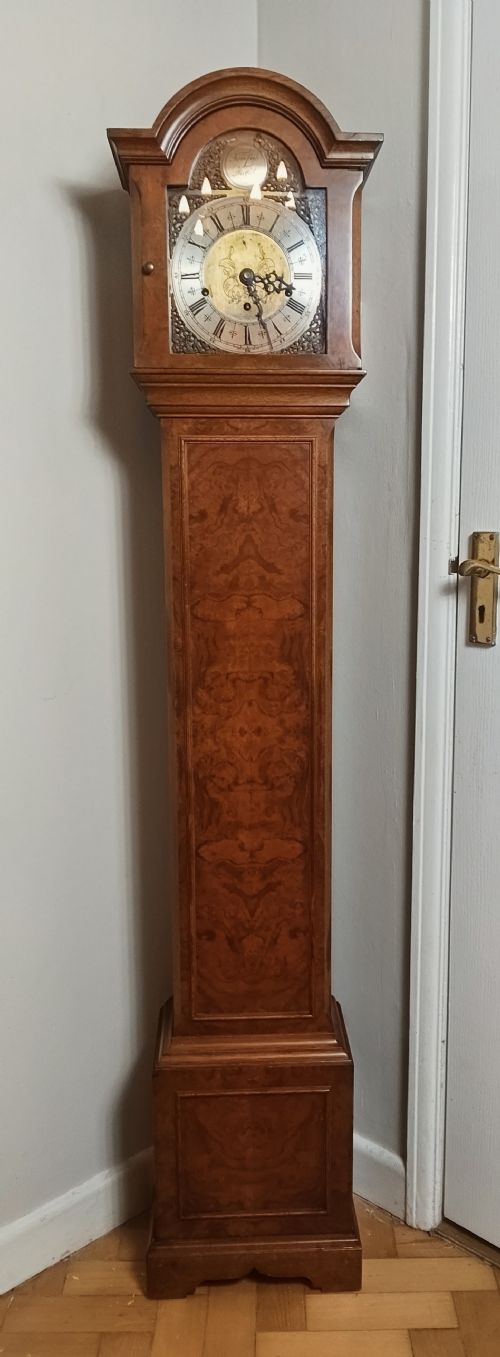
Some miniature models pack triple-tune musical chimes and swinging pendulums into surprisingly slender frames.
Distinguishing quality across examples
Superiority in these timepieces often reveals itself through the crispness of brass dial engraving, the complexity of musical movements such as quarter-chiming gear trains, and the richness of figured walnut or mahogany veneers. Finer pieces demonstrate precise proportions in smaller longcase formats, maintaining structural harmony despite reduced scale.
The integration of regional cabinetry work, secondary timber selection, and the original pairing of the movement to the case govern the enduring integrity and character of each individual clock.
Richard Northen·Herbert of Haversham·JJ Elliot
The Vintage Pendulum Hall Clock Glossary
- Longcase clock
- A tall floor-standing pendulum clock enclosed in a wooden case, commonly known as a grandfather or grandmother clock depending on its overall height.
- Grandmother clock
- A smaller, more compact version of the traditional longcase clock, typically produced during the early twentieth century to fit lower ceilings.
- Grandfather clock
- A tall freestanding weight-driven pendulum clock featuring a long wooden trunk to house the hanging weights and swinging pendulum.
- Quarter chiming
- A mechanical movement feature that sounds musical notes or chime sequences every fifteen minutes in addition to striking the full hour.
- Paterae
- A circular classical decorative motif resembling a shallow libation bowl, frequently inlaid into mahogany or walnut cabinet facades.
Vintage Pendulum Hall Clock: Frequently Asked Questions
What is the difference between a grandfather and a grandmother clock?
A grandfather clock generally stands over six feet tall with substantial proportions suited to large entryways. A grandmother clock is a scaled-down version produced to occupy less floor space.
Both utilise identical pendulum and weight-driven mechanics, but the reduced height of the grandmother clock alters the proportions of the wooden trunk and dial.
How do eight-day movements work?
An eight-day movement requires winding via a crank or key once every week to maintain the tension of the driving weights or springs. The descending weight slowly powers the gear train and swings the pendulum.
This mechanism offers reliable timekeeping convenience compared to daily-wound models.
Where should I place a longcase clock?
Longcase clocks require a stable, vibration-free floor and a secure wall fixing to keep the tall wooden case plumb. Hallways and landings provide traditional placement where the chime can resonate.
Avoid positions subject to direct sunlight or severe temperature shifts that could affect the timber and internal brass components.
How do I identify the period of a hall clock?
Dating relies on stylistic clues within the cabinet work, such as Georgian oak framing, Edwardian mahogany inlay, or 1920s walnut veneers. Dial designs, brass spandrels, and maker signatures provide further chronological markers.
Examining construction joints and secondary woods helps confirm the era of manufacture.