
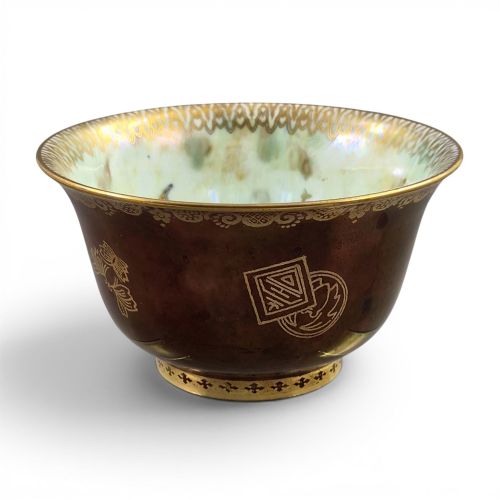
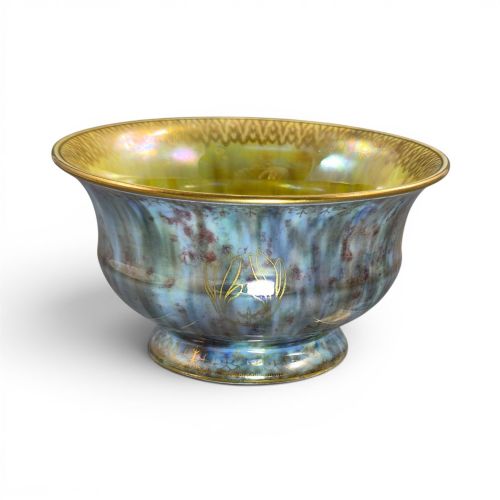
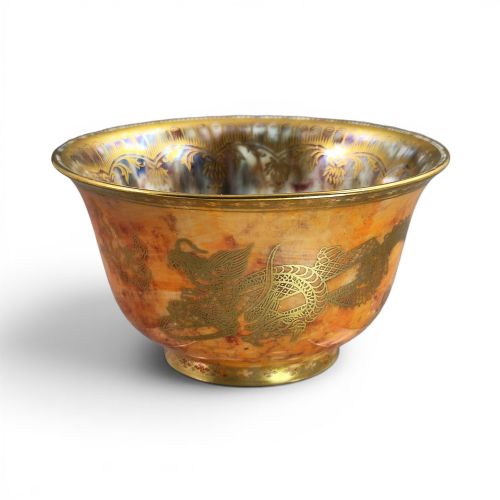


Wedgwood Lustreware Bowl
A wedgwood lustreware bowl brings vibrant colour and intricate motifs into a room through its striking metallic glaze.
Wedgwood Lustreware Bowl
When you search for a wedgwood lustreware bowl, you are looking at decorative tableware produced primarily during the Edwardian period and the 1910s and 1920s. These pieces take the form of decorative bowls, octagonal bowls, lantern bowls, and miniature cups.
The most common examples on this page feature elaborate designs such as dragons, butterflies, hummingbirds, goldfish, and phoenix motifs. They bridge the gap between traditional ceramic manufacturing and imaginative, richly coloured surface decoration.
How they were made
Potters shaped these vessels using bone china and porcelain before applying specialised glazes. Artisans then utilised lustre glaze, metallic glaze, and glaze combined with gold leaf and gold gilt to achieve their iridescent surfaces.
The decorative schemes frequently incorporate intricate patterns built up with rich colour palettes and gilt detailing. Firing techniques reacted with the metallic oxides to create the distinctive shimmering finish characteristic of the wares.
Some dragons on these bowls appear remarkably busy guarding miniature worlds of floating clouds and diaper patterns.
What varies in quality
The distinction between standard examples and top-tier pieces rests on the complexity of the design and the richness of the gilding. Highly detailed Fairyland subjects and complex geometric diaper patterns demand greater artistic execution than simpler mottled grounds.
The precision of the transfer or hand-painted motifs and the depth of the iridescent sheen dictate the visual impact of the object. Pieces that exhibit crisp application of gold leaf and intricate pictorial scenes command stronger visual presence.
Daisy Makeig-Jones·James Hodgkiss
The Wedgwood Lustreware Bowl Glossary
- Lustre glaze
- A type of ceramic glaze containing metallic oxides that produces an iridescent, pearlescent, or metallic sheen upon firing. This finish reflects light differently depending on the viewing angle.
- Fairyland
- A fanciful decorative theme developed by Daisy Makeig-Jones featuring mythical creatures, goblins, and elaborate landscapes. These designs are among the most intricate produced by the firm.
- Octagonal bowl
- A vessel possessing eight distinct sides rather than a standard circular profile. This geometric form provides multiple flat planes that showcase complex pictorial scenes.
- Bone china
- A type of soft-paste porcelain incorporating bone ash, resulting in a strong, translucent body. It offers a smooth white ground ideal for receiving brightly coloured glazes and gold gilt.
Wedgwood Lustreware Bowl: Frequently Asked Questions
What is a wedgwood lustreware bowl?
A wedgwood lustreware bowl is a decorative ceramic vessel finished with an iridescent metallic glaze and often adorned with mythological or naturalistic motifs.
These pieces typically date from the Edwardian era through the 1920s and showcase complex artistic designs developed by the pottery's notable designers.
How do I identify a Fairyland piece?
Fairyland pieces are recognised by their imaginative pictorial scenes depicting dragons, phoenixes, and fantastical landscapes often enhanced with heavy gilding.
They frequently utilise rich ruby, orange, blue, or green lustre grounds that create deep atmospheric backgrounds for the detailed motifs.
Were these bowls used for food?
These vessels served primarily as decorative display items rather than functional tableware for dining.
Their delicate metallic glazes and intricate gold gilt designs were intended to catch the light in drawing rooms and display cabinets.
How should I care for my bowl?
Care for these ceramic pieces requires gentle dusting with a soft dry cloth and protection from abrasive materials.
Because the surface relies on delicate metallic glazes and gold leaf, harsh cleaning agents and water immersion should be avoided.