
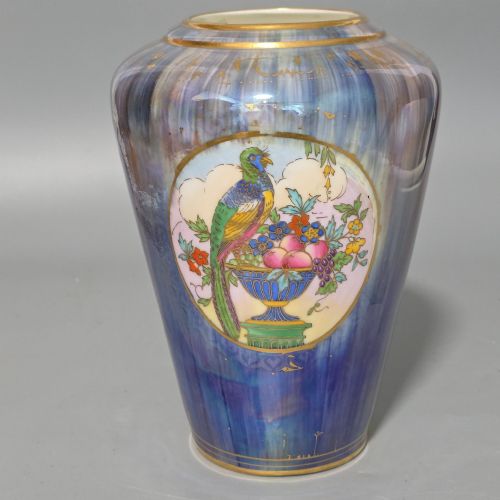


Edwardian Lustre Ceramics
Edwardian lustre ceramics bring metallic sheen and imaginative surface design to decorative bowls, vases, and small vessels.
Edwardian Lustre Ceramics
Edwardian lustre ceramics encompass decorative bowls, vases, miniature cups, and jug and bowl sets produced around the early twentieth century. Buyers seeking this phrase encounter British pottery that bridges the Edwardian period and the subsequent 1920s.
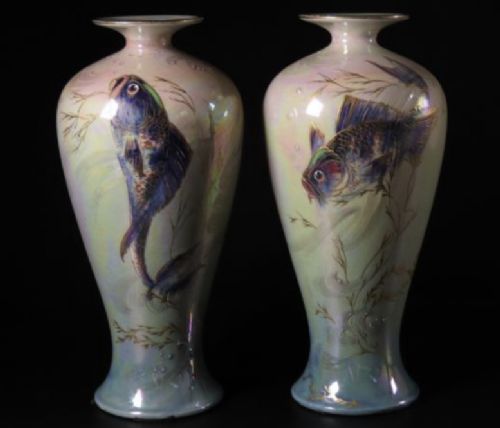
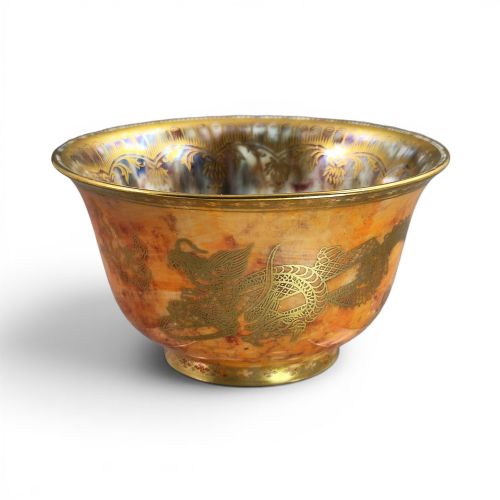
The dominant forms on this page include large octagonal bowls, bud vases, and miniature vessels featuring intricate ornamental motifs. These pieces often display specific artistic themes such as dragons, butterflies, and fish designs.
Originating largely from prominent English potteries, these objects reflect the transitional tastes of the era. The selection ranges from domestic sets to highly detailed display items finished with metallic glazes.
Materials and production methods
Potters shaped these vessels from earthenware, porcelain, and bone china before applying specialised glaze finishes. The distinctive iridescent surface relies on lustre glaze techniques combined with metallic elements.
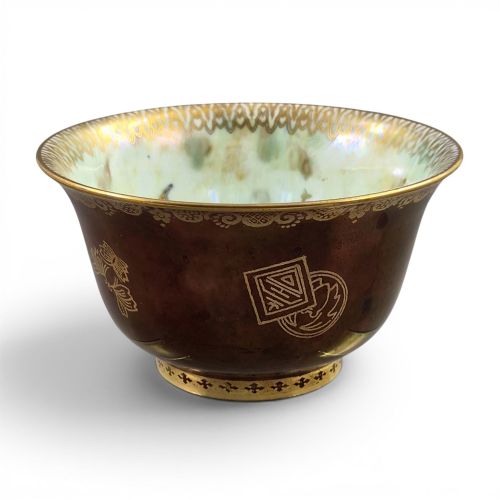
Makers integrated gold leaf and gilt details into the surface decoration to catch the light across hand-enamelled patterns. These decorative additions required precise firing processes to bond the metallic sheens with the underlying ceramic body.
Early twentieth-century ceramic designers populated their lustre bowls with dragons and fairies, proving that office hours in the pottery industry could remain wonderfully imaginative.
Distinctions in quality and execution
The sophistication of the painted surface decoration largely defines the upper tier of these ceramics. Pieces featuring complex narrative or mythical scenes demand greater mastery from the designer than simple geometric or mottled finishes.
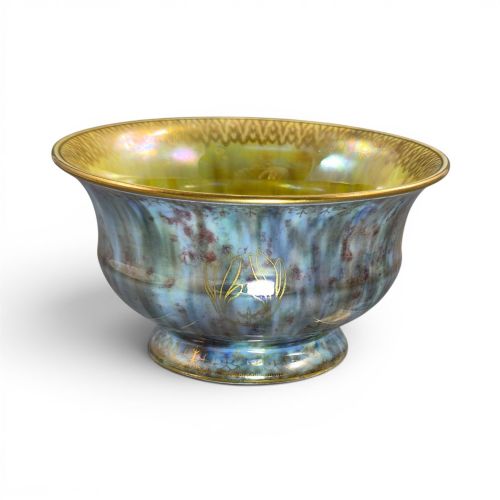
The clarity and depth of the metallic lustre glaze determine the visual impact of each vessel. Finer examples display an even, shimmering iridescence that enhances the underlying ceramic form without obscuring the hand-enamelled details.
Walter Slater·Daisy Makeig-Jones·Minton·Richard Joyce·James Hodgkiss
The Edwardian Lustre Ceramics Glossary
- Lustre glaze
- A type of pottery glaze containing metallic salts that produce an iridescent sheen upon firing. This finish creates the characteristic reflective surface found on Edwardian decorative wares.
- Bone china
- A hard-paste porcelain incorporating bone ash for added strength and whiteness. It provides a delicate, translucent body suitable for finely painted miniature cups and small bowls.
- Earthenware
- Porous ceramic pottery fired at lower temperatures than porcelain. It forms the robust structural body for many large decorative bowls and vases.
- Gilt
- A thin application of gold leaf or gold paint applied to ceramic surfaces for ornamentation. It accentuates rims, handles, and specific design motifs.
- Octagonal bowl
- A vessel possessing eight distinct sides forming a geometric profile. This specific shape frequently showcases complex narrative lustre designs.
Edwardian Lustre Ceramics: Frequently Asked Questions
How should I display edwardian lustre ceramics at home?
Place these vessels in areas with direct natural light to fully appreciate the iridescent quality of the glaze. Avoid positioning them in damp spaces or locations subject to extreme temperature fluctuations.
Keep them away from direct heat sources that might affect the ceramic body or metallic surface over time. Simple, neutral display surfaces allow the intricate painted details and gold leaf elements to stand out.
What subjects appear on these painted lustre vessels?
Common motifs include mythical creatures such as dragons and celestial dragons alongside natural subjects like butterflies, fish, and deer. Many designs draw upon imaginative folklore and detailed decorative borders.
Artists utilised these elaborate themes to create narrative scenes across octagonal and circular bowls. The integration of fantastical elements remains a defining characteristic of the period's output.
How do I distinguish between ordinary lustre and fairyland lustre?
Fairyland lustre pieces feature complex, highly detailed narrative scenes populated by fantastical characters and intricate border patterns. These ambitious designs often incorporate extensive gold leaf and multiple glaze layers.
Ordinary lustre wares typically focus on simpler repeating motifs such as butterflies, single dragons, or mottled orange and ruby glazes. The distinction lies entirely in the complexity and scope of the surface painting.
Were these ceramic pieces used for daily dining or display?
Most items listed under this category served decorative or specialised functions rather than everyday utility. Vases, miniature cups, and large ornamental bowls were intended primarily for interior display.
Certain items like jug and bowl sets combined practical domestic use with decorative surface artistry. However, the delicate nature of the metallic lustre glaze meant owners usually preserved them as ornamental objects.