
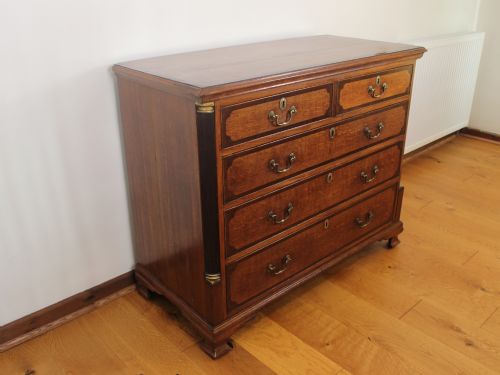
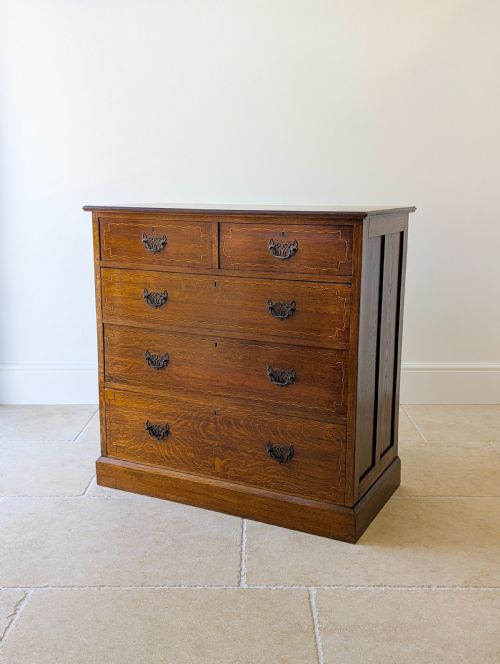


Warm Oak Commode
A warm oak commode brings practical storage and rich timber grain to a room, appearing in forms from Georgian chests to French fruitwood pieces.

Warm Oak Commode
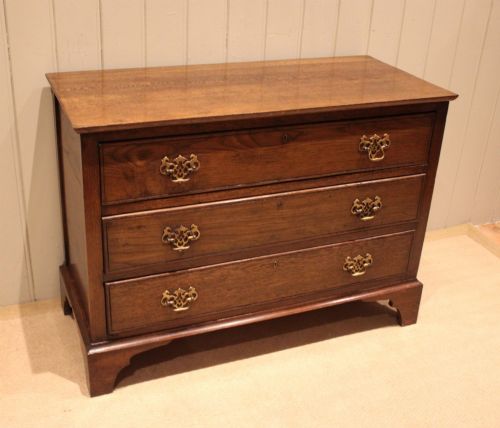
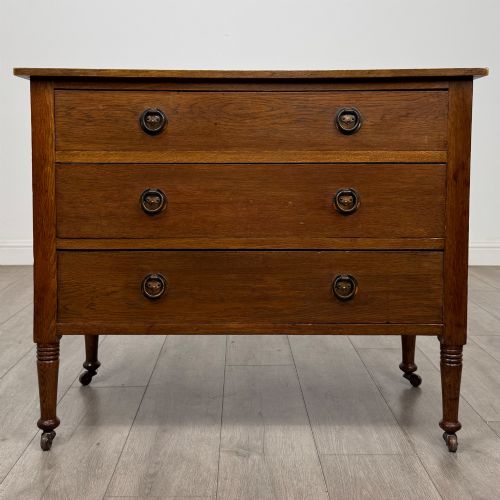
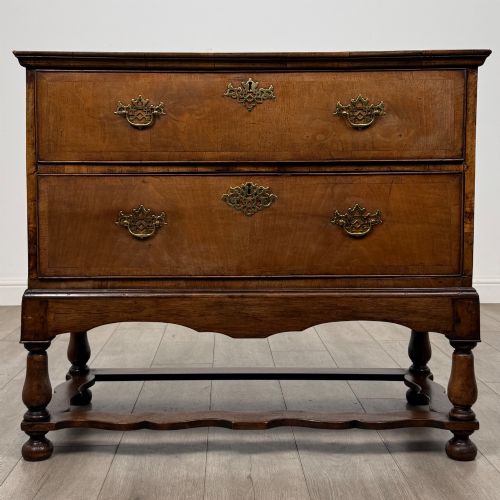
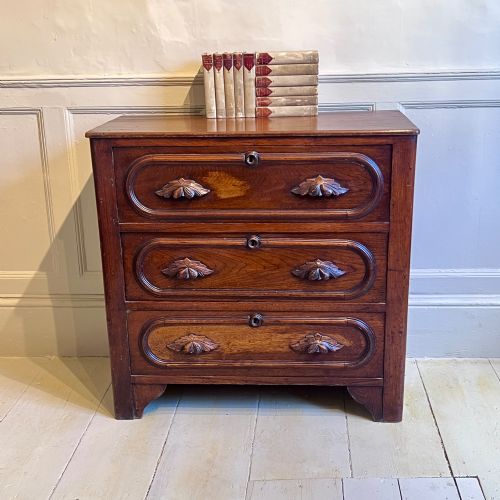
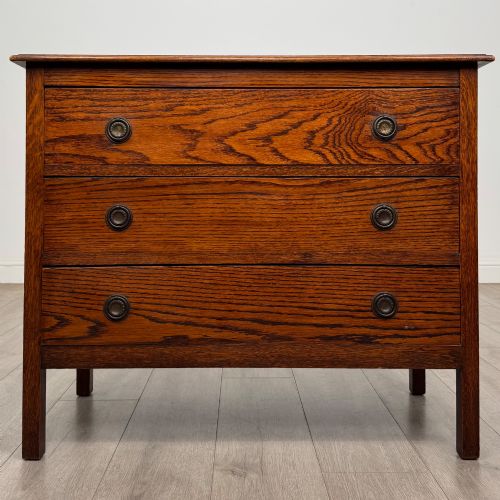
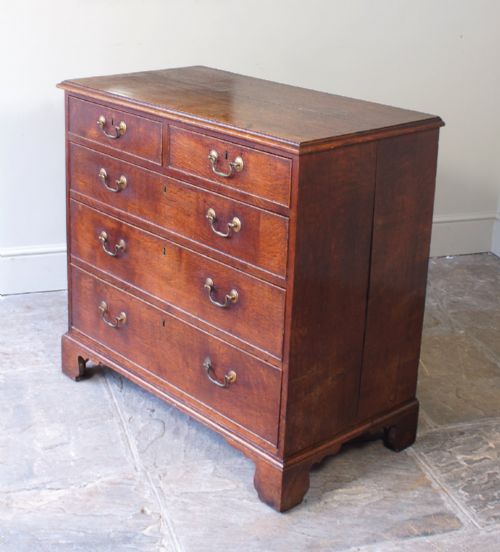
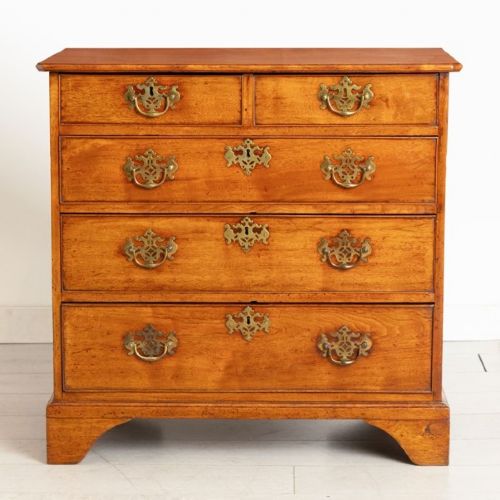
A warm oak commode encompasses chest of drawers forms and miniature chest of drawers variants spanning the seventeenth century through to the Edwardian period. Buyers searching for a warm oak commode encounter pieces shaped by Georgian, Arts and Crafts, William and Mary, and French Provincial styles.
The selection on this page demonstrates origins across England, France, Sweden, and America, utilising timbers such as oak, elm, fruitwood, and walnut. Low chests of drawers and diminutive examples sit alongside taller proportions designed for domestic storage.
What varies in quality
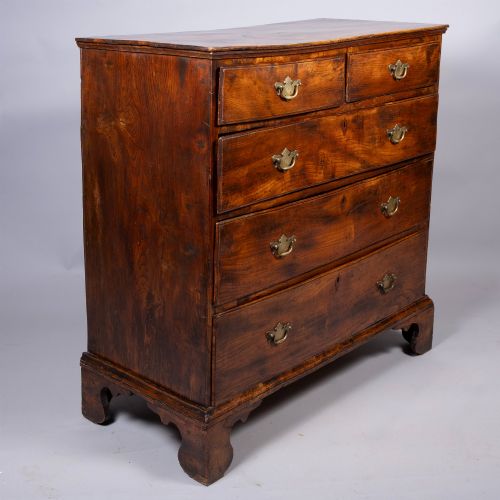
The refinement of the timber figure and the crispness of carved elements distinguish examples across the periods. Figured elm and solid oak show distinct variations in natural patterning and colour depth.
The presence of original handles, crossbanding, and bracket feet influences the overall integrity of the construction.
Miniature chests of drawers appear alongside low profiles and standard multi-drawer storage formats.
The Warm Oak Commode Glossary
- Crossbanding
- A border strip of veneer laid around the edge of a drawer front, often in a contrasting timber such as mahogany. This technique frames the primary wood grain.
- Bracket foot
- A simple foot shape supporting the corners of a chest, frequently seen on Georgian furniture. It elevates the carcase slightly off the floor.
- Stringing
- A thin inlay line of contrasting wood, such as boxwood, embedded into the surface. It adds delicate linear decoration to drawer fronts and tabletops.
- Figured wood
- Timber possessing a decorative grain pattern resulting from irregular growth. Figured elm and oak display distinct movement and visual depth.
Warm Oak Commode: Frequently Asked Questions
How do I date an oak chest?
Dating relies on examining construction methods, hardware types, timber choices, and stylistic details such as bracket feet or crossbanding.
Earlier examples from the seventeenth and eighteenth centuries often display hand-cut joinery and solid timber construction.
Where were these commodes made?
The pieces originate from workshops across England, France, Sweden, and America, reflecting regional cabinet-making traditions.
French pieces frequently utilise fruitwood or oak in provincial styles, while English examples showcase Georgian and Arts and Crafts designs.
How do I clean and maintain oak furniture?
Maintenance involves dusting with a soft cloth and occasionally applying natural beeswax to nourish the timber grain.
Avoid placing pieces near direct heat sources or strong sunlight to protect the finish.