
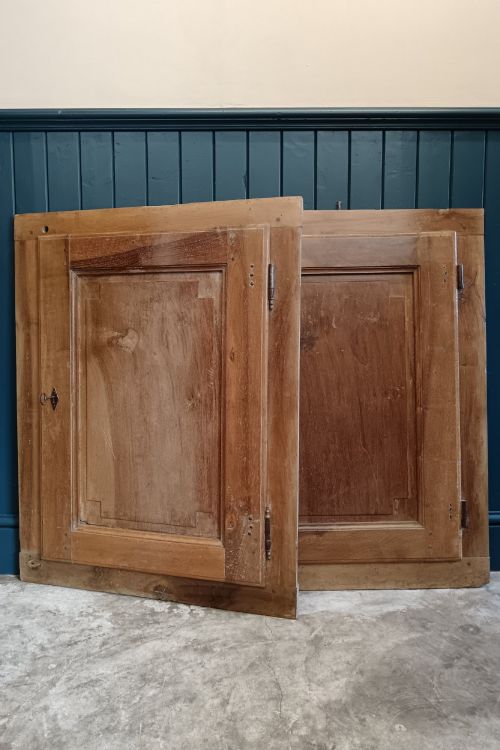


Walnut Wall Cabinet
A walnut wall cabinet brings rich timber tones and practical storage to vertical spaces, drawing on centuries of fine cabinet-making traditions.
Walnut Wall Cabinet
A walnut wall cabinet encompasses a variety of hanging storage forms, from corner cupboards and display units to specialised panetiere bread stores. When searching for a walnut wall cabinet, buyers encounter pieces spanning the 18th century through the Edwardian period and the 1920s.
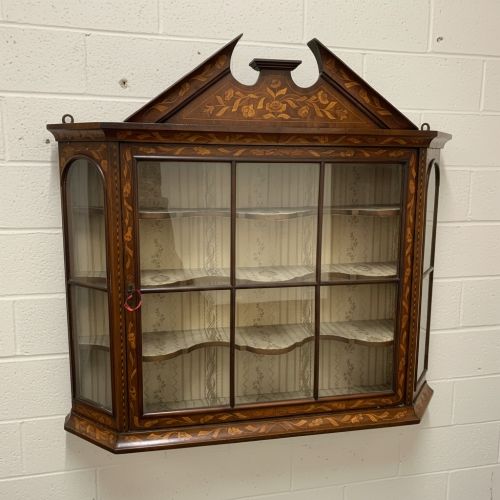
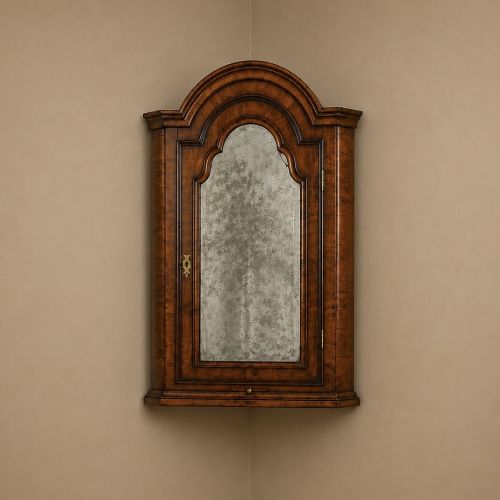
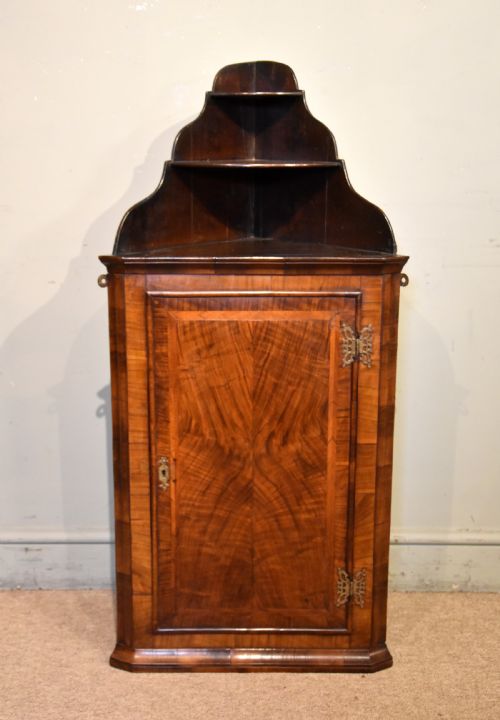
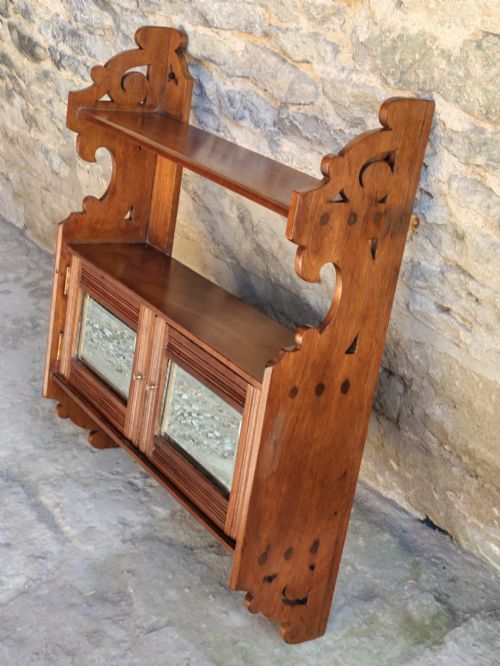
The selection ranges from British Georgian designs and Victorian glazed display units to continental European marquetry and carved French examples. Corner configurations and flat-backed wall hanging models dominate the selection, often incorporating shelves or internal compartments.
Makers and workshops across England, Italy, France, and Northern Europe produced these items using native and exotic veneers, tailored for domestic display and storage in hallways, living rooms, and bedrooms.
How they were made
Cabinet makers utilised solid walnut and highly figured burr walnut veneers applied to secondary woods such as oak, elm, or mahogany. Construction methods combined traditional joinery with decorative techniques including marquetry inlay, floral carving, and turned finials.
Glazing, brass hardware, iron hinges, and mirrored panels frequently integrated into the designs, while specific variations featured fabric linings or hand-painted advertising signs added later in their working lives.
Several Victorian walnut cabinets bear later hand-painted advertising signs for chocolate brands, transforming domestic furniture into unexpected grocery memorabilia.
What varies in quality
The distinction between tiers rests upon the choice of timber figure, such as the richness of burr walnut veneers, alongside the crispness of hand-carved detailing and marquetry work. Construction finesse, original brass or iron hardware, and the preservation of historic glass further separate standard utility pieces from masterwork examples.
Provenance and regional origin introduce additional nuance, where specific Dutch, French, or English stylistic idioms display varying degrees of cabinet-making ambition and architectural proportion.
Arthur Simpson·Urquhart and Adamson·Liberty and Co
The Walnut Wall Cabinet Glossary
- Burr walnut
- A figured wood grain obtained from the warted growths on walnut trees, prized for its swirling patterns on cabinet doors. It adds notable visual depth to veneered surfaces.
- Panetiere
- A traditional French food cupboard, often featuring turned spindles or carved panels, designed to store bread safely off the floor. These pieces frequently double as decorative wall-mounted cabinets.
- Marquetry
- The art of applying pieces of veneer to a structure to form decorative patterns and pictorial scenes. Dutch examples utilise this technique extensively on wall furniture.
- Corner cupboard
- A triangular cabinet specifically constructed to fit neatly into the corner of a room, maximising floor space. Hanging versions attach directly to wall studs.
- Aesthetic movement
- A late 19th-century design style emphasising visual beauty over narrative or moral function, often incorporating Anglo-Japanese motifs. Cabinets from this movement display clean lines and refined artistic detailing.
Walnut Wall Cabinet: Frequently Asked Questions
Where should I hang a wall cabinet?
These cabinets suit dining rooms, hallways, or living spaces where floor area is limited. Secure them directly into structural wall studs to support the weight of the timber and contents.
Ensure the hanging height allows comfortable access to shelves or display items while balancing the proportions of surrounding furniture.
How do I care for walnut wood?
Maintain the timber by keeping it away from direct sunlight and sudden temperature shifts that can dry out old veneers. Dust gently with a dry, soft cloth and avoid modern silicone polishes.
Occasional application of appropriate wax preserves the natural lustre of the walnut grain without sealing the historic surface.
How do I date an antique cabinet?
Examine the secondary woods, construction joints, and hardware styles to determine the period of manufacture. 18th-century pieces often display hand-cut dovetails and pegged joints, whereas Victorian and Edwardian examples show more standardised machine-assisted construction.
Stylistic markers such as Queen Anne curves, Georgian cornices, or Aesthetic Movement motifs provide further chronological clues.