



Walnut Tray Table
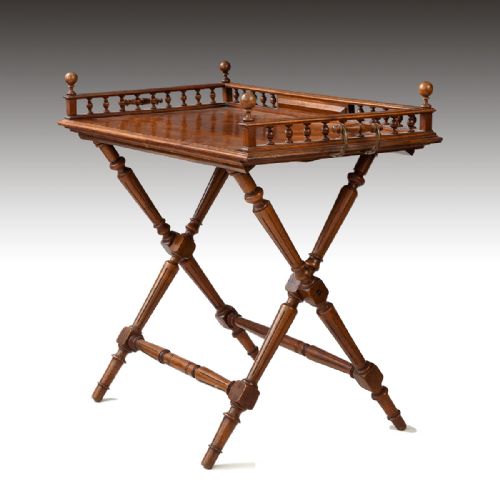
A walnut tray table combines a removable serving surface with a sturdy stand, offering a versatile piece for serving tea or drinks.
Walnut Tray Table
A walnut tray table spans periods from the eighteenth century through the Victorian era and into the early twentieth century, taking the form of occasional tables, coffee tables, and bedside tables.
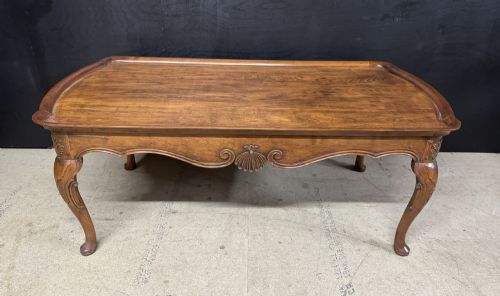
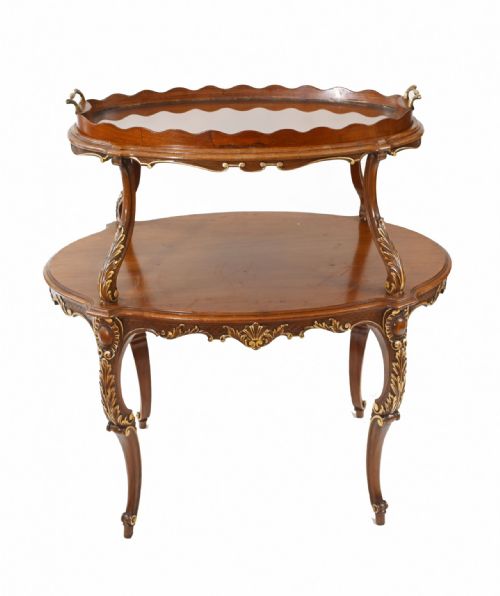
Buyers meet butler trays on folding stands alongside tray-top coffee tables and silver tables, utilising figured timbers and marquetry decoration.
Origins range from English workshops to French, Italian, and Dutch makers, reflecting diverse stylistic revivals including Queen Anne and Louis styles.
Materials and Techniques
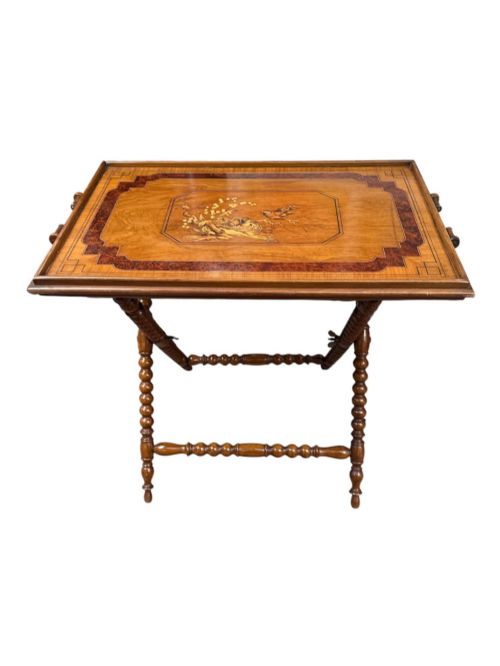
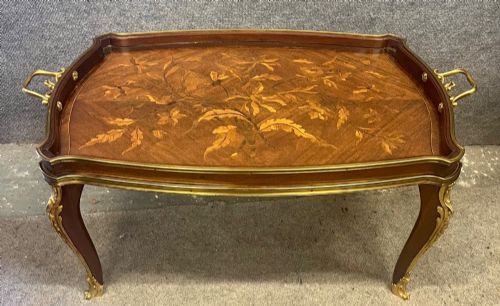
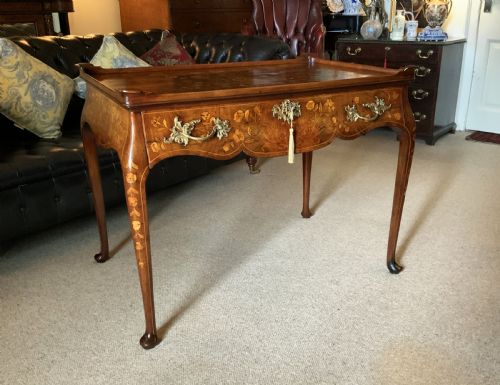
Cabinet makers utilised solid walnut and burr walnut veneers, applying intricate marquetry, floral inlay wood, and olivewood to the surfaces.
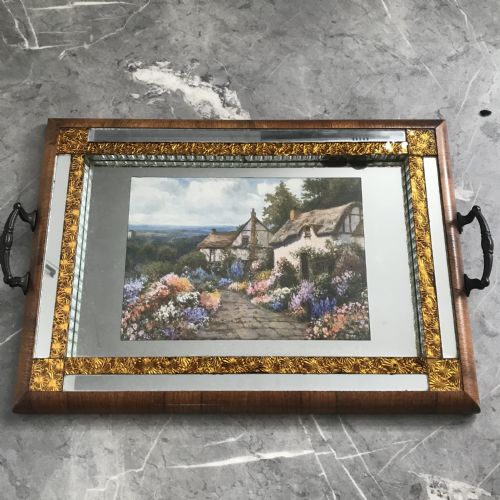
Metal elements such as brass appear on hinges, handles, and gallery frames, while glass tops protect delicate veneer or provide mirrored serving trays.
Materials recorded across the inventory include solid walnut, burr walnut, brass, glass, marquetry inlay, and olivewood.
Design and Execution
The choice of timber grain separates ordinary pieces from superior examples, particularly the depth and movement found in burr walnut and figured veneers.
The integration of the removable tray to its stand dictates the success of the piece, with crisp carving, precise marquetry, and original brass fittings marking the finest workshops.
Whytock and Reid
The Walnut Tray Table Glossary
- Burr walnut
- A figured wood grain obtained from walnut tree growths, prized for its swirling patterns on tabletops.
- Marquetry
- Inlaid pieces of wood fitted together to form decorative pictures or geometric patterns on the surface.
- Butler tray
- A portable serving tray with raised edges and handles, designed to lift off its folding wooden stand.
- Silver table
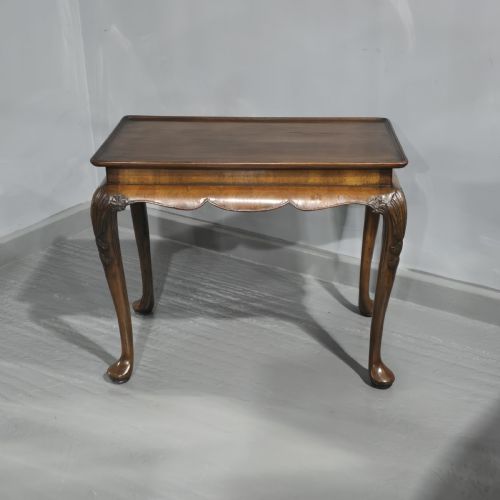
- An occasional table with a raised gallery edge originally intended for displaying silver tea services.
Walnut Tray Table: Frequently Asked Questions
What is a walnut tray table?
A walnut tray table is a dual-purpose piece consisting of a removable serving tray resting upon a fixed or folding support stand.
Craftsmen built these tables using walnut and burr walnut veneers, often incorporating brass handles and raised gallery edges to secure items during transport.
How do I use a tray table today?
These tables function well as flexible coffee tables, bedside stands, or auxiliary surfaces for serving drinks in a sitting room.
The removable tray allows owners to lift the serving surface directly from the stand to carry items between rooms.
Are tray tables eighteenth century?
Examples date from the eighteenth century onwards, with Georgian and Regency periods establishing the classic butler tray on stand format.
Later Victorian, Edwardian, and twentieth-century interpretations continued the form using diverse marquetry and revival styles.
How do I identify burr walnut?
Burr walnut displays dense, swirling grain patterns created by knot growth in the timber, giving the surface significant visual depth.
Cabinet makers selected these veneers for the main surface of tray tops to create a decorative centrepiece.