




Wooden Tea Tray Stand
A wooden tea tray stand offers a practical surface for serving and display, combining traditional craftsmanship with folding convenience.
Wooden Tea Tray Stand
A wooden tea tray stand brings together portable serving surfaces and stable folding or fixed supports, appearing across periods from the eighteenth century to the twentieth. Buyers hunting for a wooden tea tray stand encounter forms ranging from simple butler's trays to elaborate marquetry pieces and tiered cake stands.
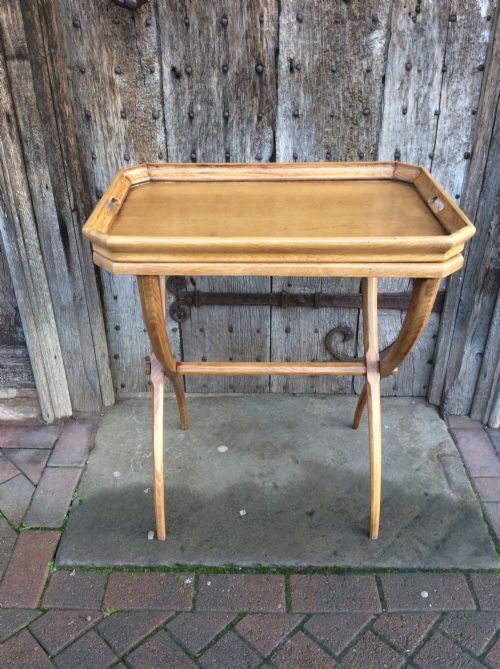
The selection includes folding tables, occasional coffee tables, and side tables in woods such as mahogany, walnut, oak, and hardwood. Many examples incorporate removable trays or integrated stands designed for compact storage and versatile household use.
Origins stretch from British Georgian and Victorian workshops to Chinese Export, Persian, and Anglo-Indian traditions. This variety provides both utilitarian serving pieces and decorative furniture with brass or copper top accents.
Materials and construction methods
Cabinetmakers utilised dense timbers like mahogany, walnut, and oak to build durable frames and trays capable of supporting heavy service items. These woods were frequently shaped into folding X-frames, solid legs, and tiered structures.
Decorative surfaces often feature marquetry inlay using lighter woods such as boxwood and satinwood, alongside carved details. Metal elements, particularly brass and copper tops or hinges, appear on Persian and Anglo-Indian imports to create contrasting textures.
Period styles span eighteenth-century Georgian, Victorian, Edwardian, and regional pieces including Chinese Export and Anglo-Indian designs.
Distinctions in quality and execution
Execution of detail defines the upper tier of these pieces, seen in crisp wood carving, precise marquetry inlay, and tightly fitted folding mechanisms. Finer examples display careful timber selection with balanced grain patterns.
Simpler utility items focus strictly on sturdy construction and functional hinges, while decorative import pieces rely on intricate metalwork and surface engraving. The integration between the tray and its support reveals the builder's skill.
The Wooden Tea Tray Stand Glossary
- Butler's tray
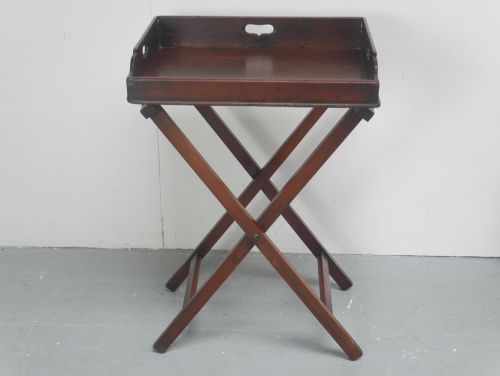
- A portable wooden tray with hinged or panelled sides, designed to lift off a folding stand for serving. It provides a stable surface that packs away flat when not in use.
- Marquetry
- A decorative technique applying fitted pieces of veneer to a wooden surface to form intricate pictures or patterns. It often employs contrasting timbers like satinwood and walnut.
- Tiered stand
- A piece of furniture featuring multiple horizontal surfaces arranged vertically, commonly seen in cake stands and occasional tables. This design maximises display space in compact rooms.
- Occasional table
- A small, versatile table used for specific tasks rather than permanent placement. These items are easily moved around a room to suit daily needs.
Wooden Tea Tray Stand: Frequently Asked Questions
What is a wooden tea tray stand used for?
These pieces function primarily as portable serving surfaces or low display tables for drinks and ornaments. The folding design allows them to serve temporarily in living spaces and pack away when floor space is needed.
Historically, butler's trays carried silver and china from kitchens to parlours, while tiered versions held cakes during afternoon tea. Today they work well as coffee tables or side tables in smaller rooms.
How do I identify a Georgian tray stand?
Georgian pieces typically feature solid mahogany construction with understated lines and precise cabinetmaking. Look for traditional joinery and classical proportions that reflect eighteenth-century design standards.
Later Victorian and Edwardian revivals often incorporated more elaborate carving or marquetry. Comparing the timber density and structural joints helps separate earlier originals from subsequent interpretations.
Are folding tray tables stable?
Most folding stands rely on crossed leg frames or hinged supports designed to lock securely under the weight of the tray. Proper alignment of the wooden pivots ensures the structure remains firm during use.
Over time, folding joints can loosen with regular movement. Gentle handling and checking the pivot pins help maintain stability when opening and closing the stand.
How should I care for antique wood and brass?
Antique timber benefits from occasional waxing to nourish the grain and protect against dry indoor environments. Avoid placing wooden surfaces near direct heat sources that might cause warping.
Brass and copper tops require soft cloths to remove dust without scratching the metal. Keeping moisture away from unsealed wood joints preserves the structural integrity of the piece.