



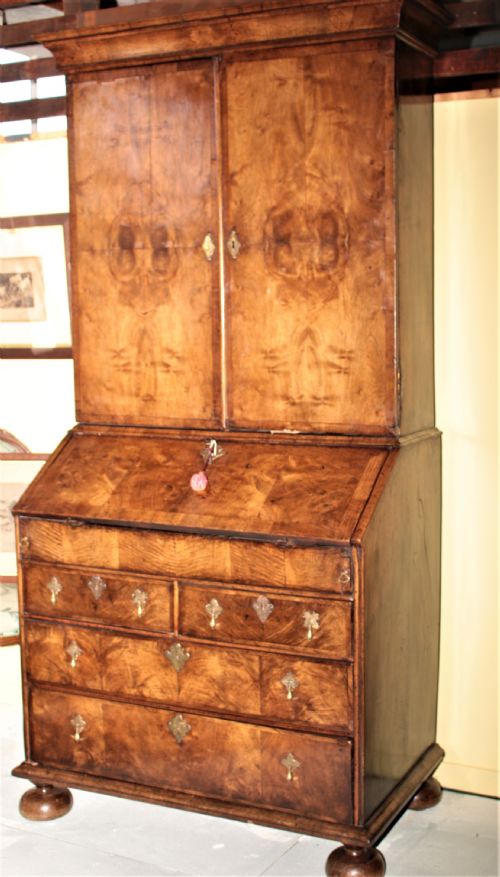
Walnut Tallboy Desk
A walnut tallboy desk combines the vertical presence of a tall chest with a drop-down writing surface, offering both storage and a dedicated workspace.
Walnut Tallboy Desk
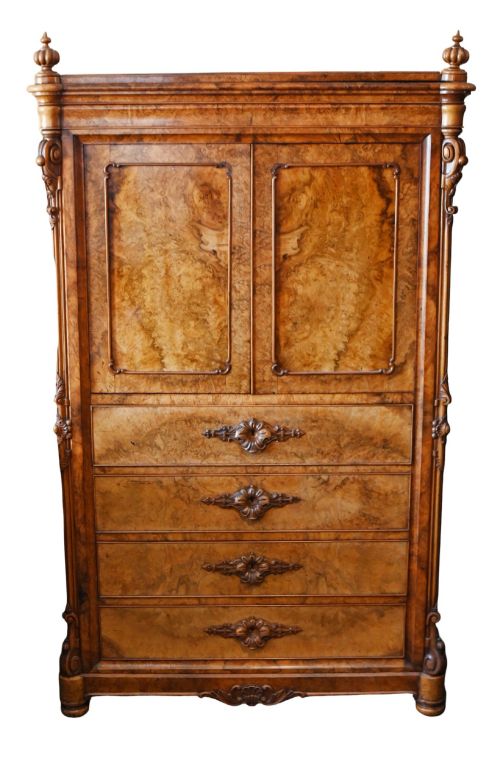
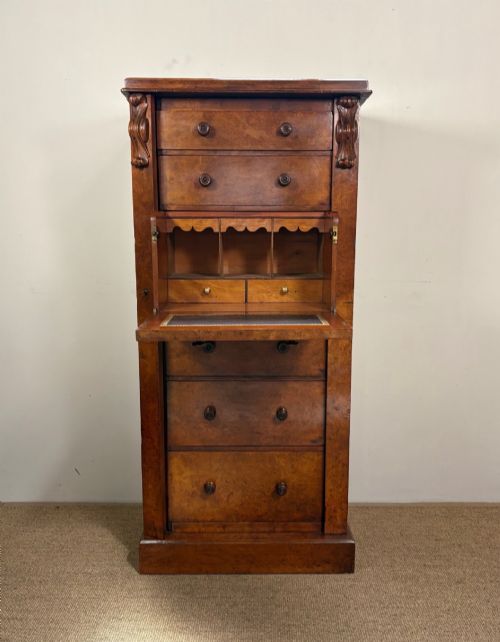
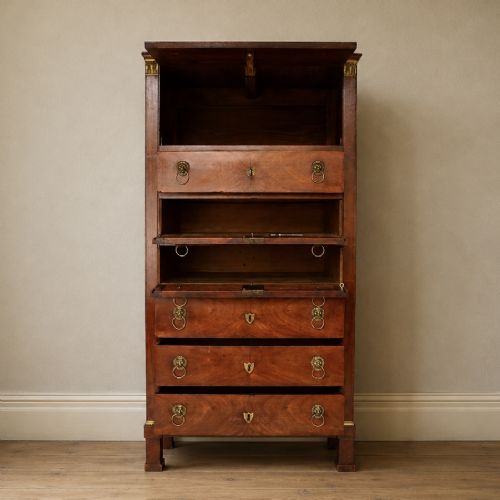
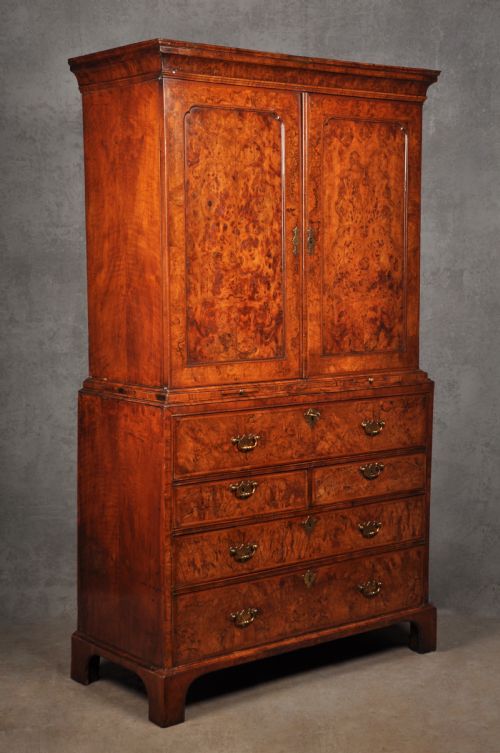
A walnut tallboy desk encompasses pieces categorized across the listings as secretaire cabinets, chest on chest forms, and bureau bookcases. These furniture items provide substantial vertical storage paired with an integrated writing compartment.
The pieces appearing on this page span several eras, with examples originating from the 18th century, 19th century, Edwardian period, and mid-20th century. Styles range from Queen Anne and George I to French Empire, Dutch Empire, and Art Deco.
Buyers are most likely to encounter 18th-century George I and Georgian examples alongside 19th-century secretaire chests and French secretary cabinets. These primary variations incorporate either a fitted bureau drawer or a larger upper cabinet section designed for correspondence.
How they were made
Construction relies heavily on walnut timber, burr walnut veneer, and oak, supported by secondary woods and detailed brass hardware. Cabinetmakers utilised figured veneers to create striking grain patterns across the primary facades of these tall forms.
Writing compartments feature internal configurations of small drawers and pigeonholes enclosed by fitted drop-front writing surfaces or fall-front secretaire drawers. Glass panels appear on upper bookcase sections, while marquetry inlay decorates specific continental pieces.
Listings incorporate multiple periods, spanning from 18th-century George I designs to mid-20th-century Art Deco interpretations.
What varies in quality
Quality differences stem from the selection of figured walnut timbers and burr walnut veneers, where deliberate grain matching elevates the visual impact of the piece. The intricacy of internal compartment joinery and the depth of carved or inlaid details further separate standard examples from finer works.
Proportion and scale dictate the desirability of these tall forms, particularly in smaller examples or sophisticated bureau bookcases from the early Georgian era. The original condition of the brass handles, hinges, and internal drawer linings also influences the overall character of each cabinet.
The Walnut Tallboy Desk Glossary
- Secretaire
- A piece of furniture containing a drawer or compartment that folds down to form a writing desk. It often conceals smaller pigeonholes and concealed compartments within.
- Bureau bookcase
- A combination of a slant-front or drop-front desk base with an enclosed shelving unit or cabinet on top. This dual-purpose form provides both display and workspace.
- Burr walnut
- Timber taken from a walnut tree outgrowth, prized for its swirling, highly figured grain patterns. Cabinetmakers applied this as a veneer to the principal surfaces of high-end furniture.
- Chest on chest
- A tall storage unit constructed in two separate sections, with a smaller upper chest resting on a wider lower base. This configuration maximises vertical capacity while remaining moveable.
- Marquetry
- The art of applying pieces of veneer to a structure to form decorative patterns and pictures. Continental examples frequently utilise this technique for floral or geometric designs.
Walnut Tallboy Desk: Frequently Asked Questions
What is a walnut tallboy desk?
A walnut tallboy desk is a tall storage cabinet that incorporates a dedicated writing surface, often taking the form of a secretaire chest or bureau bookcase.
These pieces combine vertical drawer space with a fold-down or drop-front desk compartment, offering both practicality and traditional cabinetmaking craftsmanship.
How do I identify an 18th-century piece?
Eighteenth-century examples often display early Georgian or Queen Anne stylistic traits, featuring figured walnut veneers, traditional brass hardware, and hand- dovetailed drawer construction.
Closer inspection of the internal timber and secondary woods, such as oak, helps confirm the age and construction methods typical of the period.
Where were these cabinets used?
These tall writing cabinets served primarily in private studies, libraries, and principal bedchambers of large homes. They provided a secure place to manage correspondence and store important documents.
The vertical design allowed homeowners to maintain a functional workspace without occupying excessive floor area in domestic rooms.
How do I care for walnut veneer?
Walnut furniture requires placement away from direct sunlight and heat sources to prevent the timber and delicate veneers from drying out or fading. Regular dusting with a soft, dry cloth maintains the surface finish.
Applying specialised furniture wax occasionally helps nourish the wood and preserve the depth of the grain patterns.