

18th Century Double Chest
An 18th century double chest provides towering vertical storage through two stacked carcases, offering exceptional Georgian timber work for serious interiors.
18th Century Double Chest
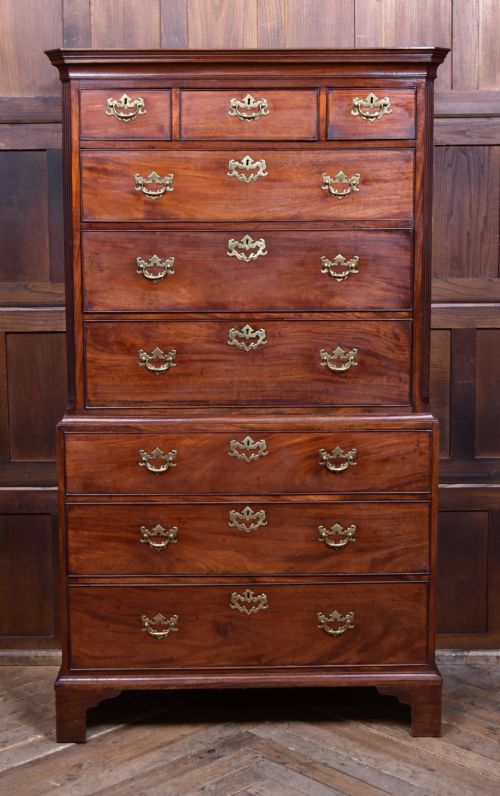
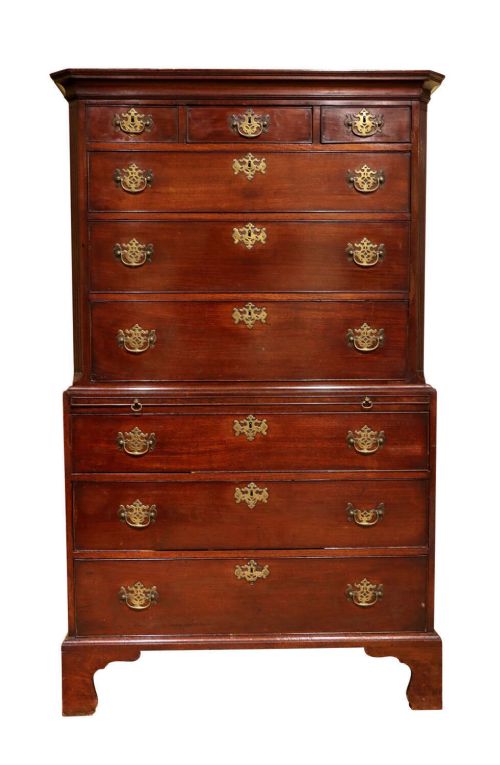
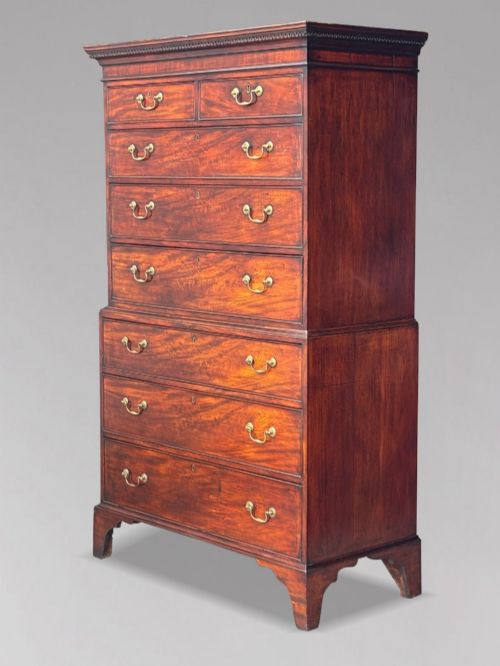
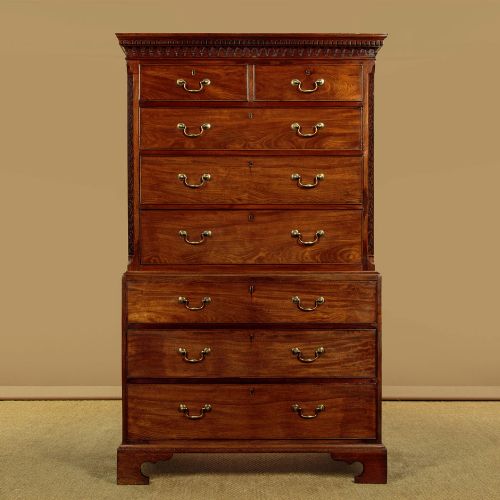
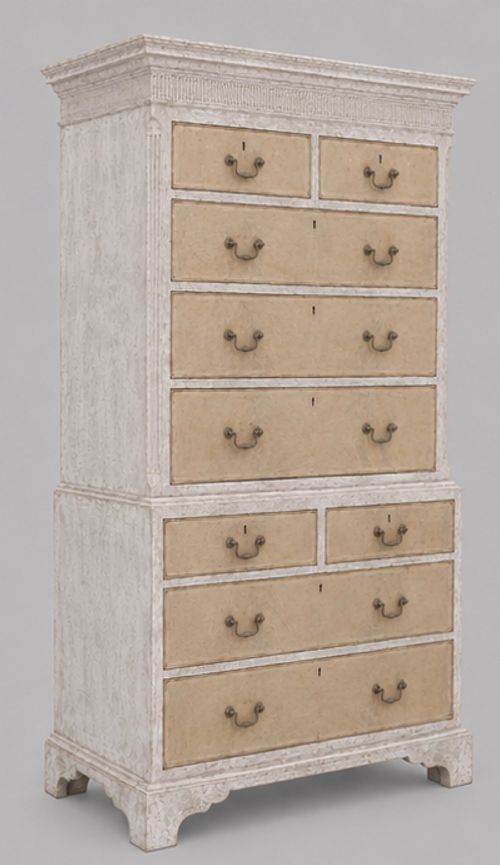
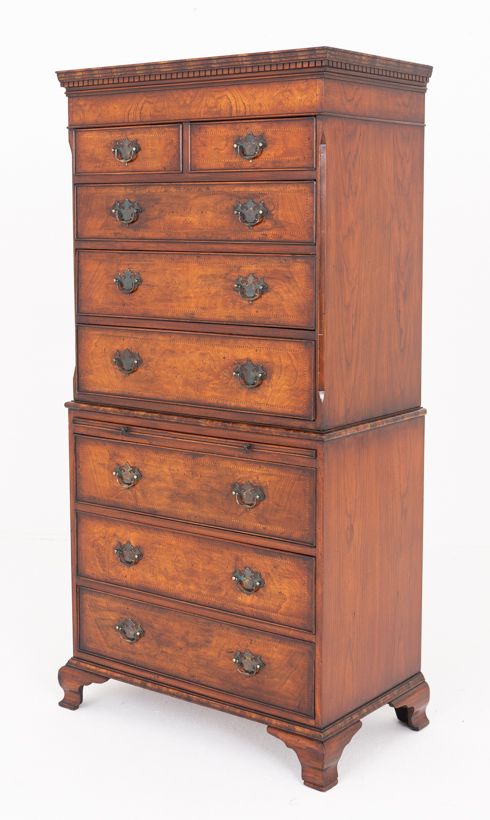
An 18th century double chest typically pairs a narrower upper section with a deeper lower base, creating a commanding presence in any room. These imposing pieces, often termed tallboys or chest on chests, serve primarily as capacious storage furniture.
The versions most commonly met on this page span the Georgian, George III, and George II periods, displaying rich regional and stylistic variations. Makers constructed them from sturdy native timbers as well as imported tropical hardwoods to satisfy elite domestic demands.
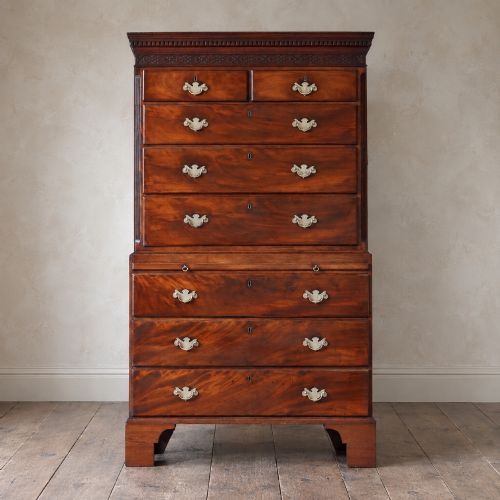
Beyond standard drawer configurations, these large items frequently integrate brushing slides, secretaire drawers, or upper bookcase components. Such additions transform a simple storage unit into a versatile writing and display surface.
Materials and Construction
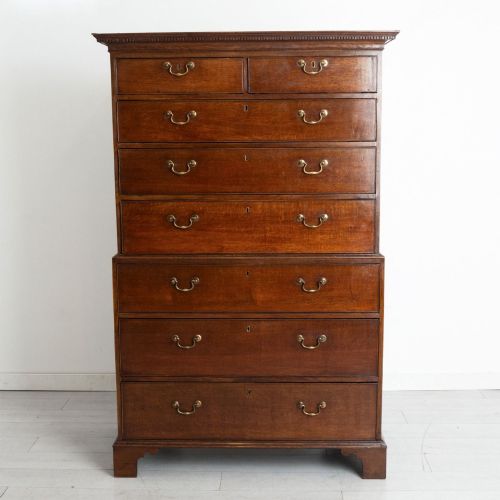
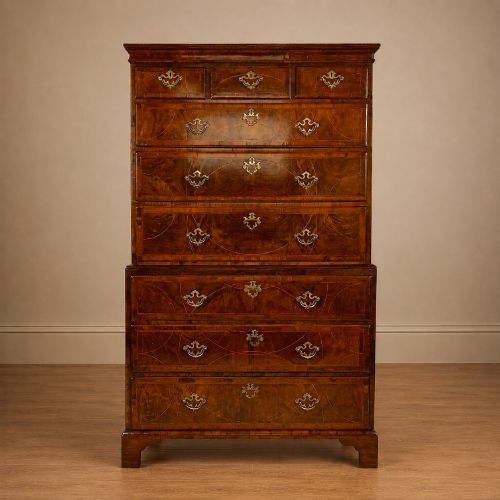
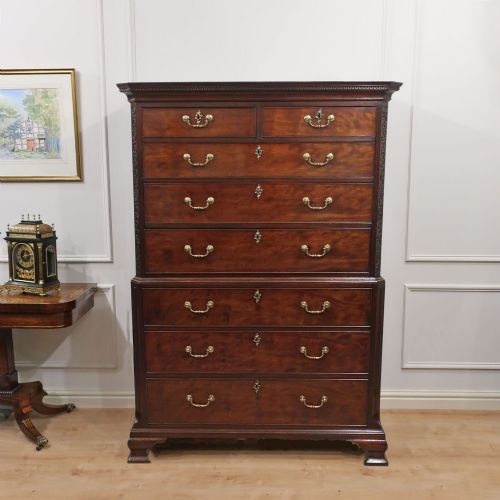
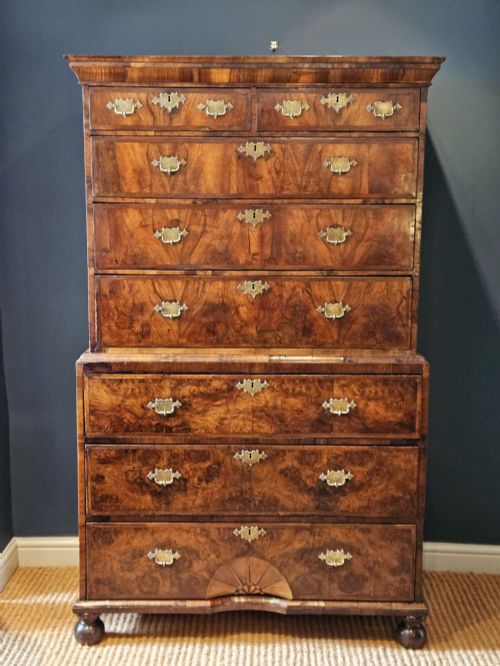
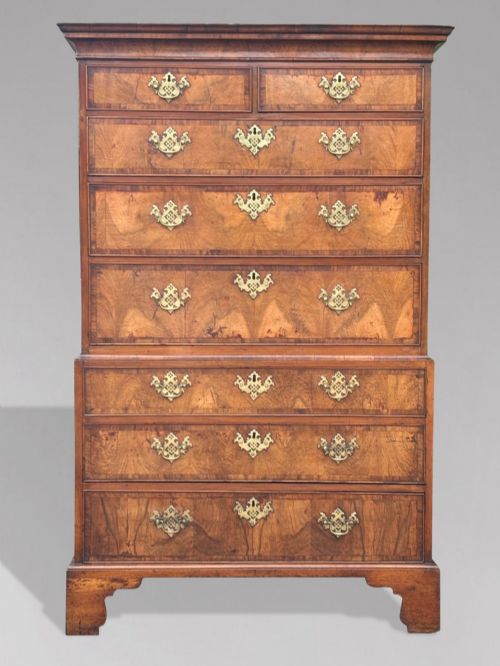
Cabinet makers built these imposing structures predominantly in solid mahogany, oak, and walnut, often selecting highly figured veneers for the primary drawer fronts. Secondary timbers like deal or pine frequently form the internal drawer linings and backboards.
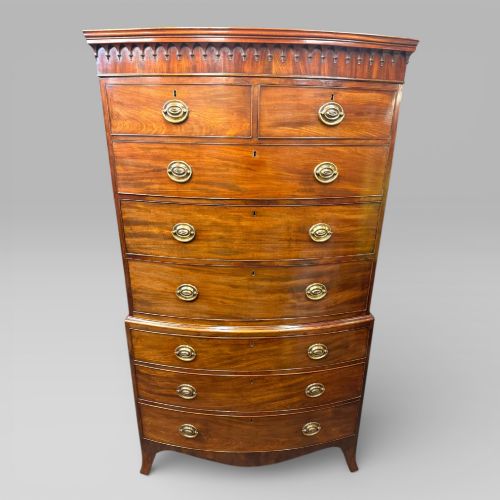
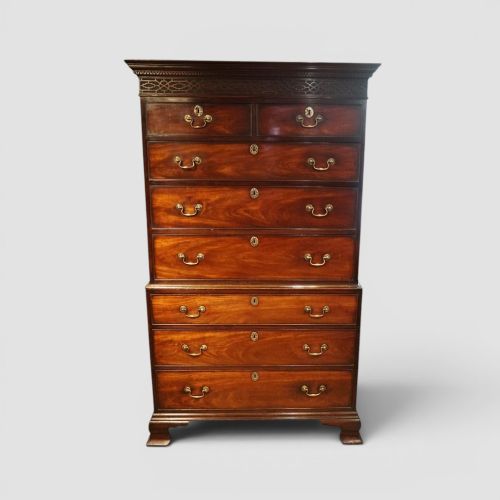
Surface ornamentation relied on sophisticated techniques such as line inlay, fruitwood marquetry, and carved blind fret cornices. Brass hardware, including original swing handles and pierced backplates, completed the construction and secured the stacked sections together.
Current listings feature pieces spanning the early Georgian, George II, and George III periods, constructed in mahogany, walnut, oak, elm, and painted fruitwood.
Quality and Proportion
The distinction between ordinary and exceptional examples rests upon timber selection, figuration, and structural harmony. Finely figured mahogany or burr walnut veneers paired with crisp carving elevate a piece far above plain provincial work.
Proportion and originality dictate the standing of any specimen, particularly the survival of original brass handles, feet, and cornices. Unaltered patination and tight drawer joints distinguish the master cabinet maker's output from later alterations.
The 18th Century Double Chest Glossary
- Tallboy
- A traditional term for a chest on chest, denoting a tall set of drawers split horizontally into two stacked carcases.
- Brushing slide
- A pull-out wooden shelf integrated above the drawers, historically used for folding clothes or writing notes.
- Blind fret
- Carved geometric ornamentation applied to a flat wooden surface, frequently seen running along Georgian cornices.
- Secretaire
- A fitted drawer housing a drop-front writing desk with small pigeonholes and hidden compartments inside.
- Marquetry
- Decorative patterns formed by fitting contrasting pieces of wood veneer into a prepared background surface.
18th Century Double Chest: Frequently Asked Questions
What is an 18th century double chest?
An 18th century double chest is a tall piece of furniture consisting of two separate cabinet sections stacked vertically. It provides numerous drawers for clothing and household linens while occupying minimal floor space.
These pieces belong predominantly to the Georgian era and appear in various woods, including mahogany, walnut, and oak. Their grand scale makes them striking focal points in traditional bedrooms.
How were these tall chests used?
Historically, households utilised these large chests to store garments, bed linens, and personal valuables securely. The upper section held smaller everyday items, whilst the deeper lower drawers accommodated bulkier textiles.
Many examples incorporated sliding shelves or pull-out desks, allowing them to function as makeshift writing bureaus. This dual purpose suited the domestic requirements of Georgian gentlemen and ladies.
How do I live with a tallboy?
Living with a tallboy requires adequate vertical clearance and proper wall anchoring to ensure stability. Because these pieces are heavy and tall, securing them safely protects both the antique and the room.
Position the chest away from direct sunlight and strong heat sources to preserve the timber and veneer. Regular polishing with traditional wax maintains the rich patina of the wood.
How do I tell periods apart?
Distinguishing between periods involves examining the changing styles of cornices, bracket feet, and drawer construction. Early 18th century pieces frequently employ walnut with herringbone inlay and cushion-moulded drawers.
Later Georgian and George III examples favour mahogany with ogee bracket feet, intricate blind fretwork, or oval brass drop handles. Regional provincial pieces often retain simpler lines using native elm or oak.