

Walnut Table with Mirror
A walnut table with mirror brings together warm timber and reflective glass, uniting utility and display across periods from the eighteenth century to Art Deco.
Walnut Table with Mirror
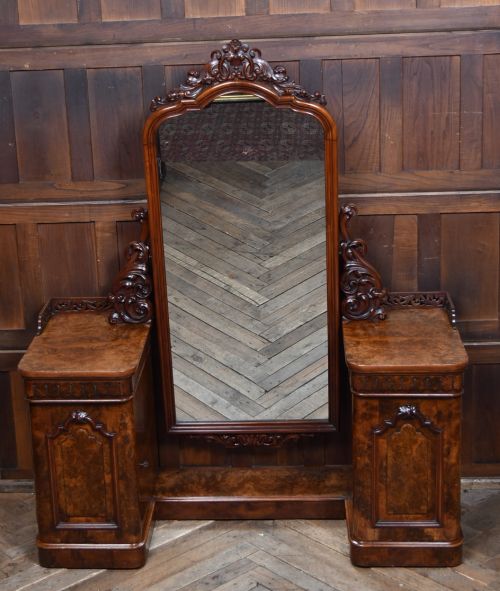
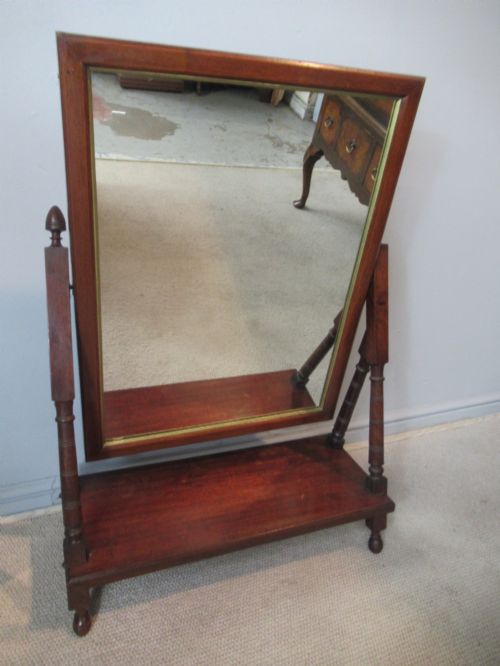
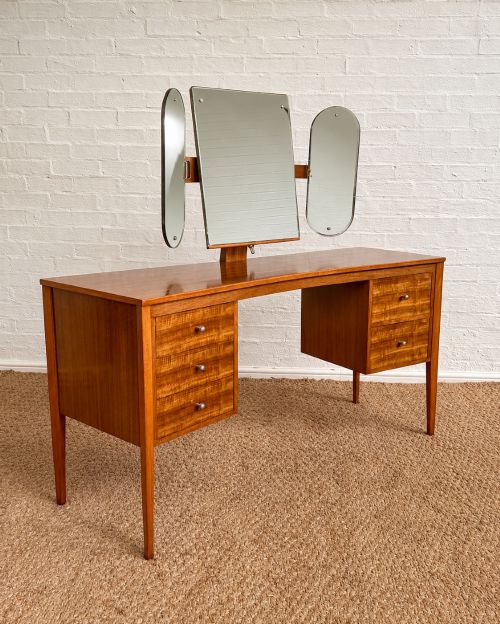
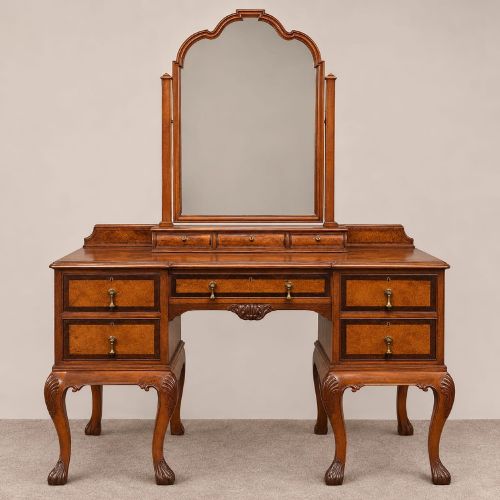
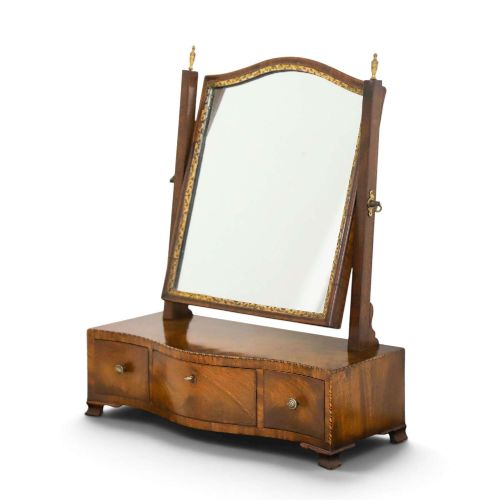
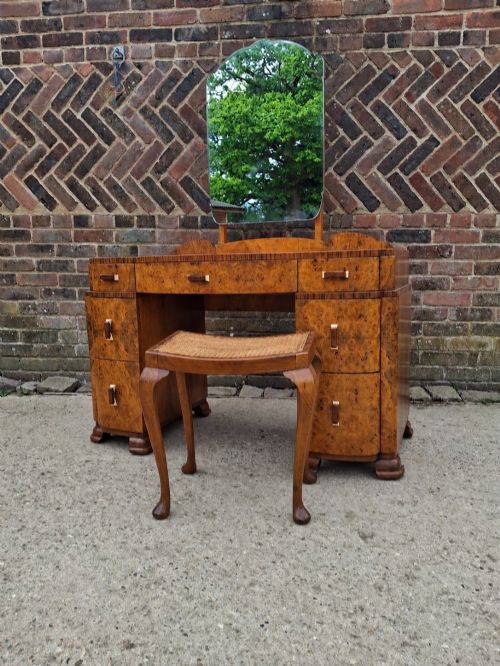
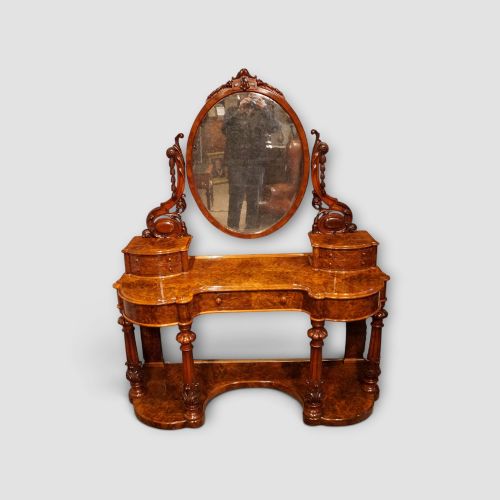
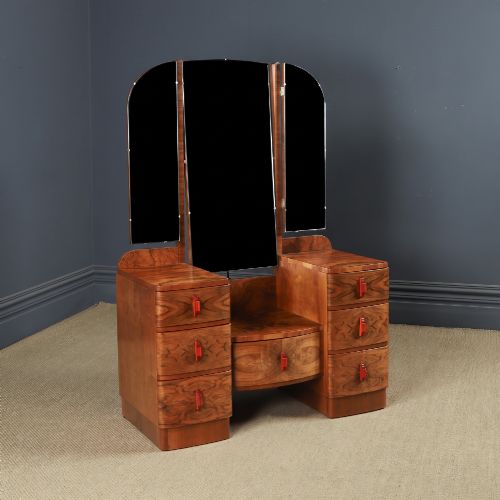
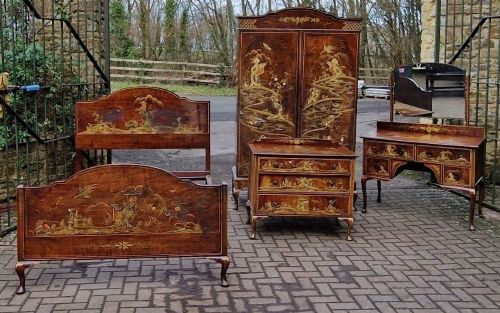
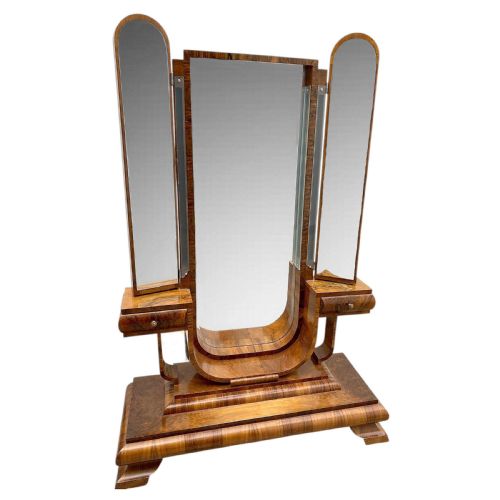
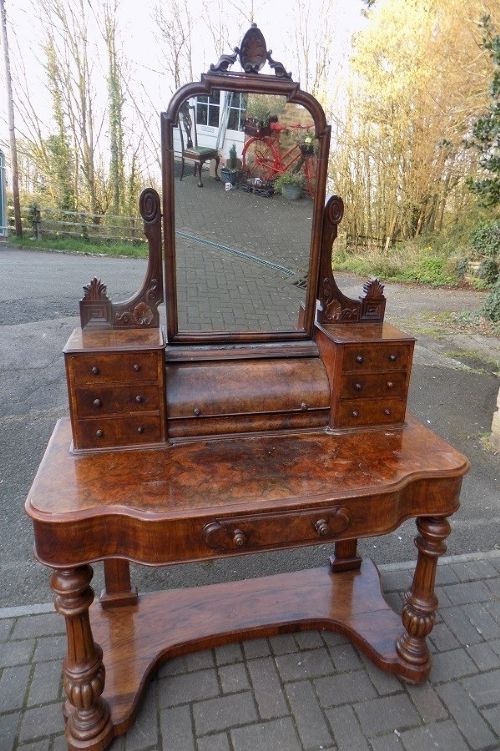
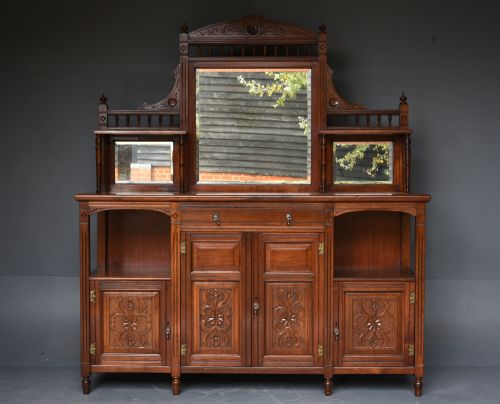
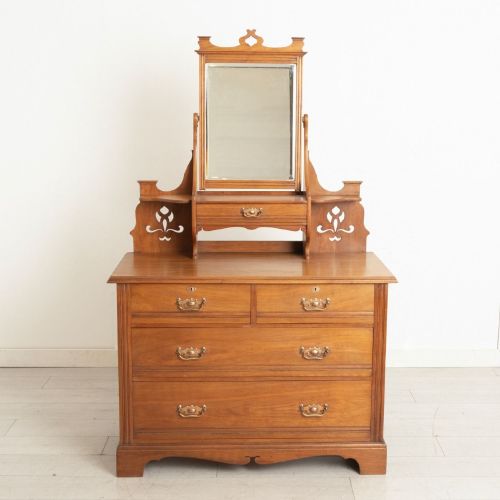
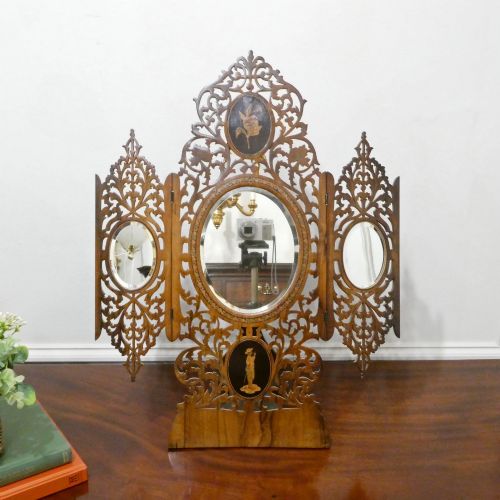
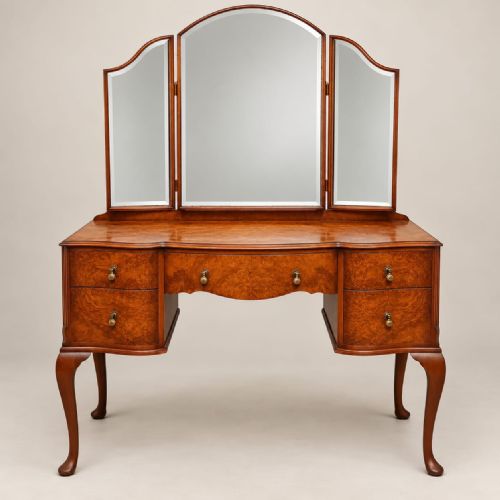
A walnut table with mirror encompasses a diverse range of furniture forms designed for personal grooming and writing, spanning dressing tables, toilet mirrors, and small occasional pieces. Buyers frequently encounter nineteenth-century Victorian pieces alongside eighteenth-century toilet mirrors and twentieth-century Art Deco iterations.
The selection includes substantial pedestal dressing tables with attached or triple mirrors, alongside compact bureau mirrors and desk variants. Examples stretch from simple Queen Anne designs to elaborate Arts and Crafts and Aesthetic movement creations.
Materials and construction
These pieces rely on walnut and burr walnut veneers applied over secondary timbers, often highlighted with figured grain patterns, laburnum, or subtle inlay work. Brass hardware, metal fittings, and fabric elements appear alongside clear mirror glass.
Joinery methods range from eighteenth-century box mirror construction to Victorian pedestals and twentieth-century veneered frames. Glass plates are typically held within swing frames or secured to backing boards on dressing chests.
Walnut Table with Mirror Retail Price Guide 2026
Typical asking prices for walnut table with mirror among the pieces listed under this phrase on Sellingantiques today, from the lower quarter to the upper quarter. They describe what is for sale here now, not the wider market.
Listings feature walnut pieces from the eighteenth century through to Art Deco designs in 1930.
Judging quality
Quality rests upon the selection of the timber figures, where richly patterned burr walnut veneer denotes superior craftsmanship over plain surfaces. The harmony between the table base and the pivoting or fixed mirror frame determines the overall structural integrity.
Refined execution appears in crisp edge mouldings, well-fitted small drawers within bureau fitments, and original brass hardware. The clarity and preservation of the mirror glass contribute significantly to the visual success of the piece.
Shapland and Petter
The Walnut Table with Mirror Glossary
- Burr walnut
- A decorative timber veneer taken from the warted growths on walnut trees, prized for its swirling, mottled grain patterns. It provides a highly figured surface on Victorian and twentieth-century dressing furniture.
- Toilet mirror
- A small table-top mirror, often fitted with small drawers beneath, designed for grooming during the seventeenth and eighteenth centuries. These pieces sit atop a chest or dedicated stand.
- Bureau fitment
- A writing section integrated into a table or chest, incorporating small pigeonholes and compartments for correspondence. It adds a dual-purpose function to mirrors and tables.
- Duchess dressing table
- A large Victorian dressing table style featuring a large central mirror, often flanked by smaller mirrors or trinket drawers above a tiered surface.
Walnut Table with Mirror: Frequently Asked Questions
How do I date an antique walnut mirror?
Dating relies on examining the construction of the mirror frame, the type of walnut veneer, and the bevel or clarity of the glass. Earlier pieces from the eighteenth century employ simple box frames and primary timbers like red walnut.
Later Victorian and Edwardian examples incorporate burr veneers, more complex pedestal arrangements, and machine-cut mirror plates. Comparing the hardware and internal drawer construction to known period styles clarifies the age.
Where should I place a toilet mirror?
Toilet mirrors function well placed upon a sturdy chest of drawers, a side table, or a dedicated dressing surface. Their compact proportions allow them to sit securely in bedrooms or dressing rooms.
Positioning them near natural light enhances their reflective qualities while making use of the small storage drawers often built into their bases.
How do I care for walnut veneer?
Walnut veneer benefits from being kept away from direct sunlight and extreme humidity fluctuations, which can cause the thin wood layer to lift or dry out. Regular dusting with a soft, dry cloth maintains the surface without stripping the polish.
A light application of appropriate furniture wax preserves the warmth of the grain over time.