




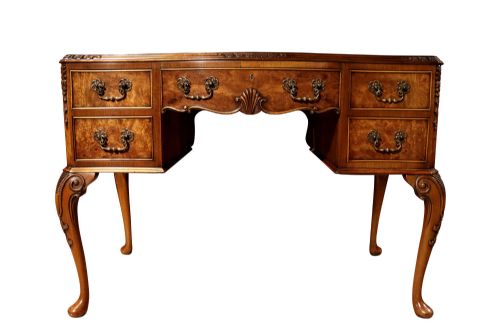
Carved Wood Vanity Desk
A carved wood vanity desk brings together practical surface space and period craftsmanship, offering a dedicated spot for grooming or correspondence.
Carved Wood Vanity Desk
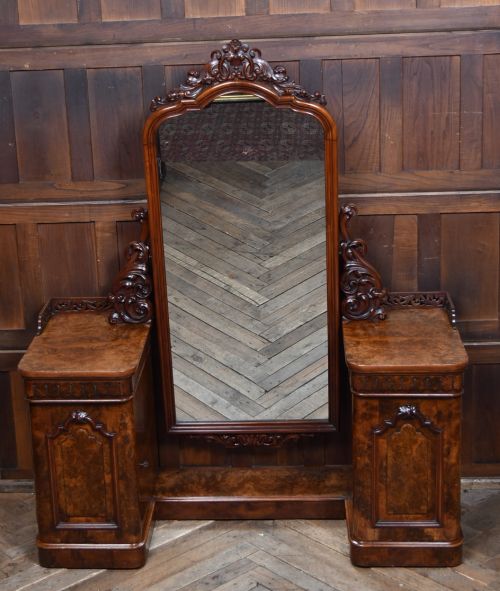
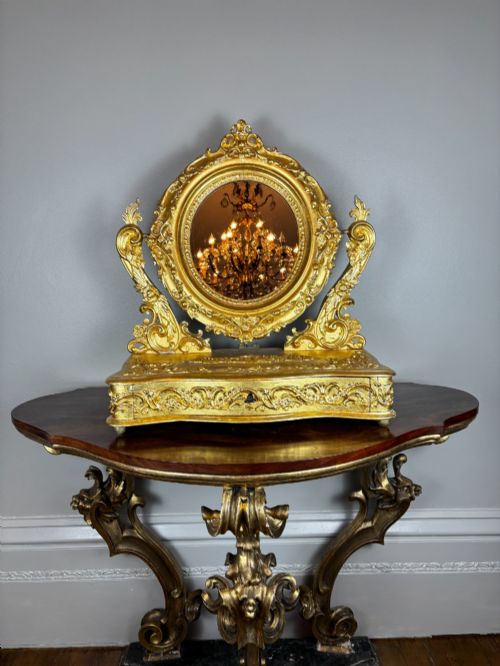
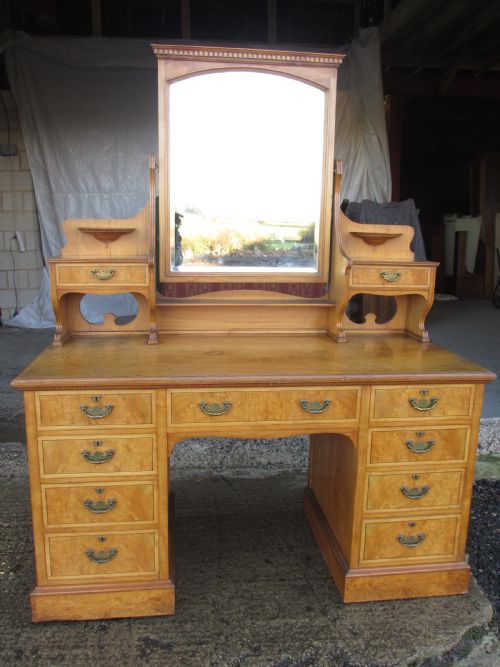
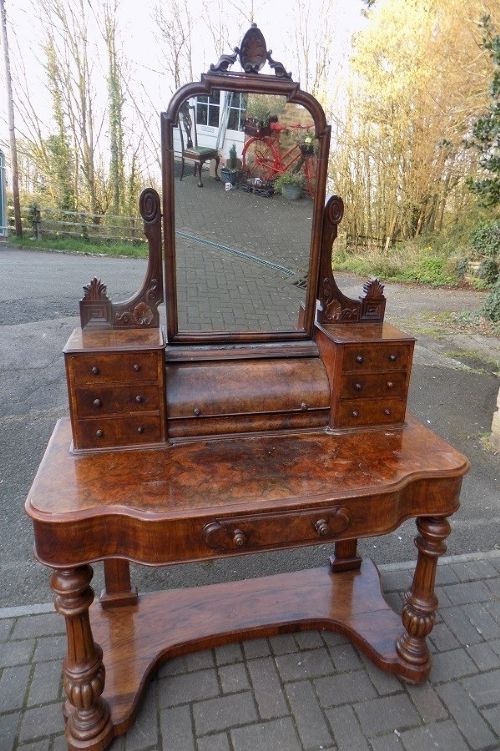
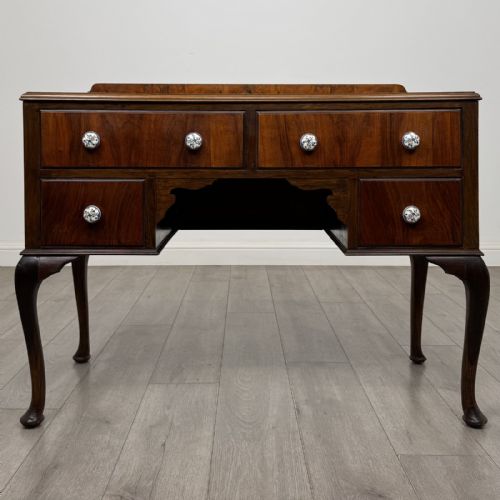
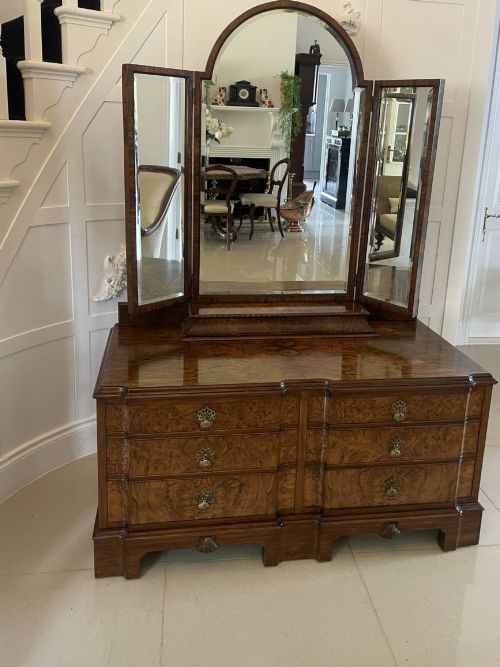
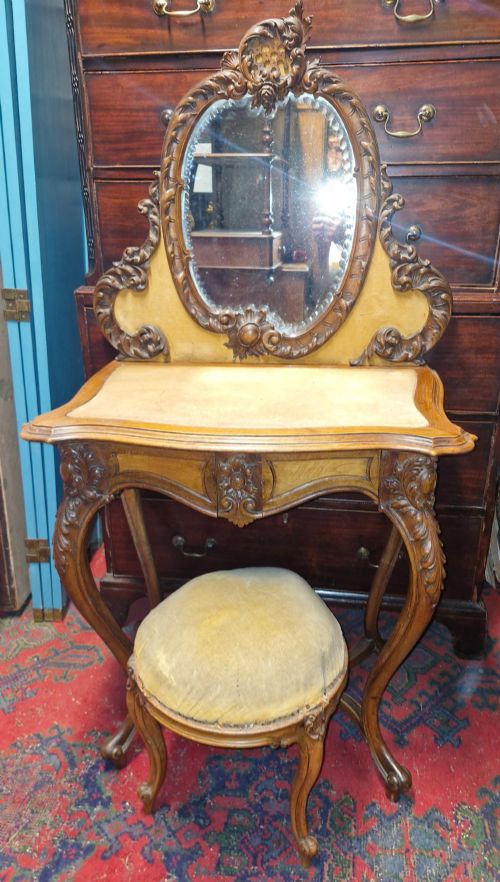
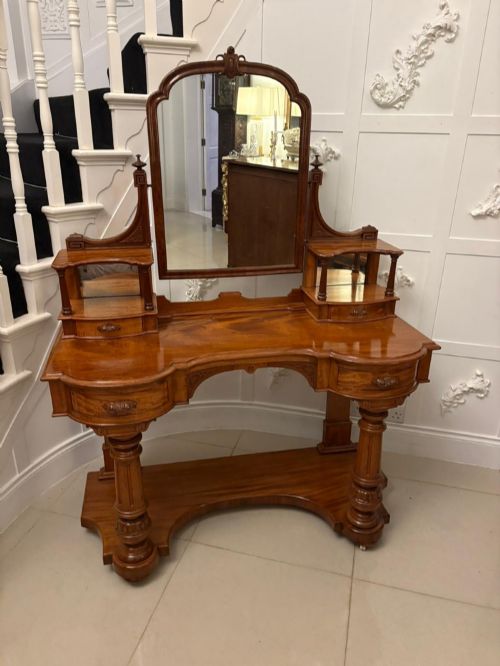
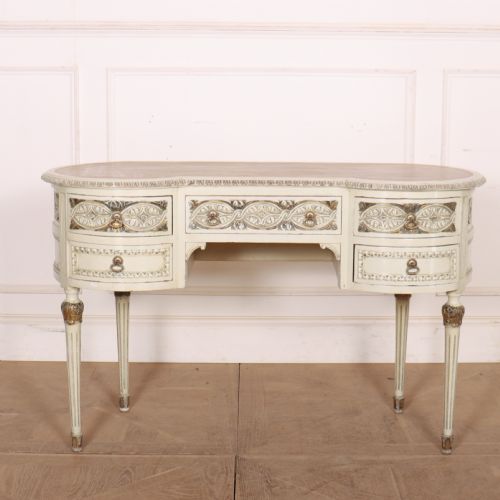
When searching for a carved wood vanity desk, buyers encounter forms spanning dressing tables, writing desks, and lowboys originating from Georgian, Victorian, and Edwardian periods. These pieces combine timber surfaces with integrated mirrors, drawers, or writing compartments.
Surviving examples extend to Georgian mahogany designs and later twentieth-century interpretations influenced by Queen Anne or Chippendale styles. Each variant retains the fundamental combination of a timber carcase and carved ornamentation suited to a bedchamber or dressing room.
Materials and construction methods
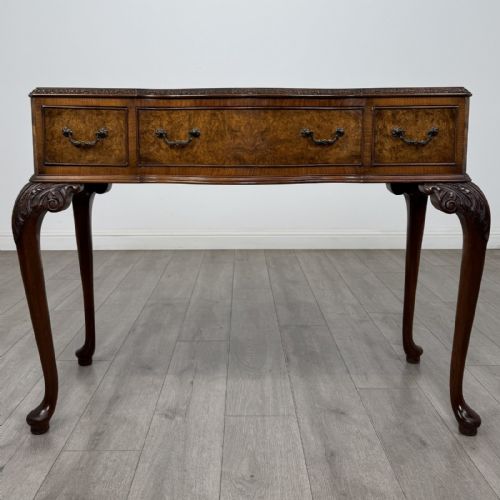
Cabinetmakers utilised solid timbers and decorative veneers, notably burr walnut, flame mahogany, and oak, applied to structural carcases. Surfaces frequently incorporated brass hardware, leather writing inserts, and shaped mirror glass.
Carving was executed by hand directly into the timber frame, embellishing cabriole legs, drawer rails, and mirror supports. Joinery techniques included dovetailed drawers and mortise and tenon framing to ensure structural stability.
Carved Wood Vanity Desk Retail Price Guide 2026
Typical asking prices for carved wood vanity desk among the pieces listed under this phrase on Sellingantiques today, from the lower quarter to the upper quarter. They describe what is for sale here now, not the wider market.
Listings feature pieces spanning from the 18th century to 1930, utilising walnut, mahogany, oak, and rosewood.
Assessing construction and material standards
Quality rests upon the selection of timber figures, such as the richness of burr walnut or flame mahogany veneers. Superior items display crisp, deeply carved motifs rather than shallow or mechanically pressed decoration.
The integration of secondary timbers, original brass fittings, and uncompromised mirror silvering distinguishes finer examples. Construction integrity within the drawer linings and stability in the leg joints further separate standard production from exceptional craftsmanship.
Edwards and Roberts
The Carved Wood Vanity Desk Glossary
- Burr walnut
- A prized timber veneer obtained from the growth excrescences of walnut trees, yielding intricate, swirling grain patterns.
- Duchess dressing table
- A large Victorian dressing table style characterised by a central pivoting mirror and flanking tiered jewellery drawers.
- Cabriole leg
- A furniture leg that curves outward in a convex arc and then bends inward in a concave arc, terminating in a decorative foot.
- Lowboy
- A small eighteenth-century dressing or side table featuring one or more tiers of drawers beneath a flat top.
- Serpentine front
- A furniture front curving outward in the centre and inward at the sides, demanding advanced woodworking skill.
Carved Wood Vanity Desk: Frequently Asked Questions
What is a carved wood vanity desk used for?
These pieces served historically for personal grooming, hair styling, and private correspondence within the bedroom or boudoir. They provide a surface for daily routines alongside storage drawers for cosmetics and writing materials.
In modern interiors, they function effectively as compact writing desks or decorative dressing tables. Their surface area accommodates modern stationery or laptops while preserving period character.
How do I distinguish between Victorian and Georgian desks?
Georgian pieces generally display restrained classical proportions, rectilinear or serpentine mahogany forms, and understated bracket feet. They reflect eighteenth-century ideals of symmetry and structural clarity.
Victorian examples tend to be larger, utilising burr walnut or satinwood with heavier carved ornamentation, elaborate mirror superstructures, and varied revival styles such as Rococo or Art Nouveau.
Where should I place a vanity desk in a room?
Positioning these items near a natural light source maximises the utility of the integrated mirror for dressing or writing. Placing them against a bedroom or study wall highlights the carved timber details and grain patterns.
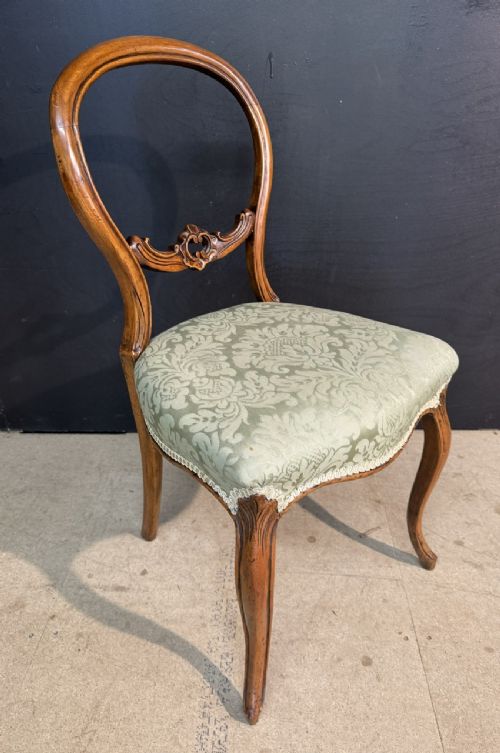
Ensure adequate clearance for associated seating, such as matching side chairs or slipper chairs, to maintain comfortable daily access to the drawers and surface.
How do I care for antique wood surfaces?
Maintain the timber by dusting regularly with a soft, dry cloth and avoiding silicone-based polishes that can degrade the finish over time. Keeping the furniture away from direct heat sources and strong sunlight preserves the veneer and wax layers.
Period leather inserts benefit from occasional gentle conditioning, while mirror glass requires mild cleaning solutions applied to the cloth rather than directly onto the antique silvering.