




Walnut Splat Back Chair
A walnut splat back chair brings structural elegance and deep timber tones to a room, offering both durability and classical form.
Walnut Splat Back Chair
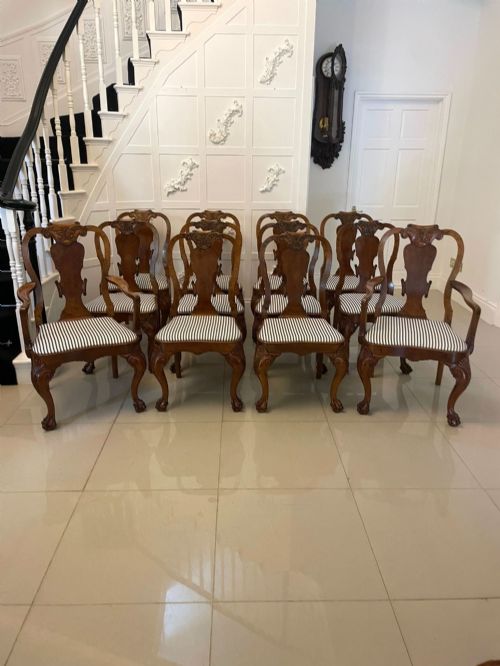
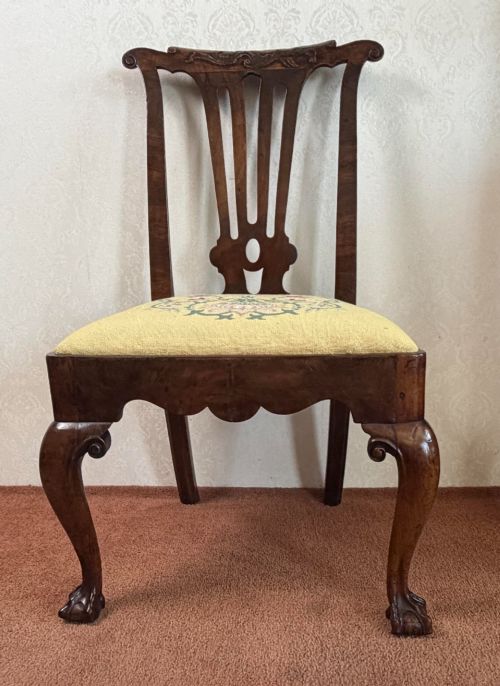
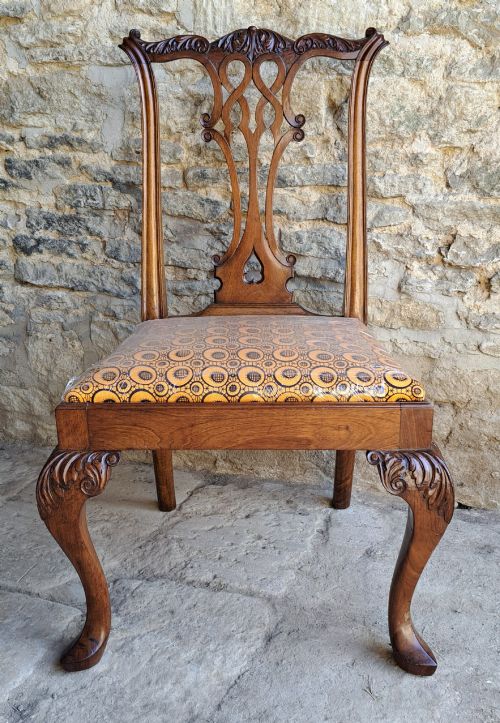
The material palette extends beyond the primary timber to encompass various upholstered elements. Drop in seats and fixed pads frequently appear covered in fabric, textile, leather, velvet, tapestry, and red upholstery. Brass details and parcel gilt additions also emerge on specific high status examples from the collection.
What varies in quality
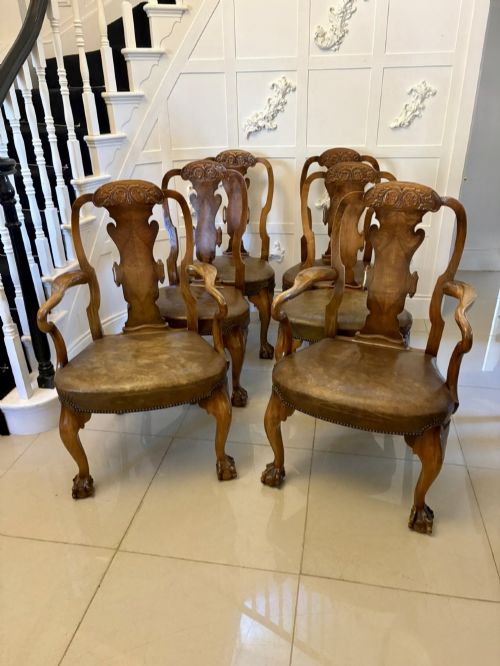
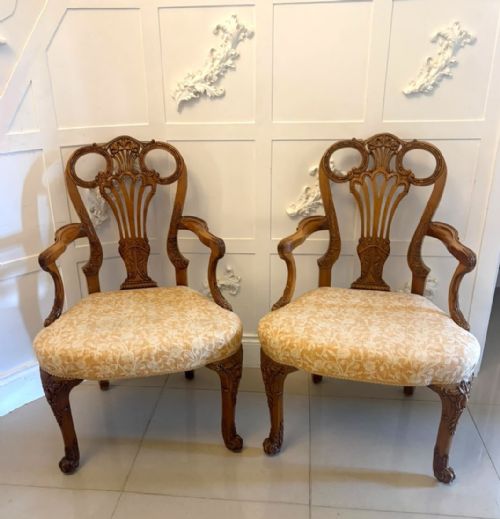
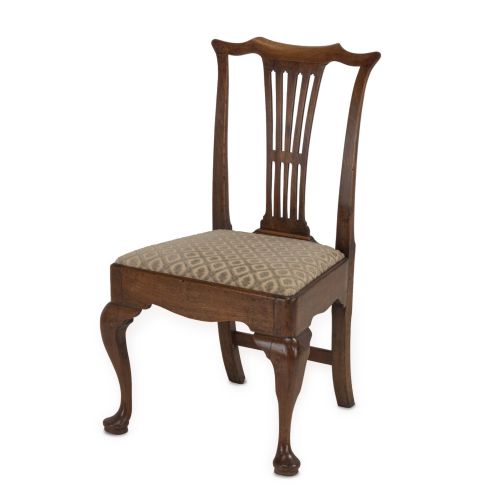
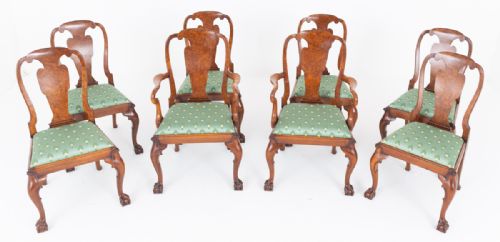
The standard of a walnut splat back chair rests upon the selection of timber and the crispness of the carving. Finely figured burr walnut and rich red walnut distinguish superior examples from plain domestic stock. The proportion and thickness of the central splat determine the architectural balance of the entire frame.
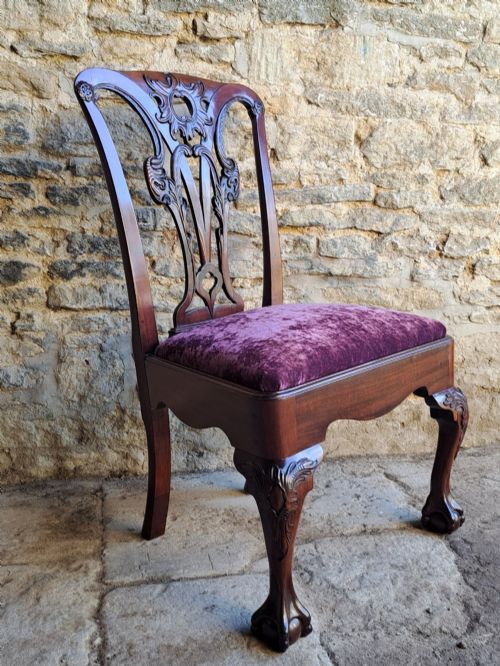
Execution of decorative elements such as pierced splats, carved crest rails, and Dutch marquetry indicates the skill of the original workshop. Cabriole legs finished with refined feet demonstrate superior sculptural work compared to simpler straight or plain turned supports.
Listings feature walnut splat back chairs spanning the eighteenth, nineteenth, and twentieth centuries, incorporating Queen Anne, Georgian, and Victorian styles.
Charles Tozer·Whytock and Reid of Edinburgh·Spillman and Co
The Walnut Splat Back Chair Glossary
- Splat back
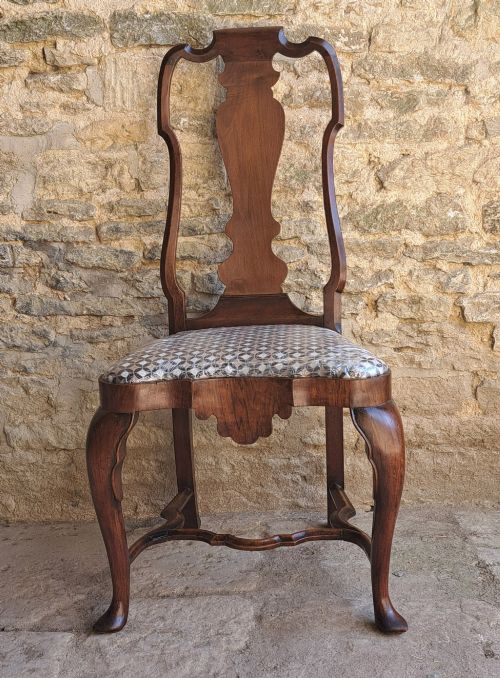
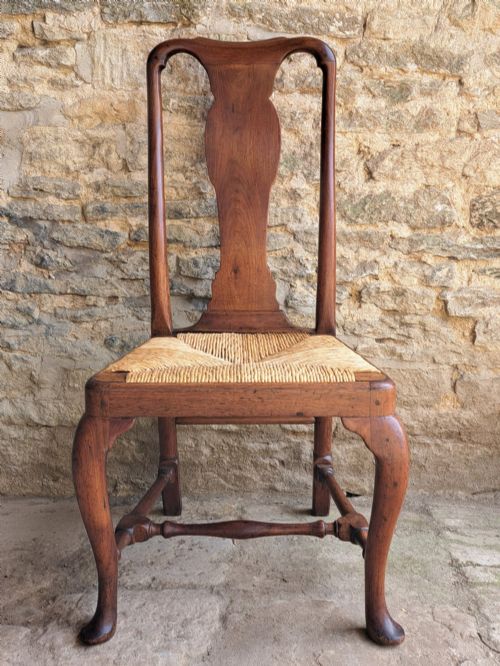
- A chair design featuring a central vertical wooden slat fitted between the seat and the top rail. This structural element provides lumbar support while offering a canvas for decorative carving or pierced shaping.
- Cabriole leg
- A furniture leg that curves outward in a convex arc and tapers inward in a concave arc, resembling the leg of an animal. This form frequently terminates in pad or claw and ball feet on eighteenth century seating.
- Drop in seat
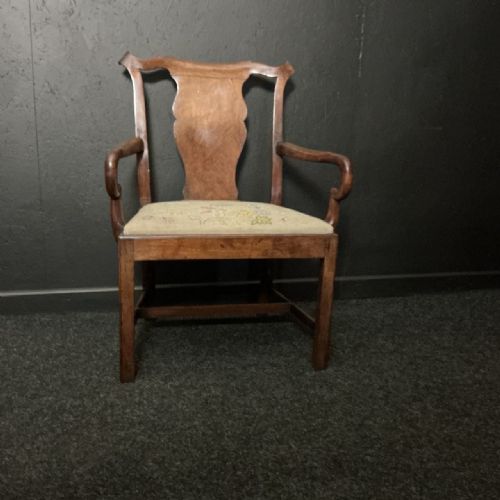
- A removable wooden frame upholstered separately and dropped into a recess in the chair rails. This construction method allows for straightforward reupholstery without dismantling the primary frame.
- Burr walnut
- Wood sourced from the growth growths of walnut trees, yielding complex swirling grain patterns. Cabinet makers prized this veneer for high status cabinet work and chair backs.
- Marquetry
- The art of applying decorative pieces of veneer to a structure to form intricate pictorial designs. Dutch makers utilised this technique extensively on high back dining chairs.
Walnut Splat Back Chair: Frequently Asked Questions
What is a walnut splat back chair?
A walnut splat back chair is a wooden seat featuring a central vertical wooden slat within the backrest, constructed primarily from walnut timber. These pieces range from eighteenth century originals to later revival editions.
They serve various functional roles, including dining, desk work, and general household seating, defined by their distinct timber grain and classical silhouettes.
How do I date a walnut splat back chair?
Dating involves examining the construction methods, timber selection, and stylistic cues present in the frame and carving. Eighteenth century examples often feature hand shaped joinery and dense, patinated walnut.
Later Victorian and twentieth century revival pieces display different tool marks, standardised dimensions, and manufacturing techniques typical of their respective eras.
Where were these chairs used?
These chairs functioned primarily in formal dining rooms, studies, libraries, and parlours of period homes. Desk variants suited administrative tasks, while armchairs provided seating for head of table or reading use.
Smaller childs chairs and side chairs served secondary residential spaces, matching the decorative scheme of the main reception rooms.
How do I live with antique walnut furniture?
Living with antique walnut involves placing pieces away from direct heat sources and sudden humidity changes to protect the timber and veneer. Regular dusting and occasional maintenance keep the polished surfaces stable.
Upholstered drop in seats can be maintained or updated with appropriate period textiles to suit modern domestic environments while preserving the core structure.