

Walnut Sideboard Server
A walnut sideboard server anchors a dining room with rich timber grain and practical surface space, offering generous storage for dining ware.
Walnut Sideboard Server
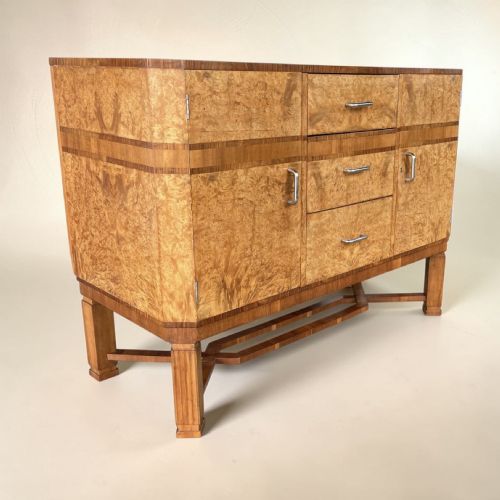
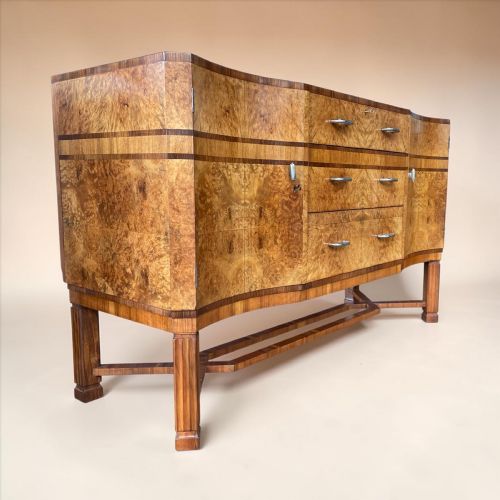
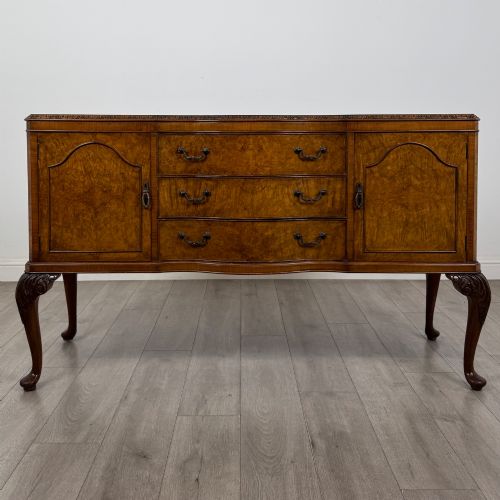
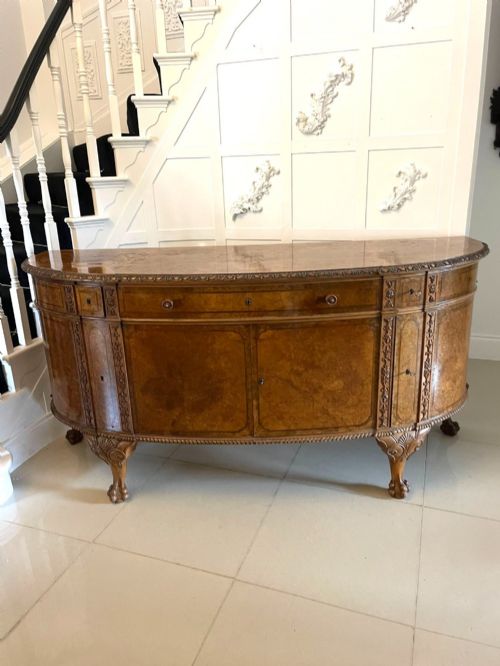
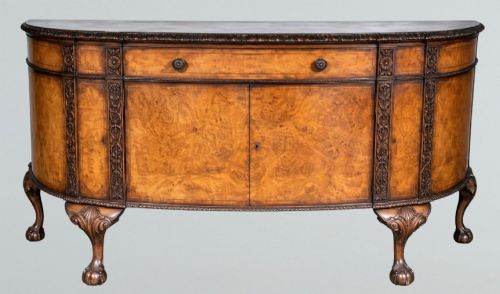
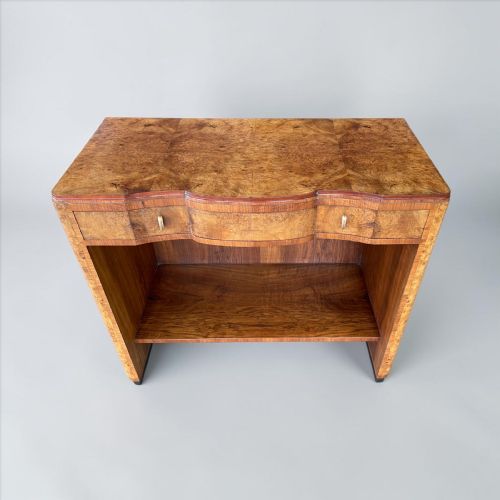
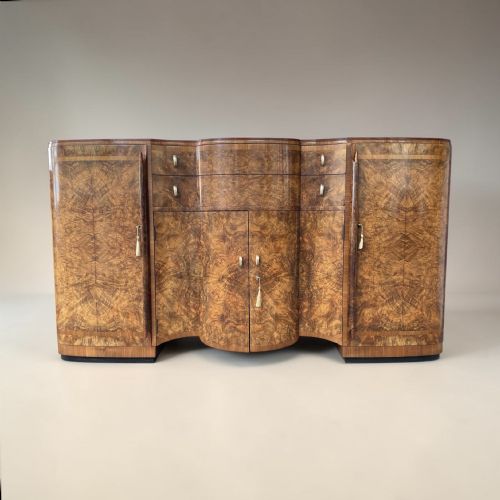
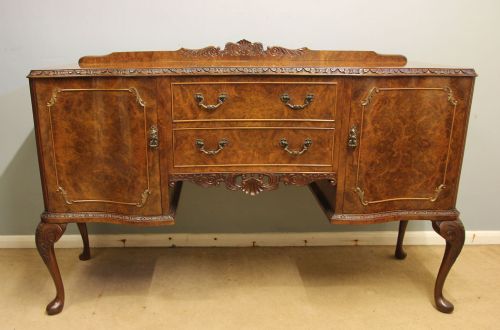
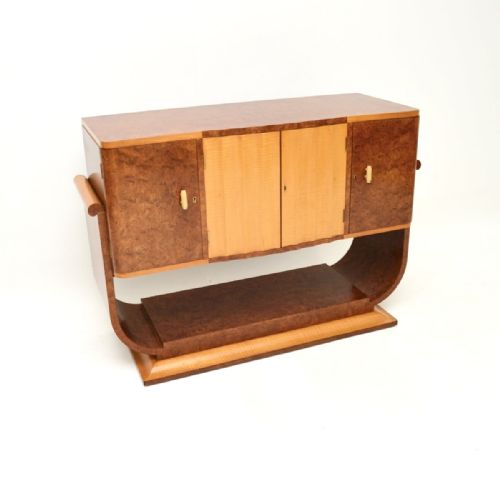
A walnut sideboard server combines the functions of a serving table and a storage cabinet, designed primarily for dining rooms and entertaining areas. These pieces span several centuries and styles, though Queen Anne revival and Art Deco examples dominate the available selection.
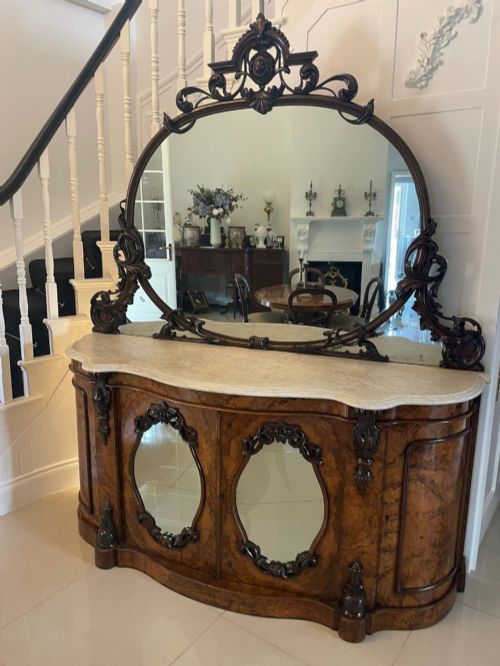
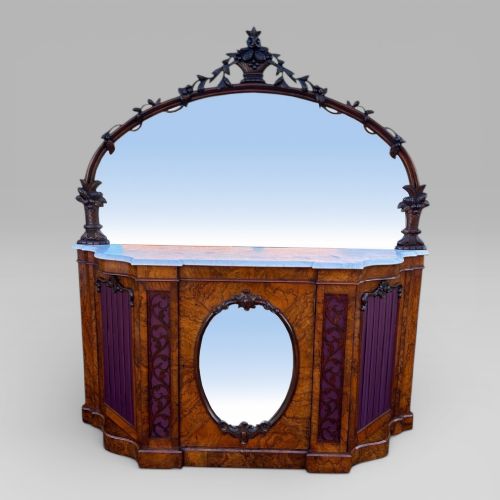
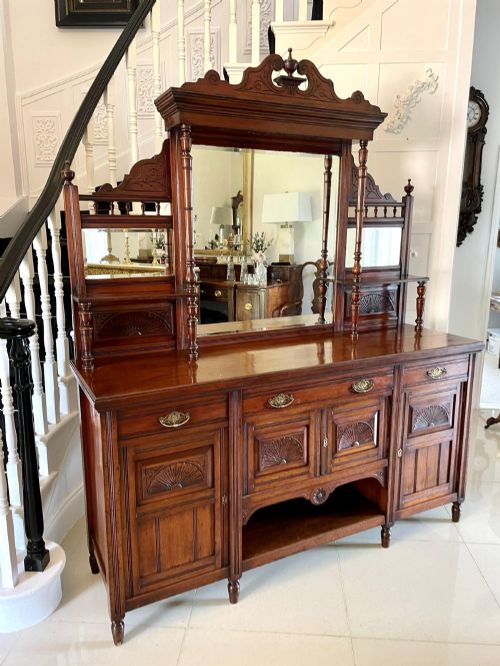
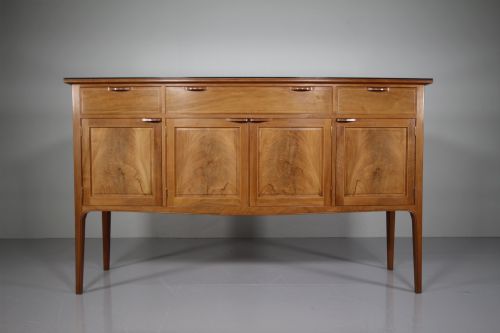
Forms range from serpentine front servers and credenzas to compact cocktail cabinets and larger Victorian buffet tables with carved mirror backs. Buyers encounter varied formats including bow fronts, breakfronts, and simpler console tables suited to domestic dining spaces.
Origins stretch from English workshops to French provincial cabinet makers, incorporating regional traits like marble tops or ormolu mounts. The underlying construction consistently serves the dual purpose of display and concealed storage.
Materials and Construction
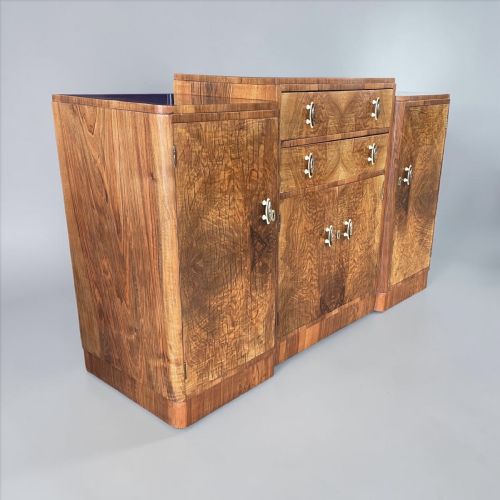
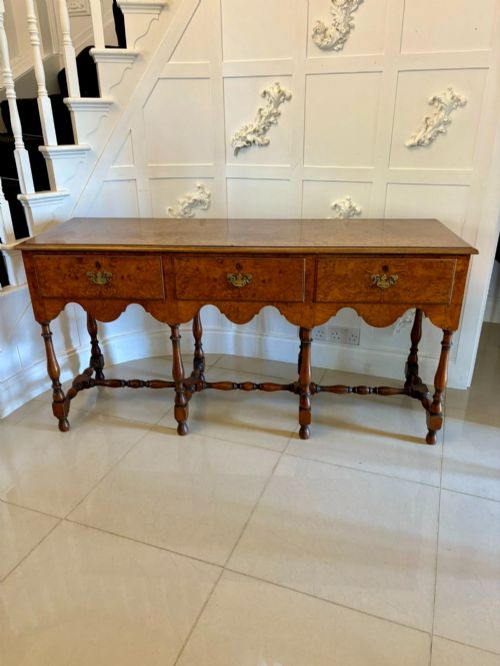
Cabinet makers utilised solid hardwood framing overlaid with figured walnut and burr walnut veneers to create striking symmetrical grain patterns across the front doors and drawers. These surfaces often receive a polished finish that highlights the complex swirling figures of the wood.
Secondary materials such as brass handles, marble slabs, mirrored glass backs, and mother-of-pearl inlay appear across Victorian, Edwardian, and Art Deco pieces. Structural integrity relies on traditional joinery within the hardwood carcase to support heavy timber and stone components.
Listings span multiple eras from the nineteenth to the twentieth century, with Queen Anne revival and Art Deco styles frequently represented in burr walnut.
Assessing Quality and Craftsmanship
Quality rests upon the selection of timber veneers, where continuous matching grain across drawer fronts distinguishes finer workshops from standard production. The density and figuring of the burr walnut dictate the visual impact of the piece.
Construction details such as dovetailed drawer boxes, heavy marble slabs, integrated cutlery compartments, and stamped maker signatures elevate specific items. The precision of curved serpentine or bow fronts further marks superior cabinet work.
Maurice Adams·Edward Barnsley·Epstein·Hille of London·Hamptons of Pall Mall London·Harry and Lou Epstein
The Walnut Sideboard Server Glossary
- Burr walnut
- A prized timber harvested from tree growths that produces intricate, swirling grain patterns. Cabinet makers prized this wood for veneering prominent surfaces.
- Serpentine front
- A furniture front characterised by a concave central section flanked by two convex curves, or the reverse. This shape requires advanced woodworking skill to execute properly.
- Credenza
- A dining room cabinet used for storing and serving food, often featuring sliding doors or extensive cupboards. Victorian examples frequently include decorative mirror backs.
- Dumbwaiter
- A tiered serving stand or small sideboard designed to hold dishes without requiring constant attendance from staff. These pieces often feature pivoting or telescopic sections.
- Breakfront
- A large cabinet where the central section projects forward from the flanking wings. This architectural arrangement creates depth and visual rhythm in formal dining furniture.
Walnut Sideboard Server: Frequently Asked Questions
How do I distinguish an Art Deco server from a Victorian one?
Art Deco servers rely on clean geometric lines, streamlined shapes, and dramatic burr walnut veneers without historical revival ornamentation. They date predominantly to the nineteen-thirties and feature minimalist hardware.
Victorian pieces incorporate heavy carved details, mirrored backs, and darker timber tones, often referencing earlier historical periods like the Renaissance or Gothic revivals. Their construction is generally heavier and more ornate.
What is the difference between a sideboard and a server?
A server is traditionally a more compact piece focused primarily on surface space for plating food during meals, occasionally featuring fewer cupboards. Sideboards tend to be larger, offering deeper storage capacity with multiple drawers and cabinets.
In historical listings, makers and retailers frequently used these terms interchangeably, meaning many pieces perform both storage and serving functions equally well.
How should I care for walnut veneer surfaces?
Walnut veneer requires protection from direct sunlight and extreme humidity fluctuations to prevent the timber from fading or the glue from lifting. Dusting regularly with a dry cloth maintains the finish.
Avoid placing hot serving dishes or wet glasses directly onto the polished wood surface to prevent ring marks and heat damage. Using felt pads and coasters preserves the historical polish.
Did these pieces always include fitted cutlery trays?
Some period servers and sideboards were constructed with specialised lined drawers containing fitted slots for flatware and serving pieces. These were tailored for formal dining arrangements in large households.
Many standard sideboards were built with open shelf space or adjustable wooden shelving instead, intended for general crockery and linen storage.