




Walnut Extending Dining Table
A walnut extending dining table brings rich timber grain and practical versatility together for any room.
Walnut Extending Dining Table
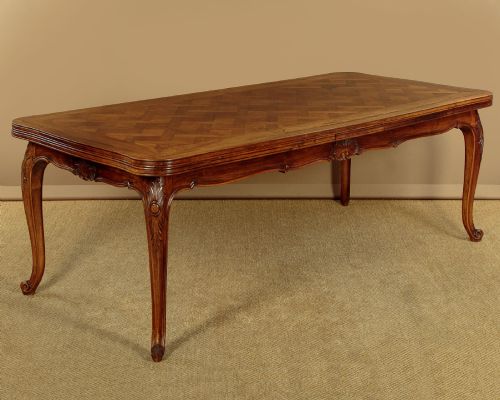
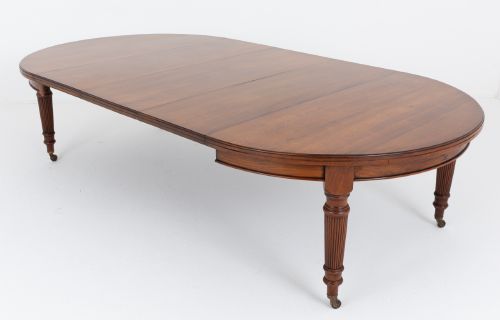
A walnut extending dining table provides a grand surface for gathering while adapting easily to smaller daily layouts through clever mechanism designs. The walnut extending dining table appears in forms ranging from traditional Victorian wind-out mechanisms to 1930s drawer-leaf configurations and French revival styles.
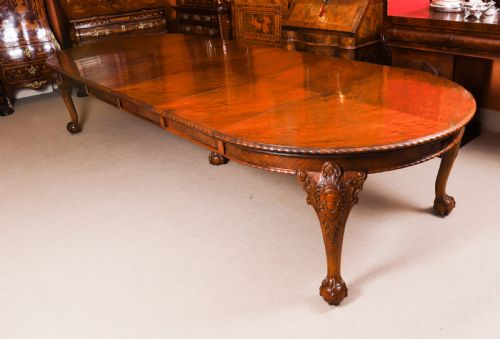
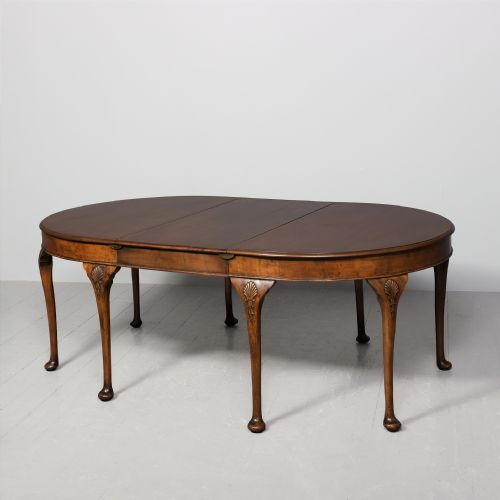
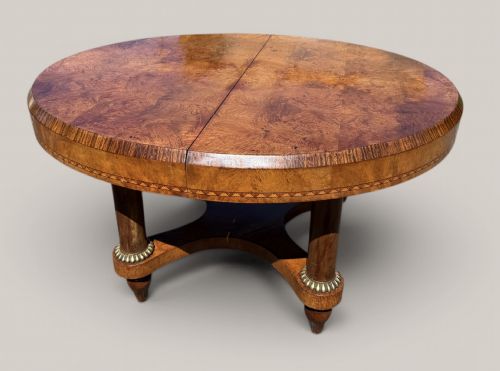
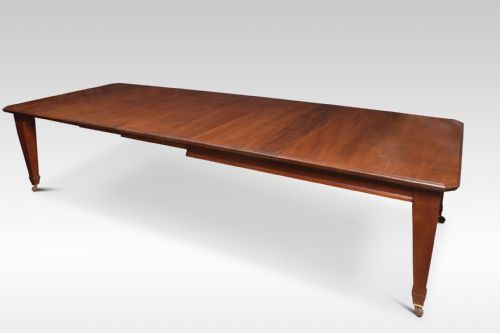
Victorian examples often feature heavy timber leaves that pull out on runners, whereas twentieth-century pieces frequently utilise drop-in leaves or Art Deco parquetry tops. Queen Anne revival versions show prominent burr walnut veneers paired with traditional cabriole legs.
Makers and workshops across Britain and France produced these tables in various sizes, spanning compact six-seaters up to large ten-foot dining surfaces designed for substantial rooms.
How they were made
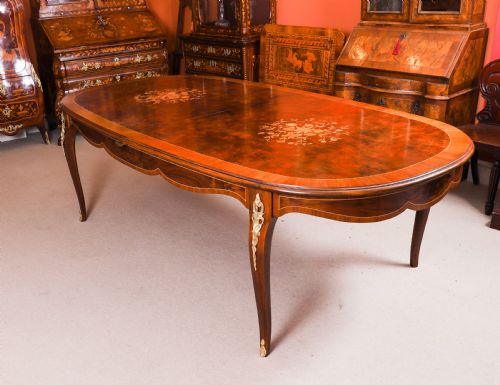
Cabinet makers selected figured walnut and burr walnut veneers for their swirling grain patterns, laying them over secondary timbers to create decorative table tops. Marquetry inlay and brass mounts often accented the borders and bases of French and Edwardian examples.
Internal extension frameworks relied on sturdy timber tracks, brass winding mechanisms, or sliding drawer leaves that allowed smooth operation when expanding the dining surface. Carved solid walnut formed the cabriole legs, pedestals, and claw feet that supported the heavy top sections.
Listings span from the 18th century through the Victorian era to 1930s Art Deco styles, featuring solid walnut, burr walnut, and marquetry inlay.
What varies in quality
The choice of veneer sets the visual standard, with heavily figured burr walnut commanding attention through complex, natural patterning compared to plain timber boards. The precision of the extension mechanism determines how smoothly the leaves align and how stably the table rests when fully opened.
Carved details on the legs and aprons reflect the hand of the maker, moving from simple turned supports to intricate cabriole legs with ball and claw feet. Matching timber colour and grain continuity across the added leaves indicate careful selection by the original cabinet maker.
Maple and Co·Whytock and Reid
The Walnut Extending Dining Table Glossary
- Burr walnut
- A prized timber harvested from tree growths that produces intricate, swirling grain patterns. Cabinet makers prized this wood for tabletop surfaces.
- Wind out
- A mechanical extension system operated by a handle that separates the table halves to insert extra leaves. This method is common on nineteenth-century tables.
- Parquetry
- Geometric wood inlay work arranged in patterns across the tabletop. This technique appears on twentieth-century tables.
- Cabriole leg
- A furniture leg that curves outward at the knee and tapers inward to an ankle, ending in a pad or claw foot. This style defines Queen Anne revival pieces.
- Drawer leaf
- An extension design where leaves slide out from underneath the main top. These pull out simply from each end of the frame.
Walnut Extending Dining Table: Frequently Asked Questions
How do wind out tables work?
A removable metal handle turns an internal screw mechanism that draws the table halves apart. This creates the gap needed to drop in one or more extra timber leaves.
Once the leaves rest securely on the wooden runners, the handle turns in reverse to lock the top tight.
How do I care for walnut veneer?
Keep the wood away from direct sunlight and steady heat sources to prevent the burr walnut veneer from drying out or splitting. Use coasters and placemats to protect the polished surface from moisture and heat marks.
Apply a quality beeswax periodically and buff gently with a soft cloth to maintain the natural lustre of the grain.
How many people will these seat?
Capacities range widely depending on the length of the frame and the number of available extra leaves stored with the table. Smaller versions accommodate six diners comfortably in daily use.
Fully extended tables with multiple leaves inserted can seat ten to twelve guests for larger gatherings.
How do I tell Victorian from Art Deco pieces?
Victorian examples rely on dark walnut timber, heavy turned or carved legs, and mechanical winding systems hidden beneath the apron. They often feature deep mouldings and traditional proportions.
Art Deco tables from the 1930s embrace blonde walnut veneers, geometric parquetry patterns, and streamlined drawer-leaf designs with minimal ornamentation.