




Walnut Sheet Music Holder
A walnut sheet music holder brings period charm to a room, offering a dedicated spot for scores and folios with the rich warmth of figured timber.
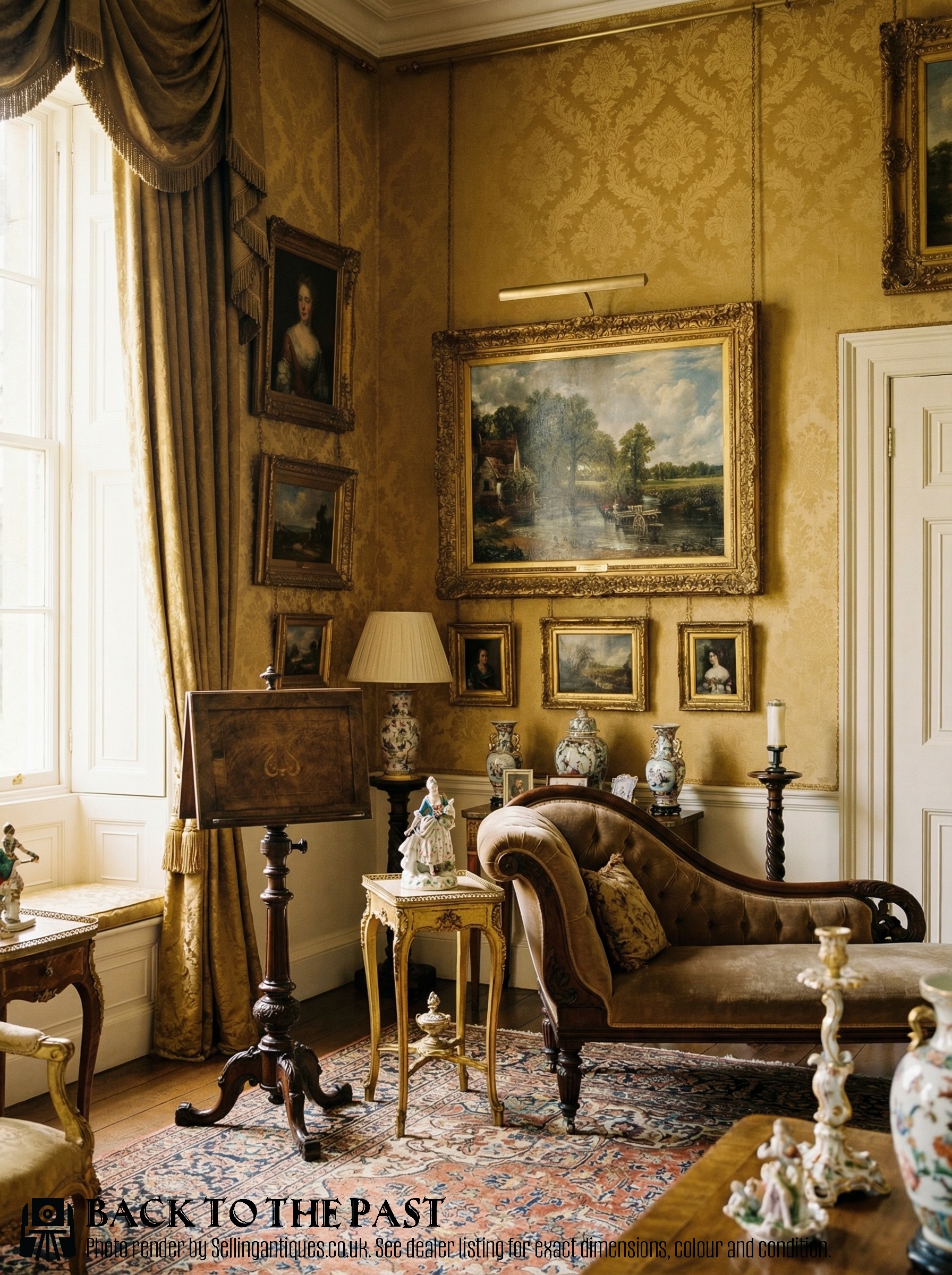
Walnut Sheet Music Holder
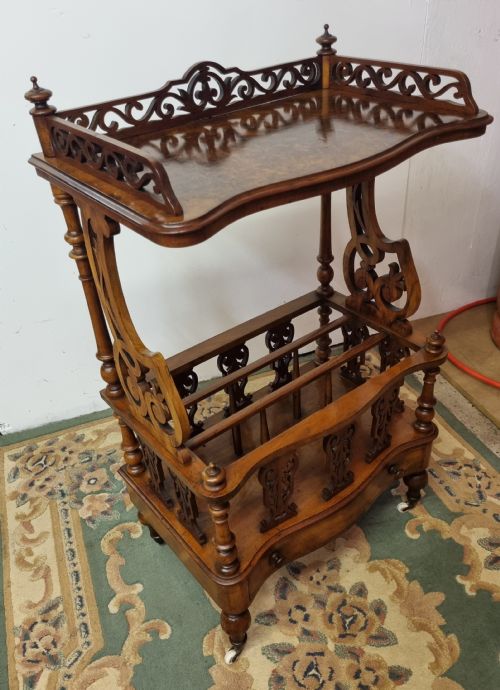
When you search for a walnut sheet music holder, you encounter pieces designed primarily during the Victorian and Regency eras to store and display folios, scores, and periodicals. The selections on this page span the nineteenth century, including the 1850s, 1860s, 1870s, and 1890s, capturing decades of domestic musicianship and parlor culture.
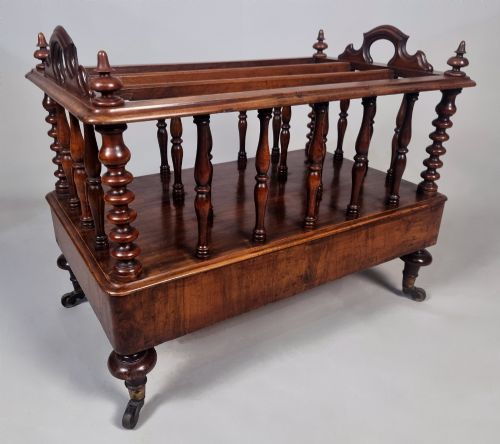
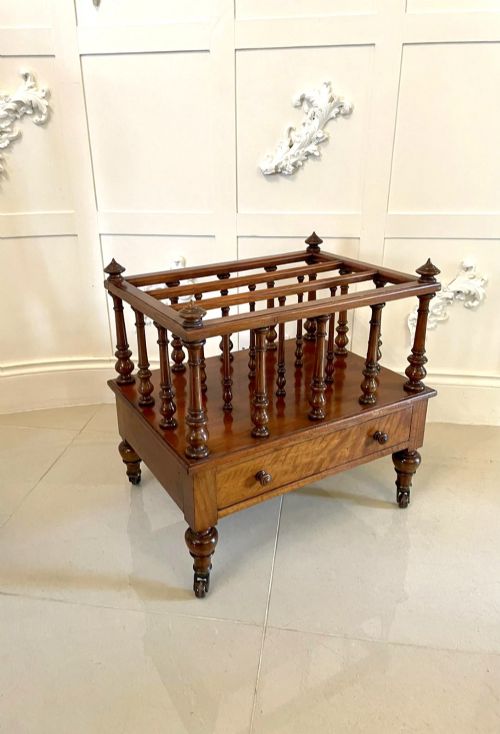
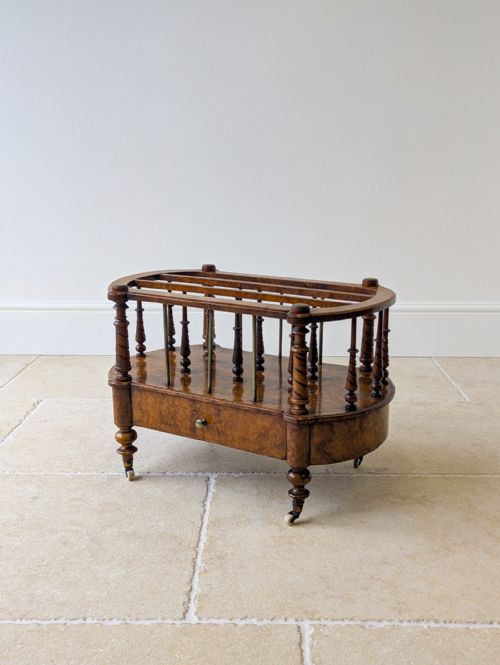
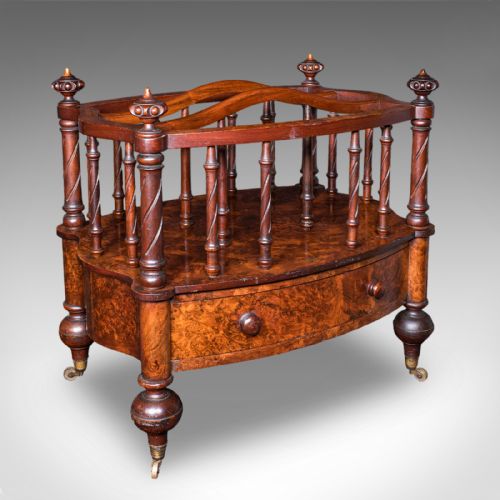
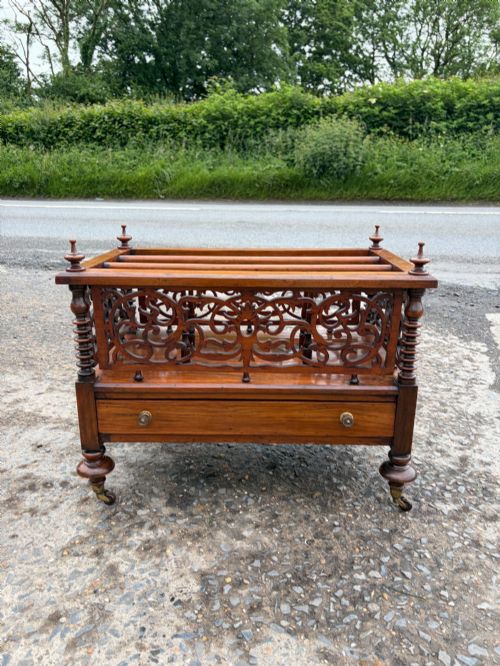
The dominant forms you will meet are canterburys, music stands, lecterns, and magazine racks. These items range from compact three-section compartments and serpentine shapes to pieces equipped with drawers or combined work tops.
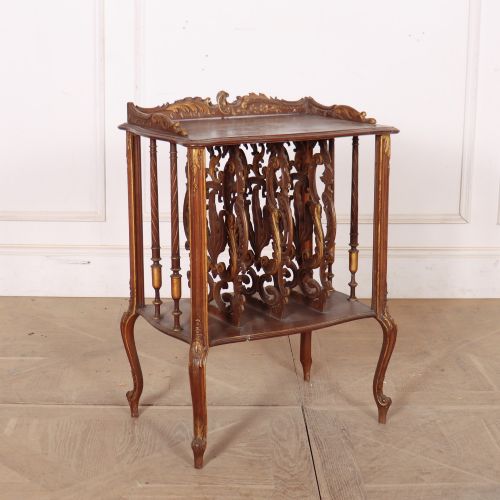
Origins vary across English workshops and continental European styles, such as French Rococo Revival and Black Forest carving. The common thread is the use of walnut, burr walnut, and black walnut, often paired with contrasting inlays and turned supports.

How they were made
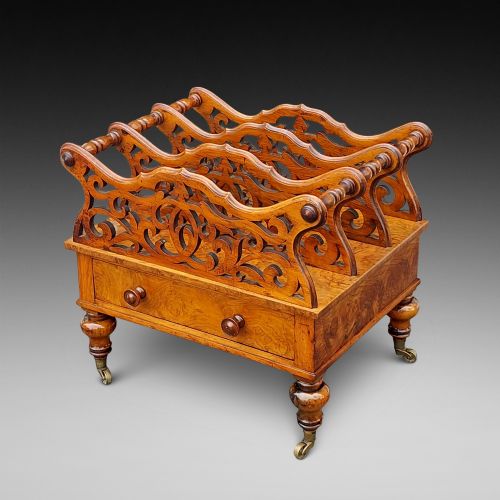
Cabinet makers utilised solid walnut and decorative veneers like burr walnut to cover primary structures, relying on timber cut to reveal intricate grain patterns. Marquetry inlay, wood inlay, and pierced fretwork frequently embellish the panels and dividers of these stands.
Structural integrity often depended on turned wooden columns, bracket feet, and occasionally brass or metal fittings for adjustable music stands and lecterns. Ceramic components and gilt highlights sometimes appear as subsidiary decorative elements.
Joinery techniques suited the domestic interior of the nineteenth century, accommodating both stationary magazine racks and fully adjustable reading desks with pivoting mechanisms.
Walnut Sheet Music Holder Retail Price Guide 2026
Typical asking prices for walnut sheet music holder among the pieces listed under this phrase on Sellingantiques today, from the lower quarter to the upper quarter. They describe what is for sale here now, not the wider market.
Listings feature walnut, burr walnut, and black walnut across Victorian, Regency, and nineteenth-century periods.
What varies in quality
The distinction between standard examples and superior pieces rests in the selection of the timber and the ambition of the joinery. Figured walnut and burr veneers with strong, natural figuring indicate a higher grade of material chosen by the cabinet maker.
Execution of detail separates fine works from routine items, observable in the crispness of carved serpentine shapes, pierced fretwork, and precise marquetry inlay rather than surface ornamentation alone.
Edwards & Roberts·Shoolbred
The Walnut Sheet Music Holder Glossary
- Canterbury
- A low stand with upright partitions, originally designed to hold sheet music and folios. Victorian examples frequently incorporate drawers beneath the main compartments.
- Burr Walnut
- A specialised timber cut from walnut tree growths, prized by cabinet makers for its swirling, highly figured grain patterns. It forms the primary decorative surface on many high-grade nineteenth-century pieces.
- Marquetry
- The art of applying decorative pieces of wood veneer to a structure to form intricate patterns or pictures. On these stands, floral or geometric motifs are common.
- Fretwork
- Ornamental woodwork pierced with patterns, often seen on the upright divisions of Victorian canterburys. This technique lightens the visual weight of the timber.
- Lectern
- A reading stand designed to hold books or music at an appropriate angle for performance or study. Many nineteenth-century versions feature adjustable heights and brass fittings.
Walnut Sheet Music Holder: Frequently Asked Questions
What is a walnut canterbury used for?
A canterbury serves as a specialised stand for organising and displaying sheet music, books, or periodicals within a domestic sitting room.
The vertical partitions keep folios upright and accessible for musicians playing the piano or other parlor instruments.
Are these stands suitable for modern magazines?
The partitions and racks designed for historical sheet music accommodate contemporary magazines, folios, and art books rather well.
Placing them beside a sofa or armchair provides a functional surface for daily reading materials while retaining period character.
What is the difference between a rack and a canterbury?
A music rack generally focuses on holding scores or folios in an open display format, sometimes with adjustable angles for performance use.
A canterbury specifically incorporates distinct vertical compartments, often raised on legs and occasionally including a small drawer at the base.