

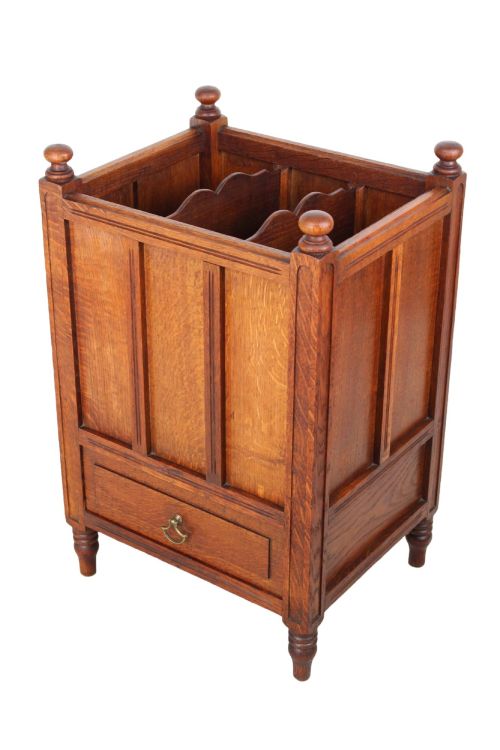
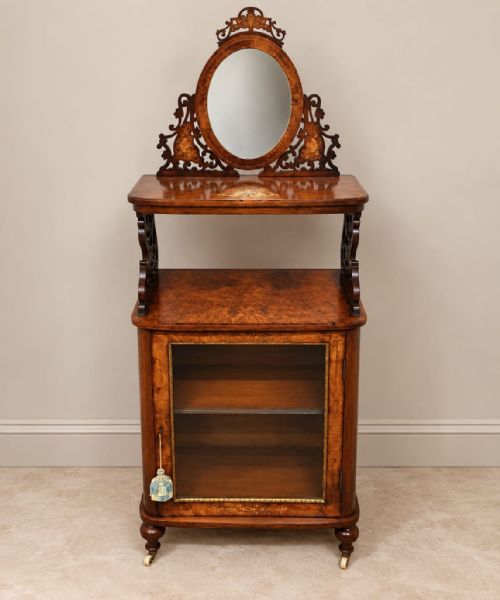

Brown Wooden Music Stand
A brown wooden music stand brings architectural timber and period craftsmanship into a room to hold folios and scores.
Brown Wooden Music Stand
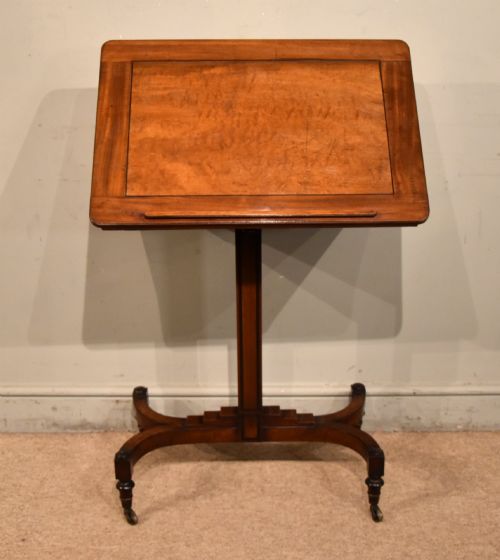
A brown wooden music stand encompasses adjustable lecterns, upright cabinets, and partitioned racks designed to hold folios and periodicals. The selections span Georgian, Regency, Victorian, and Edwardian eras, offering distinct proportions and timber choices.
Canterburys and music cabinets appear frequently alongside adjustable reading stands and duet lecterns. These pieces serve domestic rooms with compartmentalised storage or adjustable heights for practical use.
Origins range from English country houses to French workshops, utilising mahogany, walnut, oak, and burr walnut. Buyers encounter standard single desks alongside multi-tier cabinets and folding stands.
Materials and construction
Cabinet makers utilised mahogany, walnut, burr walnut, oak, and rosewood, often pairing solid timber framing with figured veneers. Brass fittings provide adjustable mechanisms, hinges, and castors on portable reading stands.
Construction techniques include carved ornamentation, ebony banding, and inlaid motifs. Joinery varies from dovetailed drawer construction in cabinet bases to turned uprights and lyre-shaped supports.
Listings feature items built from mahogany, walnut, burr walnut, oak, and rosewood across Georgian, Victorian, and Edwardian periods.
Execution and timber selection
Quality rests in the selection of figured timber veneers, such as burr walnut and mahogany, matched with crispness in carved details and inlay work. Stronger examples maintain smooth operation in adjustable ratchet mechanisms and tight joinery at stress points.
The refinement of brass hardware, the presence of original castors, and the integrity of internal dividers distinguish standard production from superior workshop output. Subtle touches like ebony banding elevate simpler forms.
Howard and Sons of London
The Brown Wooden Music Stand Glossary
- Canterbury
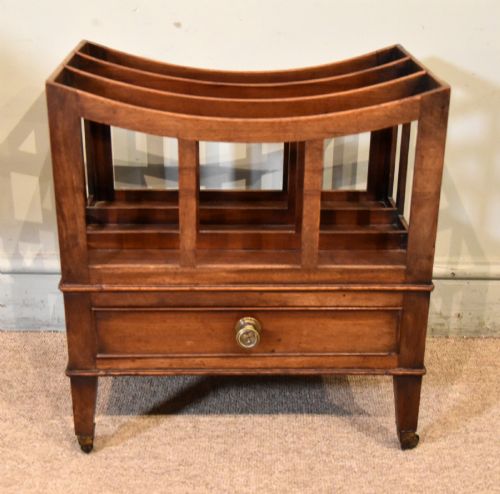
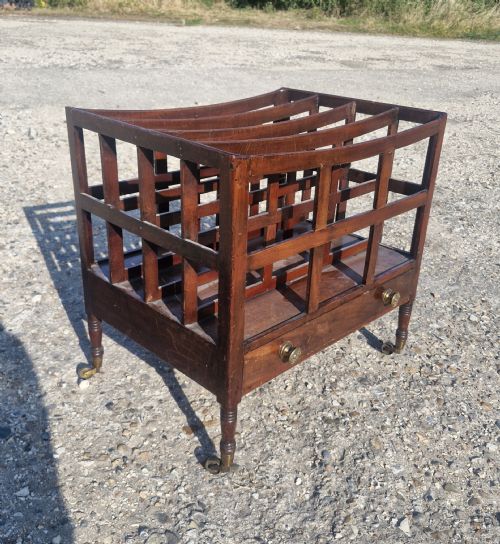
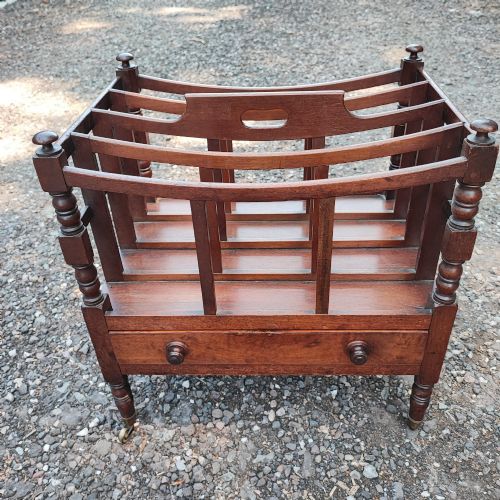
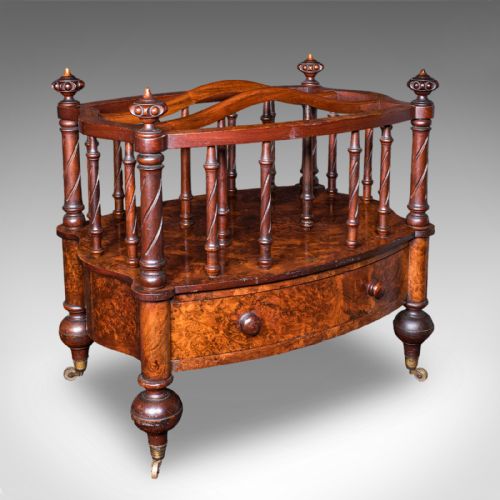
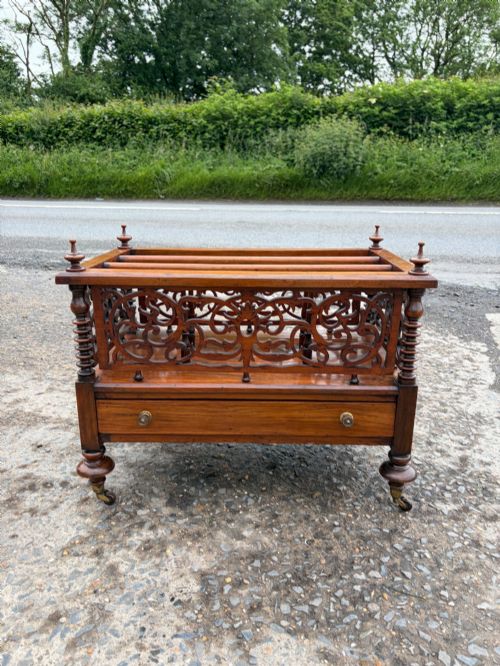
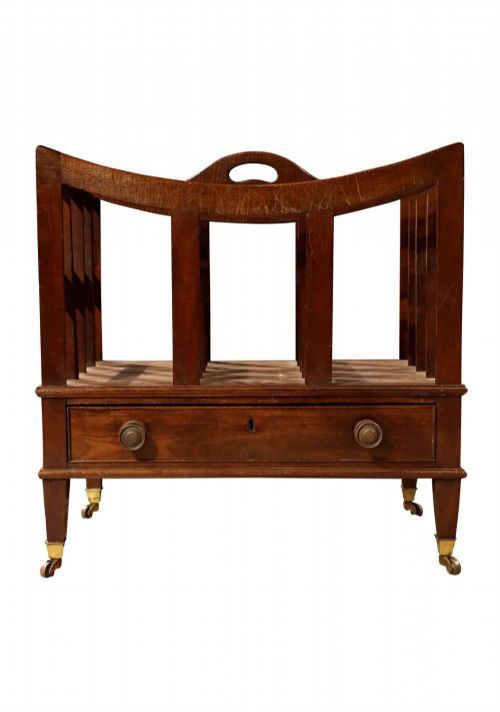
- A low stand featuring upright divisions, originally designed for sheet music and now used for magazines. These pieces typically include a single drawer beneath the partitions.
- Duet stand
- A music stand configured to hold two open scores simultaneously, often featuring an adjustable double desk. They appear in Georgian and Victorian periods.
- Lectern
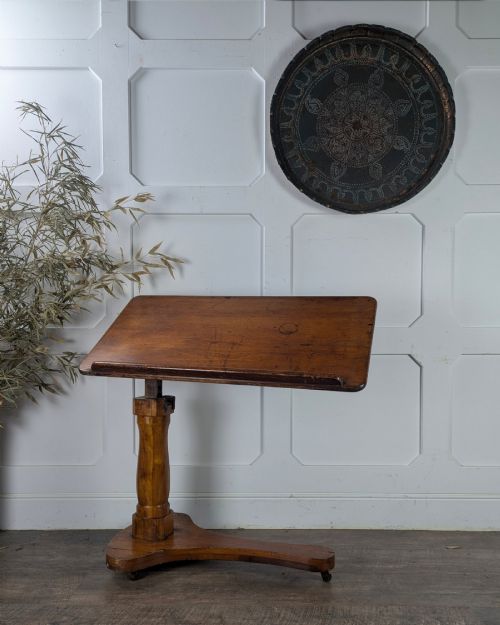
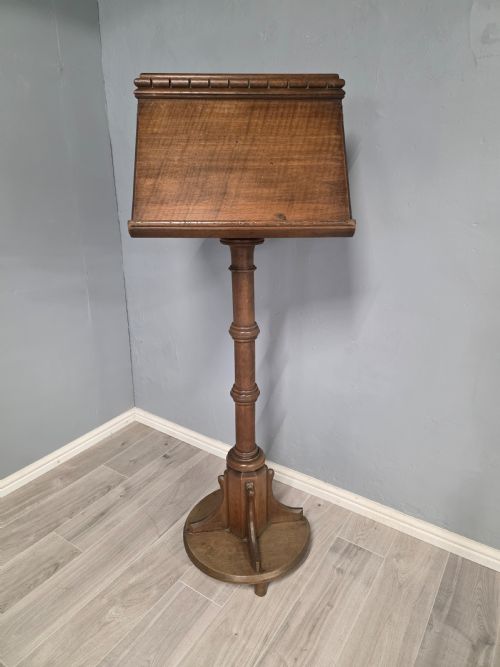
- A tall reading stand designed for holding books or scores at a standing height. Many examples incorporate adjustable ratchets for angle control.
- Whatnot
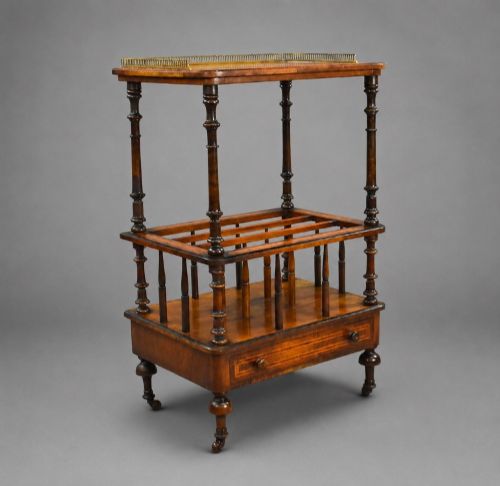
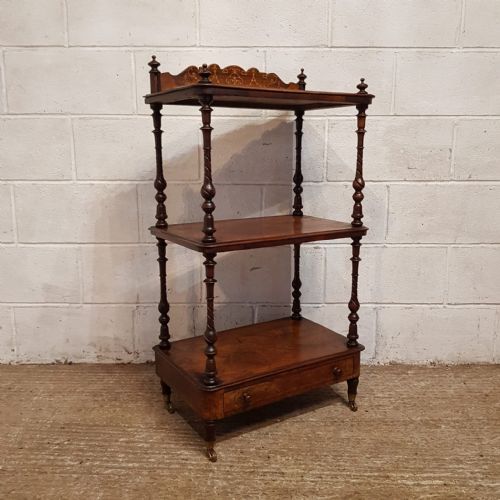
- An open set of multiple shelves supported by slender pillars, sometimes combined with music storage or drawer compartments. They provide display space alongside utility.
- Lyre-shaped
- A decorative motif resembling a classical stringed instrument, frequently incorporated into the central support column of music stands. This shape typifies 19th-century aesthetic choices.
Brown Wooden Music Stand: Frequently Asked Questions
How do I adjust the height on these stands?
Most adjustable stands utilise a brass thumbscrew or a ratcheted wooden mechanism to secure the stem at the desired level.
Careful handling of the original metal components ensures the mechanism operates smoothly without straining the surrounding timber.
Can I use a Canterbury for modern magazines?
The vertical partitions are well-suited for holding periodicals, newspapers, and contemporary sheet music alongside traditional folios.
The sturdy timber dividers keep oversized paper goods upright and organised within domestic living spaces.
What is the difference between a music cabinet and a Canterbury?
A music cabinet encloses scores behind doors or drawers, protecting paper contents from dust and light exposure.
In contrast, a Canterbury provides open slatted partitions for immediate access to frequently played pieces.
How do I distinguish a Georgian stand from a Victorian one?
Georgian and Regency pieces tend to feature cleaner architectural lines, linear mahogany grains, and restrained brass mounts.
Victorian examples often embrace burr walnut veneers, heavier turned supports, and more elaborate carved ornamentation.