




Inlaid Sheet Music Stand
An inlaid sheet music stand holds scores and sheet music while bringing rich timber and decorative wood inlay into a room.
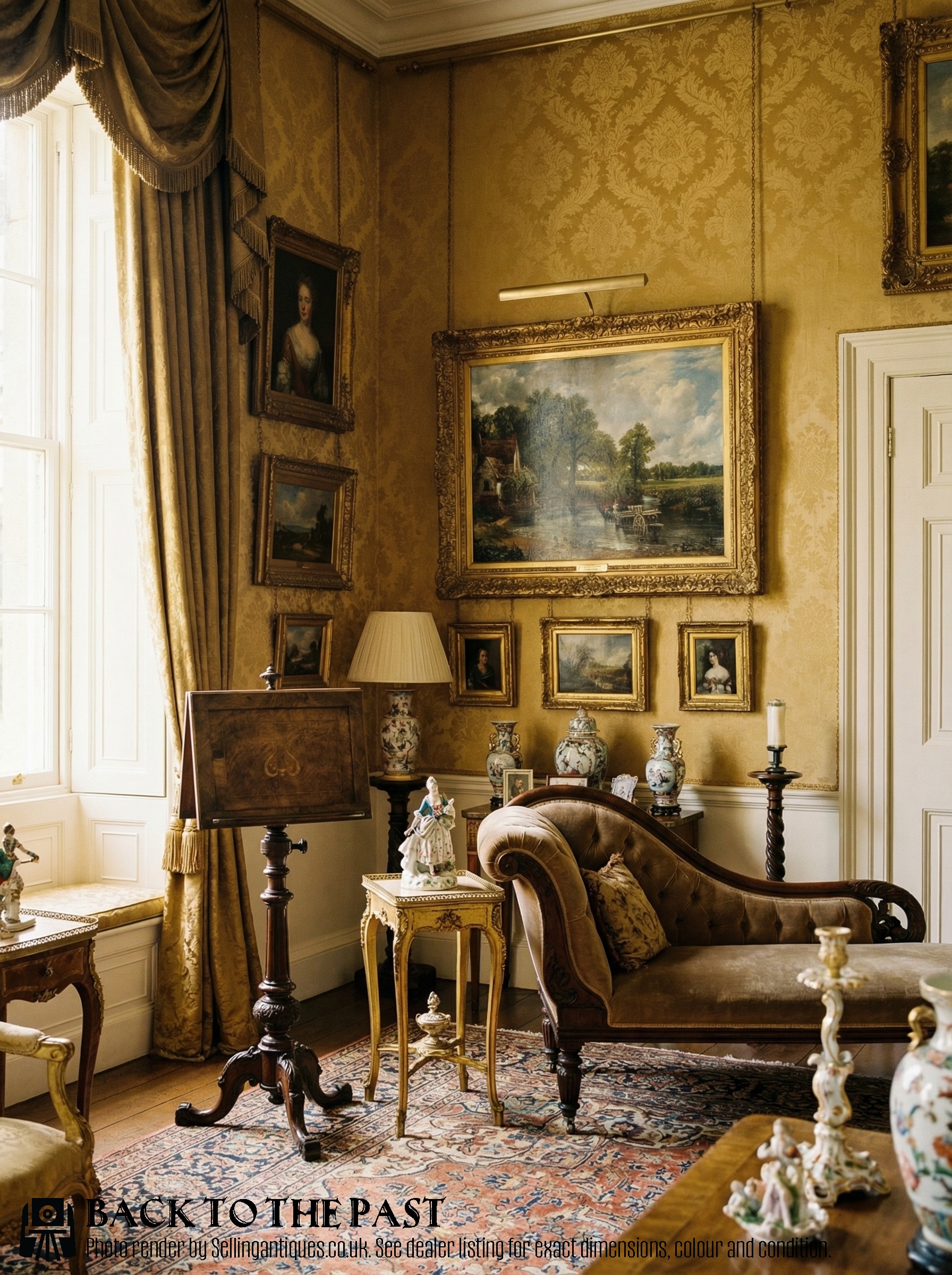
Inlaid Sheet Music Stand
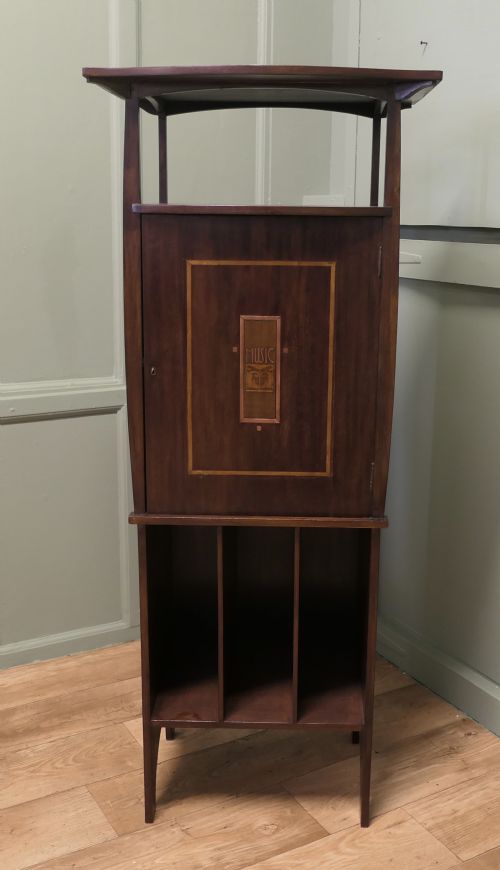
When you search for an inlaid sheet music stand, you are looking at functional furniture designed to organise musical scores, periodicals and sheet music in the home. These pieces emerge predominantly from the Victorian and Edwardian eras, alongside earlier Regency and William IV examples.
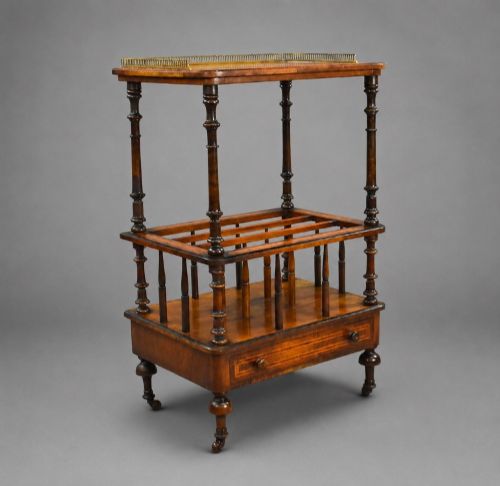
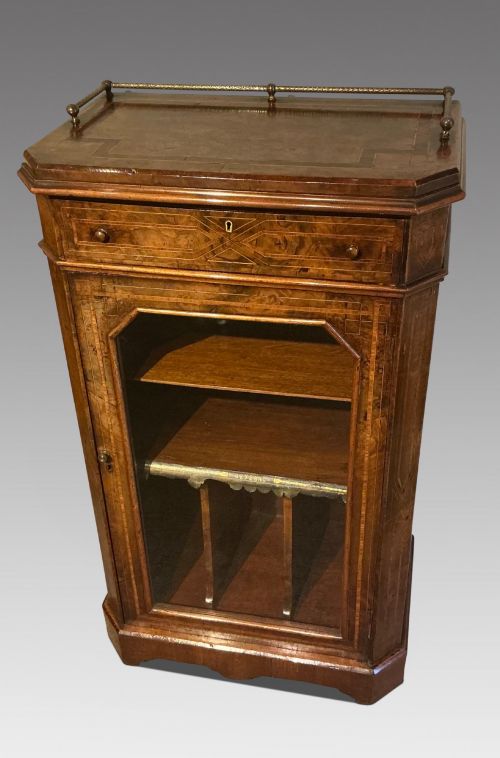
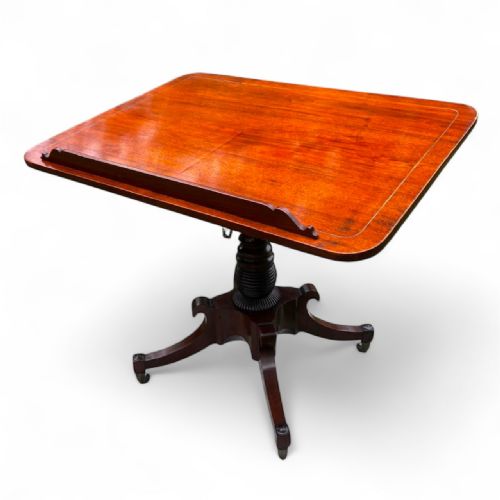
The version you are most likely to meet on this page is the Victorian or Edwardian music cabinet, often rendered in burr walnut or mahogany with contrasting wood inlay. Alongside upright cabinets, the selection includes open canterburys, tiered whatnots, and adjustable stands designed for performance or display.
Forms vary from lyre-shaped music stands to multi-drawer cabinets and magazine racks, capturing the domestic musical habits of the nineteenth and early twentieth centuries. Each piece combines practical storage for sheet music with the decorative cabinet-making standards of its period.
Materials and construction
Cabinet-makers relied on choice hardwoods such as mahogany, walnut, burr walnut, rosewood and satinwood as the primary structural and visual foundations. These timbers provided rich grain patterns that served as a backdrop for delicate wood inlay and marquetry work.
Decorative surface work incorporated contrasting veneers, geometric wood inlay, and occasional brass fittings or fretwork panels. Joinery techniques ensured that upright music cabinets, canterburys and tables remained stable while supporting heavy collections of paper scores.
The listings on this page span the Regency, Victorian, and Edwardian periods, utilising hardwoods like mahogany, walnut, rosewood, and satinwood.
Judging quality and execution
The distinction between standard production pieces and finer examples rests on the crispness of the wood inlay and the selection of timber veneers. Burr walnut and figured mahogany with precise, intricate marquetry sit at the upper end of the scale, showing deliberate attention to visual balance across the panels.
Structural integrity and internal fittings define the usefulness of each piece, from smooth drawer operation to the rigidity of adjustable reading stands and music holders. Substantial proportions and well-executed fretwork indicate a higher grade of workshop production.
GM Elwood for JS Henry
The Inlaid Sheet Music Stand Glossary
- Canterbury
- A low stand with vertical partitions designed for holding sheet music, folios or magazines. It frequently incorporates a small lower drawer and castors for mobility.
- Inlay
- A decorative technique where pieces of contrasting wood, metal or other materials are inserted into recessed cavities in the timber surface to form patterns.
- Marquetry
- Elaborate wood inlay assembled to create pictorial or decorative designs across a furniture surface, utilising the natural grain and colour variations of different veneers.
- Whatnot
- An open set of multi-tiered shelves used for displaying or storing small items, often combined with a music cabinet or canterbury in Victorian interiors.
- Burr walnut
- A highly prized wood cut from walnut tree growths, notable for its swirling, intricate grain patterns that provide rich visual texture on cabinet doors.
Inlaid Sheet Music Stand: Frequently Asked Questions
What is a music cabinet used for?
These cabinets were built to store sheet music, folios and scores safely within the home parlour or music room. Their internal drawers and compartments kept paper goods flat and organised.
Today, they function equally well as bedside tables, small storage units or decorative side tables in living spaces.
Are these stands adjustable?
Certain specialised music stands and tables include adjustable mechanisms to tilt or raise scores to a comfortable reading height for musicians. These mechanical examples are typically found in earlier nineteenth-century pieces.
Cabinets and canterburys, by contrast, remain fixed in their dimensions and focus purely on storage.
How do I care for inlaid wood furniture?
Keep these timber pieces away from direct sunlight and steady heat sources to prevent the veneers and delicate inlay from drying out or lifting. Regular dusting with a soft, dry cloth preserves the polished finish.
Apply a quality beeswax polish occasionally to nourish the walnut or mahogany grain without building up heavy residue.