

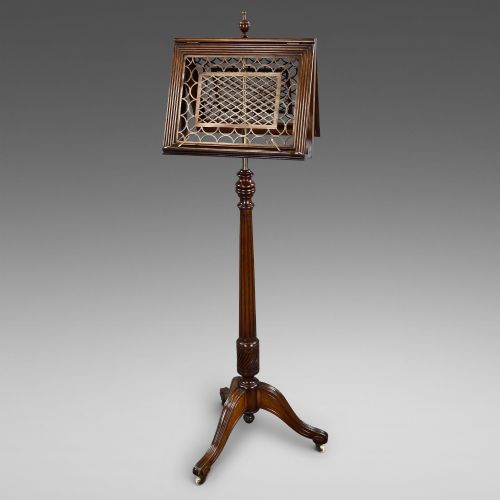


Antique Sheet Music Rest
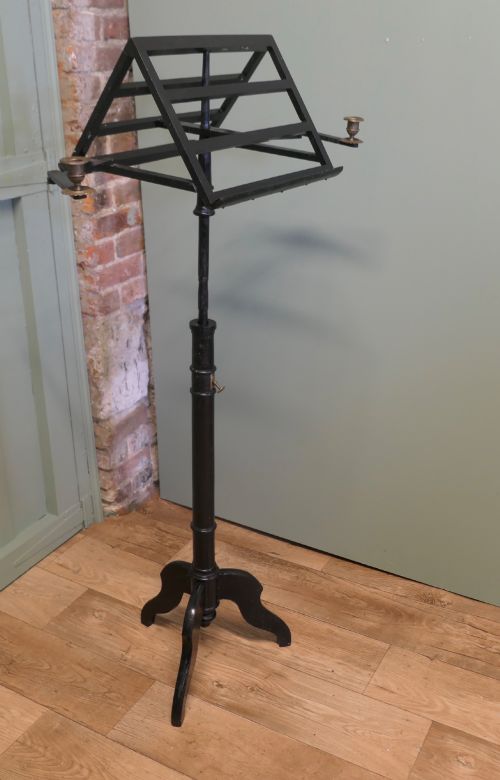
These antique sheet music rest pieces are built to hold scores steady during practice or performance, bringing period timber and brass into a room.
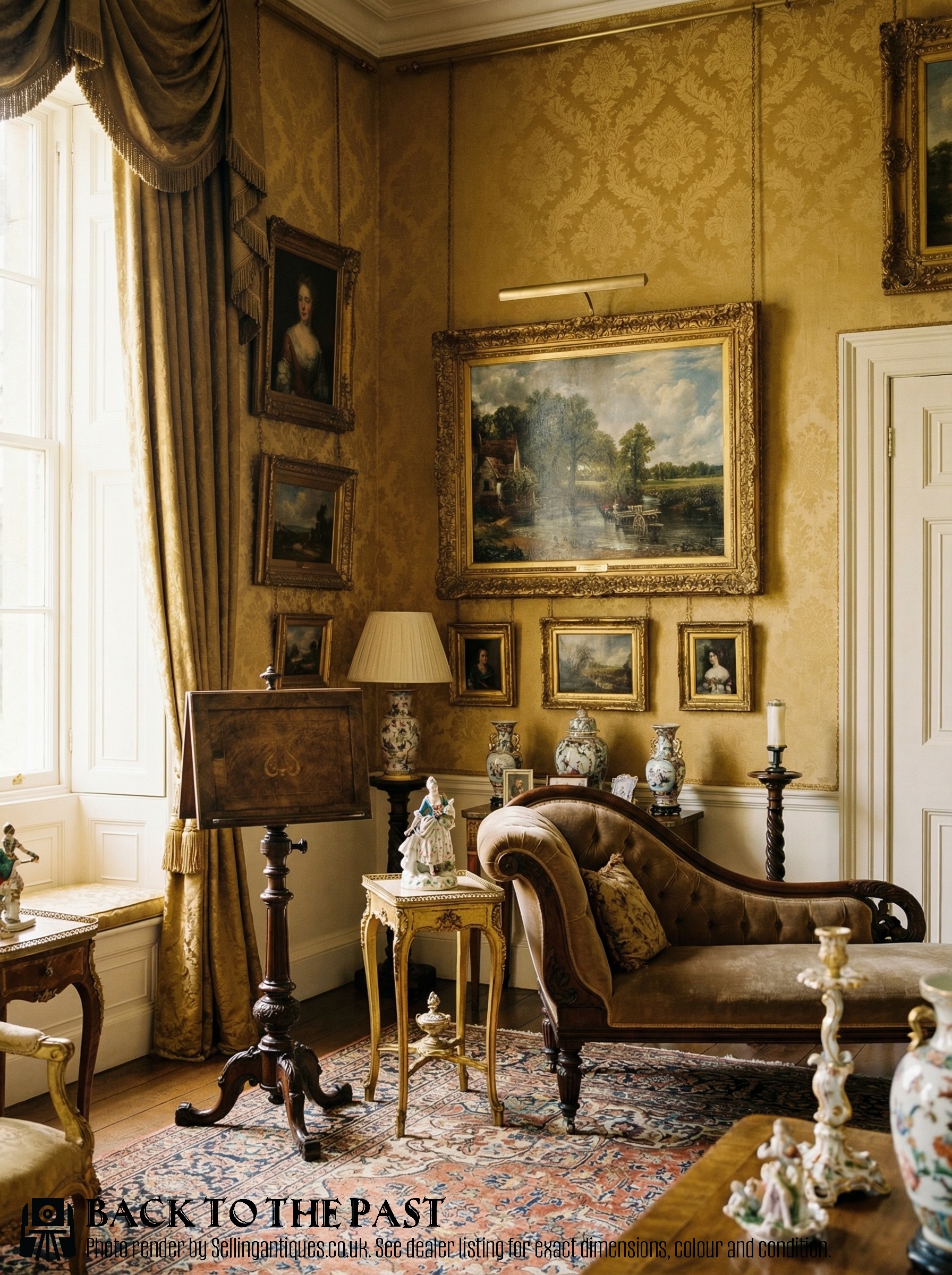
Antique Sheet Music Rest
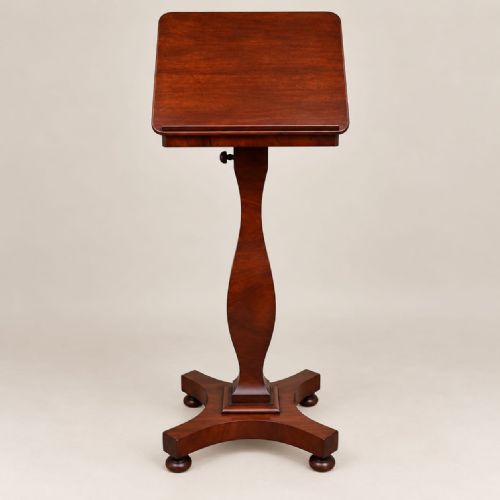
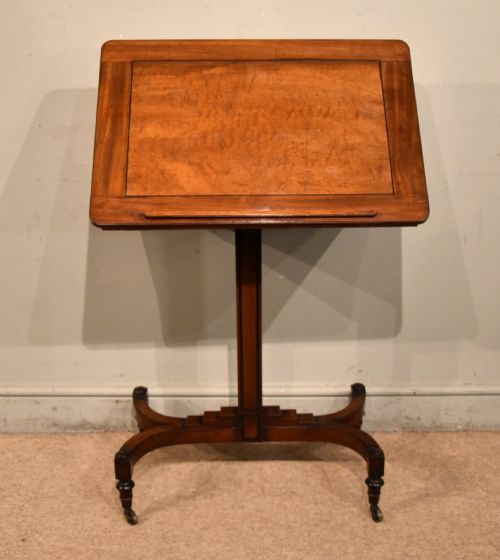
When you search for an antique sheet music rest, you encounter freestanding stands, table models, and lecterns designed for holding bound volumes or single sheets. The pieces on this page span the Georgian, Regency, and Victorian periods, alongside later interwar examples.
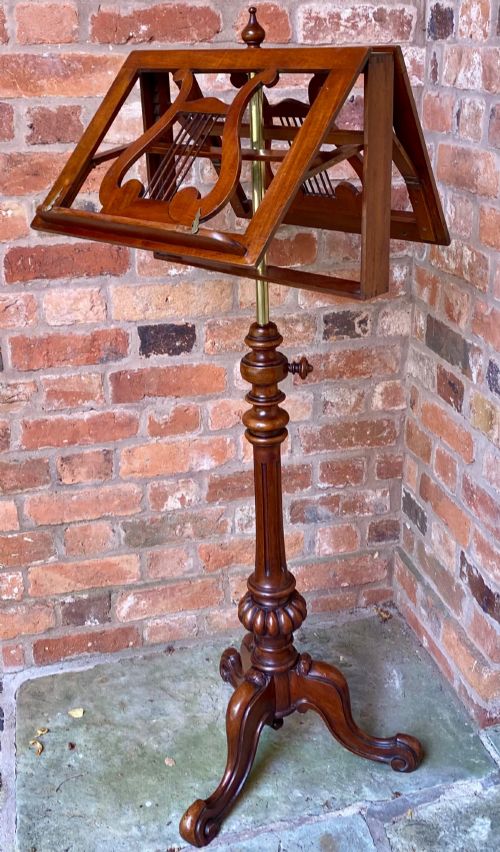
Most items you meet here are mahogany or walnut stands, frequently featuring adjustable columns and lyre-shaped supports. Duet stands capable of holding open books for two musicians appear regularly among these listings.
Alongside standard music stands, the selection includes reading stands and portfolio racks that serve a similar function. Formats range from plain turned pillars to carved Black Forest designs and inlaid satinwood details.
Materials and construction
Cabinet makers utilised dense hardwoods such as mahogany, rosewood, walnut, and burr walnut for these stands. These timbers were selected for their stability and finished with polished surfaces that highlight the grain.
Brass fittings provide the mechanism for adjustable heights and tilting desks on many examples. Inlaid satinwood details appear on select pieces, adding contrast to the darker primary woods.
Antique Sheet Music Rest Retail Price Guide 2026
Typical asking prices for sheet music rest among the pieces listed under this phrase on Sellingantiques today, from the lower quarter to the upper quarter. They describe what is for sale here now, not the wider market.
Listings span the Georgian, Regency, and Victorian periods, with materials ranging from brass and mahogany to burr walnut and satinwood inlay.
Judging quality and craftsmanship
The sophistication of the adjustable mechanism distinguishes standard utilitarian pieces from finer workshop productions. Smooth operation of the brass screws and ratchets indicates careful original fitting.
Carving depth and timber selection define the upper tier of the range. Solid mahogany and burr walnut with crisp fretwork or shaped lyres demonstrate greater workshop investment than plain turned alternatives.
The Antique Sheet Music Rest Glossary
- Duet stand
- A music stand wide enough to hold an open book for two players. These often feature adjustable twin desks.
- Lectern
- A reading desk designed to hold large volumes at a comfortable angle. They share adjustable stems with music stands.
- Lyre-shaped
- A central support cut in the outline of a stringed musical instrument. This motif is common on Regency and Victorian stands.
- Burr walnut
- A highly figured timber veneer prized for its swirling grain patterns. It appears on finer Victorian examples.
- Fretworked
- Timber pierced with decorative open patterns. This technique lightens the visual weight of the music desk.
Antique Sheet Music Rest: Frequently Asked Questions
What is an antique sheet music rest?
These pieces are adjustable stands or lecterns built to hold scores and books for musicians. They support paper at a readable angle during practice or performance.
Most examples date from the Georgian through to the Victorian eras, constructed in timbers like mahogany and walnut with brass hardware.
How do adjustable music stands work?
Adjustable stands use sliding central columns secured by brass thumbscrews or wooden wedges. This allows the player to set the height for sitting or standing.
Tilting mechanisms on the desk portion let you angle the sheet music precisely to reduce glare and suit your line of sight.
Were these stands used for reading books?
Many stands served a dual purpose for holding heavy books, folios, and portfolios as well as sheet music. Heavier lecterns were built specifically for large bound volumes.
Reading stands appear frequently alongside music stands in period listings, sharing the same adjustable column and base construction.
How do I date a music stand?
Dating relies on timber choice, base form, and the style of any carved or inlaid decoration. Regency pieces often feature sabre legs and brass columns, while Victorian stands lean towards heavier carved walnut.
Hardware details like hand-cut screws and timber locks also help place a piece within Georgian, Victorian, or interwar periods.