



Walnut Planter Table
These walnut planter table examples bring living greenery indoors with deep timber grain and refined French or English styling.
Walnut Planter Table
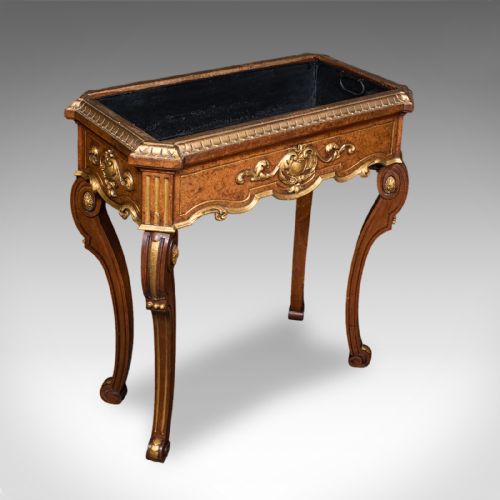
A walnut planter table combines a decorative display surface with a waterproof well for indoor plants, bringing botanical life directly into nineteenth-century reception rooms. You encounter these primarily as Victorian and nineteenth-century pieces reflecting French Rococo Revival or Louis XV taste.
The form functions equally as a jardiniere, plant stand, or occasional side table, often featuring removable lids or liners. Many examples double in historical record as wine coolers or cellarettes, demonstrating the multi-use nature of nineteenth-century furniture.
How they were made
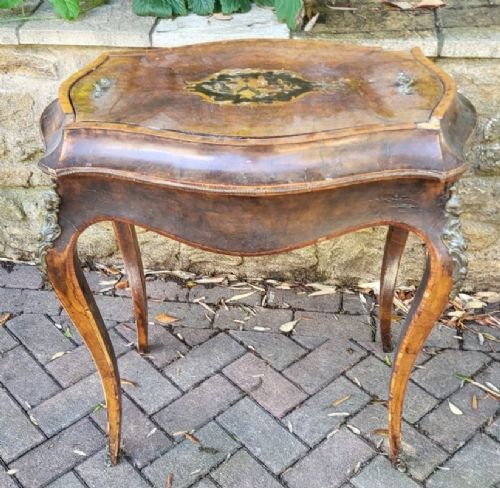
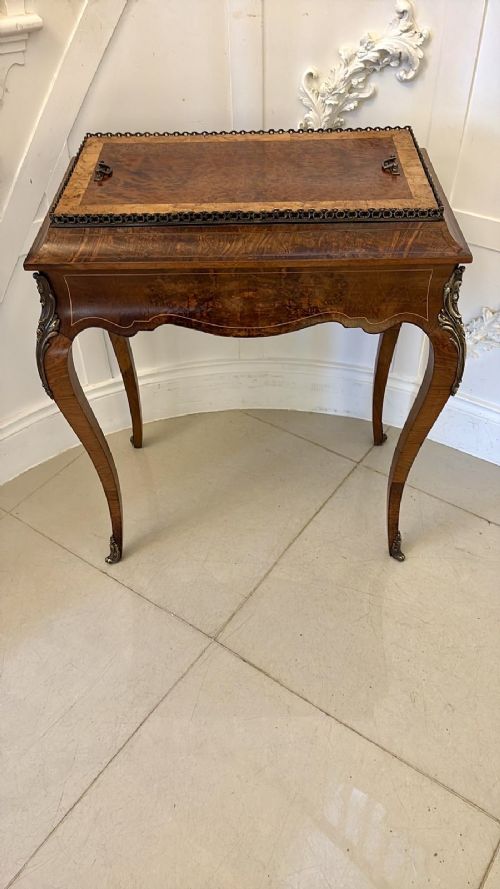
Cabinetmakers utilised rich timbers like plain and burr walnut, frequently enhancing the surfaces with intricate marquetry and parquetry inlays. The structural woodwork pairs with functional metal liners, zinc inserts, or marble tops to contain moisture and soil safely.
Many French-inspired designs incorporate cast or chased ormolu mounts and brass details that accent the curvilinear outlines of the revival styles. These mixed media constructions unite carpentry and metalworking to create ornamental yet durable furniture.
Walnut Planter Table Retail Price Guide 2026
Typical asking prices for walnut planter table among the pieces listed under this phrase on Sellingantiques today, from the lower quarter to the upper quarter. They describe what is for sale here now, not the wider market.
Victorian multifunctionality means your fern stand might double quite convincingly as a nineteenth-century wine cooler.
What varies in quality
The distinction between ordinary and superior pieces lies in the choice of timber veneer and the precision of the marquetry inlay. Selected burr walnut displays rich, swirling grain patterns that elevate the visual weight of the furniture.
Execution of the metal mounts, such as cast ormolu and brass fittings, separates standard production from finer cabinetmaking workshops. Heavier gauge liners and intact interior components also distinguish better-preserved specimens.
The Walnut Planter Table Glossary
- Burr walnut
- A prized timber harvested from walnut tree growths, known for its swirling and knotty grain patterns. Cabinetmakers sliced this wood into thin veneers for decorative table surfaces.
- Ormolu
- Gilded bronze or brass applied as decorative mounts on furniture. It adds bright metallic contrast to dark walnut timbers, particularly in French revival pieces.
- Marquetry
- The art of applying small pieces of veneer to a structure to form decorative patterns or pictures. Examples often feature floral or geometric motifs across the table top.
- Cellarette
- A lockable container or fitted table used originally for holding bottles of wine or spirits. Many nineteenth-century jardinieres share this deep well form, leading to overlapping descriptions in historical records.
Walnut Planter Table: Frequently Asked Questions
What is a walnut planter table used for?
These tables provide a decorative container for displaying live potted plants inside Victorian and nineteenth-century parlours or drawing rooms. The central well holds earth or a metal liner while the surrounding surface serves as a side table.
Many examples also function as occasional tables, wine coolers, or lamp stands when fitted with a solid lift-off lid. This versatility made them popular across both English and French domestic interiors.
How do I care for the wood and interior?
Protect the walnut timber by using inner pots or waterproof liners inside the well to prevent moisture damage and staining. Clean the exterior surfaces with a soft cloth and maintain the wood using appropriate beeswax rather than modern silicon polishes.
Check that metal liners or zinc inserts remain watertight if you intend to plant directly inside them. Regular dusting and stable room humidity preserve both the veneer and the delicate marquetry inlay.
How do I tell English and French styles apart?
French pieces often display exaggerated Louis XV or Rococo Revival curves accompanied by cast ormolu mounts, parquetry, and shaped aprons. English examples from the Victorian or William IV periods tend to favour sturdier proportions, burr walnut veneers, and subtle marquetry.
English models sometimes incorporate marble tops or simpler turned supports, whereas French designs lean heavily into asymmetrical floral marquetry and gilt bronze details.
Are these tables suitable for modern homes?
Their compact footprint makes them useful as side tables or plant stands in contemporary living spaces, hallways, or conservatories. They offer practical display space while introducing warm nineteenth-century timber tones to a room.
Using them for houseplants continues their original historical purpose while protecting the antique surfaces. Tables with lift-off lids also provide hidden storage for small household items.