



Burr Walnut Jardiniere
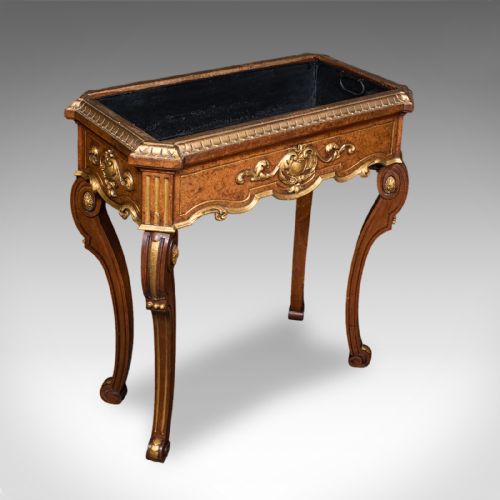
A burr walnut jardiniere brings rich grain and classical French revival styling to a room designed for indoor planting.
Burr Walnut Jardiniere
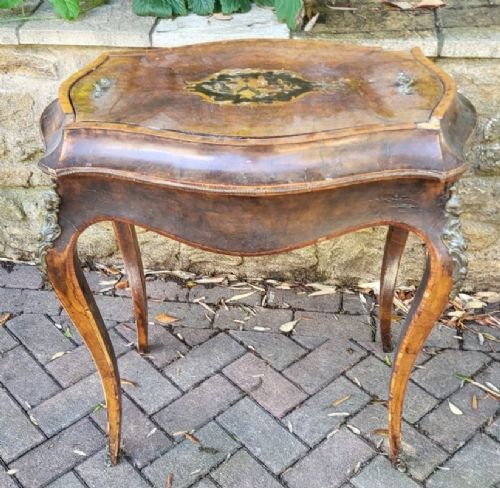
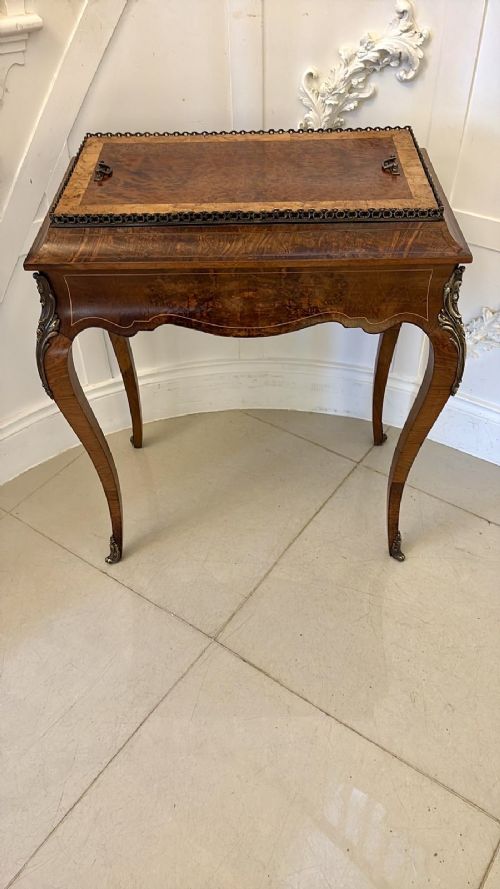
A burr walnut jardiniere is a decorative plant stand or table designed to house indoor greenery, most frequently seen here in nineteenth century Victorian and French Louis XV styles. These pieces combine practical plant holders with elegant display furniture, often incorporating lift off lids or internal liners.
The selections available range from French tables with ornate ormolu mounts to simpler Victorian marquetry inlaid planters. Buyers typically encounter freestanding side tables and dedicated plant stands originating from the eighteen fifties up to eighteen eighty.
Materials and construction
These items rely on the highly figured grain of burr walnut veneer, frequently enhanced by marquetry inlay and contrasting timbers such as kingwood. Cabinetmakers applied these decorative veneers to solid wood carcases, creating intricate patterns across the tops and sides of each planter.
Metal components play a structural and decorative role, featuring cast ormolu mounts, brass details, and internal metal or zinc liners designed to hold water and soil safely. French examples often integrate porcelain plaques into the walnut framework.
Burr Walnut Jardiniere Retail Price Guide 2026
Typical asking prices for burr walnut jardiniere among the pieces listed under this phrase on Sellingantiques today, from the lower quarter to the upper quarter. They describe what is for sale here now, not the wider market.
Several of these botanical display tables doubled as discreet cellarettes and wine coolers for thirsty Victorian botanists.
Judging quality in a burr walnut jardiniere
Quality rests heavily on the depth and symmetry of the burr walnut figuring across the main surfaces, alongside the crispness of any marquetry work. Finer examples display carefully matched veneer panels that create a harmonious visual balance.
The standard of the metalwork distinguishes superior pieces, notably the definition in cast ormolu mounts and the durability of fitted internal liners. Hardware integration and the precision of joinery around lift off lids further separate standard production from exceptional craftsmanship.
The Burr Walnut Jardiniere Glossary
- Burr walnut
- A wood veneer taken from the burl growth of a walnut tree, prized for its swirling, highly figured grain patterns. It provides a decorative surface ideal for statement furniture.
- Ormolu
- Gilded bronze or brass mounts applied to furniture for decorative effect, common in French revival pieces. These metal accents highlight corners, legs, and borders.
- Marquetry
- The art of applying pieces of veneer to a structure to form decorative patterns and pictures. Craftsmen use various woods to create contrasting geometric or floral designs.
- Jardiniere
- A decorative pot or stand for holding plants or flowers. In nineteenth century furniture, these evolved into elaborate tables with waterproof liners.
Burr Walnut Jardiniere: Frequently Asked Questions
How were these used originally?
These pieces sat in nineteenth century drawing rooms to display potted plants and ferns indoors without damaging surface finishes. Their waterproof liners allowed owners to water plants directly inside the decorative wooden housing.
Many designs also functioned as multi-use furniture, doubling as side tables or wine coolers when fitted with solid lift off lids. This versatility made them central furnishings for formal entertaining spaces.
Can I put real plants inside?
Original metal or zinc liners allowed Victorians to house live plants directly within the wooden stands. Modern owners often use plastic nursery pots inside these liners to protect the historic metal.
Placing potted greenery inside a protective saucer prevents moisture from reaching the vintage timber and veneer. This preserves the internal structure while maintaining the traditional display method.
How do I spot French revival style?
French Louis XV revival pieces feature characteristic cabriole legs, flowing serpentine lines, and generous application of gilt ormolu mounts. Makers often incorporated intricate marquetry and Sevres-type porcelain plaques into the walnut framework.
In contrast, simpler Victorian pieces tend to rely more strictly on geometric veneer patterns and rectilinear or subtly rounded table shapes. Examining the mount quality and leg contours clarifies the stylistic origin.
Where does burr walnut come from?
Burr walnut originates from a growth or deformity on a walnut tree where new branches tried to sprout. This abnormal growth creates dense, swirling patterns of grain that cabinetmakers slice into thin veneers.
Because each burl yields unique patterns, no two burr walnut pieces share identical markings. Master craftsmen carefully arranged these distinct veneers to create symmetrical patterns across table tops.