

Walnut Pedestal Bureau
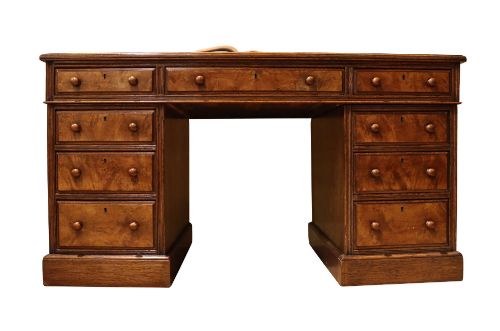
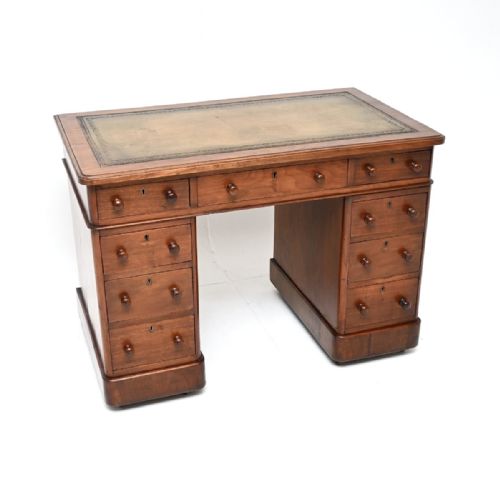
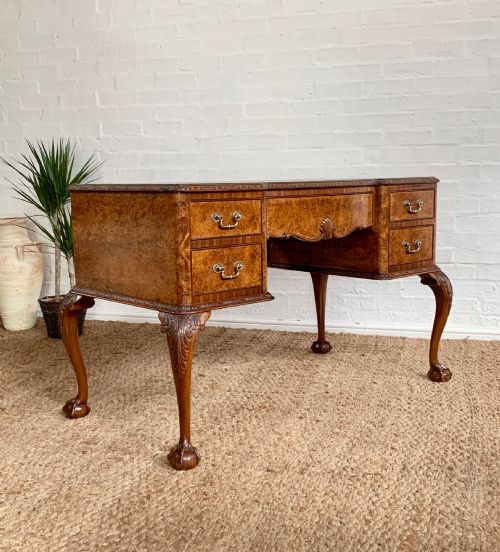
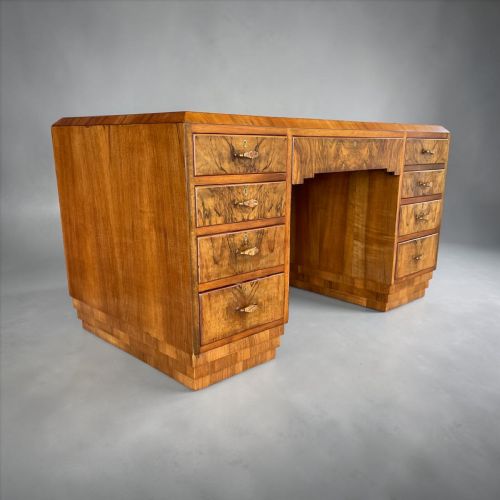
A walnut pedestal bureau offers a substantial workspace anchored by twin banks of drawers, combining fine cabinet-making with functional utility.
Walnut Pedestal Bureau
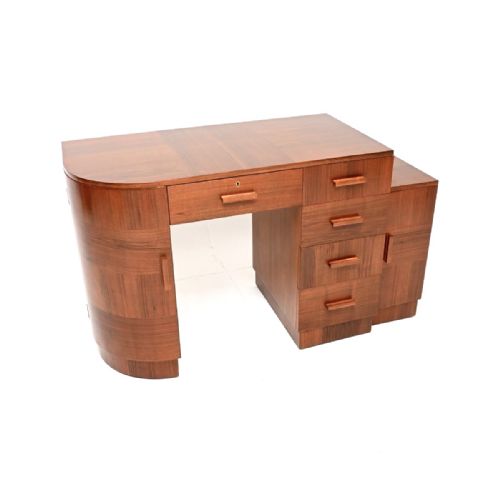
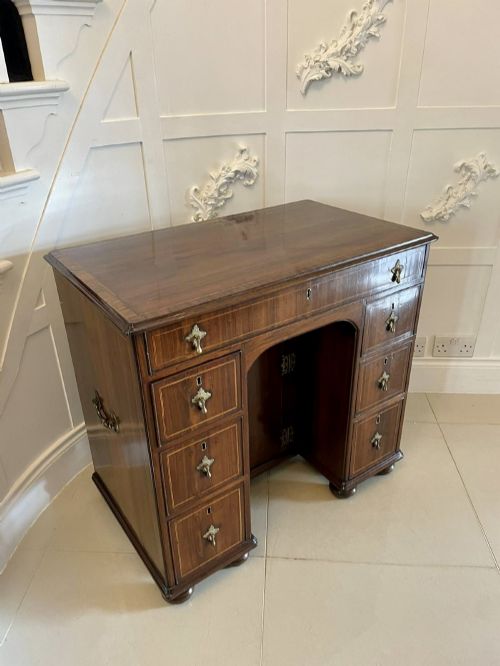
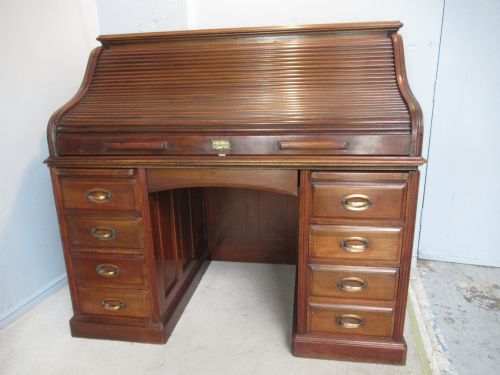
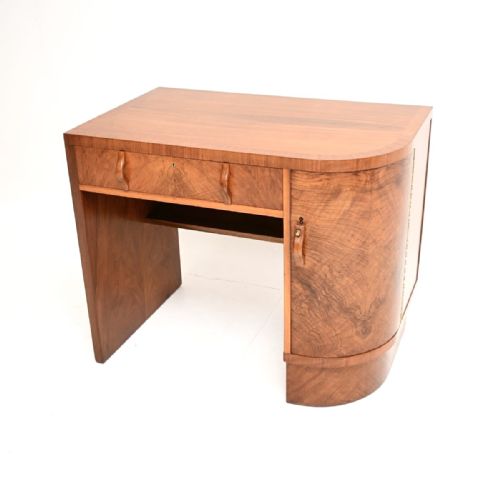
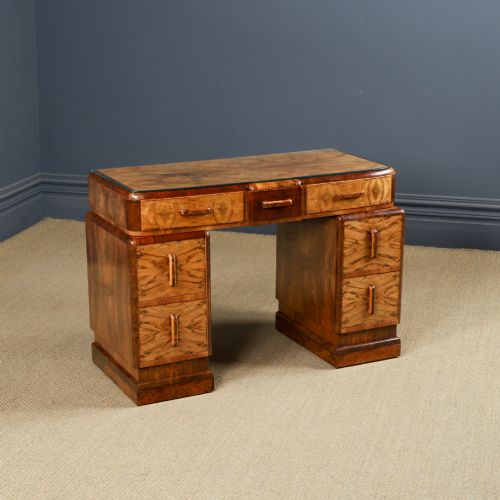
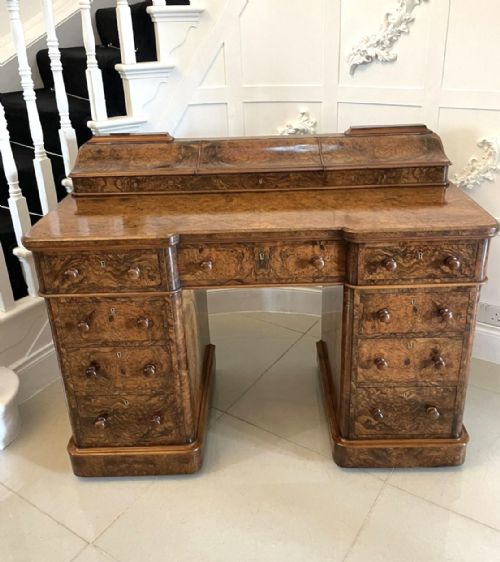
Buyers seeking a walnut pedestal bureau encounter forms ranging from eighteenth-century kneehole desks to twentieth-century Art Deco and Edwardian variations. The selection includes compact writing tables, kneehole desks, and Davenport styles, with eighteenth-century and Victorian pieces appearing frequently.
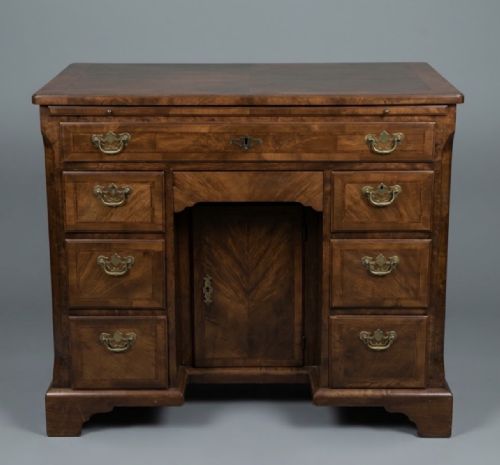
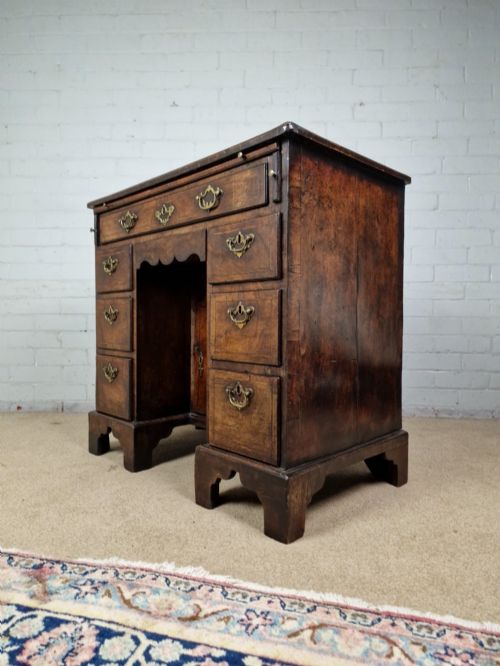
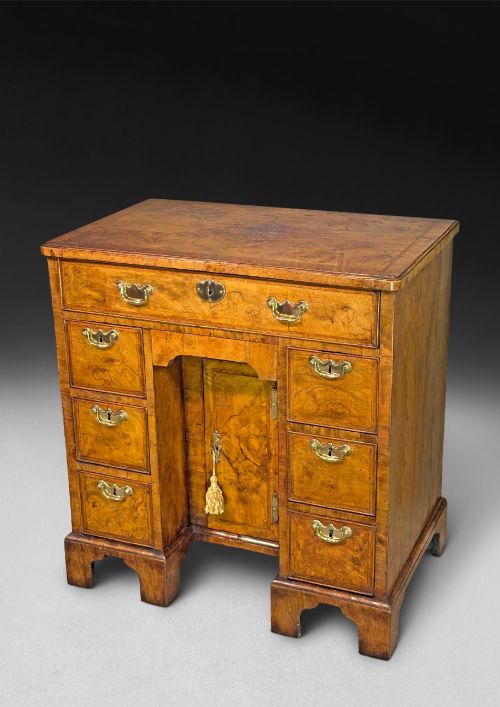
Early examples from the Georgian and Queen Anne periods present figured, fiddleback, or burr walnut surfaces alongside traditional kneehole configurations. Later nineteenth and twentieth-century interpretations introduce oak, glass, and burr elm elements to the standard pedestal desk layout.
Construction and materials
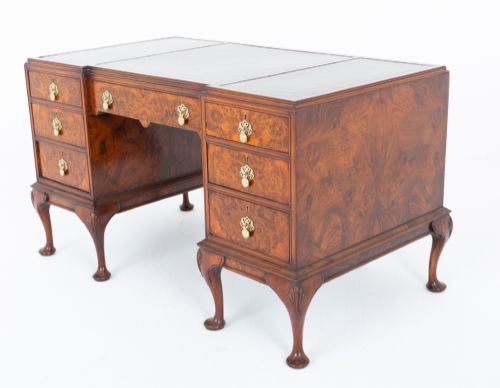
Cabinets are constructed using solid timber frames paired with decorative veneers, notably burr walnut and figured walnut, applied to secondary timbers such as oak and pine. Brass hardware, including drop handles and escutcheons, complements the timber grain.
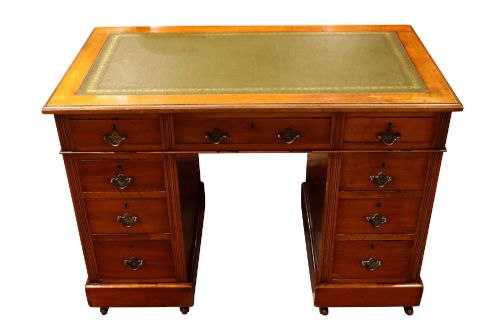
Writing surfaces frequently incorporate inset leather panels, often tooled with gilt decoration, set directly into the wooden top above the pedestal drawers.
Assessing quality in construction
Quality rests in the selection of the timber veneers, where symmetrical grain matching across drawer fronts distinguishes finer workshops from standard production. The depth of figure in burr walnut and the crispness of internal drawer construction signal superior craftsmanship.
The integrity of the secondary woods, the retention of original brass hardware, and the preservation of the fitted interior compartments further separate standard utilitarian pieces from exceptional cabinet-maker outputs.
Maple and Co·Boston Chair Company·Étienne Kohlmann
The Walnut Pedestal Bureau Glossary
- Burr walnut
- A timber harvested from the warted growths on walnut trees, yielding highly ornamental swirling grain patterns. It is sliced into thin veneers for decorative cabinet fronts.
- Kneehole desk
- A compact writing desk featuring a recessed central space for the legs, flanked by two pedestals of small drawers. This form became popular during the late seventeenth and eighteenth centuries.
- Davenport desk
- A small writing desk featuring a sloping, hinged top above a set of drawers accessed from the side. The form emerged in the nineteenth century.
- Fiddleback walnut
- A figured grain pattern named for its historical use in the backs of violins, displaying rippled cross-grain figuring that catches the light.
Walnut Pedestal Bureau: Frequently Asked Questions
What is a walnut pedestal bureau?
A walnut pedestal bureau is a sturdy writing desk supported by twin columns of drawers, finished with walnut veneers or solid timber.
These pieces typically incorporate a central writing surface, sometimes lined with leather, and provide substantial enclosed storage beneath.
How do I identify an eighteenth-century piece?
Eighteenth-century examples display characteristic construction methods, such as hand-cut dovetails on the drawer sides and native timber linings.
They frequently feature figured or burr walnut veneers applied to oak carcases, with period-appropriate brass handles.
How should I care for the leather top?
Leather writing surfaces require gentle maintenance using specialist leather balms to prevent the material from drying out.
Avoid placing damp items directly onto the surface and keep the desk away from direct heat sources to protect both the leather and the underlying walnut.
Where does the kneehole design come from?
The kneehole desk format developed during the late seventeenth century as cabinet-makers refined domestic workspace furniture.
The central recess allowed the user to sit comfortably while keeping writing materials close at hand within the flanking drawer stacks.