



Walnut Paper Stand
A walnut paper stand brings tactile warmth to a room, holding daily reading in figured timber that catches the light.
Walnut Paper Stand
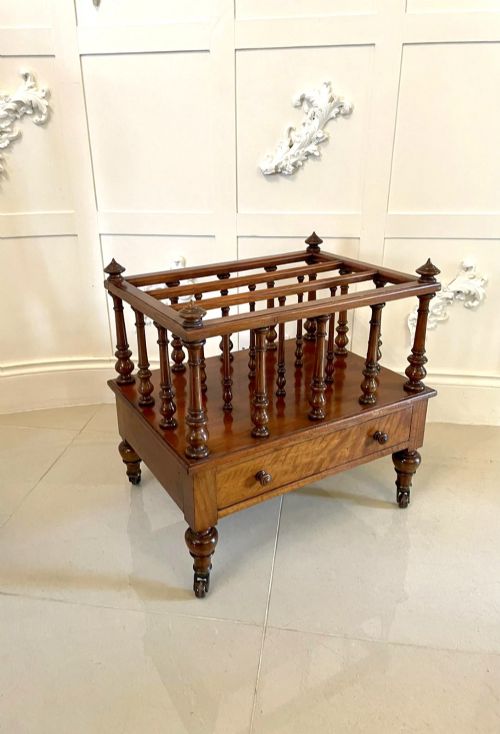
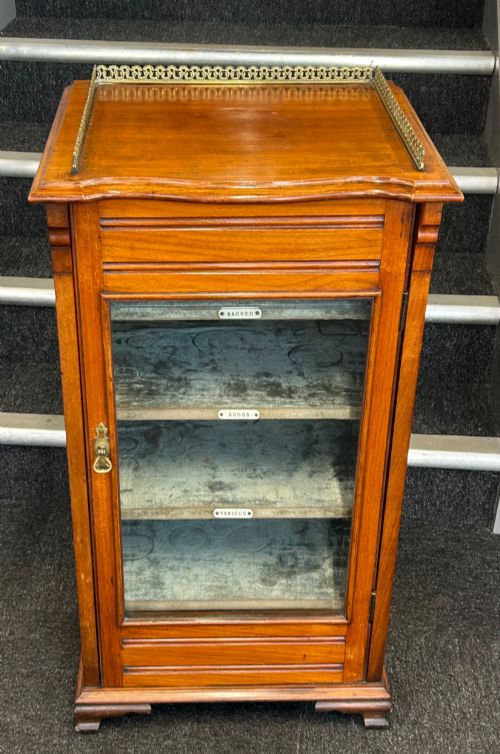
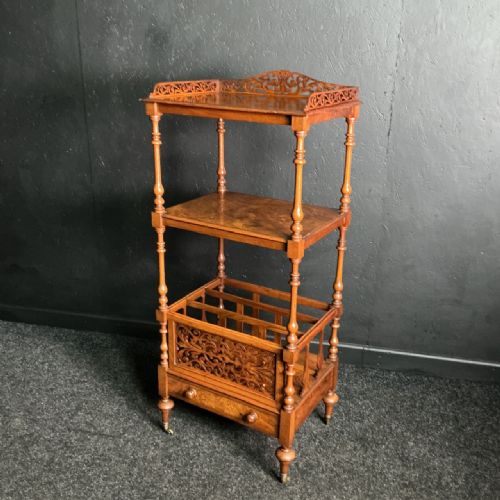
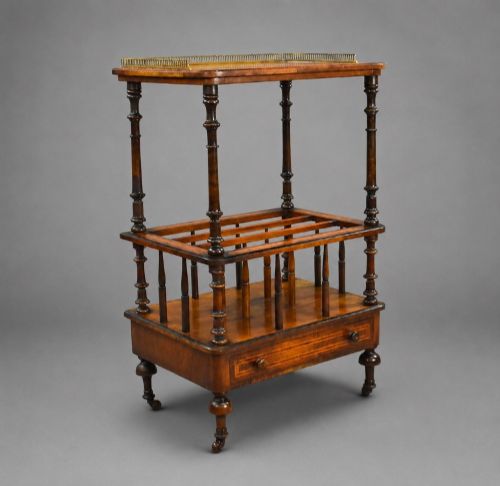
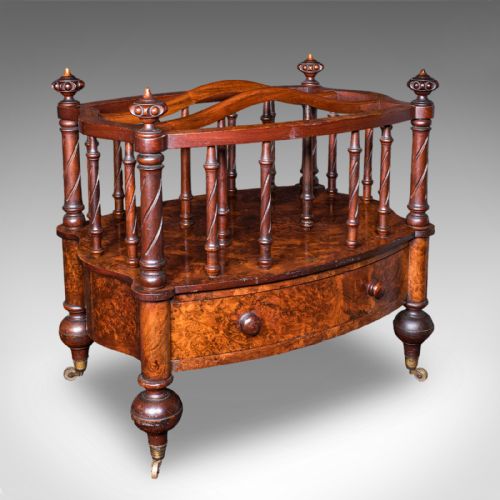
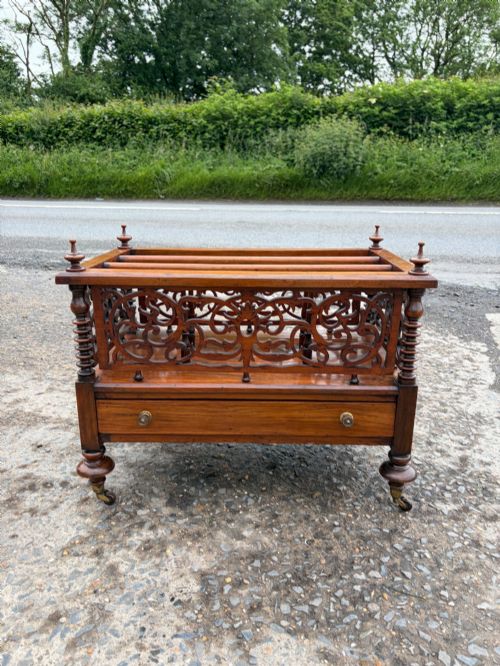
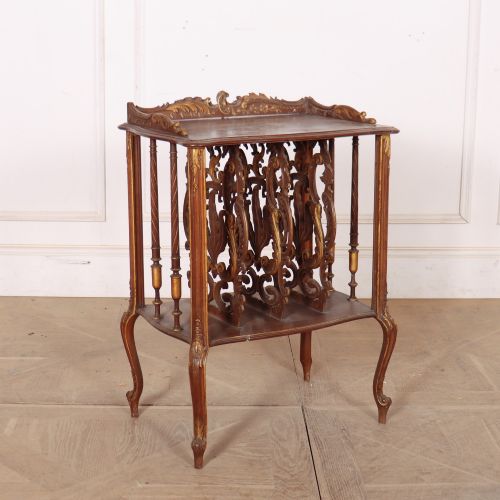
A walnut paper stand appears most frequently on this page as a Victorian canterbury, often incorporating music racks, magazine stands, and small drawers beneath open divisions. These pieces date largely from the nineteenth century, moving through Regency, Victorian, and Edwardian periods with distinct proportions and ornamentation.
Makers utilised rich timbers, pairing plain walnut with burr walnut veneers and contrasting inlay to elevate pieces originally designed for newspapers, periodicals, and sheet music. Forms range from compact freestanding tables to taller music cabinets and multi-tiered whatnots.
The domestic interior of the nineteenth century relied on these stands to keep periodicals and folios orderly, resulting in surviving examples that combine utility with decorative marquetry, brass castors, and turned supports.
Assessing quality in walnut paper stands
The distinction between standard examples and superior pieces rests upon the selection of burr walnut veneer and the precision of the wood inlay. Master craftsmen achieved symmetry in book-matched grain and executed marquetry without gaps or lifting edges.
Proportion and structural integrity separate robust examples from weaker ones, particularly in the joinery of the vertical dividers and the smooth operation of fitted drawers. Attention to detail in turned spindles and the quality of original brass castors complete the assessment of a well-made piece.
Object forms recorded here include canterburys, music cabinets, whatnots, and newspaper racks incorporating brass and copper.
The Walnut Paper Stand Glossary
- Canterbury
- A low stand with upright divisions, designed for holding loose sheets of music, newspapers, or magazines. The form originated in the late eighteenth century and evolved into a staple of Victorian furnishing.
- Burr walnut
- Timber taken from the warted growths of a walnut tree, yielding a swirling, highly figured grain pattern. Cabinet makers used veneers of this wood on prominent surfaces.
- Marquetry
- The art of creating decorative patterns on wood surfaces by fitting together small pieces of veneer of different colours and materials. This technique appeared widely on Victorian and Edwardian examples.
- Whatnot
- An open set of freestanding shelves used for displaying or storing small items, frequently combined with canterbury compartments in the lower section. These pieces offered versatile storage in nineteenth century drawing rooms.
- Stringing
- A narrow strip of contrasting wood, such as boxwood or ebony, inlaid into grooves on a furniture surface to create geometric borders. It highlighted the edges of panels and table tops.
Walnut Paper Stand: Frequently Asked Questions
What is a walnut paper stand used for?
These pieces served as dedicated storage for daily newspapers, periodicals, and sheet music in the nineteenth century parlour. Their divided sections kept loose paper sorted and accessible near seating areas.
Today, they function just as well beside a modern sofa or armchair to hold current reading material, magazines, or vinyl records.
How do I date a walnut paper stand?
Dating relies on observing construction methods, timber choices, and stylistic markers across the nineteenth century. Regency and early Victorian pieces often feature bolder classical turns, while high Victorian examples display rich burr walnut veneers and intricate marquetry.
Edwardian pieces tend toward lighter framing and restrained inlay, reflecting changing domestic tastes at the turn of the twentieth century.
Where should I place it in a room?
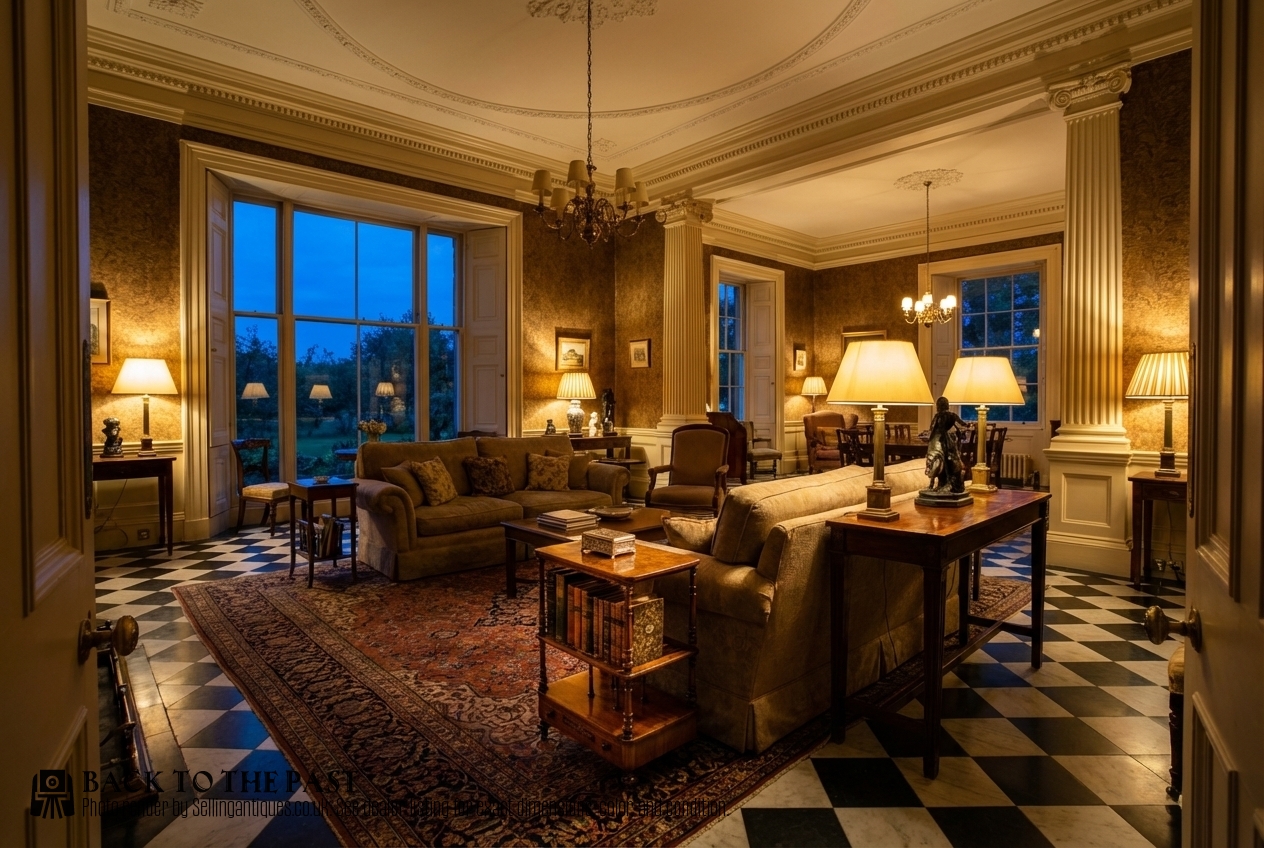
A freestanding canterbury or music cabinet works best beside a desk, reading chair, or sofa where periodicals collect. Because many examples feature finished backs and rotating castors, they look correct viewed from any angle in an open space.
Avoid placing antique walnut directly beside active heat sources to protect the polished timber and delicate veneer work.
Are these stands sturdy enough for daily use?
Nineteenth century cabinet makers built these pieces to withstand the regular handling of heavy folios and newspapers. Sound joinery and stable vertical divisions mean they remain entirely practical for holding modern magazines and books.
Lifting the stand by its main body rather than pulling on fragile fretwork or dividers ensures the structure remains secure over time.