
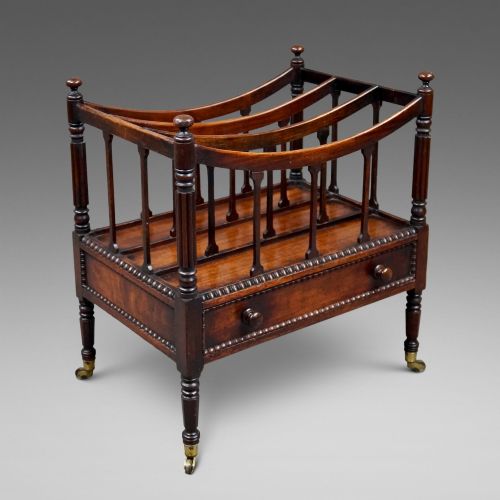
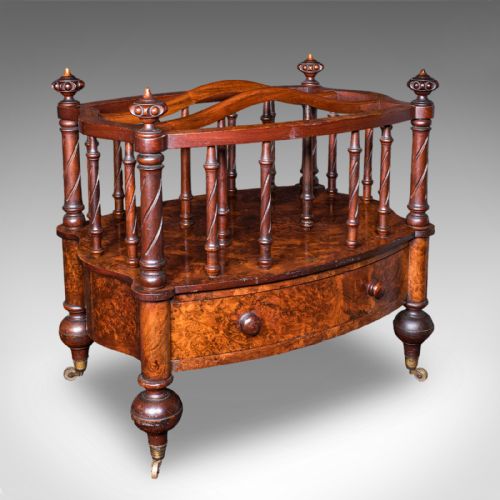
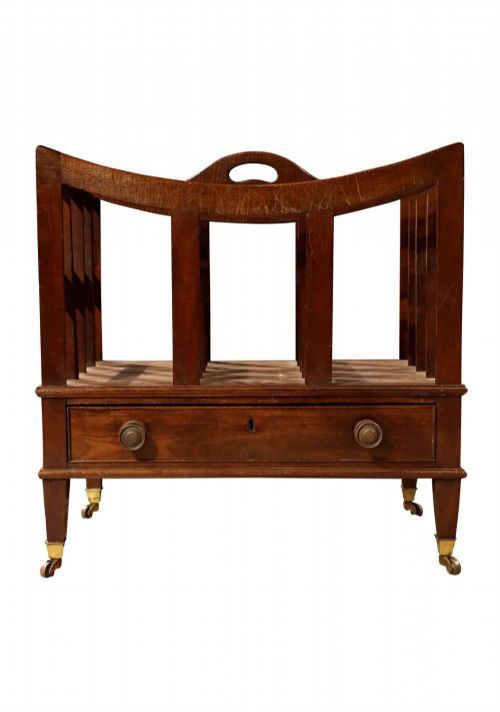

Canterbury Rack with Drawer
A canterbury rack with drawer combines partitioned storage for periodicals or music sheets with a useful lower compartment.
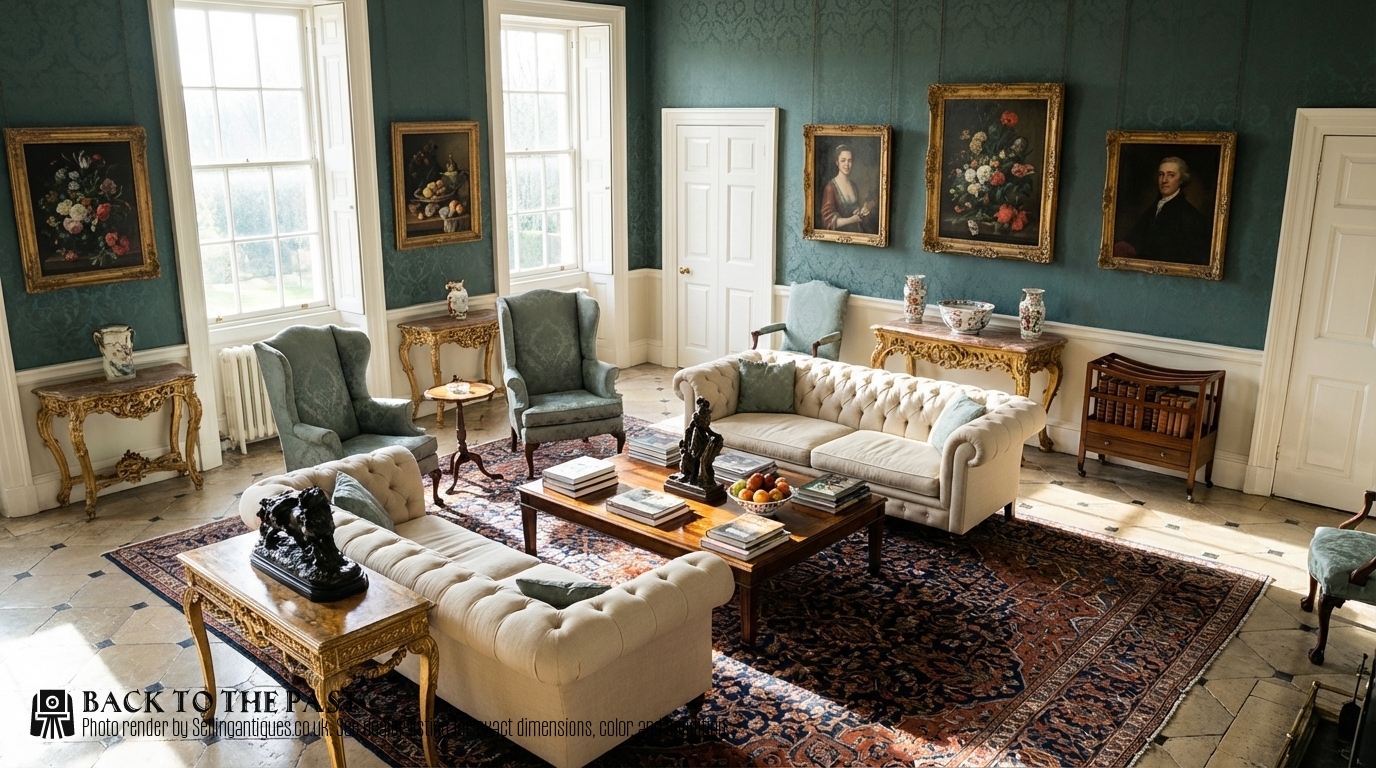
Canterbury Rack with Drawer
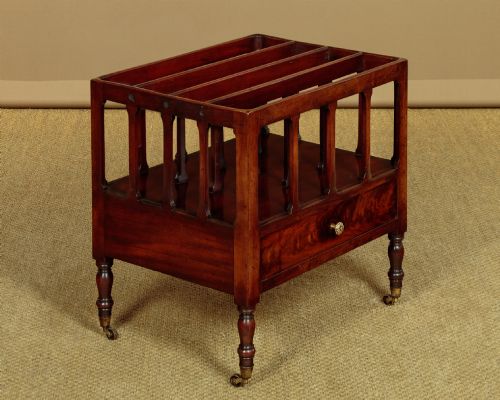
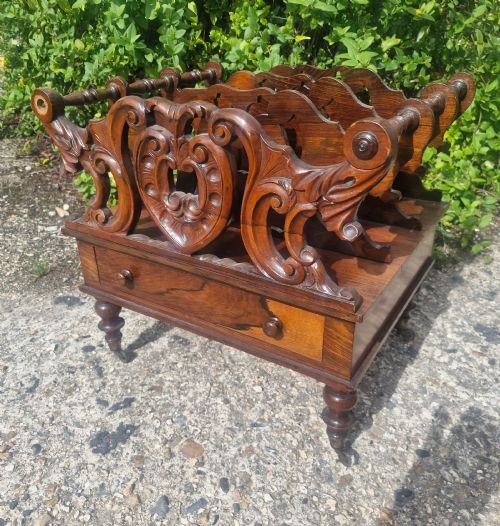
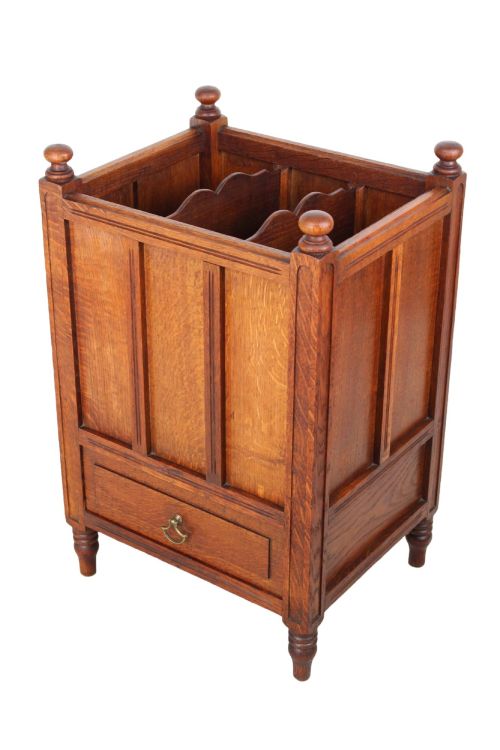
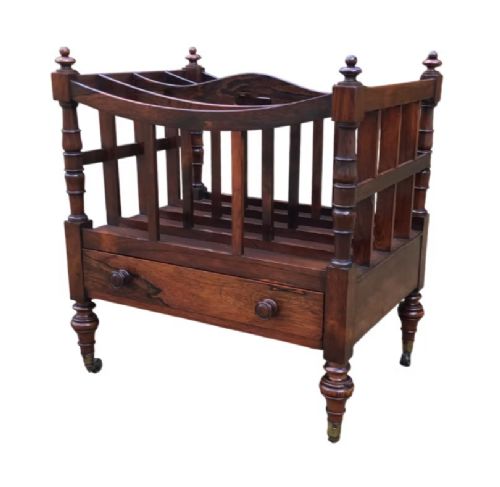
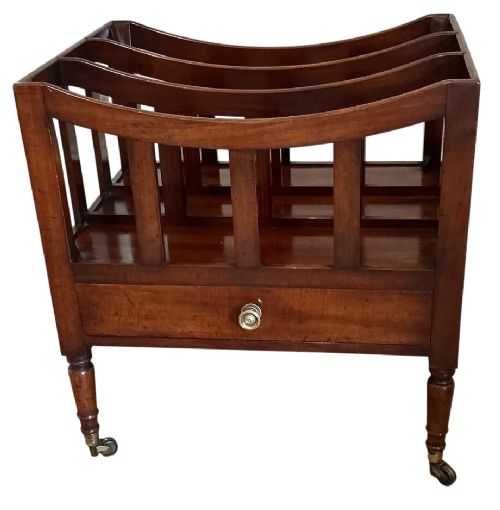
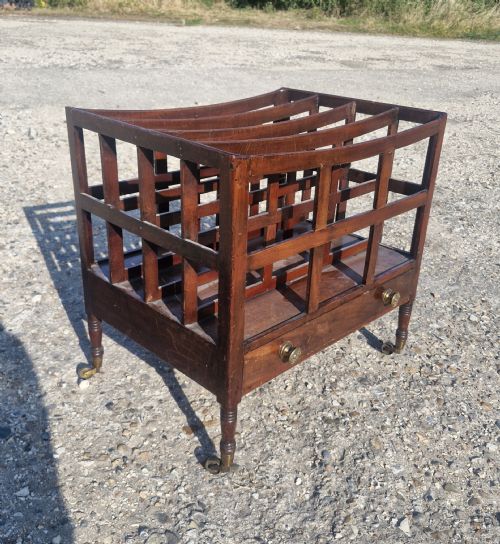
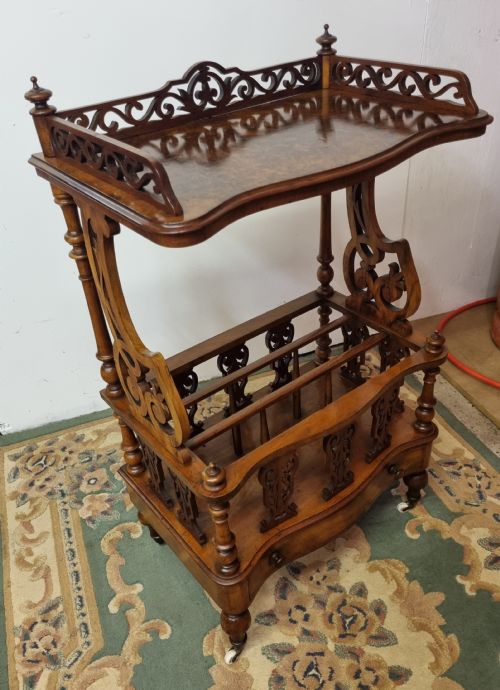
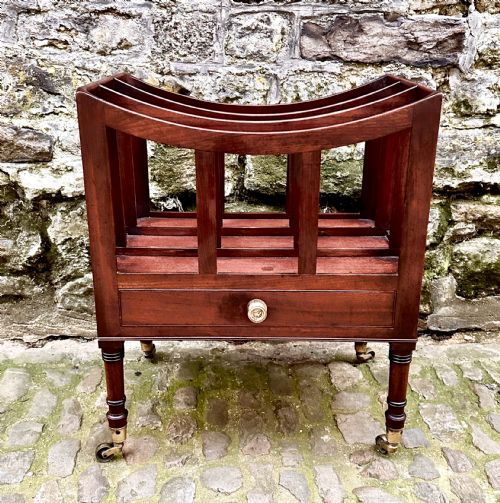
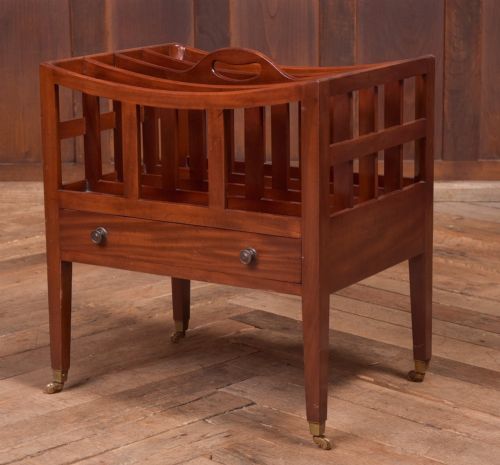
A canterbury rack with drawer is a piece of antique furniture designed to hold newspapers, magazines, and sheet music while providing enclosed storage in a base drawer. The examples seen on this page span the Georgian, Regency, Victorian, and Edwardian periods.
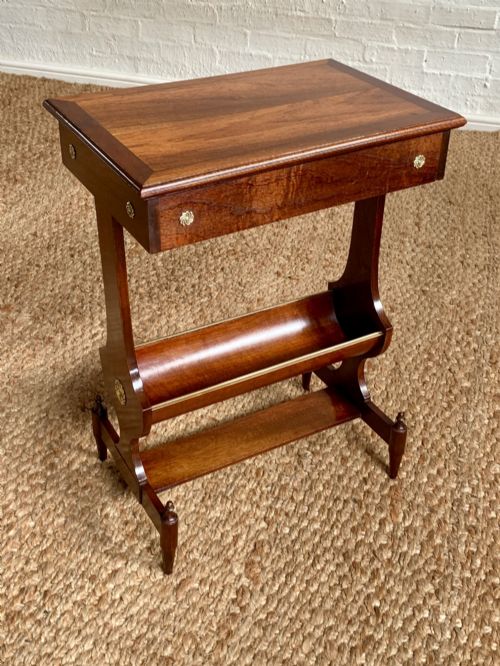
Most pieces encountered here are constructed from timber such as mahogany, rosewood, and walnut, often featuring division slats for organising paperwork. These items function as freestanding stands or side tables within domestic spaces.
Materials and Construction
Cabinetmakers utilised dense hardwoods such as mahogany and exotic veneers like rosewood, burr walnut, and satinwood to build these stands. Brass castors, ceramic details, and ebony stringing frequently appear as secondary decorative elements.
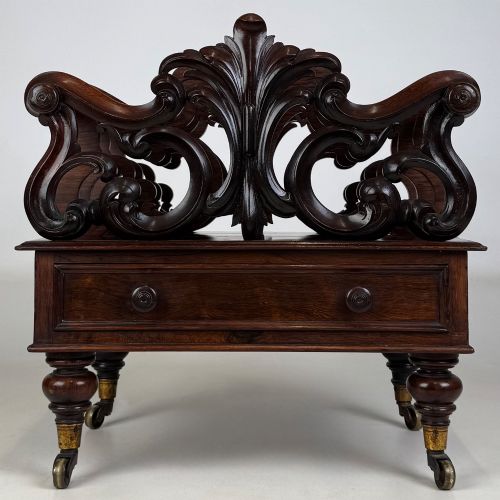
Joinery methods involved precise framing for the vertical divisions and dovetail construction for the integrated base drawer. Pierced fretwork and carved details, such as scrollwork or foliate designs, were shaped by hand.
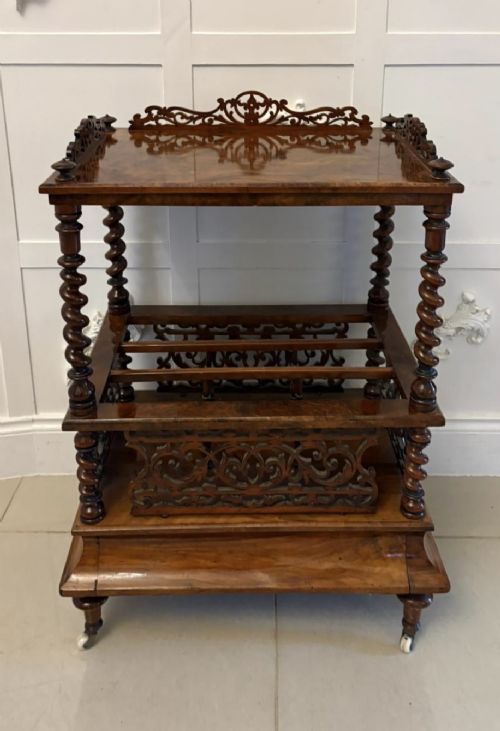
Some Victorian models managed to combine a music stand, a paper tidy, and a display whatnot all into one ambitious piece of furniture.
Markers of Quality
Quality rests in the selection of timber grain, particularly the depth and movement in rosewood or burr walnut veneers, and the crispness of carved woodwork. Finely pierced fretwork divisions require meticulous hand-cutting that distinguishes superior examples.
The integrity of the structural joinery, the smooth operation of the drawer, and the retention of original brass fittings or castors separate refined cabinet-making from simpler production.
Edwards and Roberts·Howard and Sons
The Canterbury Rack with Drawer Glossary
- Canterbury
- A low stand fitted with upright divisions for holding music sheets or periodicals, typically featuring a drawer beneath. Originating in the late 18th century, the form bears a name linked to the Archbishop of Canterbury.
- Division
- An upright wooden partition that divides the top section into separate slots for papers. These dividers often feature pierced scrollwork or fretwork.
- Whatnot
- A piece of open shelving furniture with multiple tiers, occasionally combined with a canterbury base and drawer. These multi-functional stands provide display space alongside paper storage.
- Fretwork
- Ornamental perforated woodwork created by cutting intricate patterns through a thin board. This technique appears on the vertical slats of superior racks.
- Inlay
- A decorative technique where contrasting materials like ebony are embedded into the primary timber surface. This creates geometric lines or patterns across the cabinet body.
Canterbury Rack with Drawer: Frequently Asked Questions
What was a canterbury rack used for originally?
These stands were created to hold sheet music, books, and newspapers near seating areas in polite rooms. The lower drawer provided enclosed space for smaller accessories or writing materials.
Over time, households adapted them for magazines and general paperwork while retaining their original placement in living spaces.
How do I date a mahogany canterbury?
Georgian and Regency versions tend to exhibit linear forms with brass castors and simpler mahogany grains. Victorian and Edwardian examples often introduce rosewood, burr walnut, or elaborate fretwork divisions.
Construction details, such as drawer dovetailing and timber choice, help narrow down the manufacturing decade.
Are these pieces sturdy enough for daily use?
Most antique stands are constructed from durable hardwoods like mahogany and walnut, making them structurally sound for holding current periodicals. Their legs often retain original castors designed for gentle repositioning across rooms.
Care should be taken when moving them loaded with heavy materials to protect the vertical division joints.
What is the difference between a canterbury and a magazine rack?
A traditional canterbury specifically incorporates upright wooden slats forming distinct partitions, often paired with a drawer below. Later magazine racks sometimes abandon the multi-division format for simpler open troughs.
Earlier examples from the Regency and Victorian eras generally adhere strictly to the formal partitioned design.