




Walnut Mirrored Door Sideboard
These walnut mirrored door sideboards are substantial pieces that anchor a room with figured grain and reflected light, offering both display and concealed storage.
Walnut Mirrored Door Sideboard
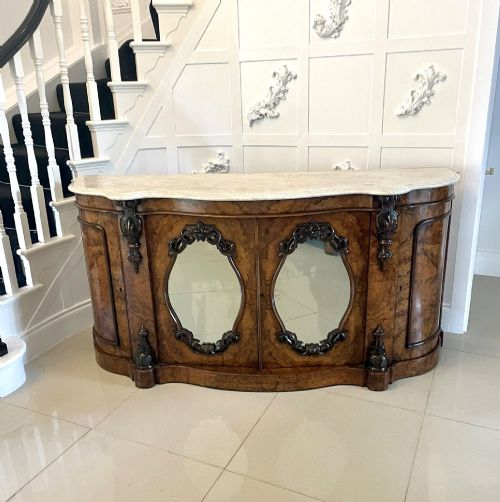
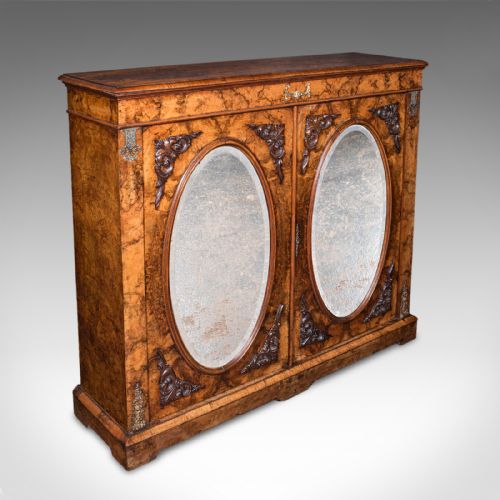
A walnut mirrored door sideboard brings together rich timber surfaces and reflective glass panels, functioning primarily as a credenza or low cabinet. These items appear most frequently in Victorian forms, spanning from mid-century examples to later decades of the nineteenth century.
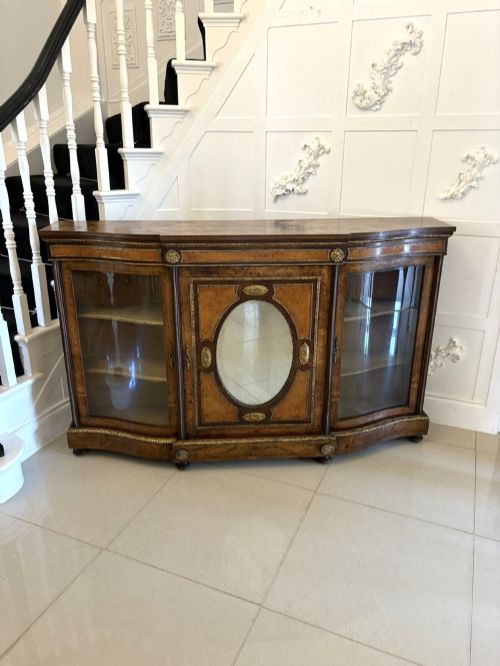
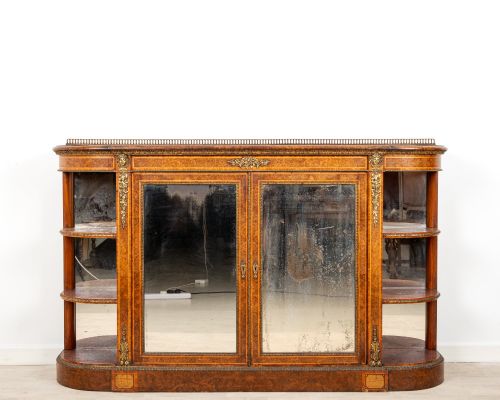
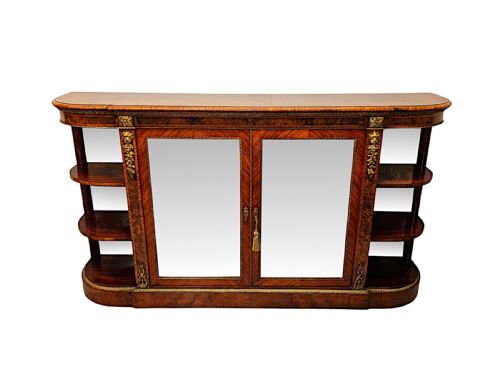
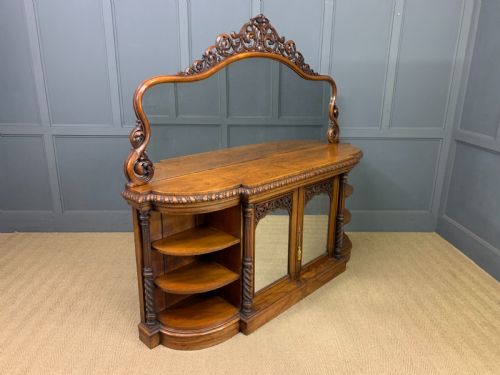
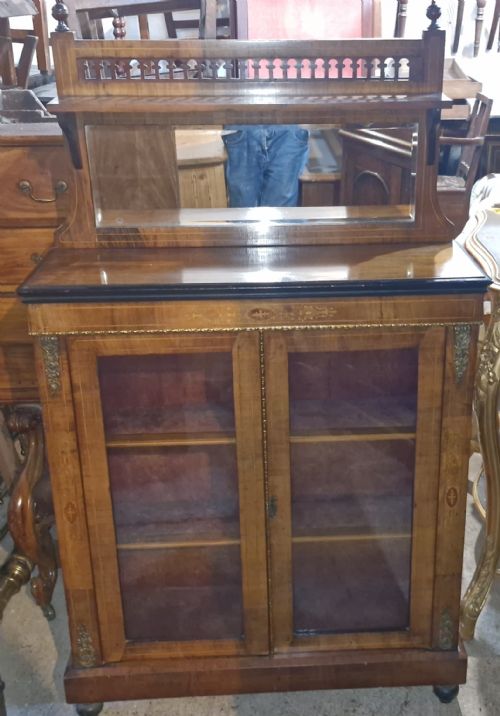
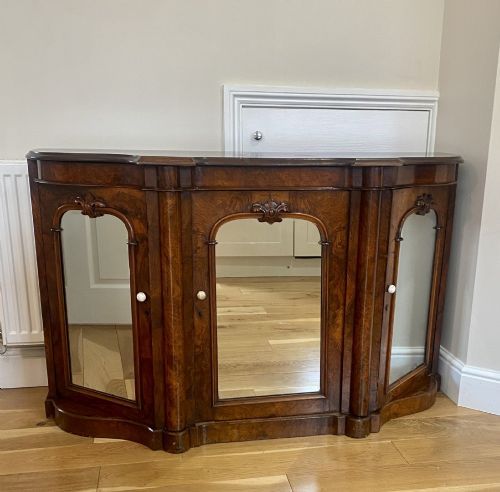
The category encompasses serpentine fronted credenzas, mirror back chiffoniers, and display cabinets alongside occasional Regency book cabinets and Edwardian variations. Buyers encounter pieces ranging from small proportions to large, twin-door or four-door configurations designed for formal reception rooms.
Materials and construction
Cabinet makers utilised solid walnut and figured burr walnut veneers over secondary timbers, selecting cuts that displayed rich, swirling grain patterns. Marquetry inlay frequently decorates the surfaces, adding linear detail or floral motifs.
Glass panels serve as central mirror doors or mirrored backs, while cast or gilt ormolu mounts highlight the corners, pilasters, and friezes. Marble tops appear on specific credenzas, providing a contrasting stone surface above the wooden carcase.
Current listings feature walnut cabinets spanning the Regency, Victorian, and Edwardian eras, incorporating marble tops, ormolu mounts, and mirrored doors.
Assessing quality and execution
The distinction between standard production and superior examples rests on the selection of burr walnut veneer and the precision of the marquetry inlay. Highly regarded pieces display harmonious grain matching across multiple doors and panels rather than random timber cuts.
Mounting hardware reveals the maker's hand, where chased ormolu mounts and substantial brass fittings integrate smoothly into the design. Carved details on serpentine fronts and the integration of heavy marble tops further separate ambitious commissions from simpler workshop output.
Gillows
The Walnut Mirrored Door Sideboard Glossary
- Credenza
- A low cabinet or sideboard, frequently fitted with glass or mirrored doors and decorative mounts. These pieces originally functioned for serving food or displaying plate in dining spaces.
- Burr Walnut
- A distinctive timber harvested from walnut tree growths, yielding highly figured, swirling grain patterns. Cabinet makers prized this veneer for principal facade surfaces.
- Ormolu
- Gilded bronze mounts applied to furniture for decorative enrichment. Makers cast and chased these metal elements to frame doors and accent corners.
- Serpentine
- A front contour that curves outward in the centre and inward at the sides, or vice versa. This undulating shape requires precise carpentry.
- Marquetry
- Inlays of contrasting wood veneers arranged in geometric or pictorial patterns. Artisans applied these designs to tabletops and cabinet doors.
Walnut Mirrored Door Sideboard: Frequently Asked Questions
What rooms suit a credenza?
These low cabinets function well in dining rooms, large hallways, or living spaces where surface display and enclosed storage are both required.
The reflective glass panels help bounce natural light around the interior while keeping contents protected behind doors.
How do I date a Victorian piece?
Look to the overall silhouette, timber selection, and mounting styles, noting that mid-nineteenth-century examples often favour heavy burr walnut and ormolu.
Later Victorian and Edwardian iterations frequently introduce lighter marquetry work and altered proportions suited to changing domestic fashions.
Are marble tops original?
Many nineteenth-century credenzas and sideboards incorporate fitted marble slabs designed to provide a durable, decorative surface above the timber carcase.
These stone inserts match the formal character of ormolu-mounted reception room furniture.
What is a mirror back cabinet?
A mirror back design incorporates a tall glass panel attached to the upper superstructure behind a shelf or display tier.
This feature allowed owners to showcase porcelain and glassware with added depth and illumination.