


Open Shelf Credenza Display
An open shelf credenza display brings together functional storage and open display space, drawing on Victorian and Regency traditions to anchor a room.
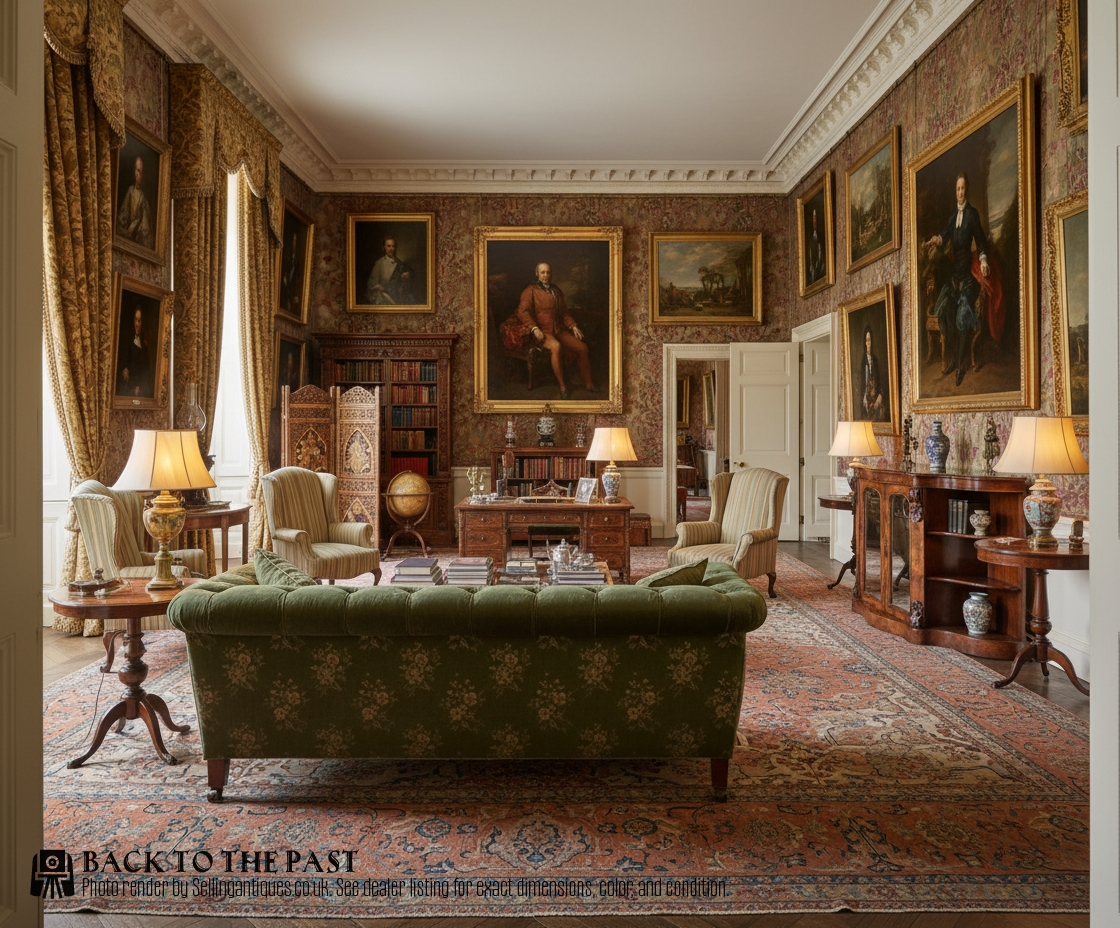
Open Shelf Credenza Display
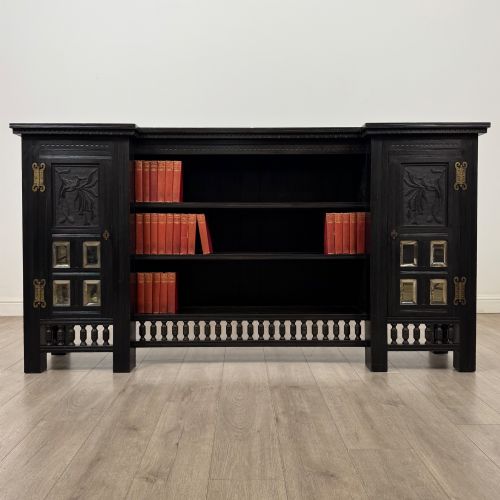
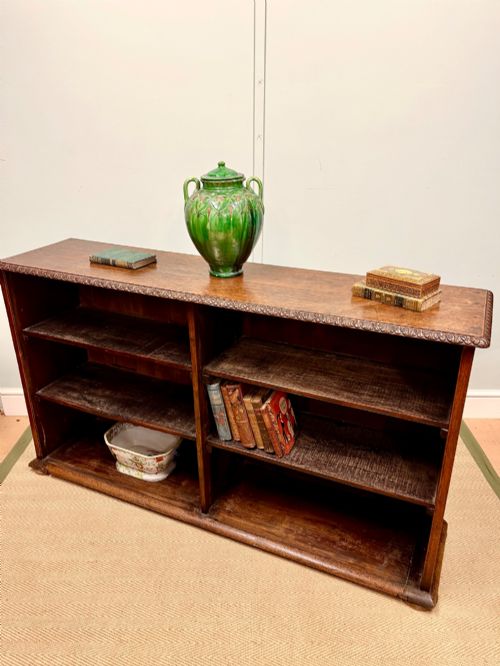
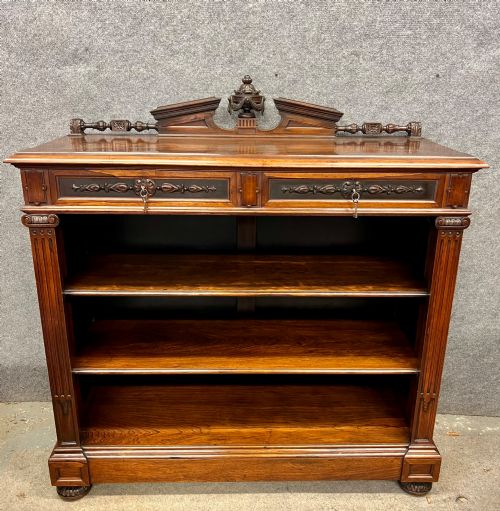
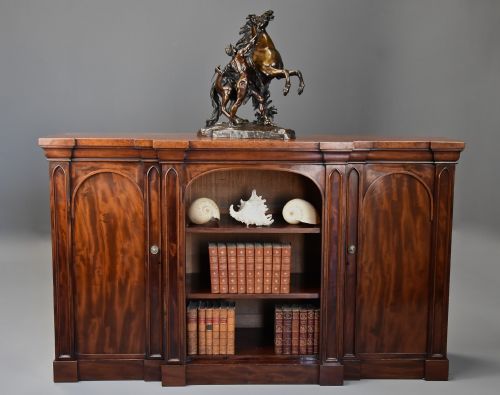
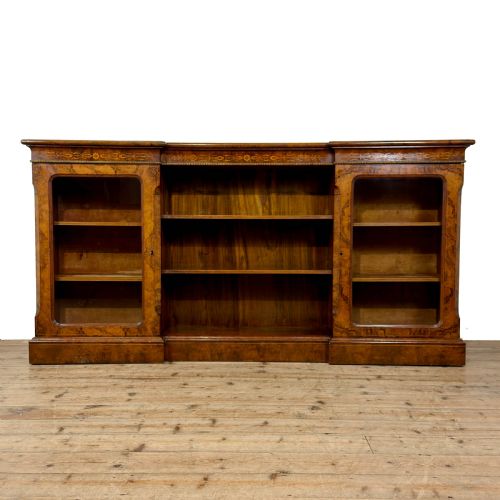
When you search for an open shelf credenza display, you encounter pieces that merge the enclosed lower storage of a traditional credenza or sideboard with upper shelving or display elements. The selection relies heavily on 19th-century Victorian and Regency forms, alongside occasional Art Deco expressions.
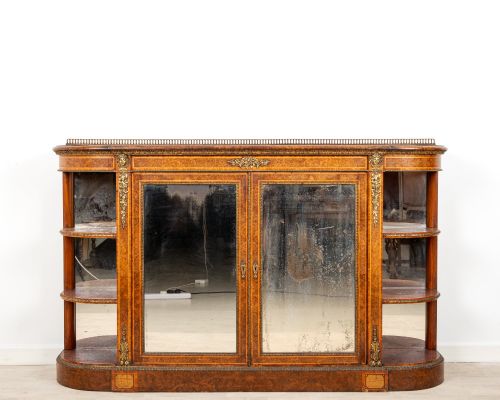
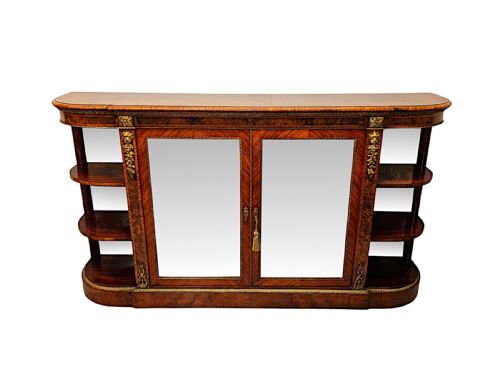
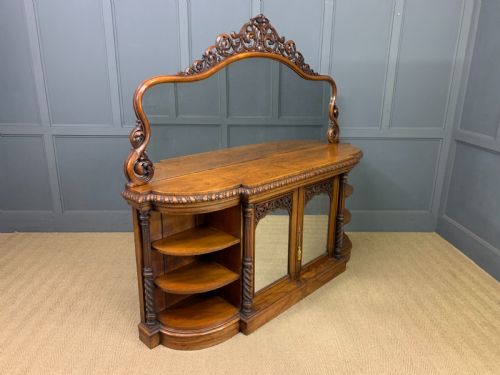
Most examples combine timber cabinetry such as burr walnut, mahogany, or rosewood with glazed doors, mirrored backs, or open tiers. These hybrids function equally well as bookcases, side cabinets, and display chiffoniers.
Makers often integrated graduated shelves above enclosed cupboards or mirrored backings to reflect light into the room. Such variations reflect the shifting domestic demands of the nineteenth century for both storage and ornamental display.
Materials and construction
Cabinet makers utilised choice timbers including burr walnut, rosewood, and mahogany, frequently applying intricate veneers to flat surfaces. Figure and grain direction were carefully chosen to create visual movement across large doors and panels.
Ormolu mounts, brass inlays, and mirrored glass were integrated to elevate the decorative scheme. These metal elements and reflective surfaces required precise joinery and fitting to sit flush against polished wood.
Listings feature woods such as burr walnut, mahogany, rosewood, and satinwood, spanning the Regency, Victorian, and Art Deco periods.
Judging quality and execution
The distinction between standard production and top-tier pieces rests on the choice of veneer and the crispness of the carving. Superior examples display symmetrical burr walnut figures and tightly fitted ormolu mounts that sit securely without gaps.
Internal construction, such as the timber used for drawer linings and carcass backs, separates utilitarian items from cabinet work intended for grander reception rooms. Maker attribution, through stamps or distinct regional characteristics, also elevates a piece.
Gillows·Robert Strahan
The Open Shelf Credenza Display Glossary
- Credenza
- A low cabinet or sideboard, often fitted with doors enclosing shelves and sometimes flanked by curved glazed compartments. It developed distinct prominence during the Victorian era for dining room and parlour use.
- Ormolu
- Gilded bronze mounts applied to furniture for decorative contrast against dark woods like walnut and mahogany. The technique involves applying a mercury-gold amalgam to cast bronze.
- Chiffonier
- A low sideboard or cabinet featuring a raised shelf or tiered superstructure above the main surface. Originally designed for holding bottles or small ornaments.
- Breakfront
- A piece of furniture where the central section projects forward from the flanking wings. This architectural arrangement creates depth and shadow across large bookcases and sideboards.
- Vitrine
- A glass-fronted cabinet or display case designed to showcase porcelain, books, or small collectables. Glazed panels are held in place by wooden or metal framing.
Open Shelf Credenza Display: Frequently Asked Questions
What is an open shelf credenza display?
It is a hybrid furniture form combining low cabinet storage with open shelves or display compartments. These pieces draw primarily from nineteenth-century Victorian and Regency cabinet making.
They serve as both storage units and display surfaces for books and decorative objects. The combination of enclosed cupboards and open tiers defines their utility in period interiors.
How do I date these cabinets?
Dating relies on timber selection, decorative hardware, and structural style markers. Pieces from the Regency period often feature brass inlay and rosewood, while Victorian examples frequently employ burr walnut and ormolu.
Secondary woods and construction methods inside the drawers also offer clues to the decade of manufacture. Stylistic influences such as Gothic revival or Art Deco further narrow the production era.
Where were these pieces used?
They were designed for principal reception rooms, parlours, and libraries of nineteenth-century homes. Their dual function allowed owners to store household linens or books while displaying ceramics and ornaments.
Mirror backs and glass doors were specifically incorporated to brighten dim Victorian drawing rooms by reflecting natural daylight.
How do I care for burr walnut?
Burr walnut veneer requires stable room humidity and protection from direct sunlight to prevent drying and fading. Regular dusting with a soft, dry cloth preserves the polished finish.
Application of appropriate furniture wax helps nourish the timber and maintain its natural lustre over time. Avoid placing items with high moisture content directly on the wood surface.