
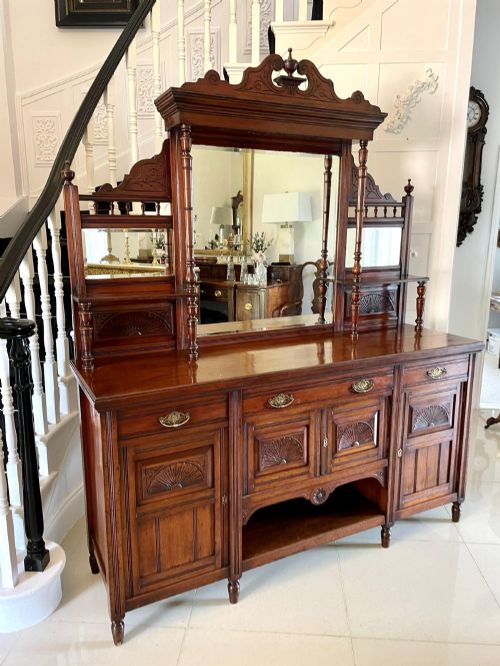
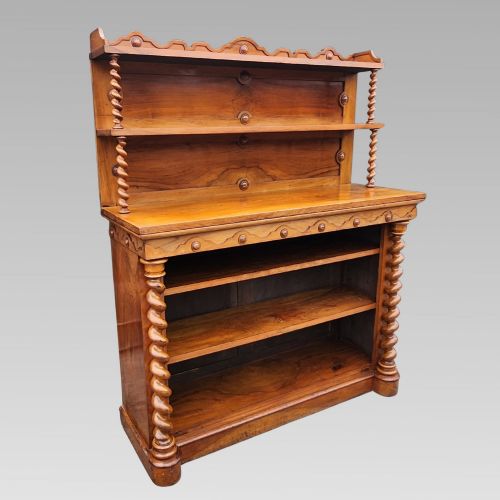
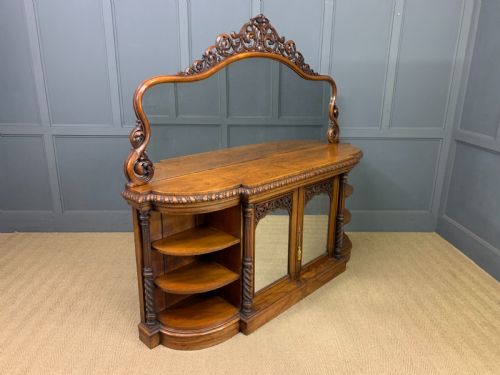


Carved Walnut Chiffonier
A carved walnut chiffonier brings rich timber grain and useful display space to a room, combining lower cupboards with upper shelving or mirrors.
Carved Walnut Chiffonier
A carved walnut chiffonier is a low sideboard or cabinet developed for the nineteenth-century parlour, offering enclosed storage alongside display surfaces. You will most frequently encounter Victorian interpretations on this page, dating from the mid to late nineteenth century through to the Edwardian period.
The form frequently incorporates architectural elements such as mirrored backs, open shelving, and glazed doors, grouping closely with credenzas and side cabinets. These pieces served as the focal point for displaying prized ceramics and glassware in period homes.
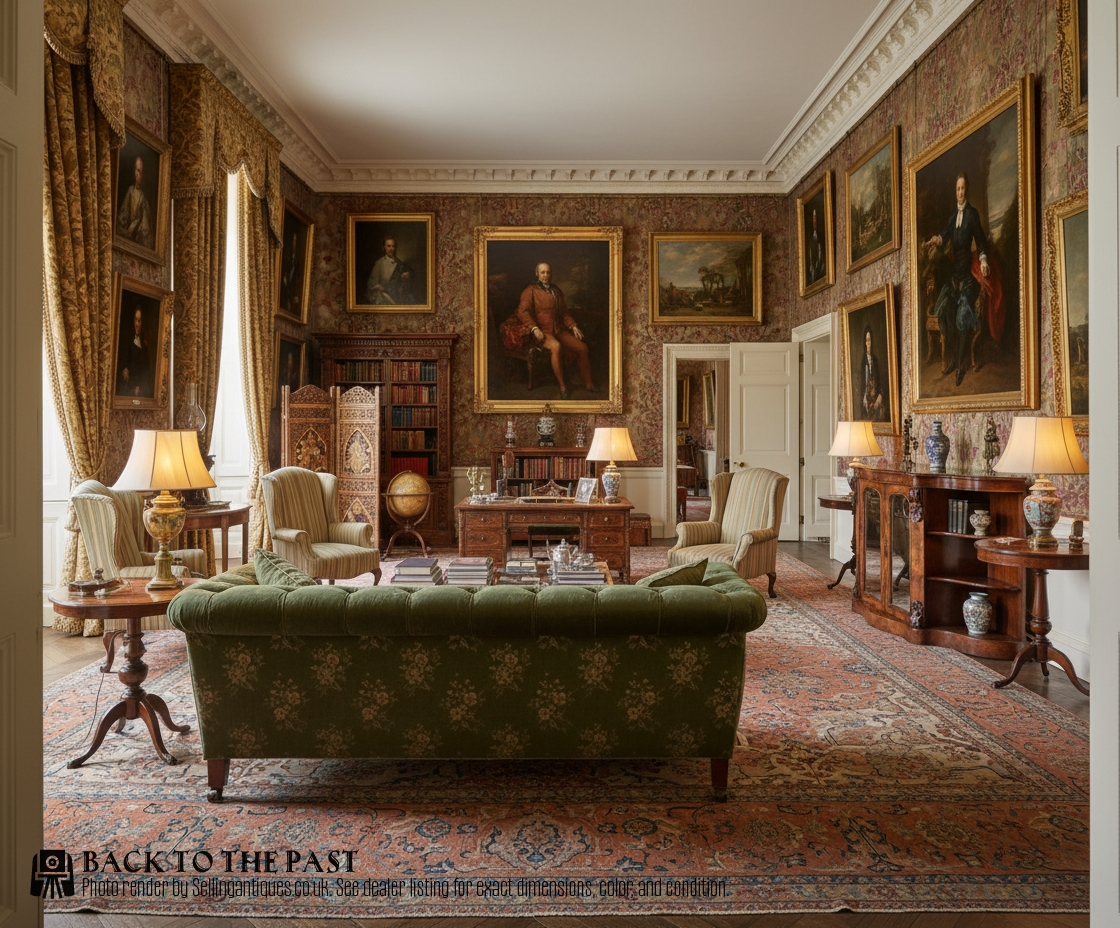
Materials and construction
Cabinetmakers utilised solid walnut and decorative burr walnut veneers over secondary timbers to achieve rich, figured surfaces. Workshops paired these warm timbers with brass hardware, marble tops, and glass panels.
Carved ornamentation and inlaid details define the decorative scheme, reflecting the revival styles and aesthetic movement tastes of the period. Mirrored glass inserts were integrated into the upper superstructures to enhance light and space within the room.
Listings feature Victorian, Edwardian, and nineteenth-century periods, utilising walnut, burr walnut, marble, and mirror glass.
Assessing quality and execution
The distinction between standard domestic pieces and exhibition quality items lies in the selection of burr veneers and the depth of hand carving. Superior examples display meticulous joinery, substantial marble tops, and finely integrated ormolu mounts.
Proportion and structural integrity separate fine cabinet work from simpler production, with better examples retaining original glass, mirrors, and fitted interior shelving.
James Plunckett Art Furniture Makers
The Carved Walnut Chiffonier Glossary
- Chiffonier
- A low sideboard or cabinet featuring a combination of cupboards and drawers, often topped with a mirror or shelves. This form evolved during the nineteenth century to provide versatile storage in principal rooms.
- Burr Walnut
- A distinctively figured timber harvested from walnut tree growths, valued for its swirling patterns. Cabinetmakers sliced this wood into thin veneers to ornament the primary surfaces of fine furniture.
- Credenza
- A low dining room or parlour cabinet, frequently featuring curved glass doors and gilt metal mounts. In nineteenth-century usage, the term often overlaps with side cabinets and chiffoniers.
- Ormolu
- Gilt bronze mounts applied to furniture as decorative enrichment during revival periods. This technique adds metallic contrast against dark timber surfaces.
Carved Walnut Chiffonier: Frequently Asked Questions
What is a carved walnut chiffonier used for?
These cabinets provide practical low storage with enclosed cupboards alongside display space on top for decorative items. In nineteenth-century interiors, they held table linen, silver, or glassware.
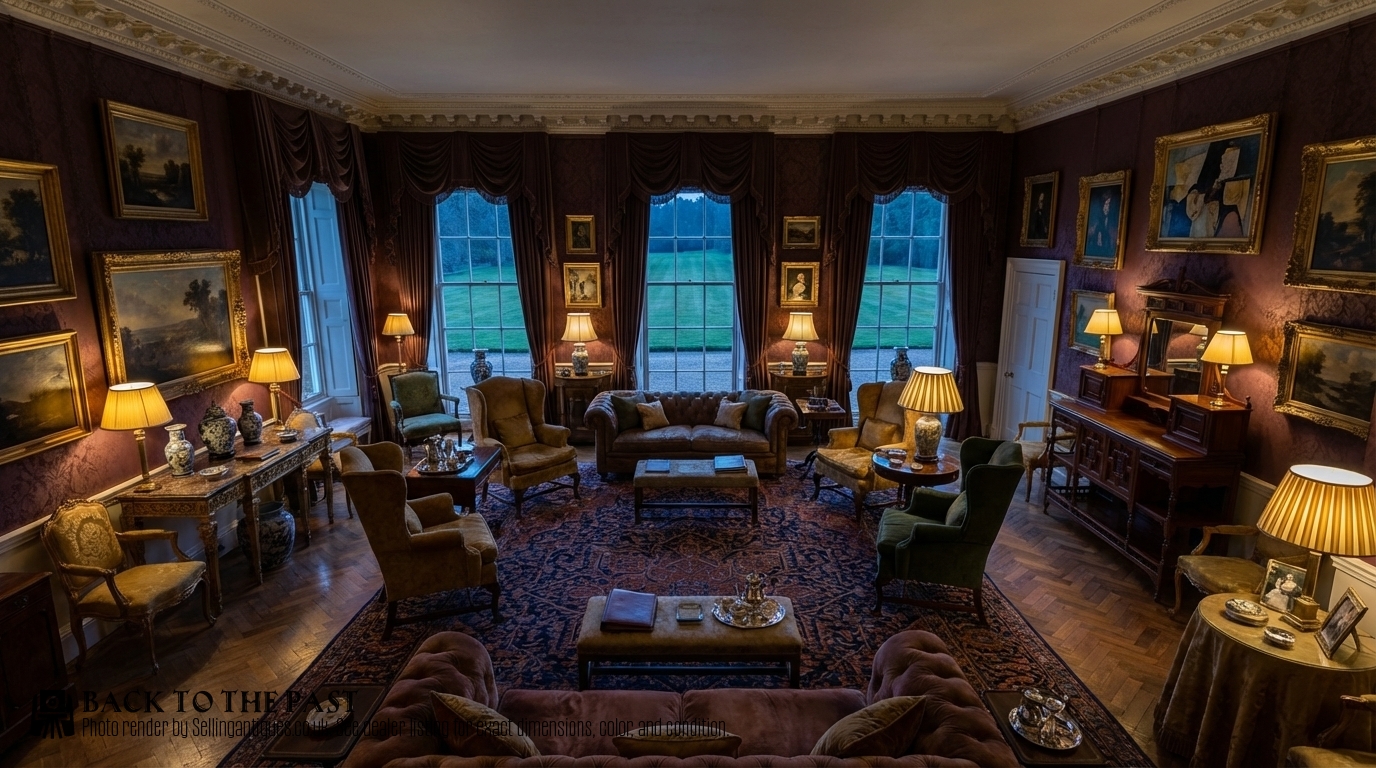
Today, they function well in living rooms or dining spaces as sideboards, offering surface area for lamps and books while concealing clutter below.
How do I date a Victorian walnut chiffonier?
Dating relies on observing construction methods, timber choices, and stylistic cues such as mirror frames and carving motifs. Mid-nineteenth century pieces often incorporate rich burr veneers and elaborate mirror backs.
Later Victorian and Edwardian examples show shifts toward simpler joinery, lighter proportions, or aesthetic movement inlay patterns.
Are these pieces made of solid walnut?
Most examples combine solid walnut framing with decorative burr walnut veneers applied to carcase fronts and drawer panels. This technique allowed cabinetmakers to showcase dramatic, swirling grain patterns without risking the warping inherent in large solid boards.
Secondary woods such as pine or mahogany were frequently utilised for internal partitions and drawer linings.
How do I style a chiffonier in a modern home?
A chiffonier works effectively against a plain wall where the figured wood grain and carved details can command attention. The surface easily accommodates ceramics, framed art, or lighting.
Keep the surrounding decor balanced to let the dark timber tones ground the room without making the space feel heavy.