
Walnut Marquetry Drawers
Walnut marquetry drawers bring together rich timber surfaces and intricate inlaid ornament across centuries of cabinet-making.
Walnut Marquetry Drawers
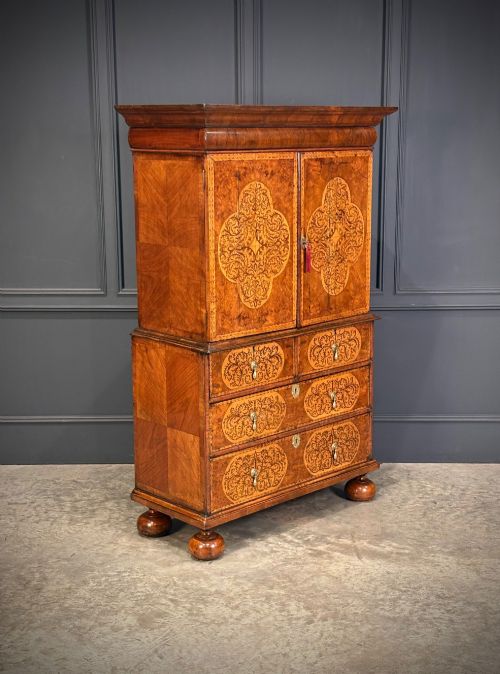
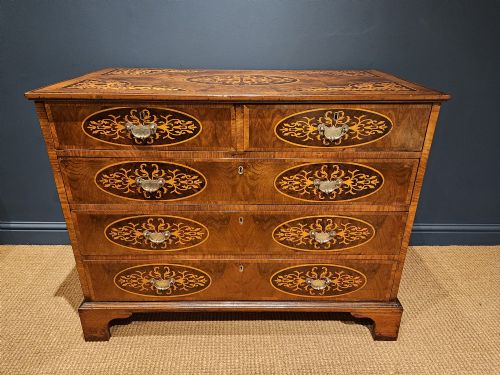
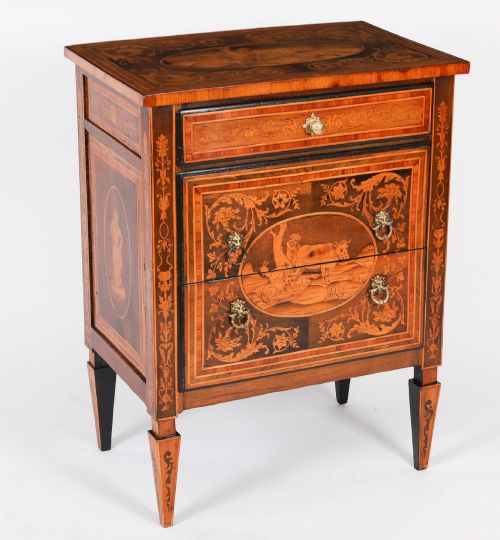
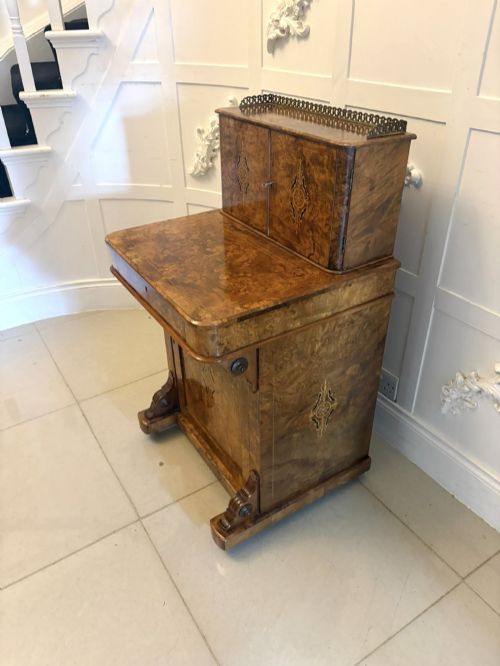
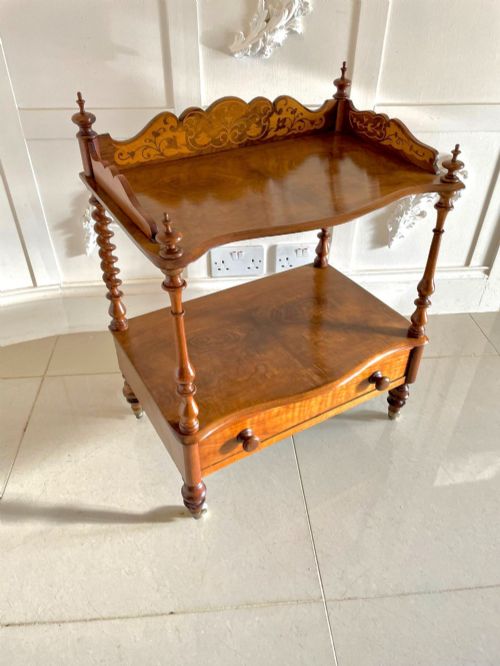
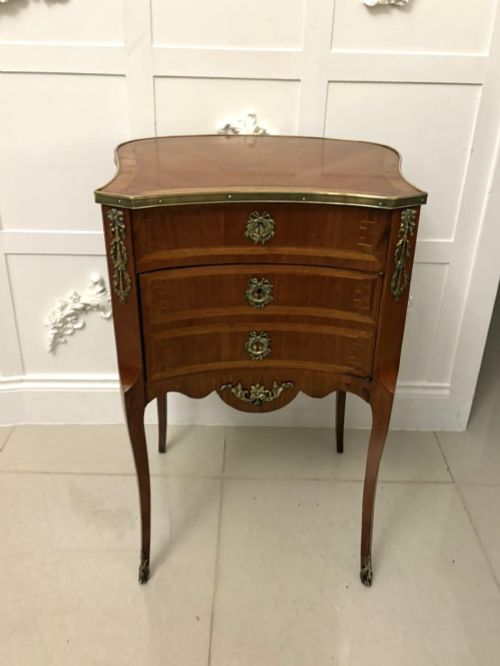
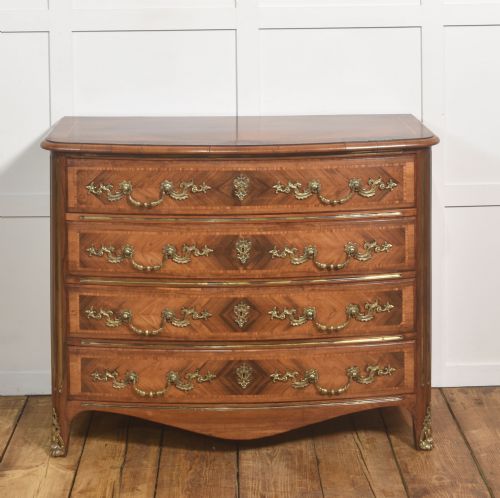
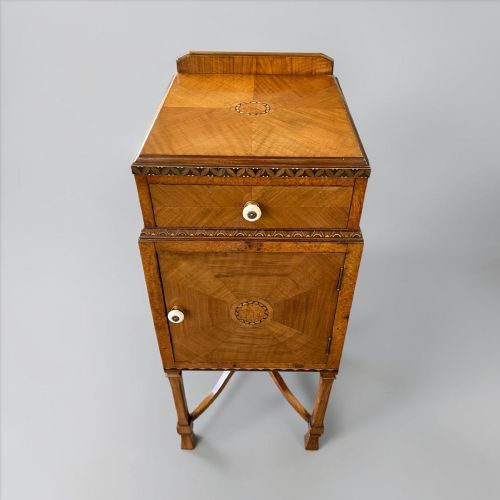
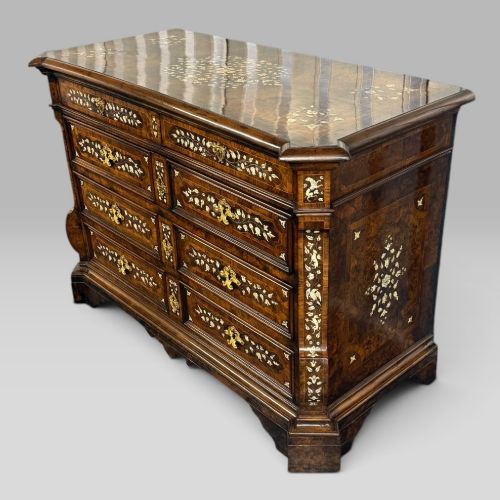
Walnut marquetry drawers encompass chests, commodes, bureaux, and bedside tables dating from the seventeenth century through to the twentieth century. These items feature patterned wooden veneers applied to carcases, frequently utilising floral, architectural, or figurative designs.
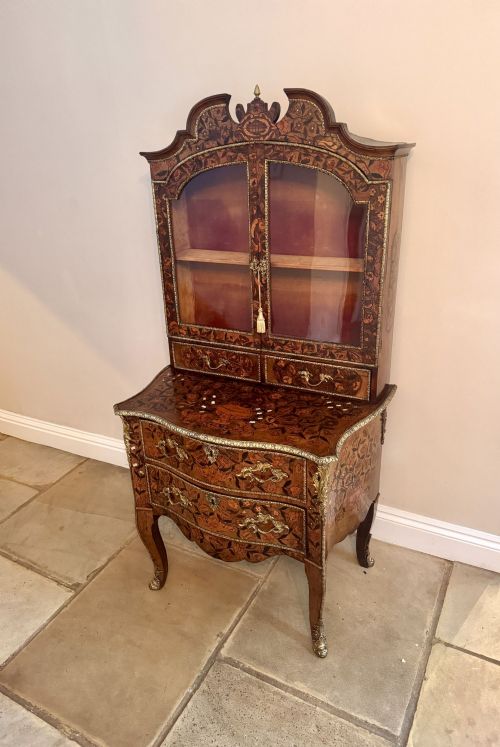
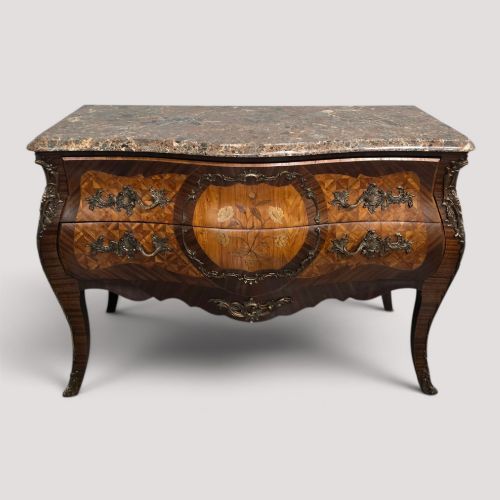
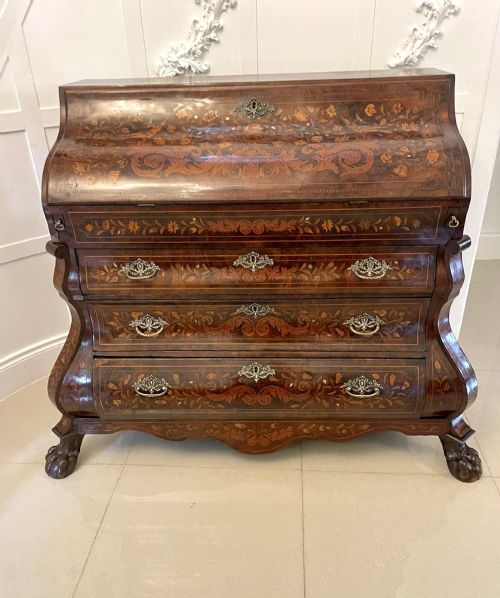
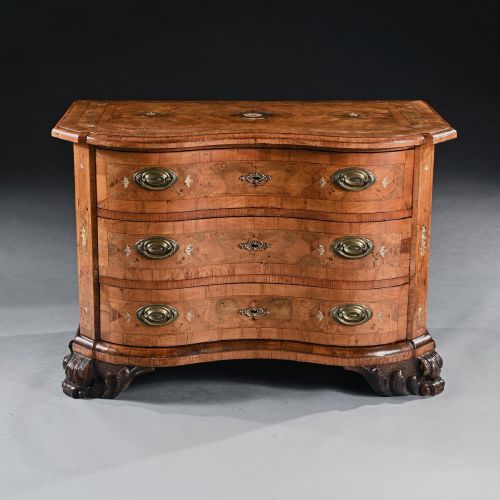
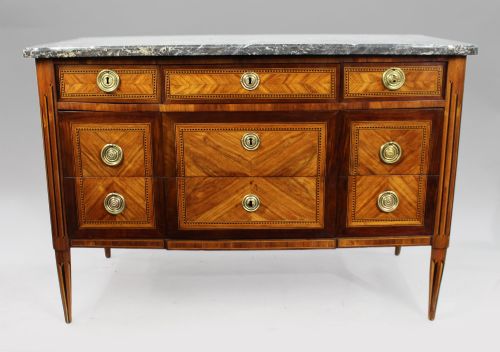
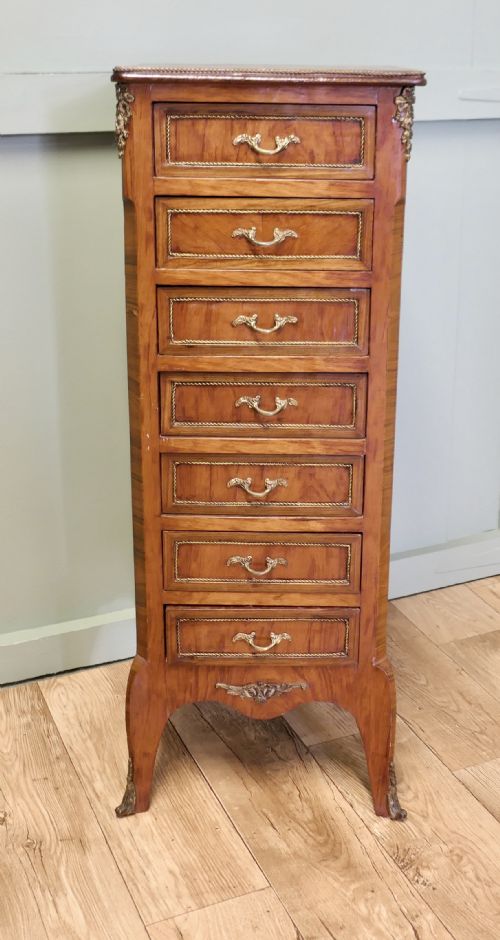
The most common examples on this page are eighteenth-century Dutch and German commodes alongside nineteenth-century French Louis XV style chests. Buyers encounter serpentine shapes, bombe forms, and straightforward side tables fitted with single drawers.
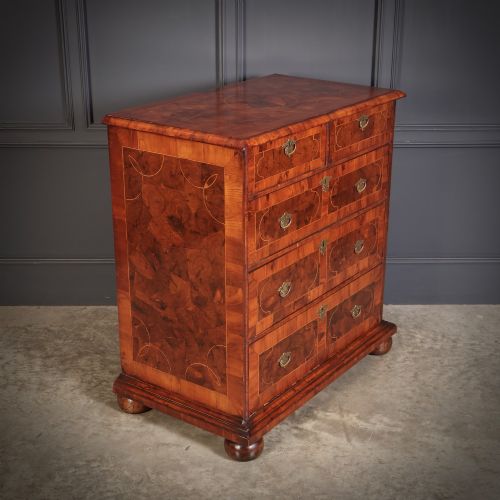
Earlier seventeenth-century examples display intricate seaweed or arabesque patterns in oyster cut veneers, whilst later twentieth-century interpretations adopt simpler geometric layouts.
How they were made
Cabinet-makers constructed carcases from secondary woods before applying primary veneers of walnut and burr walnut. Finer details incorporated fruitwood, kingwood, pewter, and ivory to create contrasting tones within the marquetry panels.
Marquetry cutters sliced thin sheets of different timbers together in packets to form interlocking pictorial motifs before gluing them to the drawer fronts and tops. Ormolu mounts, brass handles, and occasionally marble tops finished the more elaborate pieces.
Materials recorded across these listings include walnut, burr walnut, fruitwood, kingwood, brass, marble, ormolu, and glass.
What varies in quality
Quality rests primarily on the crispness and complexity of the marquetry design, where botanical precision and tonal variety distinguish superior examples from repetitive commercial work. The choice of timber also dictates value, with dense burr walnut and carefully matched oyster cuts showing greater depth than plain walnut boards.
Construction methods reveal the standard of the workshop, seen in the seamless integration of drawer linings, the retention of original brass hardware, and the fluid execution of serpentine or bombe curves.
Edwards & Roberts·Grand Ducal Workshops
The Walnut Marquetry Drawers Glossary
- Marquetry
- Decorative veneer work arranged in pictorial or geometric patterns across a furniture surface. Craftsmen cut various woods together to form cohesive designs.
- Bombe
- A swelling, outward-curving profile found on the sides and fronts of commodes and chests. This bulging form requires advanced shaping techniques.
- Oyster veneer
- Circular or oval cross-sections sliced from small branches or roots, creating concentric growth ring patterns. It appears frequently on seventeenth-century cabinetry.
- Ormolu
- Gilt bronze mounts applied to furniture for ornamentation and edge protection. These cast metallic additions were popular on French revival pieces.
- Serpentine
- A shaped outline featuring a concave centre flanked by convex curves. This undulating edge demands precise carpentry during construction.
Walnut Marquetry Drawers: Frequently Asked Questions
What is walnut marquetry?
Walnut marquetry involves cutting and fitting contrasting pieces of wood veneer into a walnut background to create pictorial patterns.
Craftsmen used botanical, floral, or abstract motifs to adorn drawer fronts and tabletops across various historical periods.
How do I date a chest?
Dating relies on examining the timber species, construction joints, handles, and overall silhouette of the piece.
Earlier seventeenth-century examples often display oyster veneers, whilst eighteenth-century pieces favour bombe shapes and elaborate floral inlay.
Where were these made?
These items originated across European workshops, with significant production in England, the Netherlands, Germany, Italy, and France.
Each region developed distinct regional styles, such as Dutch floral marquetry or French Louis XV serpentine commodes.
How do I maintain the veneer?
Maintain walnut marquetry by keeping pieces away from direct sunlight and steady humidity levels to prevent the veneer from lifting.
Apply a microcrystalline wax periodically to nourish the wood surface without building up excessive residue.