


Walnut Marquetry Card Table
When you search for a walnut marquetry card table, you are looking at folding furniture built to hold cards and games.
Walnut Marquetry Card Table
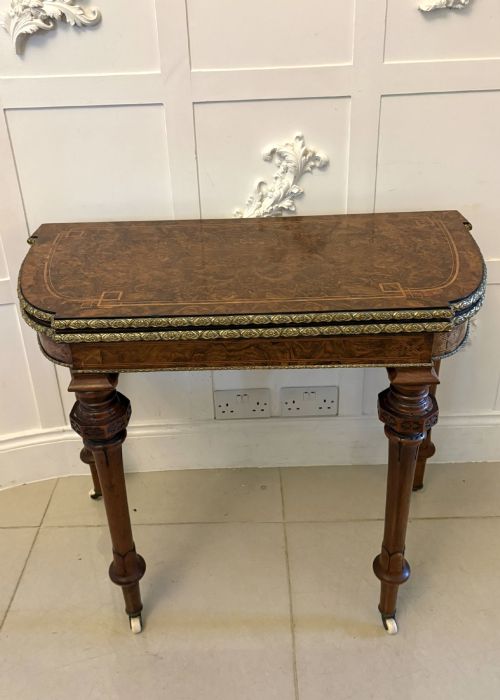
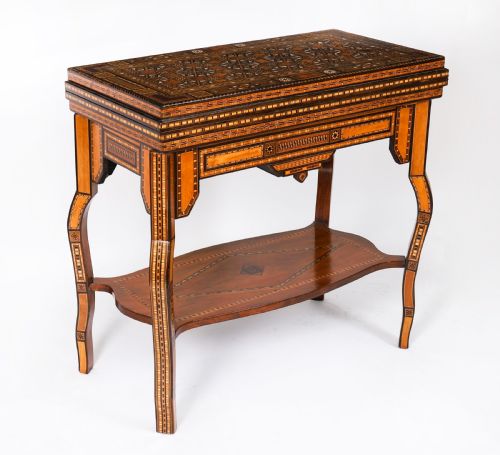
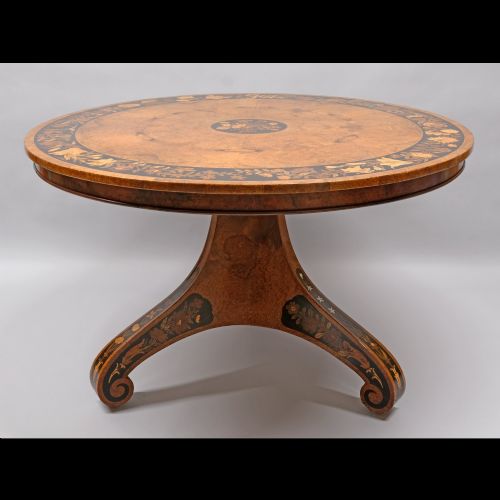
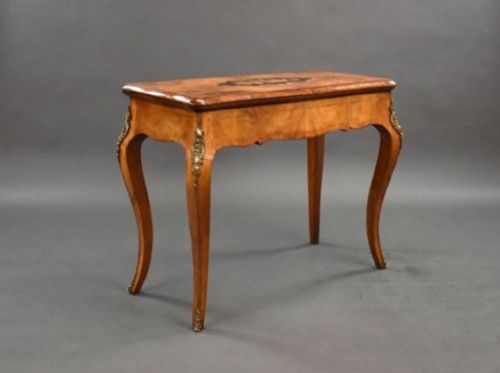
A walnut marquetry card table is a folding table designed for card playing and games, emerging frequently in Victorian and 18th-century forms across this selection. You meet these pieces mostly in Victorian burr walnut variations alongside Dutch Baroque and French Louis XV styles, often featuring fold-over tops that reveal lined playing surfaces.
These tables serve primarily as games tables, card tables, and occasional pieces that transform from console or side tables into full surfaces for play. The structural form involves hinged tops, pedestal bases, or four-legged supports that conceal compartments or work spaces beneath the playing surface.
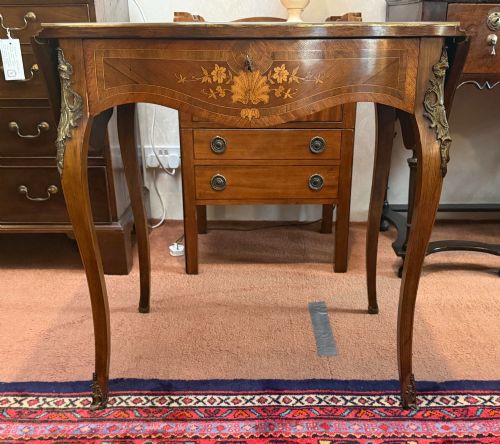
The material palette centres on walnut and burr walnut, enriched by fruitwood, boxwood, and exotic woods inlay. Makers deploy marquetry inlay to render floral patterns and geometric designs across the folding tops and friezes, sometimes augmented by ormolu mounts and brass details.
What varies in quality
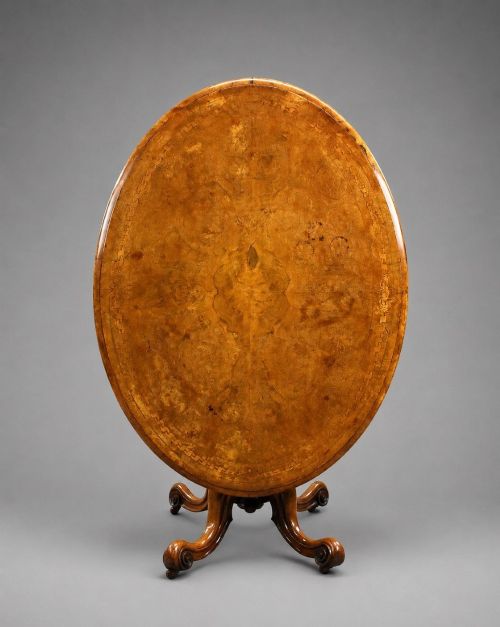
Quality rests upon the depth and intricacy of the wood inlay, where crispness of cut and variety of fruitwoods distinguish standard production from exhibition pieces. The choice of burr walnut veneer dictates the visual richness of the top, with tighter, more even burls commanding greater attention.
Construction details separate the better tables, visible in the precision of the hinge mechanisms, the weight of the ormolu mounts, and the stability of the folding or rotating top. Superior examples maintain alignment when closed and show seamless integration between the marquetry panels and the surrounding walnut timbers.
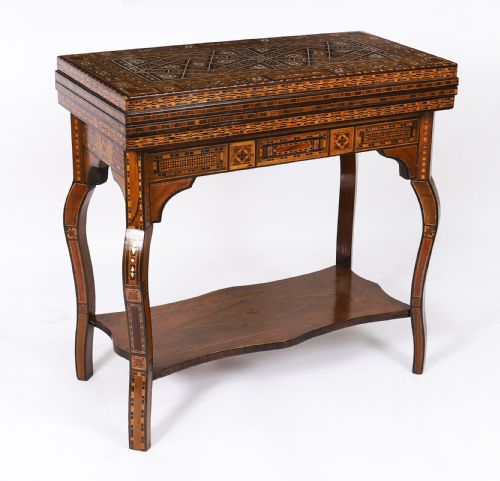
Some tables double as backgammon boards, proving that ancestors took their board games with absolute, inlaid seriousness.
Holmes Baldock·Gillows
The Walnut Marquetry Card Table Glossary
- Marquetry inlay
- A decorative technique where small pieces of wood veneer are assembled into pictorial or geometric patterns on a carcase. This method defines the ornamented surfaces of these games tables.
- Burr walnut
- Wood taken from a walnut tree growth where the grain has grown in a deformed, swirling pattern. It produces highly figured, mottled veneers prized for table tops.
- Ormolu
- Gilt bronze mounted onto furniture as decorative feet, edging, or mounts. French and Victorian makers utilised this metalwork to accent the corners and friezes.
- Fold-over top
- A hinged table top that opens out to double the surface area for playing cards or board games. This mechanism often conceals a baize-lined interior.
- Frieze
- The horizontal band situated directly beneath the table top, sometimes housing a small drawer for cards and counters. On these pieces, the frieze often carries matching inlay.
Walnut Marquetry Card Table: Frequently Asked Questions
What is a walnut marquetry card table used for?
These tables served primarily as multi-functional furniture pieces in 18th-century and Victorian parlours, providing a decorative console or side table during the day. When evening arrived, the top folded open to reveal a surface lined for card games, chess, or backgammon.
Many examples include internal wells or drawers beneath the folding top to store playing cards, counters, and dice. They functioned as social centres for domestic entertainment before being closed and pushed back against the wall.
How do I tell an 18th-century table from a Victorian one?
Eighteenth-century examples, such as Dutch Baroque or Georgian pieces, often display heavier proportions and distinct floral or animal marquetry associated with Dutch workshops. The inlay work on these older pieces uses varied fruitwoods on dark walnut grounds with simpler structural turning.
Victorian interpretations from the 19th century tend to utilise highly figured burr walnut veneers combined with French Rococo or Louis XV revival styles. These later pieces frequently incorporate ormolu mounts, boxwood stringing, and elaborate mirror-matched veneer panels across the fold-over top.
Can I use a card table for daily dining?
Card tables are built with hinged folding tops supported by a swinging leg or rotating mechanism rather than a heavy central frame. Consequently, they lack the structural rigidity required for daily dining use or heavy downward pressure.
Living with these pieces involves using them as side tables, desk surfaces, or occasional display tables where the folding top remains closed. Opening the top should be reserved for light card games or exhibition rather than heavy daily domestic wear.
What styles of marquetry appear on these tables?
The listings feature floral marquetry with elaborate bouquets, scrolling foliage, and urn motifs executed in contrasting fruitwoods and boxwood. Dutch Baroque and 18th-century pieces often display complex bird and flower compositions across the entire folding top.
French Louis XV and Victorian revival styles favour symmetrical floral sprays, ribbon-tied motifs, and geometric borders framing the burr walnut centre. Syrian, Damascus, and Levantine pieces introduce geometric bone or exotic wood inlay patterns distinct from European floral traditions.