
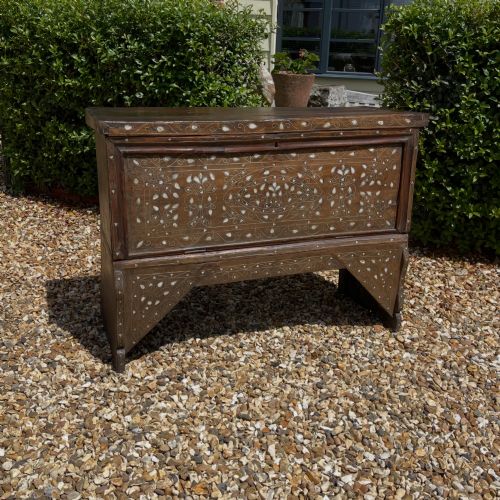


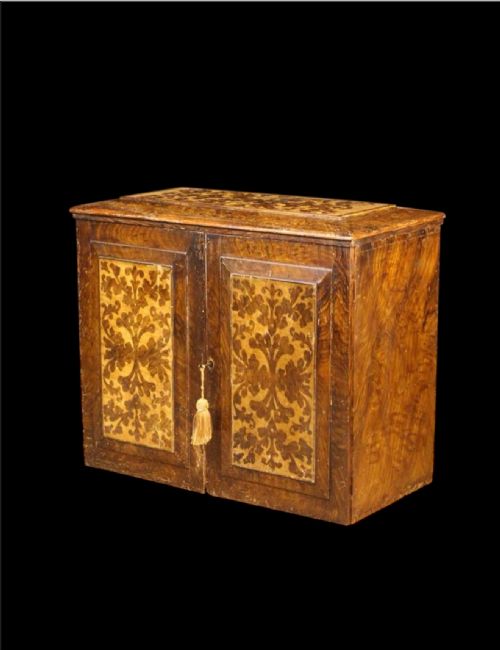

Walnut Marquetry Box
A walnut marquetry box brings intricate patterned wood into domestic spaces, prized for holding letters, tea or keepsakes.
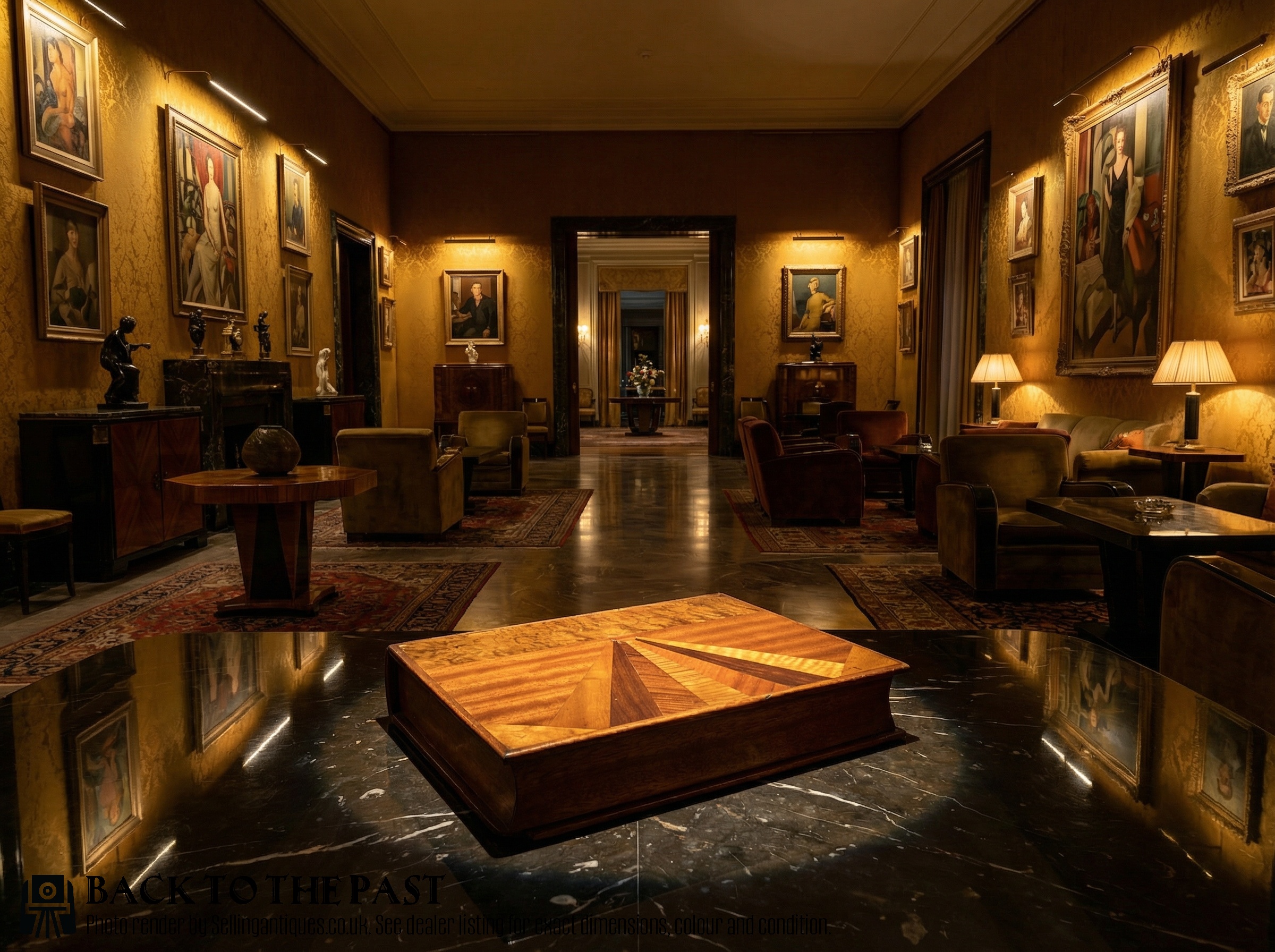
Walnut Marquetry Box
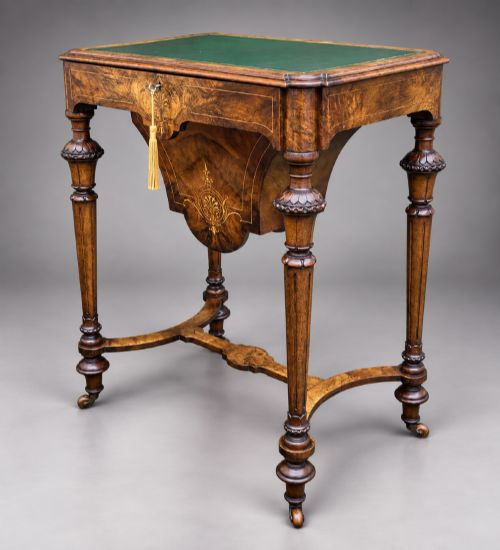
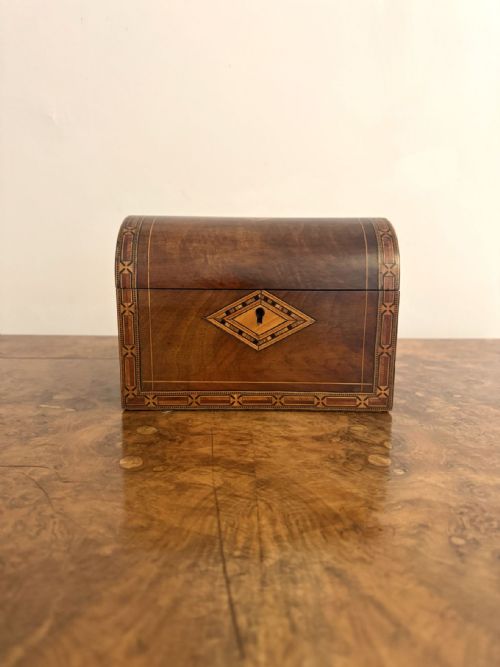
A walnut marquetry box is a container formed from timber and decorated with precision wood veneers, appearing most frequently in nineteenth-century Victorian examples. These pieces range from small table boxes and tea caddies to larger sewing tables, writing desks and musical cabinets.
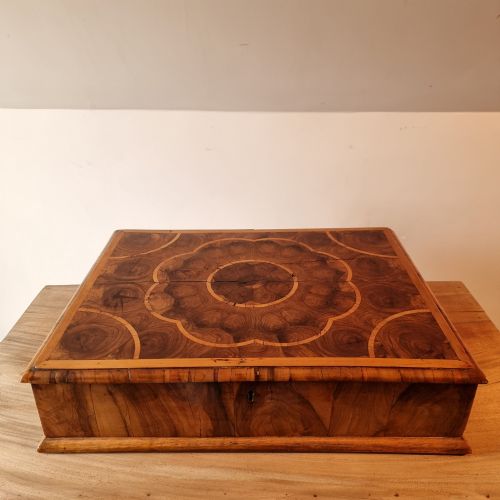
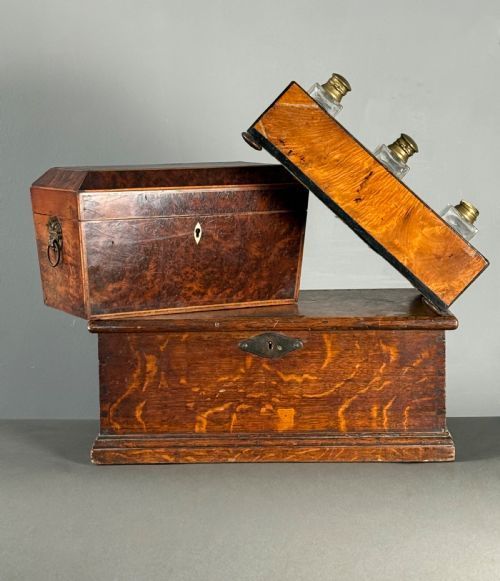
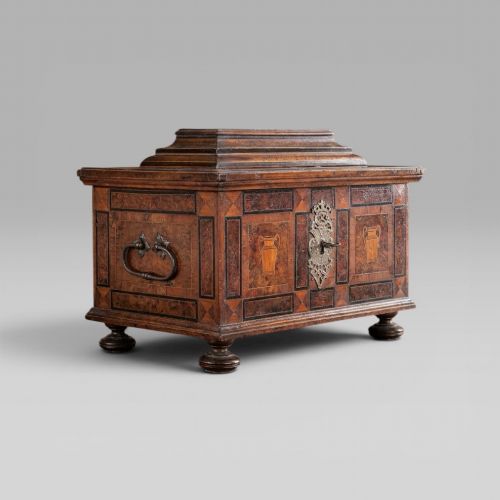
The selection extends from seventeenth-century continental caskets and William and Mary lace boxes to Georgian tea caddies and later Art Deco items. Victorian burr walnut tea caddies and stationery boxes dominate the current offerings, often featuring fitted interiors and compartments for domestic use.
How they were made
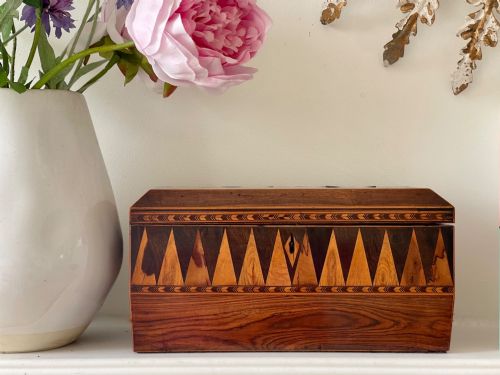
Cabinetmakers constructed the carcases from solid woods, applying figured veneers such as burr walnut to the exterior surfaces for rich grain patterns. Tunbridge inlay, boxwood, rosewood, fruitwood and ebony formed contrasting geometric or pictorial marquetry designs.
Specialised workshops embedded mother-of-pearl, bone and brass details into the timber lid and sides. Interiors often utilised satinwood linings, velvet pads and fitted compartments alongside brass mounts and working locks.
Listings feature 19th-century Victorian items alongside 17th-century continental caskets and Georgian tea caddies.
What varies in quality
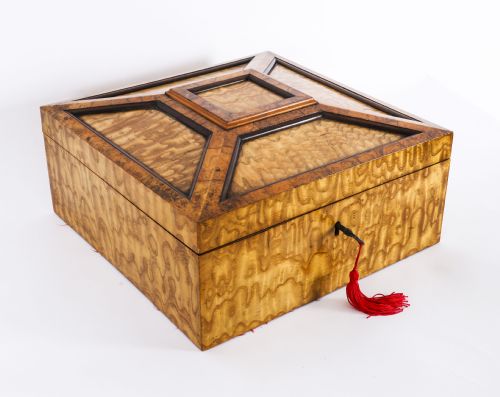
Quality rests upon the precision of the veneer work and the depth of the timber figuring. Superior examples display seamless joins in the wood inlay and balanced floral or geometric compositions across the lid and sides.
The sophistication of the internal fittings elevates certain pieces, such as intact writing slopes, operable musical movements, original velvet linings and multi-tiered sewing compartments with matching lids.
Henry Hollamby·Langdorff & Fils·Gill & Reigate
The Walnut Marquetry Box Glossary
- Marquetry
- The art of applying decorative pieces of veneer to a structural carcase to form pictorial or geometric designs. This technique distinguishes ornamental boxes from plain veneered surfaces.
- Burr walnut
- Wood taken from the abnormal growth of a walnut tree, producing swirling and mottled grain patterns. It is highly valued for decorative table boxes and caskets.
- Tunbridge inlay
- Micro-mosaic woodwork created from thousands of tiny tinted wood prisms arranged into geometric or floral bands. It is characteristic of nineteenth-century English boxes.
- Tea caddy
- A container designed specifically to store loose tea leaves securely. They frequently include internal compartments and fitted mixing bowls.
- Bijouterie
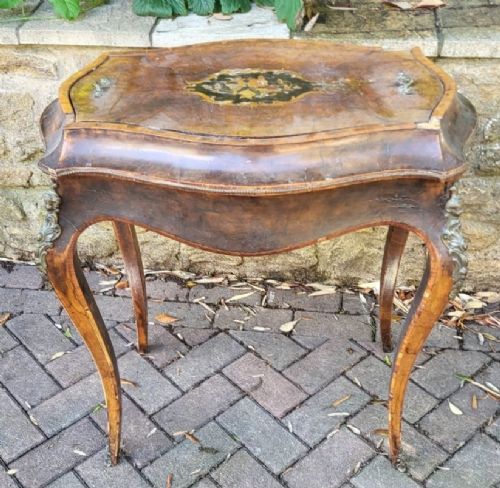
- A small glass-topped display table or box intended for small ornaments and trinkets. These pieces often feature hinged lids for viewing collections.
Walnut Marquetry Box: Frequently Asked Questions
What were walnut marquetry boxes used for?
These containers served various domestic functions, from holding precious teas and correspondence to storing sewing equipment and jewellery. Many housed fitted compartments to keep small personal items organised.
Larger variations functioned as games tables, writing desks or music boxes that played tunes via rotating brass cylinders.
How do I date a walnut box?
Dating relies on construction methods, wood types, and decorative styles like Victorian Tunbridge inlay or Georgian brass mounts. Earlier seventeenth-century caskets display heavier timber carcases and simpler hand-cut joints.
Later nineteenth-century pieces often incorporate burr walnut veneers, complex mechanical interiors and machine-sawn components.
How should I care for antique wood boxes?
Keep wooden boxes away from direct sunlight and sudden temperature changes to prevent the delicate marquetry veneers from lifting. Maintaining stable indoor humidity protects both the timber carcase and internal paper or velvet linings.
Apply occasional specialist wax polish to nourish the walnut surface without building up excessive residues.
Are the internal fittings usually original?
Many surviving pieces retain their original fitted velvet trays, mirror panels, bone knobs and compartment lids. Some boxes experienced alterations or replacement linings over the centuries due to wear from daily use.
Checking for consistent timber ageing across the interior helps determine whether the fittings match the exterior carcase.